







Monday to Friday
9am - 12.30pm - 2pm - 7pm
1. Neglecting electrical safety
Neglecting electrical safety when washing an electric car entails major risks, not only for your vehicle, but also for you. Electric cars, powered solely by their batteries and electric motors, have special features that require special attention depending on a number of factors:
- the high-voltage electrical system,
- no engine oil,
- the regenerative braking,
- software and updates.
What's more, the motor in an electric car carries risks due to the high voltage of the batteries, which can exceed 370 V. Improper handling, particularly during washing, can lead to risks of electrocutionwhich can be fatal.
The lithium-ion batteries used in electric vehicles are very well protected, but can present a risk if damaged. In the event of a collision or impact, it is vital to switch off the vehicle's power supply and check the condition of the battery. battery by a professional. We recommend that you consult the emergency response documentation supplied by the manufacturers to find out more about how to disconnect the battery safely.
It is important to stress that electric cars are no more prone to fires than combustion-powered cars. Incidents such as the fire in a Tesla Model S in the United States in July 2021 has highlighted these risks, but rest assured that such events remain exceptional. Electric vehicle technology has improved significantly over the years, and the risk of fire is low.
France, like other countries, takes the safety of electric vehicles seriously. Organisations such as UTAC and INERIS analyse the risks and propose regular measures to ensure safety when charging vehicles at home and in underground car parks (adapting the amperage of the charge, implementing devices to prevent fires). What's more, if you're a VSE or SME, we recommend that you educate your employees about good practice when it comes to electric cars.
Also read → How does electric car driver training work for employees?
2. Use inappropriate washing products
The use of inappropriate washing products can not only compromise the appearance and exterior of your vehicle, but also damage its electrical components.
Certain aggressive chemicals (detergents, acid-based cleaners, industrial degreasers, cleaning solutions with powerful solvents, etc.) used in traditional car washes can cause :
- corrosion of metal parts,
- damage to seals,
- or the deterioration of the paint's protective layers.
We recommend that you choose washing products specially designed for electric cars, often labelled as "soft or "environmentally friendly. These products contain fewer aggressive substances and are formulated to clean effectively without compromising sensitive materials or electrical components. For example, car shampoos with a neutral pH are preferable, as they clean without damaging paintwork or protective coatings.
For electric vehicles of specific makes such as Tesla, Volkswagen or RenaultFor more information, consult your owner's manual or contact your dealer for personalised advice. Some manufacturers may even recommend cleaning kits or products approved for their models.
Here is some advice from Beev for washing different types of electric cars:
| Produits | |
|---|---|
|
For bodywork
|
Gentle, environmentally-friendly car shampoos. Avoid products containing aggressive solvents or strong acids.
|
|
For rims and tyres
|
Specific cleaners that do not attack protective coatings (Meguiar's Gold Car, Meguiar's Hyper Dressing, Sonax Wheel Cleaner).
|
|
For indoors
|
Multi-surface cleaners (Windex, M. Propre, Lysol) without aggressive chemicals.
|
3. Washing under too much water pressure
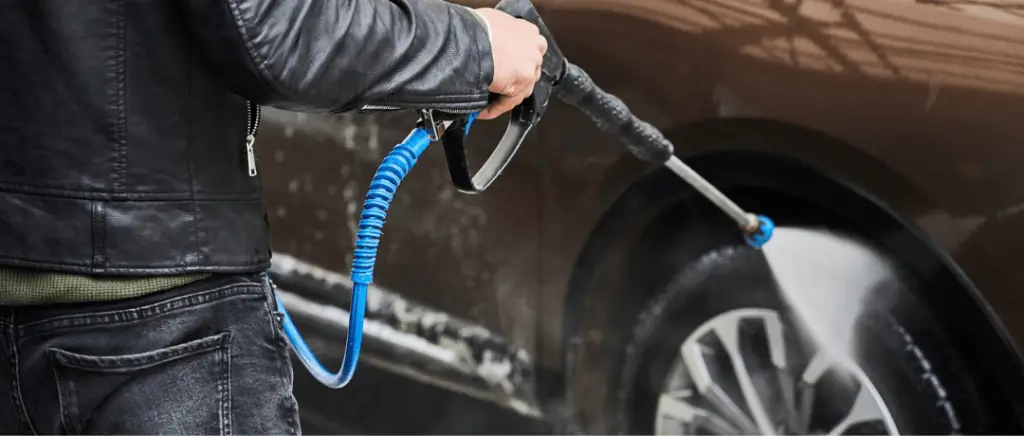
Using high-pressure water to wash an electric car is risky and can potentially cause damage to vehicle components. Electric cars are equipped with complex electrical systems and batteries which, although generally well protected, can be vulnerable to water under high pressure. This can lead to water seeping into critical areas, causing short circuits or other electrical damage.
Electric car manufacturers provide specific guidelines for cleaning their vehicles. For example, it is often recommended to avoid using high-pressure water jets directly on charging sockets, sensors and other exposed electrical components. Inappropriate cleaning can not only compromise the functionality of these components, but also lead to high repair costs. We recommend :
- Opt for a gentle to moderate stream of water, sufficient to remove dirt and debris.
- Avoid directing the spray directly onto sensitive areas (load sockets, sensors, seals) to avoid infiltration.
- Use a sponge or soft cloth with appropriate soap to control the amount of water used.
- Make sure you dry your electric car thoroughly after washing, especially around areas where water could collect or seep in (windows, door seals).
4. Choosing an unsuitable automatic washer
Some wash systems, particularly those with hard brushes, can scratch paintwork or damage exterior parts of the vehicle such as mirrors or aerials. In addition, high-pressure wash systems can force water into sensitive areas, risking damage to the vehicle's electronics.
Finally, the use of inappropriate chemicals in some automatic car washes can alter the car's finish or affect its electrical components.
You can choose non-contact washes, which offer lower-contact services with moderate-pressure water jets and gentle products, reducing the risk of mechanical damage and water ingress. Make sure that the automatic car wash uses mild products that are suitable for electric cars. Avoid areas that use aggressive chemicals.
If possible, ask for a manual drying, as this reduces the risk of water seeping into sensitive areas and gives you the opportunity to check whether any areas need special attention after washing.
There are several major carwash networks in France, including Blue Elephant, Total Washand a large number of independent stations. The networks provide maps of their stations, so you can easily find one near you. There are car washes in many towns and cities, but you can also find them in petrol stations and supermarkets. For an automatic car wash using rollers, the average price is from €4 to €16 depending on the programme. For manual washing, the price of a token generally ranges from from €3 to €5.
5. Forgetting to maintain the battery after washing
Caring for the battery after washing an electric car is crucial to ensuring the vehicle's longevity and smooth running. Although electric cars require less maintenance than internal combustion vehicles, the battery, which is the central component, requires special attention.
The batteries in electric cars, generally lithium-ion, have an estimated lifespan of between 1,000 to 1,500 charge cycles. The durability of a lithium-ion battery can extend over a decade, although its charge capacity gradually degrades over time. Factors such as driving style, charging conditions and maintenance have a direct influence on the battery's life and performance. So it's a good idea to follow these post-wash tips:
- Make sure that the battery and its connections have not been affected by water or cleaning products.
- Have your electric vehicle checked regularly by an approved professional, as electric vehicles require specific knowledge.
- Keep the battery in a temperature-controlled environment as far as possible.
- Avoid charging the battery to 100 % or dropping it to 0 % regularly, a charge cycle between 20 % and 80 % is ideal.