


























Recharging, an essential link in the electric transition of fleets
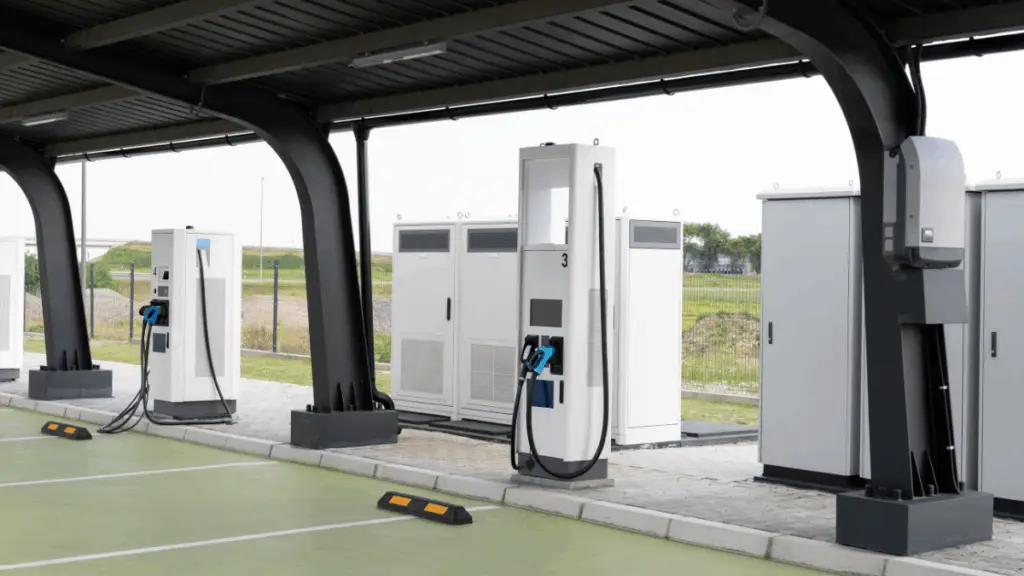
Going electric doesn't just mean replacing combustion-powered vehicles with electric ones. For a company, the challenge is broader: it involves integrating a new energy logic, redesigning uses and guaranteeing operational continuity based on a reliable recharging network.
This is precisely where the success, or failure, of an electrification project depends.
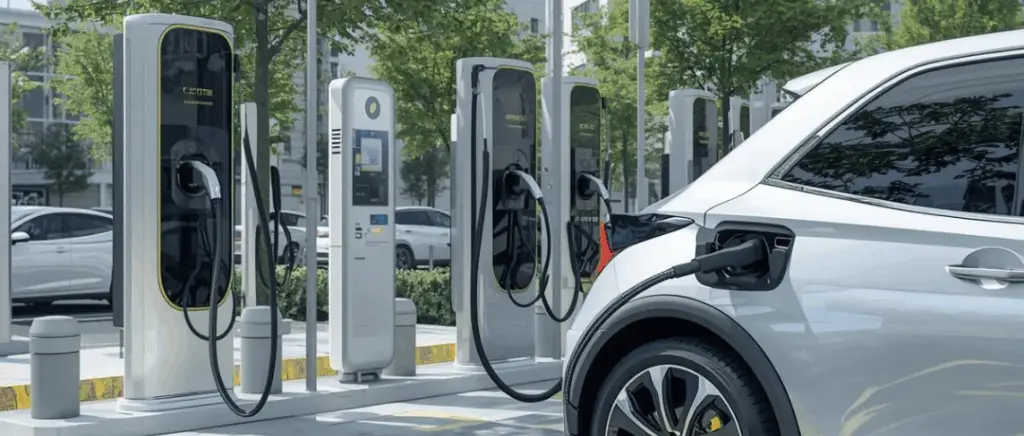
An ecosystem in the throes of change: more vehicles, but still too few charging points
The growth of electric vehicles is now far outstripping that of recharging infrastructure, both in France and across Europe. Businesses are investing massively in electric vehicles, driven by a desire to reduce their emissions, improve their CSR image or benefit from a more competitive TCO in the long term. However, there are still not enough charging stations on offer, particularly for business use.
On the public network, charging points are often designed for private individuals. Their geographical distribution, opening hours and power do not always correspond to business needs. A fleet may have to wait, change routes or adapt its timetable to find an available charging point.
This tension between available vehicles and accessible recharging solutions creates a real risk for companies: that of downtime. An electric vehicle that cannot recharge becomes an unusable vehicle. For fleets that operate at high speeds - logistics, maintenance services, mobile teams - this downtime represents an immediate cost, sometimes greater than the savings made by going electric.
Operational and energy constraints for fleet managers
Installing charging points is more than just installing equipment: it's a genuine internal transformation project. Fleet managers have to deal with multiple constraints.
Energy constraints
All installations require an assessment of the power available on site.
A car park with 20 vehicles, for example, may require :
- three-phase deployment,
- strengthening the network,
- or even a specific connection request.
Logistical constraints
We need to optimise :
- vehicle rotation,
- the availability of terminals at key times,
- parking areas,
- the management of “suckers” who unnecessarily occupy a bollard.
Technical constraints
The differences between AC and DC terminals influence :
- recharge times,
- the number of terminals required,
- the organisation of operations,
- the overall budget.
These constraints are forcing fleet managers to adopt a new vision: that of energy management coupled with vehicle management.
Cost, time, coordination: why recharging remains the main obstacle to be overcome
When a company begins its electrification project, it discovers that installing charging points is a lengthy process, involving :
- technical studies,
- administrative approvals,
- civil engineering works,
- a potentially complex electrical connection,
- followed by IRVE installation and commissioning.
Timescales can vary from a few weeks to several months, depending on the site. That's why the companies that have successfully made the transition to electric power are those that have anticipated the work ahead of the arrival of the vehicles.
Once the infrastructure is in place, on the other hand, the benefits are immediate: reduced costs, increased availability and the ability to adapt. autonomy operational.
Designing an infrastructure tailored to your fleet's needs
Successful fleet electrification requires a structured methodology. A poorly dimensioned installation creates more problems than it solves. Conversely, a well-constructed strategy delivers sustainability, reliability and profitability.
Step 1: Diagnose uses and define real energy needs
Before installing bollards, it is essential to understand how your fleet operates on a day-to-day basis.
The diagnosis enables the infrastructure to be sized correctly, and avoids cost overruns or unnecessary installations.
It consists of analysing :
- kilometres travelled each day,
- departure and return times,
- types of journey (urban, intercity, long-distance),
- user profiles (technicians, sales staff, management, etc.),
- available parking times,
- actual vehicle consumption.
This work helps to identify the power required, the number of charging points to be installed and the right balance between slow, accelerated and fast charging.
This is the basis of a reliable, efficient and scalable infrastructure.
Step 2: choose the right infrastructure model: in-house, shared or hybrid
Once the usage has been analysed, you need to determine where, how and at what power to recharge.
This is one of the most important decisions for the future performance of the park.
1) In-house infrastructure: the safe bet for captive fleets
Installing terminals on a company site gives you total control.
Advantages :
- guaranteed availability,
- centralised planning,
- predictable recharging costs,
- better security and supervision,
- the possibility of deploying smart charging.
Ideal for :
- logistics depots,
- technical centres,
- regional agencies,
- head offices.
A fleet that returns to the site each evening can be supplied almost exclusively via this model.
2) Shared infrastructure: a strategic alternative for companies without a dedicated car park
Some companies do not have suitable sites for the installation of charging points: shared car parks, jointly-owned buildings, offices in town centres, etc.
Pooling allows :
- to share costs,
- optimise the power available,
- reduce installation times,
- avoid major works.
Examples:
- shared terminals between several companies on the same business park,
- shared recharging zone in a secure car park,
- partnership with a local recharging operator.
This model requires clear management of access, priorities and billing.
3) The hybrid model: the most effective strategy for 80 % fleets
The hybrid model is now the preferred configuration for most companies, as it combines the best of both worlds:
- Internal recharging ideal for regular or scheduled night-time recharging.
- Public recharging useful for the unexpected, long journeys or long-distance travel.
This mix offers great flexibility:
- it ensures continuous availability of vehicles,
- it optimises energy costs,
- and avoids saturation of internal terminals at peak times.
It's a strategy that adapts naturally to the variety of uses within a business fleet.
Stage 3: Integrating smart charging into the heart of the energy strategy
Smart charging automatically optimises the power distributed to vehicles.
This is an essential asset for controlling costs and guaranteeing fleet availability.
Intelligent recharging makes it possible to :
- give preference to off-peak charging times,
- avoid costly power peaks,
- prioritise certain vehicles according to the needs of the following day,
- distribute energy evenly,
- control the terminals remotely using dedicated software.
By centralising all the data (consumption, battery status, charging schedule), it transforms the infrastructure into a genuine energy management tool. This is a key step in reducing electricity bills, stabilising usage and preparing the fleet for future developments (V2G, automatic optimisation, advanced load management).
The impact of charging infrastructure on fleet TCO and performance
Infrastructure is often seen as a major investment. However, itit generates considerable savings from the very first cycle of use, This is thanks in particular to lower energy costs and simpler maintenance.
Optimising total cost of ownership (TCO) through energy management
Electricity costs on average three to four times less than fuel, and this difference is immediately reflected in the TCO. Internal recharging, optimised by an intelligent system, guarantees off-peak consumption, so that every kilowatt billed is kept under control.
Reduced maintenance is a second way to save money: no oil changes, no belts, less mechanical wear. Switching to electric motors generally reduces the number of maintenance stages by 30 % to 40 %.
Finally, the tax system helps to make electric cars even more attractive: no VAT, no penalty, advantageous depreciation. A well thought-out infrastructure becomes a lever for financial optimisation.
Reliability and availability: the two levers of fleet productivity
A fleet should never come to a standstill. And that's precisely what a well-designed infrastructure can do: ensure that vehicles have the charge they need when they need it.
A reliable, connected and supervised charging point can detect anomalies upstream, anticipate peaks in use and avoid queues. Recharging becomes an automatic process, integrated into the operational routine.
For a fleet manager, this represents a significant gain in peace of mind and performance.
Data as the new fuel for energy performance
Connected charging stations provide an unprecedented level of information: exact vehicle consumption, costs per user, number of sessions, emissions avoided, rate of use of charging stations, history of faults. These data become genuine management tools.
They can be used to optimise planning, adjust future sizing, convince management with quantified reports and integrate electric mobility into CSR and CSRD reports.
Public or private pay stations: what strategy for your fleet?
Each company needs to devise its own recharging strategy. There is no one-size-fits-all solution: it all depends on the business, the sites available and the uses to which it is put.
In-house terminals: autonomy, safety and cost control
In-house installation remains the most sought-after model for professional fleets. It ensures long autonomy, budget control and maximum reliability. Recharging takes place mainly at night or during off-peak periods, and fits naturally into the operational organisation.
It also guarantees data confidentiality, which can be a challenge for some companies.
External recharging: flexibility and national coverage
Public recharging complements in-house recharging, particularly for mobile fleets or employees travelling long distances. Today's fast and ultra-fast networks mean you can recover several hundred kilometres of range in just a few minutes.
In the majority of cases, companies adopt multi-network subscriptions to guarantee compatibility and facilitate invoice management.
Towards a mixed approach: the winning combination for mobile fleets
For the vast majority of companies, the best strategy is to combine several solutions. In-house recharging covers daily needs, while public recharging provides the flexibility needed for unforeseen events.
This complementary approach optimises productivity while reducing costs. It also offers greater resilience, as the company is not dependent on a single network.
Action plan: how to deploy a recharging infrastructure effective
| Step Project phase | Objective Purpose | Action for the manager Operational role |
|---|---|---|
| Energy audits | Identify feasibility | Measuring power and network constraints |
| Analysis of uses | Adapting recharging to needs | Study routes, profiles, timetables |
| Sizing | Define the type of terminal | AC/DC arbitration, power, number of terminals |
| IRVE installation | Ensuring compliance and safety | Managing works and commissioning |
| Software control | Optimising energy | Activate smart charging, data tracking |
| Access management | Ease of use | Defining rules and badges |
| Maintenance | Guaranteeing availability | Monitoring the condition of terminals |
| Increased load | Preparing for the future | Planning future extensions |
Infrastructure and sustainable mobility: a major CSR and regulatory challenge
In addition to operational efficiency, recharging infrastructure plays an essential role in a company's environmental strategy. It supports CSR commitments, facilitates regulatory compliance and becomes a lever for attractiveness.
Direct contribution to decarbonisation objectives and EPZ compliance
Low Emission Zones are progressively imposing a reduction in thermal traffic. An electric fleet supported by a reliable infrastructure guarantees permanent access to urban areas. This is a competitive advantage for companies operating in city centres.
What's more, the use of low-carbon electricity immediately reduces our environmental footprint, strengthening our CSR indicators and the consistency of our climate commitments.
Integral part of CSRD reporting and climate strategy
European regulations now require precise extra-financial reporting. Thanks to recharge data, companies can measure, monitor and certify their emissions reduction, energy efficiency and electrification rate.
The kiosks then become a proof tool, capable of providing concrete indicators for CSRD reports, external audits and calls for tender.
Conclusion: Recharging, the invisible but decisive pillar of business mobility
Charging infrastructure is not just an accessory to the electric vehicle transition: it is the foundation of it. For fleet managers, it is an operational, financial and strategic lever. A well-designed infrastructure secures vehicle availability, reduces costs, simplifies management and ensures that mobility is part of an ambitious CSR framework over the long term.
Companies that plan ahead and structure their recharging network today are putting themselves in the best possible position to make a success of their energy transition.
And with the support of experts like Beev, every stage - from the energy audit to the installation of the charging points - can be simplified, secured and optimised.
Manage your fleet easily with our dedicated tool

A fleet management tool from A to Z
- Add your fleet and employees in just a few clicks
- Plan your transition to electric vehicles and monitor your CSR objectives in real time
- Centralise your expenses