





Key aspects of the CATL x Volkswagen collaboration
Cost-competitive and recyclable batteries
The partnership between CATL and Volkswagen is based on 2 major objectives: reduce battery production costs and developing recyclable solutionsare essential to speeding up the transition to sustainable development. electric vehicles.
To achieve these objectives, CATL brings its expertise in innovative materials such as high-density cathodes and LFP batteries (lithium iron phosphate). These technologies not only make it possible to lower costsbut alsoimprove performance. For example, the LFP battery prices fall to 53 $/kWh in 2023 in China, compared with 95 $/kWh in 2022thanks to these innovations.
For its part, Volkswagen, on the strength of its industrial experienceis capitalising on these advances to standardise these solutions on a large scale.
Together, they aim to reduce production costs to less than 100 $/kWhThis is a crucial threshold for making electric vehicles competitive with combustion engines. This partnership also provides Volkswagen with a reliable supply and competitive in batteriesThis is a strategic advantage when it comes to competing with Chinese manufacturers, particularly in their own market.
By deepening our cooperation with CATL, we will create cost-effective, high-performance battery solutions. Our priority is to build a strong local supply system.
Alfonso Sancha, Executive Vice President Purchasing, Volkswagen Group China
But the partnership is not just about reducing costs, it also takes into account the need to strong environmental objective. Theemphasis on recycling and reusing materials.
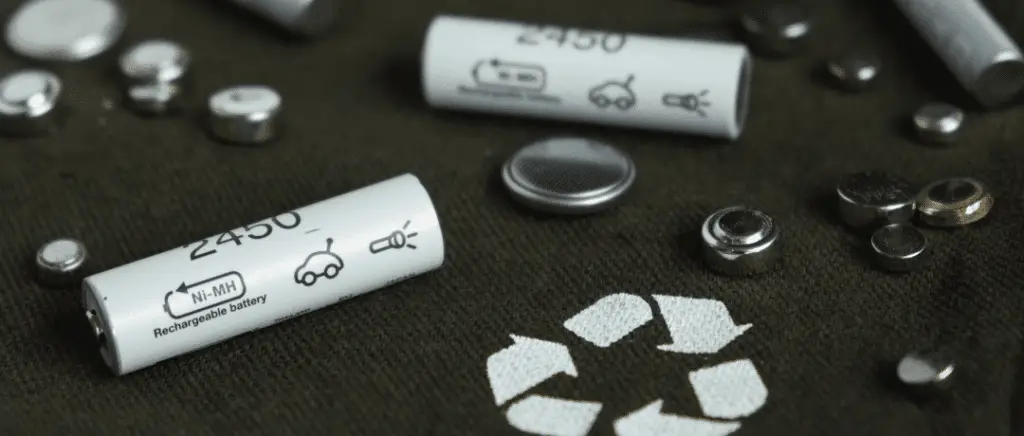
CATL develops processes recovering up to 92 % of the lithium contained in used batterieswhile Volkswagen, through its Salzgitter pilot plant, is aiming for a recycling rate of 90 %.
These approaches not only make it possible to reduce dependence on new oresbut also reduce thecarbon footprint. To give you a concrete example, the recycling of a battery of 62 kWh saves around 1.3 tonnes of CO₂.
See also our article :
In addition to economic and environmental considerations, this partnership is also strategic for the R&D managers and supply chain managers.
For the former, theaccess to patented technologiessuch as solid state batteries or cathodes without nickelThis enables research costs to be pooled and innovation to be accelerated.
As for supply chain managers, the collaboration secures the flow of critical raw materials (lithium, nickel) and diversifies sources of supply, reducing the risks associated with supply chains.
Battery exchange and V2G (Vehicle-to-Grid)
The partnership between CATL and Volkswagen is focusing on innovative solutions such as thebattery exchange and technology V2G (Vehicle-to-Grid)The aim is to meet the challenges of battery management and the integration of electric vehicles into energy networks. Together, they are developing systems to optimise the use of batteries while improving the efficiency of fleets and electrical infrastructures.
As part of this collaboration, thebattery exchange is particularly promising for electric fleets of vehicles and taxis. Inspired by the Evogo from CATL, it allows you to quickly replace used batteries with new onesreducing vehicle downtime.
This technology aims to simplify fleet managementwhile extending battery life and in reducing maintenance costs.
This system has already been successfully deployed in China, where CATL has installed more than 1,000 Evogo stations. This means that batteries can be replaced in one minuteand studies show that fleets can reduce their maintenance costs by 30 %. By targeting the Chinese electric taxi market, Volkswagen hopes to extend this solution to other regions, particularly for users with high energy requirements. autonomy and availability.
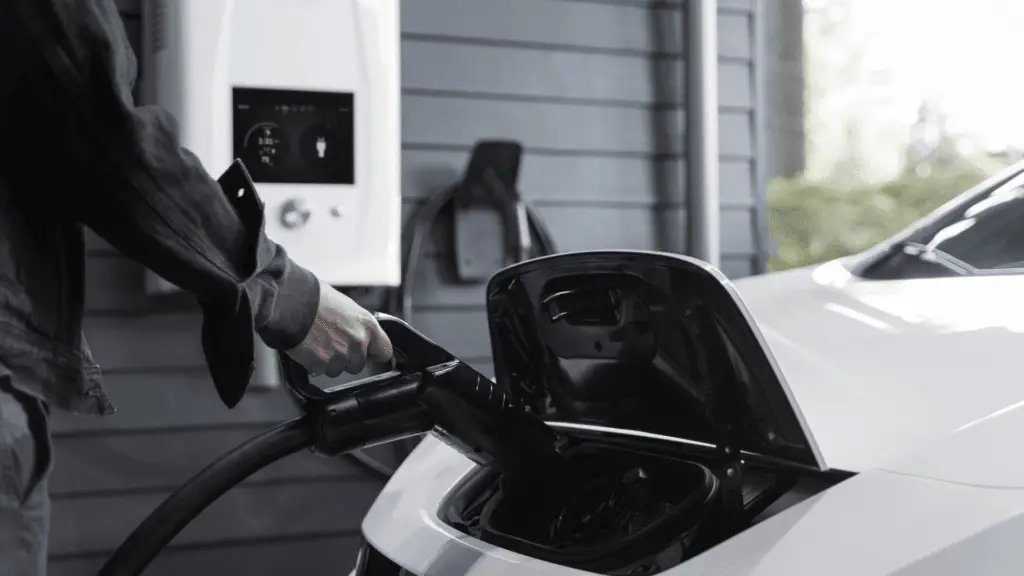
At the same time, the two partners are exploring the technology V2Gwhich allows vehicle batteries to feed energy back into the grid when not in use. Not only does this offer optimising the use of batteries but also greater grid stability, particularly during peaks in consumption.
Thanks to this technology, electric vehicles can act as mobile batteriessupplying energy to the grid, while generating electricity. additional income for their owners, who sell the stored electricity. What's more, the batteries are preserved, extending their lifespan. With forecasts indicating that V2G market could reach 1.5 billion by 2030The technology is growing fast. At the same time, Volkswagen plans to integrate V2G on more than 500,000 vehicles by 2025, a ambitious target to transform energy infrastructure.
See also our article :
Regulatory and strategic alignment of the agreement between Volkswagen and CATL
European regulations: towards more sustainable production
The partnership between Volkswagen and CATL is not just about industrial cooperation; it is also part of a demanding regulatory framework dictated by the European regulation on batteries (2023/1542).
This text imposes strict standards in terms of sustainability, traceability and environmental responsibilityThis is forcing players in the sector to anticipate increasingly stringent constraints. Against this backdrop, the alliance between these two giants has become a strategic lever that will make it possible to guarantee the conformity of batteries while securing access to critical materials.
To meet the requirements of durability and safetythe regulation imposes precise thresholds, in particular a ban on dangerous substancesa obligation to incorporate a minimum percentage of recycled materials and a assessing the carbon footprint of batteries.
From 2025each battery must display a carbon performance classand from here 2031They must contain :
- 4 % of cobalt,
- and 4 % nickel,
- 12 % of recycled lithium.
Thanks to its expertise in LFP batteries (lithium iron phosphate), which contain no nickel or cobalt, CATL is a pioneer in the adoption of these new standards.
In addition to sustainability, the battery traceability becomes a key element with the introduction of the digital battery passport from 2027.
Thanks to a Unique QR codeEach battery will have to be able to trace the history of its components, making recycling easier and guaranteeing the transparency of the materials used. For Volkswagen, this innovation represents a major asset in the life-cycle management of its electric vehicles. In parallel, CATL brings its expertise in data management and materials tracking to optimise the compliance of its products with these new obligations.
See also our article :
One of the major challenges of this regulation also lies in the duty of diligence imposed on manufacturers to limit the environmental and social impact of their supply chain. This implies greater traceability of raw materials such as lithium and cobaltand reducing dependence on geopolitically sensitive areas. In response, Volkswagen and CATL rely on a dual strategy a local industrial presence in Europe and a battery standardisation to pool costs and secure the flow of critical materials.
With the progressive entry into force of these new rules until 2028In this context, manufacturers have no choice but to adopt a proactive approach.
By integrating these requirements today, Volkswagen and CATL get a head start on the competitionThe partnership has become a model of excellence for the industry. Their partnership has thus become a model of regulatory compliance and industrial innovationwhich illustrates how the major players in the automotive industry can turn a constraint into a competitive advantage.
Carbon-neutral targets, requiring greener batteries
The two giants of the automotive and battery industries are focusing on a joint strategy to reduce the carbon footprint of their batteries and guarantee their compliance with environmental standards. Not only does this approach enable us to align ourselves with international climate agreements (Paris Agreement, Fit for 55), but also to accelerate innovation towards more sustainable energy solutions.
Volkswagen and CATL posted ambitious objectives in terms of carbon neutrality. Volkswagen is committed to achieving reducing its CO₂ emissions by 30 % by 2030 and become entirely carbon neutral by 2050. On his side, CATL plans to make all its factories carbon neutral by 2025with the aim offully decarbonised supply by 2035. To achieve this, Volkswagen is investing 35 billion invested in electromobilitywhile CATL is banking on a energy mix dominated by solar power and has already obtained PAS 2060 for several of its production sites.
In addition to battery design, the collaboration between Volkswagen and CATL also optimises the supply chain to reduce its environmental impact. Production is divided between Europe and China in order to limit transport emissions and avoid excessive dependence on certain regions. In addition, the battery standardisation not only optimises production costs, but also secures supplies of critical raw materials such as lithium, not to mention the circumventing EU taxes on Chinese/produced electric cars.
See also our article :
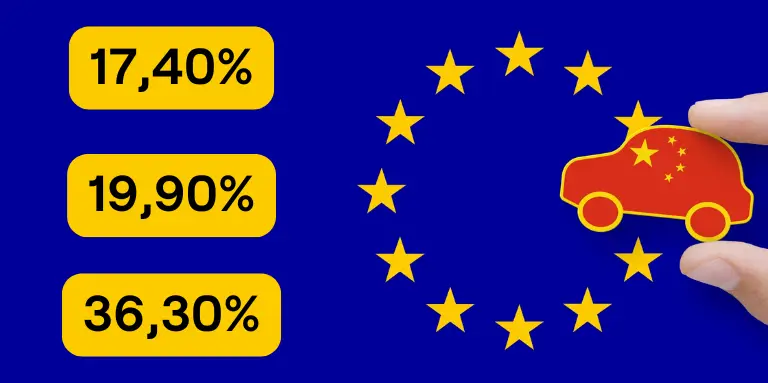
In other words, the figures illustrate the scale of this transition. The European Union aims to 15 % electric vehicles in the French fleet by 2030with 7 million charging points installed by then.
On an industrial level, CATL dominates 37.9 % of the world battery marketwhile Volkswagen's ambition is to deliver 2.9 million electric vehicles to China by 2024.
💡Did you know ? According to studies carried out by Carbon 4LFP batteries provide 50 to 70 % reduction in CO₂ emissions compared with internal combustion engines.
ISO 26262 standards: strengthening functional safety requirements
The agreement between Volkswagen and CATL is part of a rigorous regulatory framework, in particular with the application of the ISO 26262 standardwhich defines the requirements for functional safety for electronic systems in electric vehicles. This standard imposes strict criteria to minimise the risks associated with batteries, while guaranteeing the reliability of vehicles on the road.
For more details, ISO 26262 covers thethe entire battery life cycleFrom design to operation, including testing and maintenance. For electric batteries, the criteria include :
- Advanced short-circuit and overload protectionwith thermal and mechanical shock resistance tests.
- Electrical insulation standardsrequiring a minimum resistance of 100 Ohm/V DC and 500 Ohm/V AC to avoid any risk of electric shock.
- Gas management systemsto prevent the build-up of flammable vapours in the event of a malfunction.
See also our article :
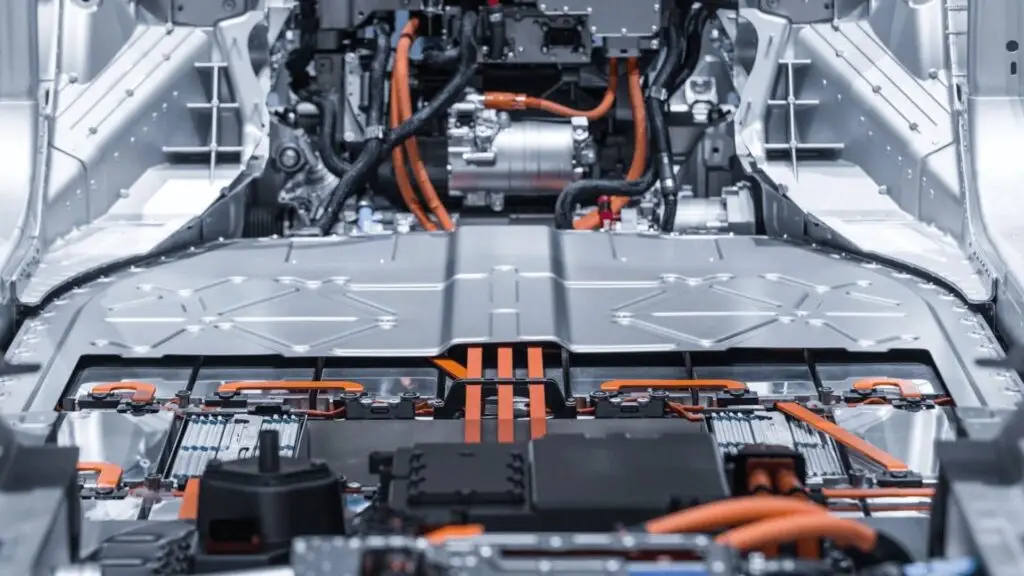
By complying with these requirements, Volkswagen and CATL are ensuring that the securing battery cells and the prevention of critical failuresThis is a major challenge for electric mobility.
Conclusion
The partnership between CATL and Volkswagen redefines the standards for batteries for electric vehicles, reconciling improved performance, cost reduction and regulatory compliance. For R&D directors and supply chain managers, this collaboration represents a major step forward. major step forwardguaranteeing :
- more batteries sustainable,
- a supply secure,
- from innovative solutions such as battery swapping and V2G technology.
All of these advantages make the transition to a more cost-effective, high-performance electric fleet easier.