













Battery MRL: what does it actually mean?
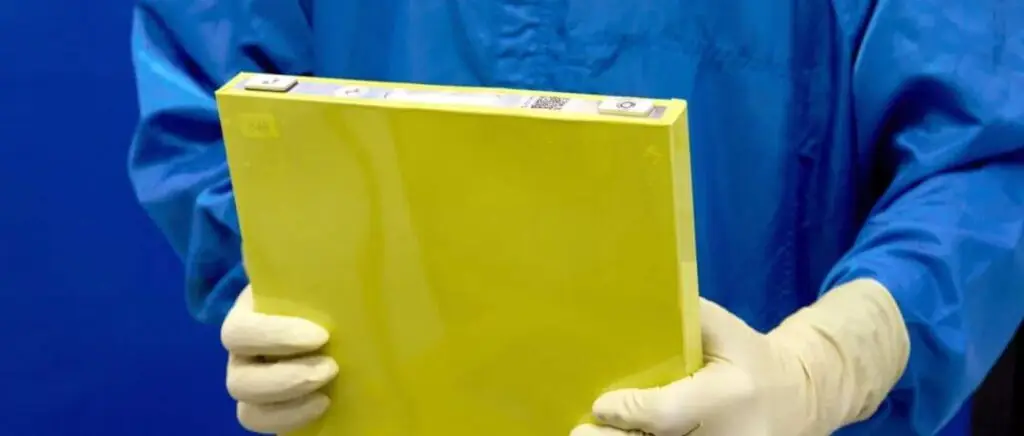
La LMR battery (Lithium-Manganese-Rich) represents a major advance in battery technology for electric vehicles, and is the fruit of a partnership between General Motors and LG Energy Solution. Unlike traditional batteries, which are mainly based on the nickel and the cobaltThe LMR battery is based on a significantly higher proportion of manganesea material that is both abundant and much less expensive.
In fact, General Motors has spent almosta decade of research to develop this technologyaccording to Kushal Narayanaswamy, the group's head of battery engineering. He points out that LMR batteries are composed mainly of manganese (approximately 65 %) and nickel (35 %), with a negligible presence of cobalt. This composition marks a clear break with that of the NMC batteries used until now in GM's large electric models, whose formula includes 85 % of nickel, 10 % of manganese and 5 % of cobalt.
This new chemistry addresses two key issues for fleet managers and CSR officers:
- A 33 % higher energy density than LFP batteries (lithium iron phosphate), which translates into a autonomy for each vehicle and better optimisation of the fleet.
- A significant reduction in production coststhanks to the use of less expensive raw materials and a prismatic design that facilitatesassembly and theintegration in electric commercial vehicles and electric trucks.
LMR technology is not intended to replace other types of batteries, but to complementing the existing offering to meet the specific needs of large companies car fleets These include greater autonomy, controlled costs and less dependence on critical materials that are subject to geopolitical tensions. GM and LG are planning a large-scale production of these batteries from 2028with the aim of equipping pick-up trucks and Electric SUVs of the group.
See also our article :
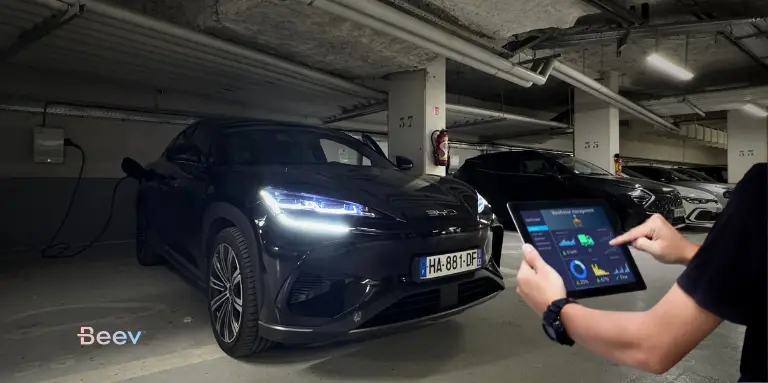
The management of vehicle fleet in business: how do you turn a cost centre into a strategic lever?
For professionals, this means being able to deploy electric vehicles capable of over 400 miles of autonomy, 640 km of range per chargeWhile maintaining competitive operating costs and reducing the environmental footprint of their business.
See also our article :

What are the benefits for fleet managers?
Reduced operating costs in the medium term
For any fleet manager, the controlling operating costs is a daily challenge. Switching to an electric fleet is already a step towards reducing fuel and maintenance costs. But with the arrival of new technologies like the LMR battery, this optimisation has reached a new level.
Thanks to its innovative design and the increased use of manganese, the LMR battery makes it possible to reduce production costs while improving energy efficiency. As a result, vehicles equipped with this technology have optimum range, limiting the frequency of recharging and, consequently, business interruptions and maintenance costs. charging stations.
In the medium term, this higher energy density translates into lower TCO :
- Fewer recharging cycles means less wear and tear on batteries and longer vehicle life.
- Less downtime for recharging or maintenance, maximising the fleet's operational availability.
- From reduced maintenance costsThis is because electric vehicles have fewer wearing parts than internal combustion models, and the robustness of the LMR battery further reduces the need for servicing.
See also our article :
In other words, for fleet manageris the assurance of better control their budget while enhancing the efficiency of their vehicle fleet.
Monday to Friday
9am to 12.30pm and 2pm to 7pm
Anticipating tomorrow's logistical and financial challenges
Since 2025, the Loi d'Orientation des Mobilités (LOM) imposes strict quotas for low-emission vehicles :
- 20 % of the fleet must be electric or rechargeable hybrid from 2025,
- 40 % from 2027
- and up to 70 % from here 2030 for companies with more than 50 employees and more than 100 light vehicles.
Failure to meet these targets exposes the company to increasing financial penaltiesup to 5 000 € per non-compliant vehicle from 2027.
See also our article :
At the same time, access to urban centres is becoming more restricted: 42 French cities apply the ZFEThe aim is to gradually ban the oldest combustion-powered vehicles. Only 100 % electric models benefit from unrestricted accessThis avoids the additional logistical costs and operating losses associated with detours or the immobilisation of non-compliant vehicles.
See also our article :

In terms of taxation, the pressure is increasing on heating: ecologic malus from 113 g/km CO₂, weight penalty for vehicles exceeding 1,600 kgIn addition, the TVS has been replaced by the TAVT, from which only electric vehicles are exempt. On the other hand, electric vehicles are exempt fromtargeted rebatesan advantageous depreciation ceiling and a TCO now lower than that of a thermal vehicleThanks to cheaper energy, simplified maintenance and tax exemptions.
See also our article :
For more information on this tax issue relating to electric cars in the workplace, please consult our white paper.
In addition to compliance, these regulations revolutionises logistics management It is becoming essential to :
- planning the integration of electric vehicles,
- rethink routes based on range and access to charging points,
- and optimise vehicle rotation to limit downtime.
See also our article :

The installation of suitable recharging points in company car parks is also mandatory: a terminal for 20 placeswith financial assistance available to reduce the initial investment.
So anticipating these challenges also means transforming a from regulatory constraint to opportunity.
Why does this technology also appeal to CSR managers?
Firstly, thanks to its innovative composition, the LMR battery makes it possible to reduce the environmental impact of extracting critical metals. This reduction in dependence on scarce resources is fully in line with the circular economy approach and the need to limit the over-consumption of raw materials, 2 pillars of strategy Environmental, Social and Governance (ESG).
Secondly, by improving energy density, as mentioned above, the number of recharges can be reduced and, ultimately, the energy consumption can be reduced. reduce the fleet's overall energy consumption. Fewer recharges also mean fewer indirect emissions linked to the production of electricity, a powerful argument for improve the company's carbon footprint.
European regulations, which come into force in 2025, now require strict standards oncarbon footprint batteriesThey are also recyclable and contain fewer harmful substances. LMR batteries, designed to meet these requirements, facilitate regulatory compliance and simplify ESG reporting:
- recycled content,
- traceability of materials,
- and environmental performance are now essential criteria for investors, partners and customers.
See also our article :

Finally, the increased durability of the LMR battery, combined with lower operating costsenables CSR managers to demonstrate concrete progress in the area of CSR. reducing greenhouse gas emissionswhile promoting theresponsible image of the company in the eyes of its stakeholders.
Technology coming soon: how do you prepare for it?
The LMR battery developed by General Motors and LG Energy Solution will be available soon from 2028. Commercial production of these prismatic lithium-manganese-rich cells will begin in the United States in the next few years. Ultium Cells factorieswith a pre-production phase planned from the end of 2027. This technology will be used primarily on GM's electric pick-ups and SUVs.
That said, to prepare properly for the arrival of the LMR battery in your electric fleet, it's essential to adopt the following approach structured approachThis is achieved by anticipating operational needs, regulatory developments and future technological changes.
Here are the key steps to follow:
- Carry out an audit of your current fleet Analyse the state of your fleet, identify the vehicles that need to be replaced as a priority (particularly those with the highest emissions) and study the real uses of mobility (mileage, cycles of use, business constraints).
- Assessing range and recharging requirements The LMR battery will extend the range of your vehicles. Plan now for the optimum sizing of your fleet and charging infrastructure, taking into account the electrical capacity of your sites and the needs of your employees (on-site charging, charging at home, access to the public network).
- Plan the installation or adaptation of charging points : Plan the deployment of suitable charging points, taking into account their location, power and future compatibility with new vehicles fitted with LMR batteries.
- Training and supporting your teams Your employees need to be made aware of electric driving, range management and the use of the new charging points. Supporting change is a key factor in successful adoption.
- Implement continuous monitoring and optimisation Install monitoring tools to analyse energy consumption, optimise recharging and plan preventive maintenance. This will enable you to adjust your strategy over time and maximise the benefits of LMR technology.
- Keeping abreast of regulations and innovations : Monitor legislative developments (LOM quotas, ZFE, taxation) and technological advances to adapt your roadmap and seize the opportunities offered by new batteries.
Conclusion
By combining higher energy density with lower production costs, this technology opens up new prospects for companies wishing to electrify their fleets in a more environmentally-friendly way. efficient, sustainable and economically viable.
For fleet managers, this is an opportunity tooptimise TCO while strengthening the operational availability of vehicles. For CSR managers, this is a concrete lever for reduce indirect emissionscomply with ESG standards, and aligning environmental objectives with the realities on the ground.
LMR technology will only be deployed on a large scale from 2028 onwards, but the today's decisions determine tomorrow's success. The time to act is now anticipate, structuring its electrification strategy and prepare for the integration of these innovations in its mobility and climate roadmap.