
















A tightening regulatory framework: the planned end of thermal heating
The automotive sector is undergoing unprecedented change as a result of a tougher regulatory framework. Faced with the urgency of climate change and the need to reduce greenhouse gas emissions, public authorities at both national and European level are stepping up measures to accelerate the transition to sustainable mobility. The future of combustion-powered vehicles, which used to dominate the roads, is now in jeopardy.
Increasing restrictions on the use of cars, the rise of environmental standards and the announcement of ever-closer deadlines for banning them all mean that consumers and professionals are thinking more quickly about the electric or hybrid alternative.
The Mobility Orientation Law (LOM): stricter obligations for professional fleets

Coming into force in 2025, the LOM Act introduces a strict regulatory framework for companies with large fleets (over 100 light vehicles and more than 50 employees). In particular, it imposes progressive quotas for low-emission vehicles (20% from 2025, 40% in 2027, rising to 70% in 2030) when renewing fleets, encouraging a rapid shift towards electric, rechargeable hybrid or hydrogen vehicles. In addition, the LOM makes it compulsory to install charging points in company car parks, depending on the number of spaces available, with financial incentives available through programmes such as "Advenir".
Failure to comply with these obligations exposes companies to significant financial penalties. The LOM Act therefore provides both a binding framework and a powerful lever for accelerating the energy transition of business fleets, by combining regulatory compliance, cost optimisation and consideration of CSR issues.
Low Emission Zones (LEZ): a tight schedule for major cities
The Low Emission Zones (LEZ)), deployed in major French and European cities, impose a strict regulatory schedule limiting access to the most polluting vehicles. These restrictions are becoming more severe every year, with the gradual exclusion of older, diesel-powered vehicles, having a direct impact on the management of business fleets. For companies, it is becoming essential to anticipate the renewal of their vehicle fleets in order to guarantee access to urban areas and avoid the risk of financial penalties. These regulatory changes also mean that logistics operations have to be adapted, with changes to routes and timetables to meet the new constraints.
However, this transition also offers strategic opportunities: integrating clean or electric vehicles, optimising operating costs and improving environmental compliance. In a B2B context, proactively managing the ZFE obligations is a key lever for ensuring business continuity, improving economic performance and reinforcing companies' commitment to CSR.
European targets: end of new combustion-powered vehicles by 2035
The European Commission has taken a decisive step by setting 2035 as the target date for the sale of new combustion engine passenger cars and light commercial vehicles, whether petrol or diesel. This decision is part of the Green Pact for Europe and the "Fit for 55" plan, which aim to massively reduce CO2 emissions by the middle of the century.
From 2035, only zero-emission vehicles (electric or hydrogen) will be allowed to be sold new in the European Union. This step sends a strong signal to industry, which is investing massively in research and development of alternative solutions, and to consumers, who must anticipate this upheaval in their purchasing choices.
Electricity, a strategic challenge for fleet performance
Reduced TCO in the long term, but only if well anticipated
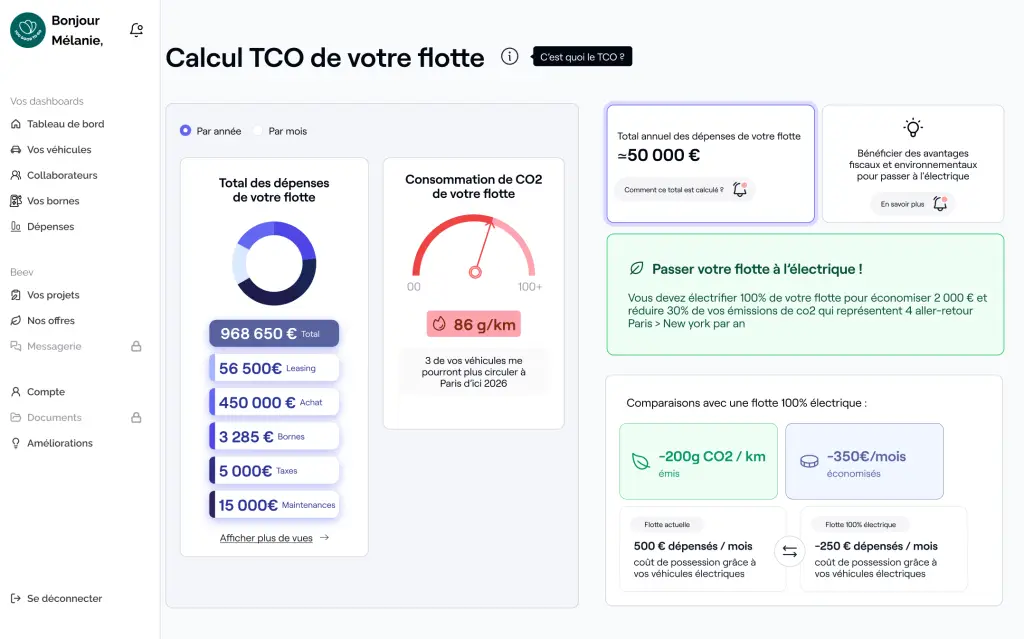
Switching to electric power often means a higher initial investment, but it can be a very attractive option. total cost of ownership (Total Cost of Ownership, TCO) over time. Savings on fuel, reduced maintenance thanks to the simplicity of electric motors, and any tax benefits, gradually offset the extra cost of purchase.
However, these benefits will only be realised if the transition is carefully planned: it is essential to analyse usage profiles accurately, to choose the right models for the right journeys and uses, and to plan recharging in advance. Poor anticipation can lead to unforeseen extra costs and reduce the expected profitability of electrification.
Risk of downtime: vehicles and terminals can't be improvised
One of the main challenges of the electric transition is managing the availability of both vehicles and recharging infrastructure. Unlike internal combustion engines, rapid access to a charging point is not yet guaranteed everywhere, particularly on long-distance journeys or in the absence of dedicated on-site infrastructures. An ill-equipped fleet or poorly assessed needs can lead to downtime, impacting business and generating additional costs.
So it's vital not to improvise when it comes to electrification: a comprehensive plan for installing charging points needs to be drawn up, users need to be trained in best practice, and the state of charge and usage needs to be monitored in real time. Only an early, structured approach can avoid the logistical pitfalls of going electric and guarantee business continuity.
The role of the fleet manager is changing: from manager to transition driver
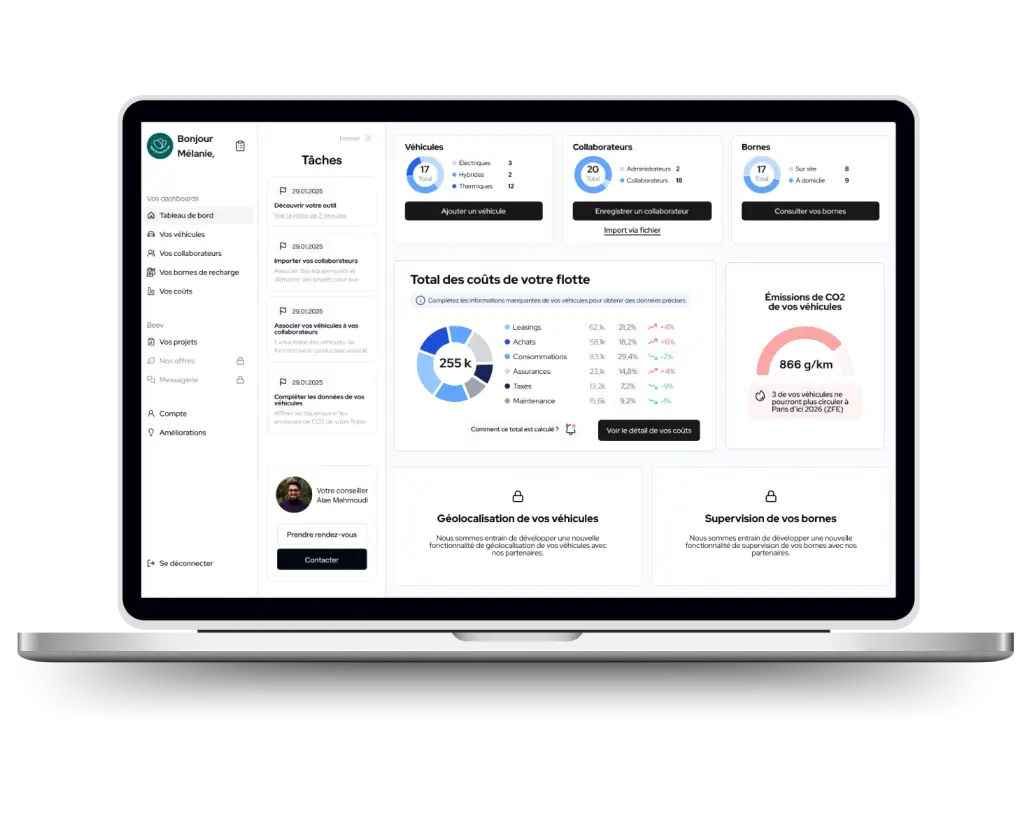
The role of the fleet manager is changing radically, evolving from the traditional status of a simple manager to that of a true driver of the energy and digital transition of corporate mobility. Formerly focused on the administrative and logistical aspects of managing acquisitions, monitoring costs, maintenance and resale, the fleet manager is now asserting himself as a strategic player, guaranteeing the fleet's technological choices, regulatory compliance and environmental responsibility. This professional becomes the interface between management, employees and players in the automotive sector, coordinating electrification, the deployment of shared mobility solutions and the optimisation of total cost of ownership (TCO).
Against this backdrop of rapid change, it is essential to equip yourself with high-performance tools to support this new role. The Fleet Manager proposed by Beev responds specifically to these challenges: it simplifies day-to-day management, centralises key data (vehicles, contracts, TCO, electrification projects, recharging points), enables the fleet to be monitored in real time and its economic and ecological performance to be steered.
Thanks to its intuitive interface, fleet managers can anticipate needs, control costs and manage vehicle allocation, energy consumption and preventive maintenance more effectively, while ensuring that the fleet complies with new regulations. As well as complying with legal obligations, the Beev tool becomes a real lever for combining operational performance with a commitment to the environment, giving fleet managers all the visibility and confidence they need to steer a successful transition.
Company fleets: 4 tips from Beev for making the electric transition a success
| Council | Detailed description |
|---|---|
| Diagnose your needs | Carry out a full audit of the vehicle fleet is the essential first step. This audit analyses all the vehicles, their daily use (mileage, types of journey, number of passengers, payload), the associated costs (fuel, maintenance, insurance) and their current environmental impact. This provides a better understanding of existing strengths and weaknesses, and enables us to make personalised recommendations for selecting the right electric vehicles. |
| Planning the infrastructure | The installation of charging stations must be planned in advance, taking into account the company's sites and the needs of mobile or teleworking employees. Beev assists with project management, from sizing to infrastructure maintenance, ensuring easy, reliable access for users. This anticipation avoids critical downtime for the smooth running of the fleet. |
| Training users | The success of the transition also depends on the adoption of new uses. It is important to raise drivers' awareness and train them in the specific features of electric vehicles, such as how to manage fuel consumption.autonomyBeev recommends ongoing support to ensure effective adoption and optimised performance in the field. Beev recommends ongoing support to ensure effective adoption and optimised performance in the field. |
| Using a dedicated tool | To manage the fleet effectively, Beev provides its Fleet Manager tool, which is free and intuitive. This tool centralises key data: real-time monitoring of vehicles and terminals, analysis of consumption and CO₂ emissions, administrative and financial management. It facilitates compliance with standards, optimises the total cost of ownership and enables the strategy to be adjusted in line with usage and regulatory changes, guaranteeing smooth management of the transition. |
Conclusion
Adopting an electric fleet is more than just replacing a few vehicles: it's a real opportunity for your company to move towards greater modernity and responsibility. From the thoughtful installation of professional charging points, to attractive leasing offers that make access to these new technologies easier, to the Fleet Manager tool offered by Beev, which facilitates day-to-day management, every step is essential to making this transition a success.
By anticipating these key aspects, you can ensure both operational performance and compliance with environmental requirements, while staying in step with regulatory developments. Don't miss this opportunity: make electric mobility a sustainable strategic lever for your organisation. If you'd like the support of an expert, Beev can guide you every step of the way.