















Why the electric transition remains a challenge for fleet managers
Switching to electric isn't just a question of replace combustion-powered cars by electric models. For example, an urban delivery company had to anticipate the real capacity of its vehicles: it ended up with vans that were unable to carry out a full round in winter because of a drop in the electricity consumption of its vehicles.autonomy.
Managers are also faced with logistical issues, such as route planning to optimise range or the need to install charging points at several sites, which involves working with external service providers and considerable budgetary planning.
Mistake No. 1: Failing to establish a clear electrification strategy
Some companies, seduced by commercial advertisements, buy electric vehicles without consulting their employees or analysing daily use.
As a result, a large construction group soon found itself with electric vans that were unsuitable for daily journeys of 200 km, even though the majority of journeys were planned in rural areas with no accessible charging points. Conversely, an SME first audited each use (short-distance journeys, returns to the depot at night) and then gradually deployed the vehicles, thereby limiting the risks of downtime.
Mistake No. 2: Focusing on purchase price rather than TCO
A manager sees an electric vehicle costing €35,000, while an equivalent internal combustion model costs €28,000.
He rejects the electric model out of hand, without considering that monthly fuel costs will fall (sometimes by a factor of three) and that maintenance is much lower (no oil changes, less braking required).
For example, a healthcare company realised after three years that its maintenance costs were 40% lower for its electric vehicles than for its previous internal combustion fleet, and that the tax incentives had reduced its initial investment.
Mistake no. 3: Neglecting therecharging infrastructure
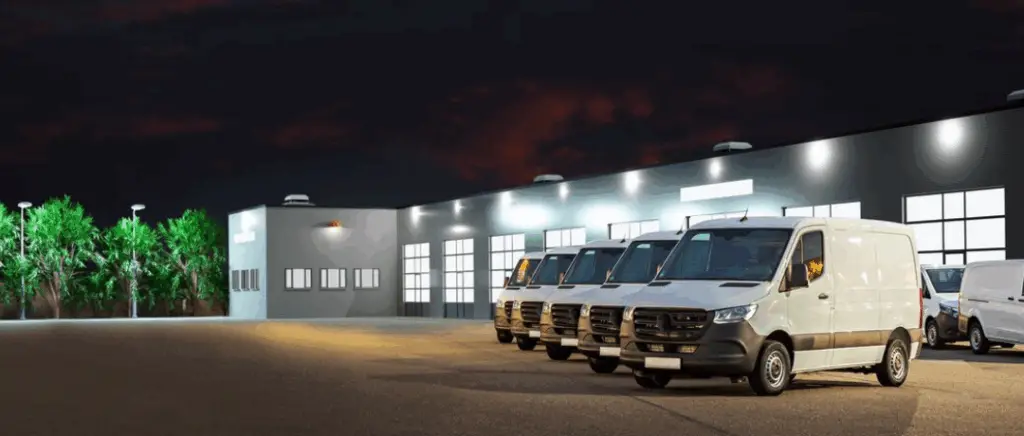
A commercial vehicle rental company installed six electric vehicles but only equipped the depot with a single 22 kW terminal, thinking that this would be sufficient for all the vehicles. However, every morning, only two vehicles were fully recharged, while the others had to wait, causing delays and organisational conflicts.
Based on a detailed analysis of usage, another company opted to install several reinforced sockets and two fast charging points, enabling each vehicle to be recharged according to a schedule adapted to the actual rate of use.
Mistake No. 4: Underestimating support for drivers and teams
When switching to electric vehicles, a B2B service company did not inform its drivers of the best way to manage their range or of the points to watch out for when recharging. Some drivers overused air conditioning or fast charging, resulting in a loss of range and premature battery wear.
Another company, on the other hand, organised eco-driving and terminal management workshops, which helped to reduce electricity consumption by 15% and avoid unpleasant surprises on a daily basis.
Mistake no. 5: Not tracking the right performance indicators
One delivery company focused simply on recording annual mileage, without monitoring the time spent recharging, the condition of the batteries or driving habits. As a result, it failed to identify in time that some vehicles were losing range through intensive use or bad habits.
After installing management software connected to the vehicles, it has been able to optimise its rounds, better identify the need for replacement vehicles and improve the quality of its service. batteryand save on total operating costs.
How can you avoid these mistakes and make your transition a success?
To maximise your chances of success and avoid all the mistakes mentioned above, it is essential to adopt a global and structured approach encompassing all the links in the chain:
- Carry out an audit and tailor your project to your real needs.Analysis: analyse the usual routes, the frequency of journeys, the seasonality and the type of missions. For example, if the analysis shows that 80 % of journeys are under 50 km, choose models with medium range rather than unsuitable premium vehicles.
- Select vehicles based on actual useFor an urban maintenance site, choose vans that offer adequate space and sufficient range for the daily round, while checking that there is a fast recharging option to deal with unforeseen events.
- Equip yourself with a wide range of recharging infrastructures: install terminals at your sites In addition to the main ones, offer home recharging for employees who work while roaming, and identify public network access solutions for long-distance travel. Many companies are making a successful transition by combining these three solutions, avoiding bottlenecks at peak times.
- Train and involve your staffFor example, set up support sessions, let the technicians test the vehicles and organise workshops on range management, eco-driving and optimum use of the charging points. This will reduce the fear of change, help everyone to master the tools and improve overall internal satisfaction.
- Implement a digital monitoring tool and track key indicatorsUse fleet management software to monitor the condition of batteries, anticipate maintenance, plan recharging at off-peak times (which can save up to 20 % on the electricity bill) and react quickly to any defect or drop in performance.
- Anticipate the future with scalable infrastructuresKeep abreast of technological and regulatory developments: for example, choose charging points that can be easily adapted to future growth or fleet expansion, to avoid repeated investment in future growth or changes to the vehicle mix.
- Stay in touch with the market and technologiesKeep a regular watch on regulations, new subsidies, advances in batteries and recharging, and adapt your choices so that you're never left behind: some companies systematically include an annual review of their fleet so that they can redirect their strategy if necessary.
Comparative table of fleet management tools: Beev vs. other market solutions
| Criteria | Beev Fleet Manager | Other solutions on the market |
|---|---|---|
| Cost of access | 100% free, with no hidden charges | Pay-as-you-go, generally by monthly or annual subscription, with additional costs for certain options |
| Fleet management | Centralised management of vehicles, drivers and charging points, suitable for companies of all sizes | Centralised management, often suitable for large fleets, sometimes less intuitive for smaller organisations |
| Energy transition | Personalised support for electrification, monitoring of CO₂ emissions, calculation of TCO for EVs | Variable support for electric vehicles, often designed for combustion or mixed fleets |
| Main features | Real-time monitoring, events calendar, document centralisation, customised reports, cost and TCO optimisation | GPS tracking, expense management, maintenance, customisable alerts, advanced reporting depending on solution |
| Ease of use | Intuitive platform, SaaS access from computer or mobile, rapid installation | Interfaces can be complex, requiring training or further integration |
| Support | Expert support for the acquisition of EVs, the installation of charging points, document management and the energy transition | Support varies between publishers, often limited to technical support |
| Adaptability | Suitable for VSEs, SMEs, ETIs and large groups, scalable at no extra cost | Often modular solutions, mainly for medium-sized and large companies |
Beev Fleet Manager is free, easy to use and dedicated to supporting the energy transition, while offering advanced management and monitoring functions.TCO optimisation for all types of fleet.
Other solutions on the market offer powerful, modular tools, but generally involve higher access costs, greater integration complexity and less specialisation in fleet electrification.
Conclusion
Opt for a electric fleetMaking the right choice for the future. With the right preparation, a clear strategy and the right tools, this transition becomes a real opportunity to develop your fleet management while keeping your costs under control.
Don't let the challenges hold you back: every step you take towards going electric strengthens your position in the face of regulatory and societal challenges, while offering your teams more modern, fun-to-drive vehicles. The future of mobility is within your grasp! Beev can support you at every stage of this transition, offering you personalised monitoring, solutions tailored to your fleet and a comprehensive range of services. fleet manager tool to simplify your day-to-day management.