





How will the Nissan Wave perform against its electric rivals in 2027?
Entering an increasingly competitive market, the Nissan Wave 2027 aims not only to seduce with its attractive price, but also to convince with its well-balanced performance. With 300 km ofautonomy WLTP, it's in the upper mid-range of the affordable electric city car segment, offering mobility that's equally suited to journeys in and around town.
- Renault Twingo electric (2027): announced at a similar price (less than €20,000) but with a slightly shorter range, the Twingo will target purely urban customers, while the Wave extends its range.
- Restyled Dacia Spring: still the lowest price champion, at around €17,000, but with more limited performance (250 km). The Wave stands out for its greater endurance and more comprehensive equipment.
- Peugeot e-208 and Renault 5 E-Tech Nissan Wave: these models offer greater range (up to 400 km), but are still significantly more expensive (€23,000 to €27,000). This makes the Nissan Wave an economical and pragmatic alternative.
All in all, the Nissan Wave sets a new standard for value for money in the electric city car category. It offers a competitive range, proven technology and affordable pricing that should appeal to both first-time electric car buyers and families looking for a second zero-emission car.
What platform is the Nissan Wave based on?
The new Nissan Wave 2027 is based on an architecture specially designed for 100% electric vehicles in the city car segment. Nissan has chosen to capitalise on a modern platform, optimised for both energy efficiency and reduced production costs, to make this city car affordable at under €20,000.
In concrete terms, the Nissan Wave is based on :
- A modular base dedicated to electric vehicles: designed to accommodate a range of compact bodystyles, it optimises interior space thanks to a flat floor and a wheelbase that is longer for its category.
- A pack battery integrated into the structure: housed under the floor, it lowers the centre of gravity to improve roadholding and free up space in the passenger compartment.
- These elements are shared with the Renault-Nissan-Mitsubishi Alliance, helping to reduce costs and ensure large-scale production, a key factor in maintaining an attractive price.
- An urban-oriented design: short turning radius, lightweight chassis and optimised design aerodynamics guarantee excellent manoeuvrability in city centres.
This platform illustrates Nissan's commitment to democratising electric mobility: offering an affordable, versatile vehicle with technology derived from superior models, but adapted to the specific needs of urban drivers.
How much range does the Nissan Wave offer?
With the Wave, Nissan is clearly responding to a strong market demand: to offer a small electric 100% city car at a competitive price, without sacrificing range. Officially scheduled for 2027, the Nissan Wave promises a compact but optimised battery, offering up to 300 km of range in the WLTP combined cycle. A performance that places this model in the upper mid-range of the electric minicar segment.
In practical terms, the Wave is aimed at urban and suburban customers, for whom autonomy remains a key criterion. Here are the key points to remember:
- 300 km WLTP: enough range to cover most daily journeys (home-work, shopping, leisure outings).
- Fast charging: thanks to its DC charging compatibility, you can regain around 80% of battery in less than 30 minutes on a single charge. fast terminal.
- Easy home recharging: from a reinforced socket or wallboxThe Wave can be recharged quietly at night, guaranteeing full autonomy every morning.
- Software optimisation: Nissan is planning intelligent energy management to limit consumption in town and extend the actual range.
In short, the Nissan Wave 2027 combines an attractive price with a competitive range - a rare equation in the electric vehicle market. With a claimed range of 300 km, it ticks all the essential boxes to appeal to urban drivers keen to reduce their fuel bills and their carbon footprint.
Will the Nissan Wave really be available for under €20,000?
While Nissan is announcing an electric city car below the psychological threshold of €20,000, the question remains as to whether this price will really be affordable in Europe from 2027. A number of factors will play a part in determining the final price:
- Nissan's strategic positioning: the Wave should offer a more affordable alternative to the Nissan Leaf, while competing with entry-level models such as the Renault 5 E-Tech and the Citroën ë-C3.
- Government subsidies: in France, the environmental bonus could bring the entry price below the symbolic €20,000 mark, but without subsidies, the list price could be closer to €22,000 to €23,000.
- The battery and its capacity of around 40 kWh: providing up to 300 km of range at such a competitive price implies maximum optimisation of production costs. Nissan will probably rely on a shared platform and proven technologies.
- The appeal version: as is often the case, the most affordable trim level will carry this attractive price tag. We'll have to check what it actually includes in terms of equipment (fast charging, driving aids, connectivity, etc.).
In short, the price of the Nissan Wave at less than €20,000 is still conceivable, but will depend on public subsidies and Nissan's sales strategy on the European market. For consumers, this is a tempting promise in a context where very few electric city cars are positioned in such a competitive segment.
What are the differences between the Nissan Wave, the Renault Twingo and the Dacia Spring of 2027?
| Model (2027) | Estimated price | Claimed autonomy | Positioning / Strengths |
|---|---|---|---|
| Nissan Wave | < 20 000 € | ≈ 300 km | Modern design, connected equipment, advanced security, aimed at young city dwellers and first-time buyers. |
| Renault Twingo E-Tech | ≈ 22 000 € | ≈ 250 km | Versatile city car, energy efficiency, reinforced recharging network thanks to Renault partnerships. |
| Dacia Spring (2nd gen.) | < 17 000 € | ≈ 220-230 km | The most affordable model, with a good price/urban mobility ratio and basic equipment. |
What technologies does the Nissan Wave carry?
The Nissan Wave 2027 is more than just an affordable electric city car: it also boasts a well-thought-out arsenal of technology to appeal to a connected, safety-conscious urban clientele. Nissan is continuing the strategy already initiated with the Leaf and Ariya, by democratising solutions previously reserved for the higher segments:
- Next-generation multimedia system: 10-inch touchscreen interface, wireless Apple CarPlay and Android Auto compatible, with over-the-air updates to keep the vehicle always up-to-date.
- ProPilot Assist driving aids: adaptive cruise control, lane keeping and assistance in traffic jams, guaranteeing comfort on urban and suburban journeys.
- Enhanced safety: automatic emergency braking with pedestrian and cyclist detection, blind spot monitoring and 360° camera to make city parking easier.
- Advanced connectivity: dedicated mobile application for monitoring range, programming night-time charging and thermal preconditioning of the passenger compartment.
- Energy efficiency: heat pump as standard to optimise range in winter and intelligent battery management, helping to maintain the promised 300 km in most situations.
Positioned as an accessible yet high-tech small electric car, the Nissan Wave 2027 aims to appeal to a generation of drivers looking for an agile, reliable and connected vehicle, without compromising on safety or practicality.
For individuals and businesses
What design and equipment can you expect from the future Nissan Wave?
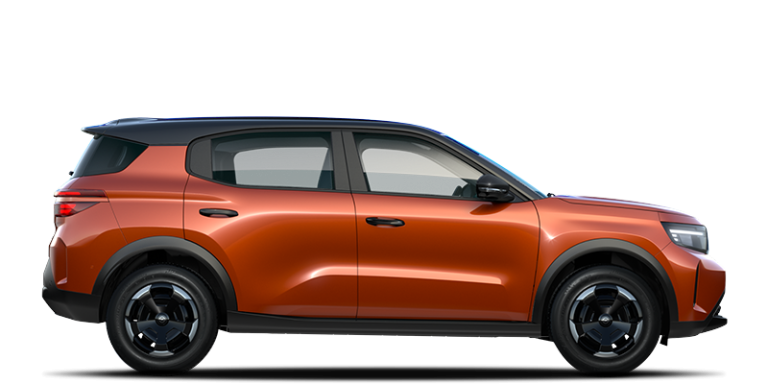
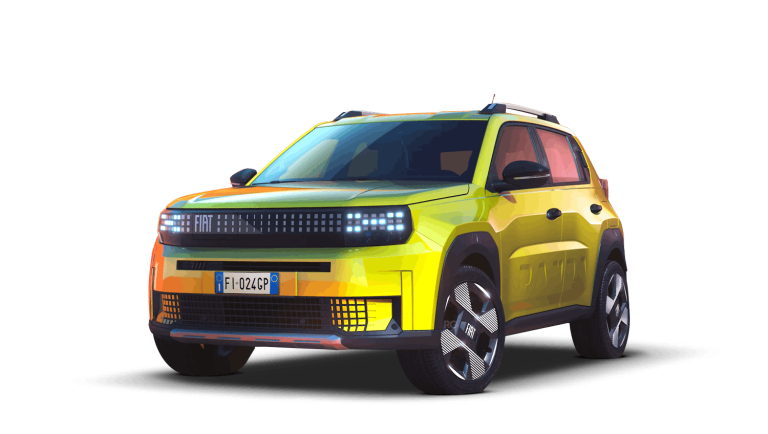
The Nissan Wave 2027 is set to be a compact, affordable electric city car, without compromising on style or on-board technology. Inspired by the latest lines in the Nissan range, it is set to adopt a modern, dynamic look, designed to appeal to urban customers looking for a vehicle that is both practical and attractive.
In terms of design, you can expect :
- A compact, aerodynamic silhouette, optimised to reduce energy consumption and improve range.
- The front end features a full radiator grille and tapering LED headlamps, the visual signature of the brand's electric models.
- A palette of bright, two-tone colours designed to appeal to young drivers and city dwellers looking to stand out from the crowd.
In terms of equipment, Nissan should focus on accessibility without sacrificing technology:
- A central touchscreen compatible with Apple CarPlay and Android Auto.
- Latest-generation driving aids (emergency braking, lane keeping, adaptive cruise control).
- Full on-board connectivity, enabling certain vehicle functions to be controlled via a mobile application.
- Comfort-oriented options (hands-free access, climate control, heated seats on top trim levels).
With the Wave, Nissan is clearly aiming to offer an electric city car with an attractive design and modern equipment that can compete with established rivals such as the Renault 5 E-Tech and the Citroën ë-C3.
Does the Nissan Wave mark a new strategic positioning for Nissan?
With the Nissan Wave, the Japanese manufacturer seems to be making a real strategic shift in the urban electric vehicle segment. This affordable model, priced at under €20,000, illustrates a clear desire to make zero-emission mobility accessible to as many people as possible, without sacrificing range or versatility.
Several signals confirm this repositioning:
- Democratising electric cars: by launching the Wave for less than the symbolic €20,000 price tag, Nissan is targeting a broader customer base, particularly those who are new to electric cars.
- Offensive strategy in Europe: at a time when regulations are tightening and electric city cars are becoming a must-have, Nissan is focusing on volume and competitiveness in a market dominated by Chinese brands.
- Reinforcing its urban DNA: the spiritual heir to the Micra, the Wave embodies Nissan's return to the small city car segment, with a more assertive identity and 100% electric power.
- A mission of image and transition: with a claimed range of 300 km, the Wave is positioned as a reassuring model, designed to show that electric cars are no longer the preserve of the premium segment.
In short, the Nissan Wave 2027 is not just a new electric city car: it's a symbol of Nissan's strategic repositioning, adapting its range to the constraints of the European market while meeting growing expectations for accessibility and simplicity.
What are the release and sales dates for the Nissan Wave?
The Nissan Wave, the new electric city car eagerly awaited for 2027, is already attracting a great deal of interest thanks to its attractive price positioning and competitive range.
Here are the key points to bear in mind when it comes to release and sales dates:
- Official presentation: Nissan plans to unveil the Wave in the first half of 2027, with a presentation at a major event dedicated to electric vehicles, reinforcing its position in the affordable city car segment.
- Market launch in Europe: The Nissan Wave is scheduled to go on sale in the second half of 2027, with gradual availability in several European markets, initially focusing on countries with high demand for electric mobility.
- Dealer availability: The first units should be available in dealerships a few weeks after the official launch, with a pre-order campaign enabling customers to reserve their model for less than €20,000.
- Delivery date to the general public: Deliveries to private customers will begin at the end of 2027, offering a practical and economical electric alternative with a user-friendly range of 300 km for daily urban and suburban use.
Make your energy transition now, with a range of new 100 % electric vehicles available for leasing from Beev!
Technical specifications of the Nissan Wave
| Features | Details announced / expected |
|---|---|
| Prices | < €20,000 (excluding grants, appeal version) |
| WLTP range | ≈ 300 km (battery ≈ 40 kWh) |
| Fast recharge | 80% in < 30 minutes on DC terminal |
| Domestic recharging | Compatible with reinforced socket / wallbox (night-time recharging) |
| Platform | Modular architecture dedicated to electric vehicles, from the Renault-Nissan-Mitsubishi Alliance |
| Design | Compact city car, full radiator grille, tapered LED headlamps, two-tone options |
| Technological equipment | 10" touch screen, Apple CarPlay / Android Auto wireless, OTA updates |
| Driving aids | ProPilot Assist (adaptive cruise control, lane keeping, traffic jam assistance) |
| Security | Emergency braking with pedestrian/cyclist detection, 360° camera, blind spot monitoring |
| Comfort & connectivity | Dedicated mobile application (charging, autonomy, preconditioning), heat pump as standard |
| Positioning | Urban and suburban electric city car, designed for first-time buyers and families with 2ᵉ cars. |
| Key dates | Official presentation: 1st half of 2027 - European launch: 2nd half of 2027 - Deliveries: end of 2027 |
Conclusion
The Nissan Wave 2027 is set to revolutionise the affordable electric city car segment. With a price announced at under €20,000, a competitive range of 300 km and modern equipment inherited from the higher segments, it is positioned as a credible alternative to the future Renault Twingo E-Tech and Dacia Spring, but also as a more accessible choice than models such as the Peugeot e-208 or the Renault 5 E-Tech.
By combining attractive design, connected technology, enhanced safety and an aggressive pricing strategy, Nissan has made the Wave not only a practical and versatile electric city car, but also a symbol of the democratisation of zero-emission mobility in Europe.
You would like toto electric?
Beev offers multi-brand 100% electric vehicles at the best prices, as well as recharging solutions.