










Social leasing: when and how can you take advantage of the new offers in September 2025?
From September 2025, the social leasing for electric cars is set to receive a further boost thanks to the extension of the government scheme. The aim is to make electric mobility more accessible to modest and middle-class households. Here are the key points:
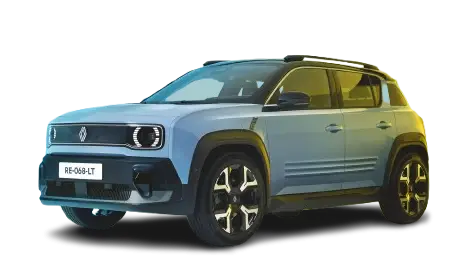
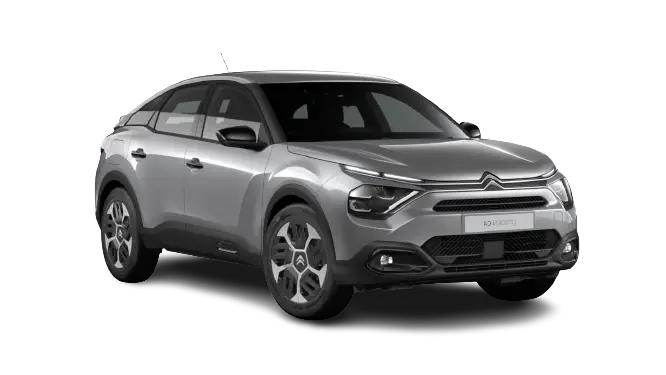
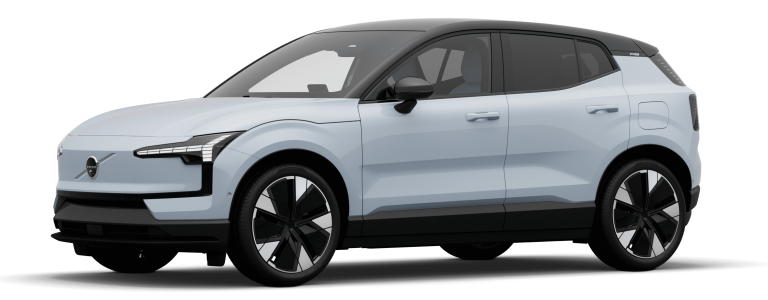
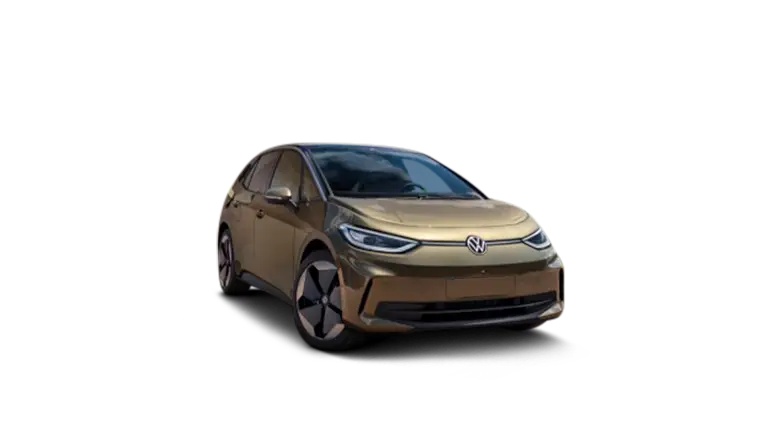
- Opening of new offers From September onwards, a number of partner manufacturers (Renault, Peugeot, Citroën, as well as a number of foreign players) will be offering electric models eligible for social leasing.
- Capped rents : monthly repayments will continue to be controlled, with a stated objective of less than €150 per monthwith no initial outlay.
- Revised eligibility criteria the scheme will no longer apply only to the most modest households; it will be extended to include intermediate income and long-distance drivers forced by their professional activity.
- Simplified procedure The new system: applications will be made directly online via a unified government portal, enabling you to compare offers and make your application in just a few clicks.
- Duration and conditions contracts generally extend over 36 to 48 monthswith basic maintenance often included in the package.
Ecological bonus abolished: what is the new "electric vehicle incentive"?
Since 1 July 2025, the environmental bonus has been replaced by the "Helping hand for private electric vehiclesfunded by Energy Savings Certificates (CEE). The aim of this change is to step up support for the purchase or leasing of new electric vehicles, while adapting funding to the current budgetary challenges.
Conditions of eligibility :
To qualify for this aid, a number of criteria must be met:
- Type of vehicle Category M1 vehicle with a gross vehicle weight rating of 3.5 tonnes or less.
- Type of energy Electricity: exclusive use of electricity as a source of energy.
- Date of operation :
- Ordered or signed before 1 January 2026.
- Invoicing or start of rental before 30 June 2026.
- Ordered or signed before 1 January 2026.
- Technical specifications :
- Acquisition cost less than or equal to €47,000 including VAT, including, if necessary, the cost of acquiring or leasing the battery.
- Mass in running order less than 2,400 kg.
- Environmental score of 60 points or more.
- Acquisition cost less than or equal to €47,000 including VAT, including, if necessary, the cost of acquiring or leasing the battery.
Amount of aid :
The amount of assistance varies according to the household's reference tax income (RFR):
- 4 200 € for low-income households or those in fuel poverty.
- 3 100 € for other households
How to apply:
The procedures for obtaining this aid are as follows:
- Choice of professional For more information, contact a company that has signed the "Coup de pouce véhicules particuliers électriques" commitment charter.
- Provision of supporting documents Please provide the required documents, such as your tax assessment, quotation or order form, and proof of identity.
- Request for premium Apply for the bonus from the company you have chosen, which will take care of the formalities with a partner energy supplier.
This aid can be deducted directly from the purchase or hire price of the vehicle, depending on the terms and conditions offered by the professional.
Financial aid: who can get up to €4,200 in 2025 for buying an electric vehicle?
In 2025, financial assistance for the purchase of an electric car will be stepped up, with a ceiling of up to €4,200 - an essential lever for accelerating the energy transition. These amounts, which are often cumulative, are targeted primarily at low-income households to encourage access to clean mobility.
Eligibility criteria have been reviewed to bring aid more into line with economic and ecological realities:
- Maximum assistance: up to €4,200 for the purchase of a new electric vehicle, including the increased ecological bonus and the conversion premium.
- Income criteria: these grants are aimed primarily at households whose reference tax income does not exceed certain thresholds, which vary according to the composition of the household.
- Types of vehicle concerned: new electric cars with a maximum purchase price before tax (often under €45,000), as well as certain plug-in hybrid models eligible under certain conditions.
- Can be combined: the conversion premium can be combined with the ecological bonus to multiply the financial impact, particularly for those who are giving up an old polluting vehicle.
- Regional schemes: several regions are offering additional grants of between €500 and €2,000 to boost local support for electromobility.
As a result, well-informed 2025 buyers can benefit from significant financial support to reduce the overall cost of their electric car, making electric cars more accessible to a wider public. To make the most of this advantage, it is advisable to consult the precise terms and conditions as soon as you start planning your purchase.
Eco-score: which electric cars are eligible for the new incentives?
At the start of the 2025 school year, the eco-score system, a key driver of incentives for the purchase of electric cars, will be evolving to better target genuinely virtuous models. This new evaluation grid aims to prioritise vehicles with a low environmental impact, thereby renewing the criteria for awarding financial incentives.
The rules you need to know to qualify for the new grants are now as follows:
- Reinforced eligibility criteria: only electric vehicles with an eco-score of more than 8/10 will be eligible for the maximum bonus, guaranteeing the best possible environmental performance. carbon footprint reduced over the entire life cycle (manufacture, use, recycling).
- Preferred models: compact, urban electric cars with the latest-generation batteries, making them more fuel-efficient. autonomy while limiting the ecological footprint, will be particularly highlighted.
- Partial exclusion: certain models that are heavy or consume a lot of energy during the production phase will receive less support, to encourage a more responsible transition.
- Adjusted bonus ceilings: the amount of the bonuses will be modulated according to the eco-score, with a decreasing bonus for vehicles below the threshold, thus encouraging the purchase of more ecologically efficient cars.
- Accessibility in urban areas: an additional bonus will be awarded to vehicles that comply with sustainable mobility standards in major conurbations, supporting local policies aimed at reducing pollution.
Home recharging: what will the new off-peak times change from November?
From 1 November 2025, the off-peak system for home charging of electric vehicles will undergo a major overhaul, with the introduction of new, more flexible and economical time slots. The aim of this reform is to encourage motorists to recharge their electric cars outside peak consumption periods, in order to reduce pressure on the electricity grid while maximising the use of renewable energies.
The main new features you need to know about :
- Extension of time slots: traditional off-peak hours (generally 8 hours) will now be extended to between 11pm and 7am, and a new off-peak time slot will be added during the day, from 11am to 5pm, to benefit solar photovoltaic production.
- New "super off-peak hours": some suppliers will offer ultra-low rates between 2am and 6am, with kWh up to 50% cheaper than the normal rate, making it easier to recharge at night even more cheaply.
- Price optimisation with the Linky meter: intelligent management of recharging will be facilitated by communicating meters, enabling recharging to be scheduled automatically at the cheapest times.
- Impact on electricity bills: although this reform will encourage lower-cost charging, it is likely to increase bills for users who are unable to adapt their consumption to the new time slots, particularly those who charge at peak times only.
- Diversification of offers: EDF, TotalEnergies and several alternative suppliers are launching specific packages tailored to the new schedules, with simplified procedures for subscribing to these tariffs.
Make your energy transition now, with a range of new 100 % electric vehicles available for leasing from Beev!
Public charging points: how many are now available in France?
In 2025, France will be one of Europe's leaders in electric vehicle charging infrastructure, with a rapidly expanding network. On 30 April 2025, the country had 168,055 public charging points, an impressive increase of +30% over one year. This increase reflects the sustained efforts of public authorities, local authorities and private operators to support the growing popularity of electric mobility.
Key figures to remember:
- 3,222 new stations opened since the beginning of 2025, corresponding to 13,361 additional charge points.
- Technical availability rate stabilised at 93%, guaranteeing maximum reliability for charging stations for users.
- A ratio of 249 recharging points per 100,000 inhabitants, making France one of Europe's best-equipped countries.
- The government has set a target of 400,000 public charging points by 2030, including 50,000 fast or ultra-fast charging points.
- Planned improvements in pricing transparency, accessibility and ease of use to enhance the user experience.
This dynamic approach illustrates the desire to respond effectively to the growing need for electric car charging, whether for everyday use or long-distance journeys, while preparing France for the massive electrification of the car fleet in the years to come.
LEZs: will low-emission zones disappear or be reinforced in 2025?
The year 2025 marks a decisive turning point for the Low Emission Zones (LEZ) in France, between debates on their abolition and the government's desire to tighten restrictions to improve air quality. In May 2025, the French National Assembly voted in favour of an amendment to repeal the national EPZ scheme, but this decision is currently on hold due to a referral to the Constitutional Council. The official timetable therefore maintains the gradual application of restrictions, with public health as a priority.
There are several key elements to this complex issue and its potential impact:
- Extension of the EPZs: On 1 January 2025, the EPZ will apply in 42 French conurbations, including Paris, Lyon, Grenoble and several major regional cities. The scope of the EPZ is growing, with more than 77 municipalities affected in some metropolitan areas.
- Tougher Crit'Air 3 restrictions: Diesel vehicles registered before 2011 and petrol vehicles registered before 2006 (classified as Crit'Air 3) are now banned from driving and parking in these zones, unless specific exemptions are granted.
- Educational period and checks: In 2025, an information phase will be introduced to help drivers make the transition, but €68 fines will gradually be applied in the event of non-compliance.
- Debate on abolition: The proposal to abolish the EPZs addresses social concerns linked to the cost of renewing vehicles for certain households, but runs counter to the urgent environmental imperatives of combating air pollution.
- Incentives and support: Cities are stepping up financial support for the purchase or hire of clean vehicles and information services to encourage soft and sustainable mobility.
Ecological Malus What can drivers expect in 2026?
From January 2026, the ecological penalty is changing radically and will now also affect electric vehicles, putting an end to their historic exemption from the weight-related tax. This reform is part of the government's drive to strengthen environmental taxation to encourage more responsible mobility.
Drivers should bear in mind several major changes:
- Extension of the weight-based penalty for electric cars: from 2.1 tonnes, new electric cars will be taxed, with a 600 kg allowance for the weight of the batteries, but a penalty that can reach several thousand euros for heavy models such as electric SUVs.
- Threshold lowered to 1,500 kg for the application of the weight-based penalty to all vehicles, with a progressive penalty between 1,500 and 2,000 kg (€10/kg) and a higher rate above 2,000 kg (€30/kg).
- Reinforcement of the CO₂ penalty: the WLTP emissions threshold at which the penalty starts will be lowered to 108 g/km, with a scale of up to €80,000 for the most polluting vehicles.
- Practical consequences: buyers of large electric vehicles must anticipate a rise in purchase costs, which could lead them to opt for more compact and lighter models.
- Impact on the second-hand market: retroactive taxation could apply, affecting vehicles registered after 2015 that were not initially subject to the malus.
This new tax situation is an invitation to think strategically before buying a new or used vehicle, with an increased focus on low weight and low emissions, even in the world of electric vehicles.
Summary table: what's new for electric car drivers in 2025?
| Theme | What's new in 2025-2026 | Main impact |
|---|---|---|
| Social leasing | New offers, rents < €150/month, eligible for intermediate incomes | More accessible electric mobility |
| EV Help | Replaces the ecological bonus, aid of €3,100 to €4,200 depending on income | Direct reduction in purchase/rental costs |
| Financial aid | Up to €4,200, can be combined with the conversion allowance | Facilitates the purchase of new EVs |
| Eco-score | Vehicles >8/10 favoured, bonus modulated according to score | Encouragement to choose greener EVs |
| Home recharging | Extended off-peak hours, super off-peak hours | Cheaper recharging if adapted to timetables |
| Public terminals | 168,055 points (+30%), target 400,000 by 2030 | Easy access to infrastructure |
| EPZ | Tightened Crit'Air 3 restrictions, zones maintained | Encourages the use of EVs or clean vehicles |
| Ecological Malus | Weight penalty for EV >2.1 t, lower CO₂ penalty | Higher costs for heavy EVs, incentives for compact models |
Conclusion
To sum up, the start of the 2025 school year will see a major overhaul of the regulatory and financial framework for electric cars in France. The abolition of the eco-bonus and the introduction of the "Coup de pouce véhicules électriques" will redefine purchase subsidies, while the extended social leasing scheme will make electric mobility more accessible to middle-income households. The eco-score system, new home recharging timescales and the continued expansion of public charging points are further enhancing the sustainability and efficiency of everyday use.
At the same time, the EPZs and the ecological penalty are evolving to reconcile the energy transition with fleet regulation.
These combined measures are designed to encourage more responsible and accessible choices, while preparing France for a massive and sustainable electrification of transport.
You would like toto electric?
Beev offers multi-brand 100% electric vehicles at the best prices, as well as recharging solutions.