












General trends in the fleet market in September 2025

The French car market showed measured growth in September 2025, with 140,354 new passenger car registrations (+1 1Q3 compared with September 2024). But behind this apparent stability lies a structural transformation.
- Sales to individuals rose by 7 % and now account for 50 % of the market.
- Sales to fleets fell by 7 % in volume terms... but this is misleading. In reality, this overall decline reflects a massive switch from combustion engines to electric and hybrid vehicles.
The most striking figure of the month: +44 % growth in electric fleet registrations in one month. And over the first eight months of 2025, the increase is +47 % compared with 2024.
Economic and regulatory context: why companies are electrifying
This transition is not happening by chance. It is the result of a cocktail of factors that are forcing fleet managers to review their trade-offs:
- LOM law and VFE quotas (low-emission vehicles): progressive obligation to include electric vehicles in fleets of more than 100 vehicles.
- Tax advantages These include VAT at €0, accelerated depreciation and recovery of VAT on electricity.
- EPZ (low emission zones): Lyon, Marseille, Paris, Toulouse... By 2027, Crit'Air 2 and 3 will be banned.
- CSR and employer image: employees and customers now expect companies to demonstrate low-carbon mobility.
What is TCO?
TCO (Total Cost of Ownership) refers to the overall cost of a vehicle over its lifetime: purchase/LLD, fuel, maintenance, insurance, tax, residual value. It is on this calculation that electric cars are now crushing combustion engines.
Share of passenger cars vs. light commercial vehicles
There is a major distinction between passenger cars and light commercial vehicles (LCVs) in this energy transition.
- Passenger cars electrification is in full swing. Private cars in business fleets are massively following the trend towards alternative powertrains, with a marked predominance for hybrid and electric vehicles.
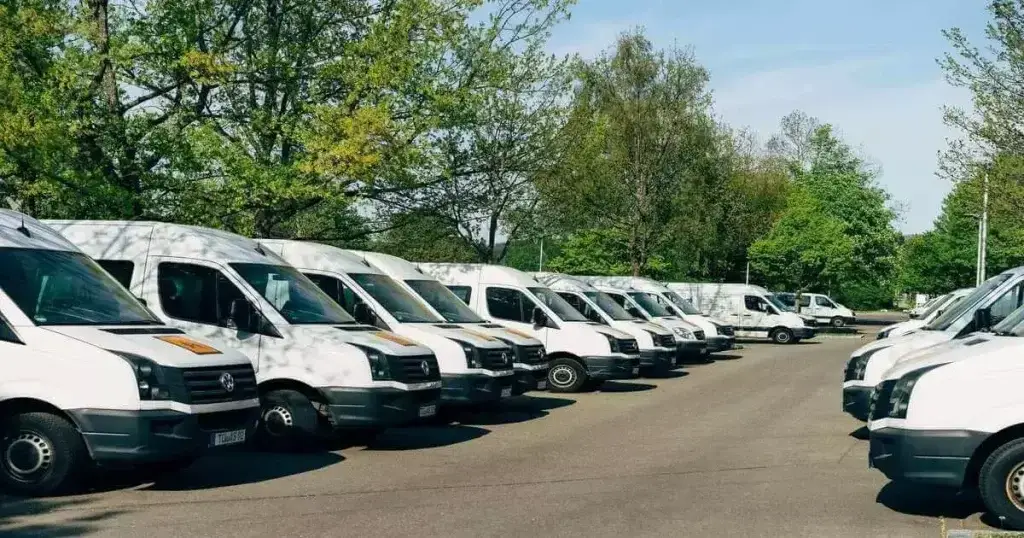
- Commercial vehicles The picture is radically different. According to AAA Data, three quarters of light commercial vehicles are still registered as diesel. There are a number of technical reasons for this resistance: autonomy still limited, sometimes insufficient payload, and recharge times incompatible with certain intensive uses.
The transition is well under way for company cars, but commercial vehicles are still waiting for a real technological game changer.
Classification by engine

Breakdown of registrations by energy source
September 2025 will see a major shift in the energy mix of business fleets. AAA Data confirms that the business car landscape has never been so diverse.
Electrified powertrains now dominate registrations, with 53 % market share (all technologies combined: MHEV, HEV, PHEV).
Interesting feature: the three main families of electrification - 100 % electrics, conventional hybrids (HEV) and microhybrids (MHEV) - are almost equally distributed, each accounting for 21 % of the fleet market.. A balance that illustrates the diversity of strategies chosen by managers :
- some are accelerating towards 100 % electric,
- others opt for hybrids to cover mixed needs,
- and some are still opting for micro-hybrids as an intermediate step towards full electrification.
Growth (or decline) of diesel and petrol
The verdict is clear: combustion engines are in massive decline among commercial fleets.
Diesel and petrol registrations fell by 46 % and 45 % compared with September 2024. This momentum signals the end of the cycle for these engines.
For decades, diesel was the mainstay of business fleets, appreciated for its fuel efficiency and residual value. Today, however, it is nothing more than a risky bet for fleet managers:
- Increasing restrictions in Low Emission Zones (LEZ),
- Increasingly unfavourable tax treatment (VAT, depreciation),
- High maintenance costs,
- Uncertain residual value on the second-hand market.
Results With only 8 % of new registrations, diesel is no longer a credible option for the future. For a fleet manager, integrating a diesel in 2025 means anticipating difficulties with resale, traffic and controlling TCO.
For its part, thepetrol withstands 17 % market share, but its trajectory is just as fragile. Certainly, some managers continue to see it as a temporary solution for urban or peri-urban use, but this strategy is rapidly showing its limits:
- Higher consumption,
- Volatility of prices at the pump,
- No permanent access to the EPZs,
- Weakened CSR image among employees and partners.
Conclusion Petrol and diesel are no longer strategic pillars. They are becoming niche solutions, used only for specific needs or pending a switch to electric power.
On the other side of the spectrum, Hybrids and electric cars continue to gain momentum.
Dynamics of hybrids (HEV, PHEV) in fleets
With more than one in two registrations, hybrids are now at the heart of the drive to make fleets greener. For many managers, they represent a pragmatic transition solution, reducing emissions and fuel costs without disrupting day-to-day driving habits.
- Micro-hybrids (MHEV) With 21 %s on the market, they are attractive because of their low price and ease of use (no recharging constraints). Fiscally attractive, they are a gateway to electrification, but they remain a transitional solution, more symbolic than structural.
- Classic hybrids (HEV) Also 21 % on the market, popularised by Toyota, they offer electrification without the need for recharging. Their advantage is clear in urban and suburban use, where they reduce fuel consumption by 20 to 30 % compared with internal combustion engines.
- Plug-in hybrids (PHEV) Although precise data is lacking for September, they still play a major role. With 60 to 100 km of electric range, they can cover 80 % of daily journeys in 100 % electric, while retaining the safety of internal combustion for long journeys.
For fleet managers, hybrids remain a reassuring compromise: meeting the greening targets imposed by the LOM law, while retaining flexibility. But beware: the current tax advantages of hybrids will not last forever. In the medium term, only the electric 100 % will remain truly competitive and in line with regulatory constraints.
You would like toto electric?
Beev offers multi-brand 100% electric vehicles at the best prices, as well as recharging solutions.
Focus on the electrification of professional fleets
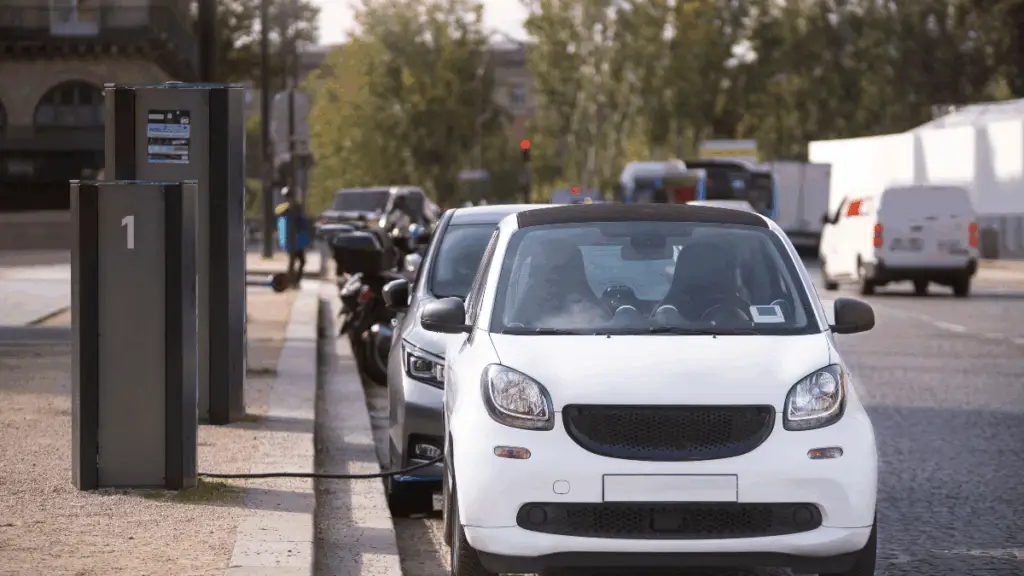
The 100 % electric vehicle continues to grow in popularity, accounting for 21 % of fleet registrations in September 2025. A figure that reflects not only mass adoption, but also the growing maturity of the market.
Fleet managers who are taking the plunge today are doing so for a number of reasons:
- Unbeatable TCO energy costs divided by 3, maintenance reduced by 30 to 40 %.
- Favourable tax treatment : full depreciation, exemption from VAT.
- Regulatory compliance Guaranteed access to EPZs and anticipation of greening obligations.
- Image value alignment with CSR objectives and employee expectations.
Let's take an example that will speak to all managers A compact saloon that covers 30,000 km/year over 4 years.
Electric vehicles :
- Lease: €420/month
- Energy: €150/month (mixed charging)
- Maintenance: €40/month
- Insurance: €70/month
TOTAL: €680/month | €32,640 over 4 years
Equivalent diesel vehicle :
- Lease: €380/month
- Fuel: €280/month
- Maintenance: €85/month
- Insurance: €75/month
- TVS: €25/month
TOTAL: €845/month | €40,560 over 4 years
The verdict: savings of €7,920 per vehicle over 4 years. For a fleet of 50 vehicles, this represents savings of almost €400,000. Enough to finance its entire recharging infrastructure !
Major groups lead the way
The pioneering companies that electrified their fleets from 2022-2023 are now reaping the rewards:
- 30 to 40 % reduction in energy costs
- Maintenance halved
- A stronger brand image
ZFE compliance guaranteed for the next 10 yearsSMEs, which have long been cautious, are now following suit. Electric leasing offers have become ultra-competitive, with monthly payments sometimes lower than diesel equivalents.
Top brands and models in September 2025
Leading manufacturers in fleet registrations
In September, the fleet market confirmed the dominance of European volume manufacturers in terms of registrations, but with a notable breakthrough by Tesla and BYD.
- Renault is the undisputed champion, with no fewer than 3 models in the top 3 of the various categories: Scénic E-Tech electric, Symbioz and Clio hybrid. The brand benefits from its expertise in electric vehicles (pioneered by the Zoe) and its nationwide service network.
- Peugeot reigns supreme among micro-hybrids, with a spectacular hat-trick of 3008, 2008 and 308 models. It is winning over fleets with its polished finishes, accessible premium image and particularly competitive TCO.
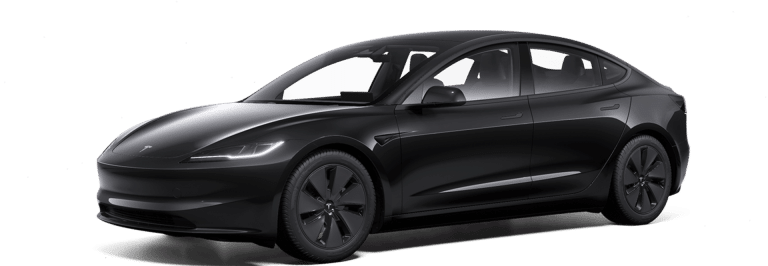
- Tesla is an exception with its Model Y, which has climbed to 2ᵉ place among electric cars despite its premium positioning. Its Supercharger network and high residual value explain this success with international fleets and large groups.
- Toyota is coming out on top with the Valenciennes-built Yaris Cross, building on its legendary reputation for reliability and its self-charging hybrid technology that has been tried and tested for over 20 years.
The electric models most popular with fleet managers
Top vehicle awards 100 % electric over the first eight months of 2025 reveals the criteria professionals use to make their choice: autonomy, TCO, service network and image.
| Rank | Model | Segment | Registrations | WLTP range | Why is the fleet so popular? |
|---|---|---|---|---|---|
| 1 | Renault Scénic E-Tech | C-SUV | 4 823 | 625 km | Reassuring autonomy, family habitability, competitive leasing price, Made in France |
| 2 | Tesla Model Y | D-SUV | 4 561 | 533 km | Supercharger network, cutting-edge technology, high residual value |
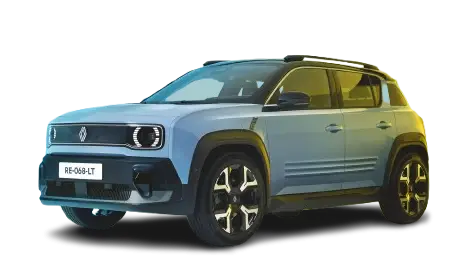
| 3 | Renault R5 E-Tech | City | 2 955 | 410 km | Urban compact, iconic design, easy to manoeuvre size (3.92 m) |
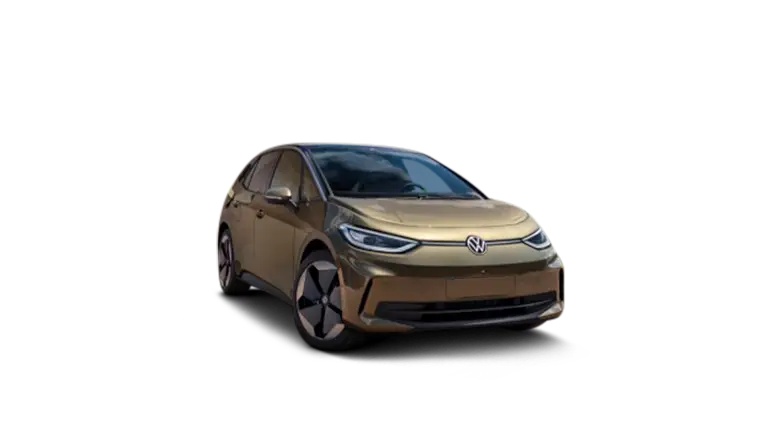
Other rising electric models Peugeot e-208, e-2008, Volkswagen ID.4, Hyundai Ioniq 5, Kia EV6... The diversity of the range means that managers can find the right vehicle for every purpose: city car, compact saloon, family SUV or light commercial vehicle.
Comparison with consumer market trends
Fleets and private customers do not prefer the same models, revealing different purchasing priorities.
| Category | Top 3 Fleets | Top 3 Individuals |
|---|---|---|
| Electric | 1. Renault Scénic E-Tech 2. Tesla Model Y 3. Renault R5 E-Tech | 1. Tesla Model Y 2. Dacia Spring 3. Renault Zoe |
| Hybrids (HEV) | 1. Renault Symbioz 2. Renault Clio 3. Toyota Yaris Cross | 1. Toyota Yaris 2. Renault Captur E-Tech 3. Toyota Yaris Cross |
| Microhybrids (MHEV) | 1. Peugeot 3008 2. Peugeot 2008 3. Peugeot 308 | 1. Peugeot 208 2. Renault Clio 3. Dacia Sandero |
- Fleets prefer Compact SUVs (B-SUV and C-SUV segments), long range, optimised TCO, extensive service network, sober professional image.
- Individuals prefer compact city cars for the budget, family SUVs for space, distinctive design and technological equipment.
This difference can also be explained by usage: professionals are looking for versatility and optimisation of TCO over 3-4 years, while private customers are more interested in the purchase price and the emotional aspect of the vehicle.
Forward-looking analysis: what's next?
Expectations for the end of the year
Traditionally, the last quarter of the year sees a peak in registrations among professional fleets. Three factors are expected to amplify this trend in 2025:
- LOM quotas that must be respected Many companies still need to catch up to meet the mandatory thresholds for low-emission vehicles (LEVs). The countdown to 31 December is encouraging companies to speed up their orders.
- Year-end tax optimisation Registering your car before 31 December means you can benefit from tax advantages (depreciation, VAT) for the full year. A powerful lever for finance departments.
- New model launches A number of manufacturers are planning strategic launches in November-December to capture end-of-year orders. The range is constantly expanding, giving managers more choice.
Our Beev prediction: electric vehicles could exceed 25 % of fleet market share by December 2025. If September's momentum continues (+44 % over one month), the last quarter could set new records and establish electric vehicles as the benchmark engine for the long term.
Impact of public policies and regulations on business choices
Public policies are playing a decisive role in accelerating the transition of fleets to electric vehicles. Several measures are combining their effects:
- The LOM law and the greening declaration obligation continue to push companies to plan their electrification.
- The EPZs will further accelerate the decline in combustion, particularly in large conurbations.
- Tax incentives (eco-bonus, depreciation) are pointing more and more clearly in the direction of the 100 % electric car.
These measures have created a formidable scissor effect: fossil-fuelled vehicles are penalised from a tax point of view and are risky from a regulatory point of view, while electric vehicles have all the advantages. For fleet managers, the choice becomes mathematically obvious.
Trends to watch in 2026
If September 2025 confirms a trend, 2026 could be the year of the definitive switch to a majority of electric vehicles in certain fleet segments.
There are several signals to watch out for:
- The arrival of new-generation batteries In 2026, carmakers are announcing batteries offering 600 to 700 km of real range, eliminating the worry of a breakdown once and for all. Ultra-fast recharging (10 minutes for 200 km) is also becoming the norm on motorways.
- Ongoing reduction in production costs Economies of scale and technological progress mean that electric power is cheaper to produce than fossil-fired power.
- The maturity of recharging infrastructures In 2026, we expect to see the widespread introduction of in-company recharging, with turnkey solutions offered by long-term leasing companies. Recharging will no longer be an obstacle, but an integrated service.
- Catching up with LCVs Electric commercial vehicles are making technical progress in terms of range and payload, and several new models are expected in 2026.
Conclusion: The electric revolution in business fleets is underway.
With 44 % growth in electric sales in one month, and more than one in two registrations already electrified, internal combustion now accounts for just 25 % of the market.
This shift is not just regulatory, it's also economic: the TCO of electric vehicles is now higher than that of internal combustion vehicles. For fleet managers, electrification is no longer a constraint, but a genuine competitive lever: savings, regulatory compliance, enhanced image.
The 100 electric % fleet is no longer a distant dream, it's an achievable goal by 2027-2028 for the majority of professional fleets of private vehicles.
At BeevEvery day, we support fleet managers in this transition. Our findings? The companies that succeed are those that dare to take the plunge, get support and think globally: choice of vehicles + recharging infrastructure + team training + tax optimisation.
And how far have you got with your electricity transition?