









Analysis of the European market for electric city cars
The European market for electric city cars has seen unprecedented growth since the start of 2025. According to Dataforce registrations of small 100 % electric cars rose by 128 % between January and August 2025, reaching 102,864 units, increasing their market share from 3.8 % to 8.4 % in one year. This rapid growth, while still below the average for all categories of electric vehicle (17.6 %), reflects a real shift in usage towards more compact and affordable urban models.
This acceleration can be attributed to a number of factors: the gradual reduction in purchase prices for certain strategic models, public incentives, as well as an increase in the number of vehicles sold. autonomy now sufficient for urban and suburban journeys. The arrival on the market of new generations of more attractive vehicles has also boosted demand.
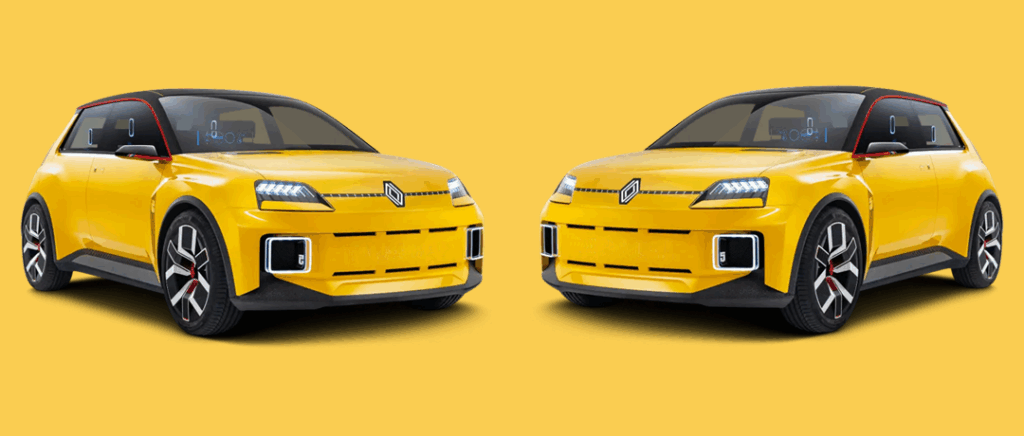
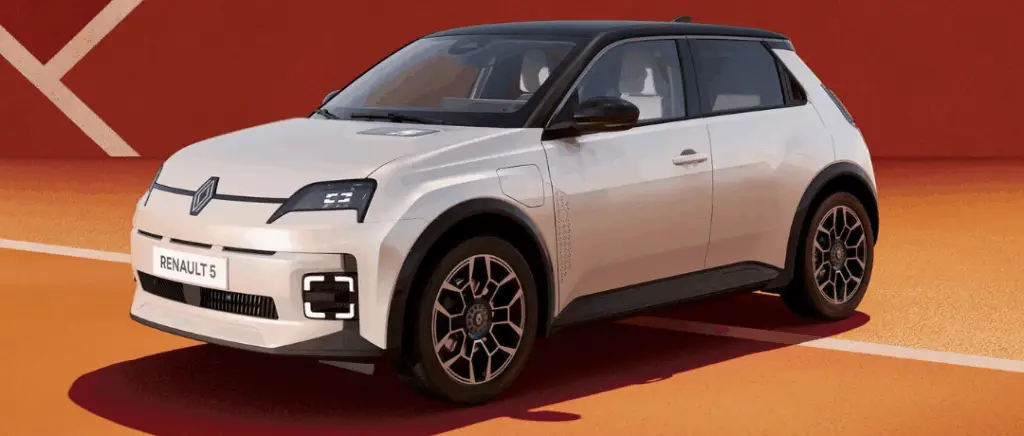
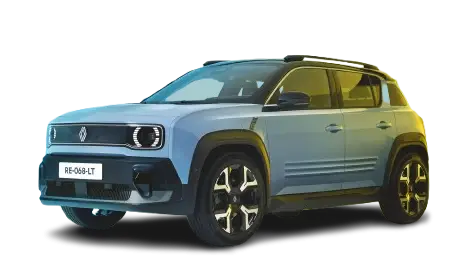
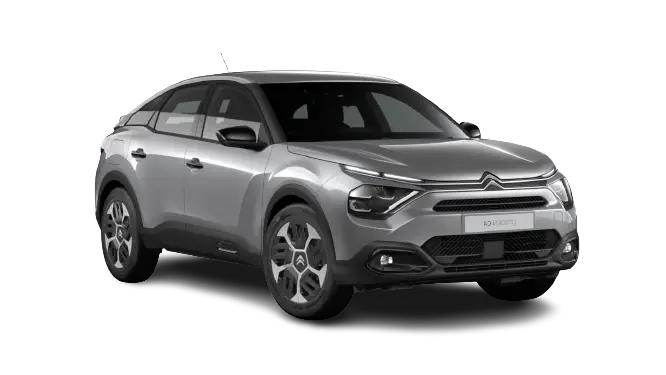
France plays a leading role in this dynamic. Not only is it Europe's leading market in this segment, but it is also the country where local manufacturers clearly dominate: the Renault 5 has won the day with 43,863 sales since its launch at the end of 2024 at a starting price of €24,990, while the Citroën ë-C3 recorded a spectacular rise of 156 % to 26,631 units. Despite a fall in volumes (-56 %), the Peugeot e-208 retains its place on the podium with 12,990 sales. Between them, these three city cars account for almost 80 % of European market share in their segment.
This supremacy underlines not only French industrial expertise but also the ability of national manufacturers to offer competitive models, produced locally and tailored to the needs of urban fleets.
| Model | Range (WLTP) | Price (€) | Engine power | Highlights |
|---|---|---|---|---|
| Peugeot e-208 | Up to 433 km | From €24,990 | 156 bhp (115 kW) | Long range, modern design, optimised fuel consumption |
| Renault 5 E-Tech | Up to 410 km | From €33,490 | 150 bhp (110 kW) | Retro-futuristic design, dynamic two-way charging (V2G) |
| Citroën ë-C3 | Up to 320 km | From €23,300 | 113 bhp (83 kW) | Competitively priced, ideal for city commuters |
An industrial and energy opportunity for France and Europe
France's growing popularity of electric city cars is about more than just the commercial success of carmakers. It opens up real industrial and energy opportunities for Europe. These compact, widely-available models represent an essential building block in the energy transition, both in terms of their ability to interact with the electricity grid and the fact that they are part of a European production chain.
Smart grid & V2G: city dwellers, vectors of energy flexibility
French electric city cars, particularly when used in company fleets, are ideal candidates for the technologies of smart grid and two-way recharging (V2G - Vehicle-to-Grid).
During periods of low energy demand, they can store surplus electricity produced by renewable energies (solar, wind). During peaks in consumption, these vehicles can return some of this energy to the grid, helping to balance and stabilise the electricity system.
Thanks to their growing numbers and their daily availability (particularly when they are recharged at night in company depots or equipped car parks), these city cars are capable of supporting the resilience of the network and reducing the costs associated with peaks in consumption.
By facilitating the widespread integration of renewable energies and reducing the need for stationary storage infrastructure, these vehicles are making an active contribution to the energy transition and to the fight against climate change. ambitious decarbonisation targets set by Europe.
French industrial base and European value chain
The development of electric city cars produced mainly in France and Europe is helping to create a local value chain.
This national industrial base enables :
- Reduce dependence on distant imports and therefore logistical and geopolitical risks.
- Supporting employment and innovation in European regions.
- Increasing the energy and industrial sovereignty of France and the European Union.
This vertical integration, combined with the growth of electric fleets, creates a virtuous circle: it strengthens the resilience of the local economy while accelerating the greening of transport.
You would like toto electric?
Beev offers multi-brand 100% electric vehicles at the best prices, as well as recharging solutions.
Why integrate electric city cars into your fleets?
France's electric city cars are proving to be ideal allies for business fleets, particularly in urban and suburban environments. Thanks to their appropriate range, competitive acquisition costs and increasing availability, they are perfectly suited to the requirements of companies wishing to electrify their fleets while optimising TCO (Total Cost of Ownership).
Decarbonisation: reducingcarbon footprint fleets
In France, thanks to a low-carbon energy mix, an electric city car generates a carbon footprint of three times lower than its petrol-powered counterpart. This enables companies to achieve their CSR and ecological transition objectives without radically changing their mobility habits. Electric 100 % city cars now offer an average range of 30 to 350 km, while hybrid or plug-in hybrid versions allow a gradual transition to electromobility, depending on usage.
This reduction in emissions also facilitates access to town centres, particularly in the following areas low-emission zones (ZFE)These are areas where combustion-powered vehicles may be restricted. In this way, electric city cars ensure fluid mobility without regulatory constraints, while reinforcing the company's responsible image in the eyes of the public and its customers.
Economic optimisation: the city car as a financial lever
The financial argument is a major driver for the adoption of city cars in companies. According to Frost & SullivanOn average, a compact saloon costs 28% more to buy than an equivalent city car. This difference is even greater when the total cost of ownership (TCO) is taken into account:
Fuel consumption: typically 5.2 L/100 km for a city car compared with 7.4 L/100 km for a mid-size saloon, representing savings of around €840 per vehicle per year (based on 25,000 km/year).
- Insurance and maintenance : 15 to 20 % cheaper for compact vehicleswith simplified mechanical interventions.
- Residual value: city cars retain around 52 % of their value after three years, compared with 46 % for mid-size saloon cars.
- Tax benefits: favourable depreciation and reduced business taxes for vehicles emitting less than 2,000 tonnes of CO 120 g/km of CO₂.
These factors make the city car profitable over its entire life cycle, and particularly relevant for urban and suburban fleets.
Urban agility and territorial adaptability
Electric city cars are the perfect answer to the needs of urban and suburban mobility:
- Compact dimensions (less than 4 metres) and a turning circle of less than 10 metres for optimum manoeuvrability.
- Ease of parking, reducing the time wasted looking for a space and increasing the efficiency of mobile workers.
- High-performance engines (often 110-130 bhp) offering versatility and comfort on urban and suburban roads.
For sales representatives travelling 150-200 km a day, these vehicles combine agility in town with sufficient range for light intercity journeys.
Ecological transition and brand image
Adopting electric city cars in your fleet contributes directly to reducing CO₂ emissions (on average 27% less than a traditional saloon car) and to your company's CSR visibility. In this way, each electric vehicle integrated into your fleet becomes a mobile communication tool, promoting the company's ecological commitment.
Extra-financial reporting also benefits from this approach, with improved carbon indicators, more favourable environmental metrics and a positive impact on investors and business partners.
How can you integrate electric city cars into your fleet?
Integrating electric city cars into a business fleet requires a strategy tailored to your company's uses and financial constraints. There are several options for making the most of these vehicles, depending on the needs identified by your fleet managers.
Choice of purchase, long-term hire or leasing depending on usage profile
The method of acquisition depends directly on the mission and the type of fleet:
- Direct purchase This is the ideal solution for companies with sufficient cash flow that want to control their entire fleet over the long term.
- Long-term leasing Leasing: ideal for companies looking for flexibility and regular renewal. Full service leasing often includes maintenance and associated services, reducing administrative and operational constraints.
- Leasing with an option to buy (LOA) Leasing: combines the advantages of full service leasing with the possibility of becoming the owner at the end of the contract, which can be interesting for the most used or strategic vehicles in the fleet.
The choice must be aligned with the planned duration of use, the predictability of missions and the overall budget allocated to the vehicles.
Lease an electric car
Optimising TCO: energy, maintenance and green taxation
Le total cost of ownership (TCO) is a key factor in the decision to acquire electric city cars for a business fleet. One of the main advantages is their energy cost, which is considerably lower than that of combustion-powered vehicles. The electricity needed to recharge a city car is much cheaper than petrol or diesel, and the controlled consumption of these vehicles means that urban and suburban journeys can be covered at lower cost. This energy saving translates directly into a significant reduction in operating costs, especially when multiplied across an entire fleet.
The maintenance of electric city cars is another area where TCO reduction factor. With fewer mechanical parts and simpler systems, servicing is less frequent and less costly. The absence of complex gearboxes, exhaust systems or thermal injection systems not only reduces the time spent on maintenance, but also cuts spare parts supply costs. This technical simplification means that fleet management teams can concentrate their resources on optimising missions rather than on corrective maintenance.
Finally, green taxation offers an additional advantage. In many European countries, and particularly in France, the low CO₂ emitting vehicles benefit from advantageous depreciation ceilings and specific tax incentives. These measures improve the return on investment in electric city cars and boost the company's economic competitiveness. By combining these different levers - energy savings, simplified maintenance and tax incentives - companies can significantly reduce their TCO compared with traditional combustion-powered vehicles, while guaranteeing operational performance and business continuity.
Tools for optimising integration
A number of digital tools can be used to maximise fleet efficiency and profitability. A TCO simulator offers a complete view of the costs associated with each acquisition or leasing scenario, comparing purchase, LLD or LOA and integrating energy and maintenance costs. Charging planning enables sessions to be organised according to daily requirements and the availability of charging points, ensuring that each vehicle is operational when it is needed. Finally, smart charging solutions automatically adjust recharging according to timetables, electricity tariffs and vehicle availability, optimising costs and overall fleet autonomy.
By combining these tools, companies can ensure a smooth transition to electromobility, guaranteeing that each vehicle is used optimally, costs are kept under control and business missions are never interrupted. This integrated approach contributes not only to the economic performance of the fleet, but also to long-term sustainability and operational efficiency.
Suitable for urban, suburban and light interurban use, electric city cars combine agility, comfort and performance, while reinforcing your company's responsible image.
Discover all the models offered by Beev and benefit from the support of our experts to renew your fleet efficiently!
Get a car policy with Beev!
Need a car policy for your company? Beev will provide you with a free personalised car policy for your company.