










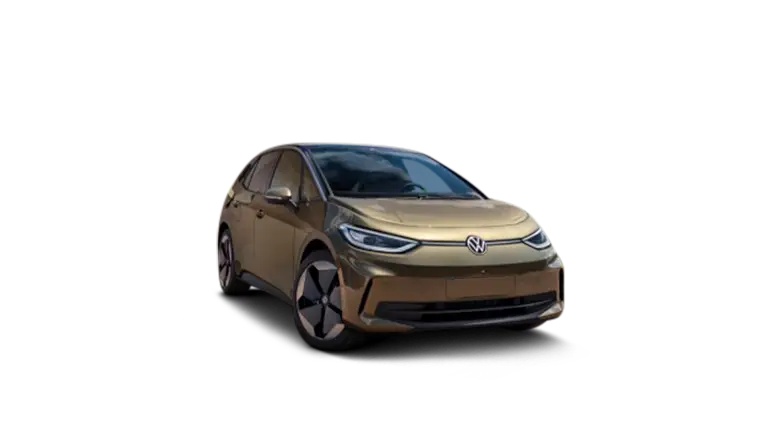









What is ecologic malus and how has it evolved?
The principle of the car surcharge in 2025
The ecological malus, also known as the CO2 tax or CO2 malus, is a tax levied when a new vehicle is registered in France. The principle is simple: the more carbon dioxide a vehicle emits, the more its owner pays when it is put on the road. The aim of this vehicle tax is to discourage the purchase of polluting models and encourage the transition to cleaner engines.
In 2025, the threshold for triggering the tax is set at 113 g/km of CO2, compared with 118 g/km the previous year. In practical terms, any vehicle emitting more than 113 grams of CO2 per kilometre will be subject to this tax as soon as it is registered. The amount then varies exponentially, starting at €50 and rising to a maximum of €70,000 at 193g of CO2/km.
Since 2022, this initial tax has been supplemented by a weight-based penalty. In 2025, this scale will apply to vehicles weighing more than 1,600 kg, with rates ranging from 10 euros per kilogram in excess to 30 euros for fractions of mass in excess of 2,100 kg. For companies that prefer SUVs, light commercial vehicles or family saloons, these two charges combined can quickly add up to several thousand euros per vehicle.
If we take the example of a new car registered on 3 March 2025 with a mass of 1,950 kg, the tax will amount to €4,520.
Changes to the malus scale in 2025 and its outlook in 2026
The tightening of the malus scale in 2025 is part of a predictable legislative trajectory that has been taken on board by the public authorities. Since 2008, when the threshold was set at 161 g/km of CO2, we have gone to 113 g/km in 2025, a reduction of almost 50 grams in less than twenty years. At the same time, the maximum amount has soared from €10,500 in 2018 to €70,000 in 2025.
The outlook for 2026 confirms this acceleration. The threshold is set to fall to 108 g/km of CO2 from 2026, further extending the number of models concerned. Even more significant for company fleets: the weight-based penalty will apply from 1,500 kg from 2026, compared with 1,600 kg at present. This 100 kg reduction in the threshold could have a major impact on professional vehicles, since 66 % of new vehicles sold in 2025 already exceed 1,500 kg.
For 2027 and beyond, the trend will not be reversed. European climate targets call for a continued reduction in emissions, and a gradual reduction of 5 grams of CO2 per year in 2025 has already been announced. According to theNGO Transport and Environment This is an important signal to the market," he says, "to encourage it to switch to vehicles with lower emissions or 100 % electric vehicles. For companies, this means anticipating the ever-increasing tax burden on petrol and diesel engines.
Comparative table of the ecological penalty - Years 2025, 2026 and 2027
| YEAR | THRESHOLD CO₂ MIN. | RATE | THRESHOLD CO₂ MAX. | RATE |
|---|---|---|---|---|
| 2025 | 113 | 50€ | >192 | 70 000€ |
| 2026 | 106 | 50€ | >189 | 80 000€ |
| 2027 | 99 | 50€ | >185 | 90 000€ |
In 2026, what new taxes will affect your fleet?
Retroactive surcharge on used cars: a major political signal
The most talked-about change to the vehicle registration document in 2026 concerns the extension of the ecological penalty to second-hand vehicles when they change ownership.
From January 2026, any second-hand vehicle registered after January 2015 and emitting more than 131 g/km of CO2 or weighing more than 1,799 kg will be subject to a penalty on resale. Although this measure mainly targets the private market and does not directly concern the acquisition of new vehicles for a business fleet, it does reveal an important trend: green taxation no longer distinguishes between new and used vehicles. For fleet managers, this political signal must be taken seriously.
If the government no longer hesitates to tax vehicles already on the road retroactively, this confirms that taxes on internal combustion vehicles are now a permanent and evolving fiscal lever. Every diesel or petrol vehicle in a company's fleet today is likely to be taxed again tomorrow. As a result, the residual value of combustion-powered assets is becoming increasingly uncertain.
Why will car taxation only get tougher?
The continued tightening of the ecological penalty is not a passing trend, but the direct consequence of serious climate commitments. The European Union is committed to achieving carbon neutrality by 2050, an ambitious goal that will be realised with the adoption of the Climate Act in 2021.
In this context, the transport sector represents a major challenge. The French High Council for the Climate is alarmed by the stagnation of greenhouse gas emissions from transport worldwide. It estimates that they need to fall by -4.7 % per year to meet the 1.5°C global warming target set by the Paris Agreement. By way of example, this would mean cutting greenhouse gas emissions in France by a factor of 6 compared with 1990 levels.
To achieve this ambitious objective, the public authorities have two main levers at their disposal: regulation and taxation. It is precisely this dual movement that is taking shape.
In regulatory terms, a ban on the sale of new petrol and diesel vehicles is set for 2035, with the aim of ensuring that all new cars arriving on the market emit no CO2. Even though discussions are underway on synthetic fuels and certain rechargeable hybrids, the trajectory remains clear: conventional combustion engines no longer have a future in the European automotive landscape.
From a tax point of view, the scale of penalties and its future changes are the tools that will support this transition. Each year, the thresholds are lowered, the amounts are increased and new criteria are introduced. For a company, this means that each year that electrification is postponed represents a potential increase in tax costs. Investing in a thermal vehicleIn other words, we are betting on accelerated depreciation and taxes that will continue to rise until 2035. So the question is no longer whether taxes will rise, but at what rate and in what form.
A combination of penalties for a formidable double effect
Commercial vehicles are generally heavier and better equipped than city cars, which systematically exposes them to the double tax of CO2 and weight. The new 2025 scale could even result in 80 % of registered vehicles being taxed, compared with 40 % in 2023. For a company renewing 10 vehicles a year in this range, the immediate extra tax cost represents between €20,000 and €35,000 a year, with no quid pro quo in terms of use or performance. And this is just the beginning: in 2026, when the weight-related penalty threshold is lowered to 1,500 kg, these same vehicles will be taxed even more heavily.
At Beev, we support our customers by incorporating these regulatory changes into our TCO analyses, so that your company can make informed investment decisions and calmly anticipate its transition to electric vehicles.
Why are electric cars becoming a must?
Electric vehicles escape the ecological penalty
Faced with escalating taxes on internal combustion vehicles, the question of electric vehicles is also becoming an economic rationale. In fact, the tax on the purchase of an electric vehicle is €0, because its CO2 emissions are zero.
The situation regarding the weight-related penalty is changing. While electric vehicles have long benefited from a total exemption, the weight-related penalty will now apply from 1,500 kg in 2026, including for certain electric vehicles. However, this tax remains marginal compared with the combined CO2 and weight tax on combustion engines. For this reason, it in no way cancels out the overall economic advantages of electric vehicles.
Electric vehicles also offer a degree of fiscal stability that combustion engines will no longer enjoy. Public policies are massively encouraging this transition through purchase subsidies for certain categories and favourable taxation on the purchase of electric cars. company vehicle tax (TVS). Investing in electric vehicles today means securing your mobility budget for the next ten years.
TCO electric vs thermal: what savings are we talking about?
As well as avoiding a penalty on purchase, it is in terms of total cost of ownership (TCO) that electric vehicles demonstrate their economic superiority for business fleets. The main savings are as follows:
- Savings on registration fees
As we have seen, the ecological penalty will become increasingly significant for the purchase of a combustion engine vehicle, compared with €0 for an electric vehicle.
- Savings on TVS
Electric vehicles are exempt from Corporation Vehicle Tax (TVS).
- Economy of recharging versus fuel
The price of diesel and petrol cannot compete with the cost of recharging an electric vehicle. As a reminder, The charge at a public charging point is between €5 and €10, compared with €10 to €14 for petrol or diesel for the same distance travelled.
- Saving on maintenance
An electric car has fewer parts than a combustion engine car. According to Avere-France, it costs 4 times less to maintain an electric vehicle than a combustion engine vehicle.
How is Beev supporting your transition to electric vehicles?
We understand that the transition to electric power is a strategic investment that requires in-depth analysis. That's why we offer tailor-made support, adapted to the specific needs of your company, whatever its size.
To do this, we carry out a complete analysis of your current fleet to produce a detailed comparative TCO calculation that incorporates all the relevant financial parameters. Our approach takes into account future regulatory developments, so that you have a realistic projection for the years ahead to secure your investment decision.
Our in-depth knowledge of the market means we can guide you towards the electric models best suited to your business needs. We only offer new vehicles that are perfectly suited to the requirements of corporate fleets. Thanks to our purchasing volume, we can negotiate the best price conditions for you.
Finally, we manage all the administrative aspects of your transition. Vehicle registration, optimisation of tax returns, installation of recharging solutions... You benefit from a single point of contact who manages your project from start to finish.
Thanks to the hundreds of companies we've already worked with, we're well aware of the obstacles and fears associated with switching to electric vehicles. Our role is to transform these fears into quantified certainties in order to demonstrate that going electric is not a gamble, but a serious solution in terms of long-term profitability.
Going electric: a decision that's hard to put off
The ecological penalty and its ongoing tightening leave no room for doubt: French car taxation has taken an irreversible turn towards penalising combustion engines. As a result, owning a petrol or diesel car is becoming an increasingly expensive investment.
Conversely, electric vehicles are emerging as an economically rational solution that is in line with European climate objectives. For companies, anticipating this transition will safeguard the profitability and long-term future of their business. vehicle fleet.