


Design, performance and innovation: the Alpine A390 deciphered
A fastback sports car with a strong personality
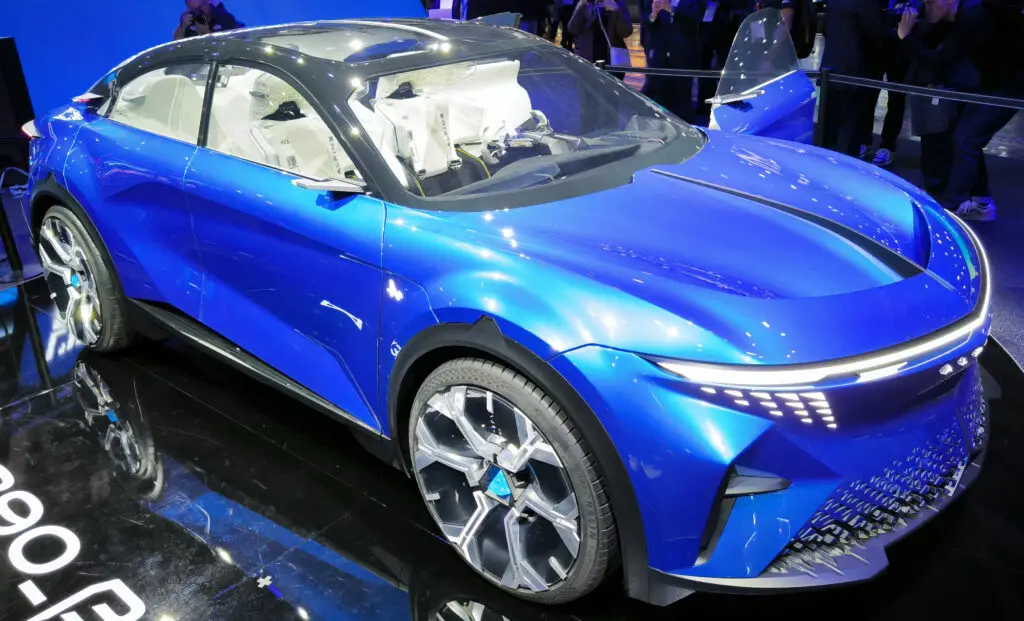
The Alpine A390 breaks with traditional SUV codes to adopt a fastback sports silhouette. At 4.61 metres in length, this five-seater electric SUV boasts sleek lines and a characteristically dynamic stance. This attention to detail extends to the exterior finish. Alpine has succeeded in creating a strong, instantly recognisable visual identity.
Technical data
Under the bonnet of the Alpine A390 lies a sophisticated electrical architecture. This uses three separate motors to deliver performance worthy of a sports car. This technology enables the integration of the Alpine Active Torque Vectoring (AATV) system, similar to that used in the iconic A110.
The French manufacturer has also opted for a three-engine configuration with all-wheel drive. It has also combined a wound rotor front motor with two synchronous permanent magnet rear motors. Each motor powers the drive wheels. This active distribution of power to the rear wheels is one of Alpine's major arguments for differentiating its electric SUV from the competition.
Autonomy and recharging
The Alpine A390 is equipped with a battery with a net capacity of 89 kWh. According to the WLTP homologation cycle, the GT version promises up to 555 km of WLTP range. This puts the A390 in the upper mid-range of the premium electric SUV segment. The GTS version, which is more powerful and has wider rims, has a slightly shorter range. The range is between 503 and 555 km, depending on the configuration chosen.
In terms of fast charging, Alpine has announced a maximum DC power of 190 kW. This power means that 65% of charge can be recovered in less than 30 minutes.
The Alpine A390 includes bi-directional charging as standard, which is of great interest to corporate fleets looking to optimise their energy consumption. This feature V2G (Vehicle-to-Grid) allows the vehicle to return the electricity stored in its battery to the general electricity network.
At a time when energy costs are fluctuating sharply, this capability opens up interesting prospects for economic and energy optimisation.
On-board technologies and premium equipment
The cabin reflects the brand's premium ambitions. The upholstery combines Alcantara and Nappa leather to create an ambience that is as sporty as it is refined. The heated seats offer excellent lateral support and the steering wheel, directly inspired by Formula 1, incorporates numerous controls to operate the essential functions.
The audio system is one of the highlights of the equipment. Alpine has teamed up with Devialet, a French manufacturer of top-of-the-range audio electronics, to develop configurations with remarkable listening quality.
In terms of driving aids, the A390 comes with the full arsenal of assistance expected in the premium segment. These include adaptive cruise control, lane keeping, automatic emergency braking and blind spot monitoring.
Alpine's pricing strategy in the battle for premium electric cars
An aggressive pricing policy for the French market
With a starting price of €67,500 for the GT version, Alpine is strategically positioning its A390 below its main German competitors. This is a deliberately attractive price to win market share from established German brands.
The GTS version, priced at €78,000, is aimed at customers looking for the ultimate in performance. With its 470bhp and enriched equipment (forged wheels, six-piston brakes, Devialet XtremeSound audio system, etc.), this sporty version is still less expensive than a Porsche Macan Electric equivalent.
This aggressive pricing is explained by Alpine's need to establish itself rapidly in a highly competitive segment. Faced with brands such as Porsche, BMW and Mercedes, it had to offer a significant price differential to compensate for an image deficit with certain customers. The gamble is a risky one: too expensive, the A390 won't find its audience; too cheap, and the brand could damage its own premium image and compromise its profitability.
The Porsche Macan Electric: David against Goliath?
Alpine A390 vs Porsche Macan Electric comparison chart
| Alpine A390 GT | Alpine A390 GTS | Porsche Macan Electric | |
|---|---|---|---|
|
Price (from)
|
67 500 €
|
78 000 €
|
82 959 €
|
|
Power
|
400 hp
|
470 hp
|
358 hp
|
|
0-100 km/h
|
4,8 s
|
3,9 s
|
5,7 s
|
|
WLTP range
|
555 km
|
555 km
|
Up to 644 km
|
|
Battery
|
89 kWh
|
89 kWh
|
95 kWh
|
|
Fast recharge
|
190 kW
|
190 kW
|
270 kW
|
|
Manufacture
|
France (Dieppe)
|
France (Dieppe)
|
Germany (Leipzig)
|
Availability and sales schedule
The official opening to the general public took place on 18 November 2025. The first customer deliveries will begin in the weeks following the arrival of the vehicles in showrooms, at the beginning of 2026. However, the GTS version, which is more powerful and better equipped, will not go on sale until the first quarter of 2026.
What the A390 tells us about the development of the premium electric market
The "sportiness" of premium electric SUVs
The Alpine A390 is part of an underlying trend that is transforming the electric SUV segment. Whereas the first electric SUVs focused on range and comfort, the new entrants are now focusing on sporting performance. The instant torque of electric motors is capable of delivering lightning acceleration with no lag time. This ability is now a central marketing argument. With its sporting heritage, Alpine is naturally capitalising on this trend.
Autonomy is no longer the only decisive criterion
Other criteria are emerging as determining factors in purchasing decisions. These include rapid recharging power and the vehicle's dynamic behaviour. For customers sensitive to driving pleasure, this technical differentiation can justify a purchase decision that goes beyond simple range considerations. By integrating features inspired by motor racing, Alpine is creating a differentiated experience that also relies on the emotion and commitment of the driver.
The battle for two-way charging (V2G/V2H)
This technology, which is not yet widely available on the French market, transforms the vehicle into an energy storage and management device. In practical terms, the A390's battery can not only recharge itself from the electricity grid, but also transfer this energy to a home (V2H - Vehicle-to-Home) or to the general electricity grid (V2G - Vehicle-to-Grid). We discuss this in more detail in our article Vehicle-to-grid (V2G): a source of energy?
This feature opens up interesting possibilities for economic optimisation. By recharging the vehicle while off-peak hours and by reusing this electricity, you can make substantial savings on your energy bill. Some companies are even exploring the possibility of reselling the electricity stored in their vehicles to create an additional source of income.
Monday to Friday, 9am to 12.30pm and 2pm to 7pm
The A390 in corporate fleets: opportunity or niche?
Competitive TCO positioning for fleets
Le total cost of ownership (TCO) is the decisive criterion for any company fleet manager. In this respect, the Alpine A390 offers solid arguments against its German rivals. With a purchase price starting at 67,500 euros, the A390 GT is positioned around 20% below an equivalent Porsche Macan Electric. This means initial savings of almost 17,000 euros per vehicle.
Over a typical holding period of 4 years for a company fleet, this difference in purchase price can be very favourable.
In all cases, the running costs of an electric vehicle are lower than those of a combustion-powered equivalent. Energy consumption remains well below the cost of fuel for a combustion SUV of the same power.
What's more, the French tax system encourages the use of electric vehicles in business fleets. It should also be remembered that the Company Vehicle Tax (TVS)Calculated mainly on the basis of CO2 emissions, electric vehicles are exempt.
Brand image: an obstacle or an asset for fleet managers?
Unlike Porsche, BMW or Mercedes, which enjoy universal recognition, Alpine remains a relatively confidential brand. This lower profile can be an obstacle for some companies that are concerned about the message they send out to their customers and partners.
However, the 'Made in France' argument resonates strongly at a time when supporting the national economy is becoming a major concern. What's more, the relative rarity of the Alpine A390 compared with the Porsche Macan or BMW iX that are ubiquitous in fleets can also be an advantage. The vehicle attracts attention without displaying the ostentatious codes sometimes associated with the most upmarket German brands.
Target company profiles
The Alpine A390 is obviously not aimed at all corporate fleets. Its specific positioning means that it is aimed at particular company profiles. The managers of large groups or medium-sized companies are a natural target. Fleets of consultancies, architecture firms or tech companies also represent a promising segment for the Alpine A390. Finally, for a salesperson working with a demanding B2B clientele, the A390 can be a valuable work tool.
Conclusion
The Alpine A390 marks a major symbolic milestone for the French automotive industry. This electric SUV embodies the ambition of a French manufacturer to regain legitimacy in the premium segment. The performance/price ratio is particularly competitive, with lap times worthy of a sports car at a lower price than the German competition. The 'Made in France' argument, far from being just a marketing slogan, is reflected in the fact that the entire car is manufactured in France.
Nevertheless, there are still weaknesses. Alpine's distribution networks, which are still few and far between, cannot compete with the density of the Porsche, BMW or Mercedes networks. For companies managing national or international fleets, this limited coverage can be a real operational hindrance.
Only time will tell if Alpine succeeds in transforming this ambitious electric SUV. The forthcoming launch of the electric A110, eagerly awaited by purists, will be a further test of the brand's ability to combine its sporting heritage with the transition to electric power.