























Global growth changes the equation for fleets
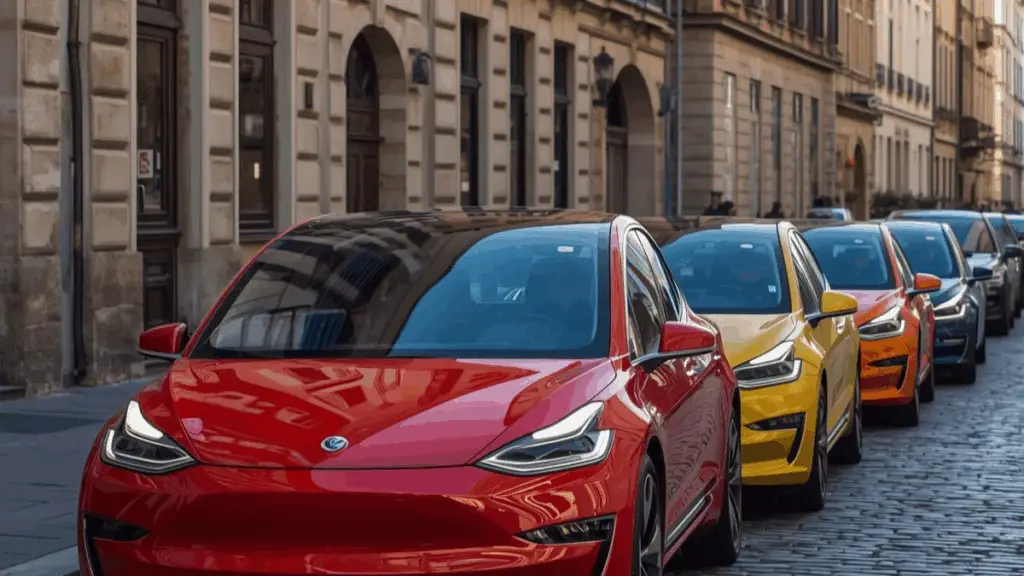
The growth in sales of electrified vehicles is not limited to a few pilot markets. It is now structural and global. What was once seen as a segmented transition is becoming a massive, uniform and sustainable movement. For fleets, this means that the electric vehicle is no longer a technological gamble, but an industry standard that is becoming widespread.
This global growth is changing the game on several levels: production capacity, manufacturing costs, technological maturity, diversity of available models and long-term investment stability.
Strong sales growth on every continent
The increase of 23 % observed in October 2025 reflects a reality: All the world's major markets are now committed to electrification. Europe is continuing on its path, supported by regulatory constraints and eco-scores, North America is stepping up local EV production, China is maintaining its industrial lead and emerging markets are gaining ground thanks to more affordable models.
For a fleet decision-maker, this geographical diversity may seem remote. In reality, it has a direct impact on their day-to-day work. The more global volumes increase, the more manufacturers :
- cushion their electrical platforms,
- standardise components,
- and optimise their logistics and manufacturing costs.
Results The electric vehicle is becoming a mass-produced product, rather than a fringe or image product. In the professional sector, this is already reflected in more competitive rents, more models and more reasonable production times.
This global dynamic acts as a safety net for fleets: electric vehicles are not a fad driven by a single region, but a direction taken by the industry as a whole. The investments of manufacturers, equipment suppliers and energy suppliers are aligned, which reduces the risk of "backtracking" and gives visibility to the decisions taken today.
A shift driven by lower costs and increased production capacity
If sales are increasing, it's not just because of the regulatory effect, but also because the production cost of electric vehicles is actually falling. Advances in battery (in particular LFP), cell-to-pack integration, the reduction in the number of mechanical parts, factory automation and platform standardisation have a direct effect on the cost price.
In practical terms, this means :
- batteries that are cheaper to produce,
- more efficient assembly lines,
- shorter design times,
- and greater profitability on every vehicle.
For fleets, there are two major consequences. The first is the gradual reduction in TCO compared with thermal. The second is theThe rapid arrival of new generations of modelsbetter optimised, with autonomy equipment tailored to the needs of professionals and natively integrated connected services.
This increase in production capacity also reassures decision-makers: volumes are no longer limited to a few large companies or pilot markets. The electric vehicle has now reached a level of maturity compatible with mass deployment in fleets, without major operational constraints.
The global market now has a direct influence on French fleets
The globalisation of EVs is not confined to major industry announcements. It is already reflected in the commercial conditions offered to French fleets: leases, ranges, availability, associated services. The more global demand increases, the more companies benefit from economies of scale.
More competitive prices thanks to global volumes
Fleet managers are noticing: LLD/LOA offers for EVs are becoming increasingly competitive, sometimes to the point of competing directly with equivalent internal combustion models. This development is largely due to international trends.
By increasing production volumes, manufacturers can :
- spread their investments over more units,
- secure their component supplies,
- negotiate more effectively with their suppliers,
- and reduce unit manufacturing costs.
The results are clear to see: EV rental costs are approaching, or even falling below, those of certain internal combustion engines, particularly when fuel and maintenance savings are factored into the calculation. For many categories (company saloons, executive vehicles, pool-cars), the question is no longer "can we afford it? but rather "why stick with combustion engines if the EV TCO is lower?
A broader offering tailored to professional use
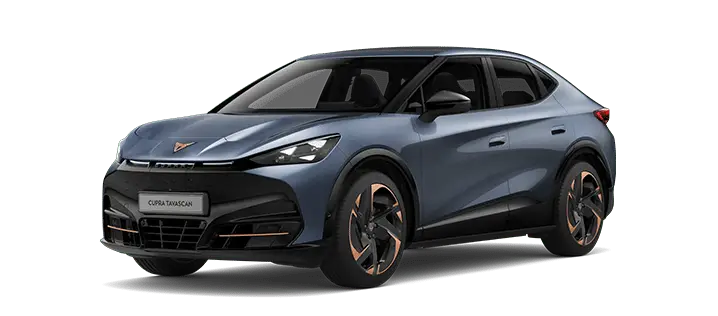
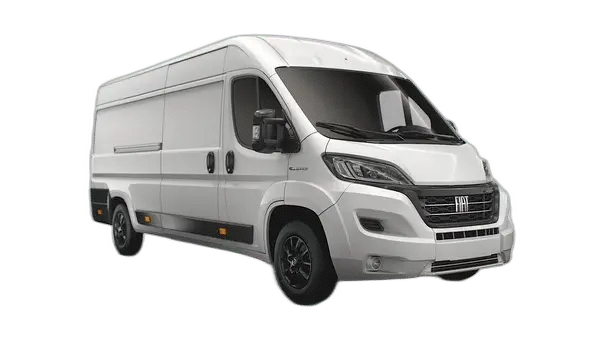
As the global market grows, carmakers are expanding their ranges. We're no longer just talking about iconic saloons and family SUVs, but a whole range of new models. complete range of professional models: city cars for urban technicians, compact SUVs for regional sales, zero-emission vans for last-mile delivery, larger vans for logistics.
Finally, this diversity means that vehicles can be properly aligned with business uses:
- high or moderate annual mileage,
- urban, suburban or inter-regional journeys,
- need for volume, comfort or image.
For a fleet manager, this opens up the possibility of creating a structured EV car policy, segmented by function, rather than 'fitting' a single electric model everywhere. The global market offers enough options to build a structured EV car policy. fleet that is coherent, efficient and aligned with operational needs.
Massive adoption is changing the way employees work
Electricity is not just an industrial transformation; it's also a way of life. cultural evolution. As more and more private customers adopt the electric car, employees are becoming familiar with its codes: range, recharging, driving and journey planning. This change in behaviour is having a direct impact on the transition of fleets.
Employees accustomed to EVs speed up integration into fleets
Historically, one of the main obstacles to the adoption of electric vehicles in companies has been human: fear of breakdowns, lack of knowledge about recharging solutions, lack of understanding of the impact of weather conditions on range. However, the growing popularity of EVs in the home has done away with many of these concerns.
More and more employees :
- already own an EV or plug-in hybrid,
- are used to recharging at home,
- have tested electric driving in real-life conditions (weekends, holidays, mixed journeys).
When these same employees get behind the wheel of an electric service vehicle, the acculturation phase is much shorter. They already know :
- flexible driving improves range,
- how to anticipate a recharge on the move,
- what reflexes to adopt in winter or on the motorway.
For fleets, this user maturity means less education, fewer operational incidents and much greater internal acceptance.
Towards more flexible and controlled professional mobility
With employees accustomed to electric vehicles, business mobility becomes more flexible. Home-work journeys, customer appointments, tours and visits can be planned more calmly, taking account of recharging but without it becoming a hindrance.
Companies are noticing :
- better planning of journeys by employees,
- a reduction in "borderline" situations of autonomy,
- more rational use of internal terminals.
This maturity also makes it easier to integrate new solutions: internal car-sharing of electric vehicles, shared pool-cars, service vehicles recharged on site at night. In short, far from adding complexity, electric power can become a more predictable and controlled mobility tool.
TCO, maintenance, energy: why the global trend reinforces the economic advantage of the EV
The global acceleration of electric cars is not just a question of units sold. It has a direct effect on vehicle economy, and therefore on fleet TCO. The EV was already competitive on certain profiles; it is now becoming advantageous on an increasingly broad spectrum.
The worldwide fall in the cost of batteries automatically reduces the TCO
Batteries account for a significant proportion of the cost of an EV. The fall in their production cost, linked to global demand and innovation, has a direct impact on TCO. Fleet managers benefit in several ways:
- long-term hire leases include more optimistic residual values,
- catalogue prices may be adjusted downwards,
- Entry-level models offer sufficient capacity for professional use.
With battery costs falling and lifetimes increasing, the equation is becoming increasingly favourable. A well-sized electric vehicle, with the right usage, can now generate significant savings over 4 to 6 years, even without massive subsidies.
More predictable energy costs than fuels
Another advantage reinforced by the global dynamic is the relative stability of electricity compared with fossil fuels. Where diesel is highly indexed to geopolitical and fiscal conditions, electricity allows for more solid budget planning.
For a fleet managerThis aspect is crucial. It can :
- accurately simulate its costs per kilometre,
- compare thermal/electric scenarios over the duration of a contract,
- secure its financial commitments in an unstable economic climate.
The growth of EVs around the world is also contributing to the development of specific solutions for businesses: adapted energy contracts, preferential rates for night-time recharging, and smart charging to smooth out peaks in consumption. These are all levers that reinforce the competitive advantage of electric vehicles in terms of cost of use.
Global infrastructure development facilitates business use
The rise of the EV is accompanied by an unprecedented deployment of charging infrastructure. This trend is particularly visible in Europe, where public authorities and private players are investing massively.
+400,000 public charging points in Europe by 2030: a rapidly expanding network
The target of 400,000 public charging points in Europe by 2030 is more than just a figure: it's the promise of a network capable of making business trips safer long distance. Major motorways, business parks, company car parks and town centres are gradually being equipped with a range of charging points, from AC 7 kW to ultra-fast charging stations.
For fleets, this increase in density is changing the way they deal with roaming. Whereas in the past, fleet managers had to build scenarios on a case-by-case basis to reassure their drivers, they can now rely on a relatively homogenous network, complemented by inter-operator roaming solutions and unique badges. The risk of blockages is reduced, and staff confidence is increased.
Private recharging + public recharging: the hybrid fleet model
In practice, the fleets with the best electric performance opt for a hybrid model combining :
- home recharging (right to plug, kWh reimbursement or flat rate),
- On-site recharging (controlled AC terminals, sometimes coupled with photovoltaics),
- public top-up charging (for long-distance journeys).
This model offers a good compromise between cost, flexibility and continuity of service. The global growth in EVs and infrastructure is facilitating this approach: supervision software solutions, multi-pin management platforms and energy management tools are now mature enough to support fleets of several dozen or hundreds of vehicles.
What fleet managers need to anticipate
In this global context, which is highly favourable to electric vehicles, fleet managers can no longer be content with one-off experiments. It is becoming strategic to structure a real electrification trajectory, in line with business constraints, regulations and financial objectives.
Adapting car policy to the new global market
A car policy In this context, where EVs are becoming standardised on a global scale, companies that are slow to change their vehicle policy risk finding themselves out of step, both financially and in terms of regulations. At a time when EVs are becoming standardised on a global scale, companies that delay making changes to their automotive policy risk finding themselves out of step, both financially and in terms of regulations.
Equip yourself with data tools to control TCO and consumption
The other pillar is steering. Electric vehicles generate a wealth of very useful data: consumption, recharging, journeys, stopping times and driving behaviour.
In a global environment where electric vehicles are becoming the norm, fleets that are content to install charging points without exploiting data are missing out on significant potential for savings and performance. Conversely, those that combine EV + data + structured car policy create a sustainable advantage.
Strategic opportunity: how fleets can benefit from the global dynamic
The global dynamic is not just a backdrop; it is an immediate lever for action. Fleets have a very favourable window of opportunity between 2025 and 2030 to accelerate their electrification under the right economic conditions.
Renew earlier to take advantage of price cuts
The next few years will see further cost reductions linked to batteries, volumes and standardisation. However, there is a risk in waiting indefinitely: that of remaining too long exposed to ZFE constraints, fuel volatility and combustion models whose residual value is more uncertain.
For certain fleet segments, it may be appropriate to renew earlier:
- to lock in attractive rents,
- take advantage of models that have already been optimised for TCO,
- and secure regulatory compliance over several years.
Global dynamics, far from being abstract, create a point of equilibrium where cost, performance and risk come together. It's this point that we need to capture.
Training employees to maximise efficiency
Even though drivers are becoming more and more accustomed to EVs, training is still the key to boosting performance. A simple 1-2 hour module on electric eco-driving, recharging management and good practice in winter can generate tangible gains in terms of fuel consumption, range and user comfort.
At a time when the EV is becoming the global standard, investing in human support is the best way to reap the full benefits of hardware investment. The electric vehicle is not just a technological issue; it's a project to transform the way people use their vehicles.
Worth remembering: the globalisation of the electric vehicle creates an unprecedented advantage for fleets
The global boom in electrified vehicles, illustrated by the 23 % and 1.9 million units sold by October 2025, is not just making headlines in industry reports. It is creating a historic context from which business fleets can benefit right now.
- Global volumes are driving down prices and stabilising TCO.
- The range of models is expanding to cover all business uses.
- Employees are increasingly comfortable with electric vehicles, which makes the transition easier.
- Charging infrastructure continues to expand.
- Regulations are pushing in the same direction, from local to European level.
For fleet managers, electric vehicles are no longer an experimental subject: they are a strategic lever for reducing costs, securing regulatory compliance, strengthening CSR performance and offering modern mobility to employees.