

















Ford and Renault: a strategic alliance driven by economics
Why Renault rather than Volkswagen?
Ford's decision to team up with Renault rather than Volkswagen for its future electric city cars came as a surprise to many observers. However, Jim Farley, Ford's CEO, was clear at the time of the announcement: «We know Volkswagen very well, its supply chain and its costs. We did a very thorough analysis, and Renault came out on top, for many reasons, including price.»
This strategic decision is based on a number of factors. Firstly, Renault's AmpR Small platform already equips the Renault 5 and R4. In fact, it is operational and has already proved its worth. It also benefits from a clear roadmap, with the forthcoming integration of less expensive LFP (lithium iron phosphate) batteries. This means lower production costs.
For corporate fleets, this price competitiveness is crucial. At a time when total cost of ownership (TCO) remains the main criterion for purchasing decisions, optimising acquisition costs is becoming a major challenge. The Ford Renault Alliance provides a direct response to this issue by pooling investment in research and development while maximising economies of scale.
Two Ford electric vehicles based on Renault R4/R5
The first two models to emerge from this collaboration will be designed by Ford but developed with Renault Group. They will be produced at the Douai and Maubeuge plants in France, based on the AmpR Small platform. While Ford insists that its vehicles will have «authentic Ford brand DNA» and «distinctive driving dynamics», we can expect to see derivatives of the R4 and R5. That said, these models will be adapted to the visual identity and standards of the blue oval.
For fleet managers, this approach offers three advantages. Firstly, the reliability of a tried and tested technical base. Secondly, they can diversify their suppliers while maintaining technical consistency. Finally, vehicles sharing the same platform make it easier to manage after-sales service and train maintenance teams.
Why is this alliance good news for corporate fleets?
Electric vehicles finally accessible to SMEs
The Ford Renault Alliance is committed to the democratisation of electric vehicles. With a price positioning expected in the affordable electric vehicle category, these future models could be under the €30,000 mark. This will make electrification more accessible to SMEs and medium-sized fleets.
With electric vehicles, the TCO of an electric vehicle quickly becomes competitive thanks to savings on fuel and maintenance. For fleets with predictable daily journeys, these electric city cars represent an opportunity for immediate budget optimisation. Reduced maintenance costs (no oil changes, fewer parts subject to wear and tear, etc.) and the tax benefits associated with electric vehicles (accelerated depreciation, exemption from VAT) add to this economic appeal.
The pooling of production resources between Ford and Renault will reduce development and production costs. This benefit should be reflected in the final price. In a market where competition with Chinese electric vehicles intensifies, This strategy offers European manufacturers a way of remaining competitive through local production.
Monday to Friday
9am - 12.30pm - 2pm - 7pm
The electric LCV segment: the real game-changer
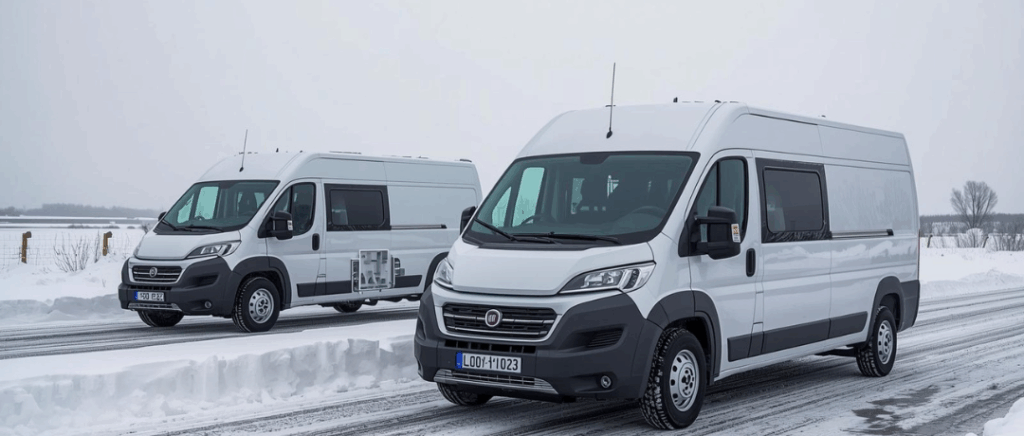
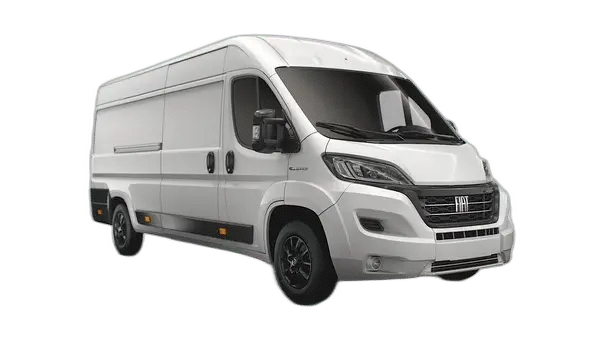
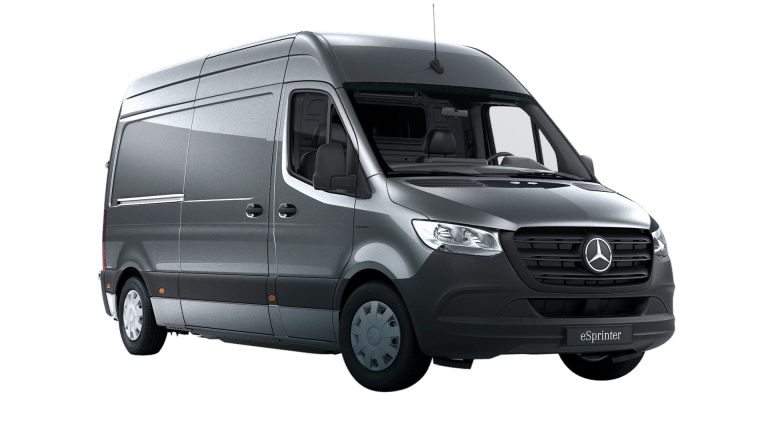
While the two electric city cars are the visible part of this agreement, the real revolution may be taking place elsewhere. Ford and Renault have signed a letter of intent «to explore the development and manufacture of Ford- and Renault-branded light commercial vehicles using common platforms».
For companies, light commercial vehicles represent the sinews of war in terms of electrification. They all need electric solutions tailored to their business needs. The electric LCV market is enjoying sustained growth, This is being driven by regulations on low-emission zones (ZFE) in Europe.
The complementary nature of Ford's expertise in the commercial vehicle segment and Renault's know-how points to significant synergies.
For corporate fleet managers, this collaboration heralds the arrival of Electric LCVs more affordable and better suited to everyday needs.
French production as a strategic asset
The production of future Ford electric vehicles at the Douai and Maubeuge plants is not just a geographical detail. For French corporate fleets, it represents a number of concrete advantages:
- Geographical proximity makes it easier for our after-sales service to respond quickly.
- Made in France« makes a positive contribution to companies» ESG scores.
- This industrial choice helps to support the French automotive industry, which is going through a period of profound change.
The electrification of company fleets, an economic and regulatory imperative
European CO2 targets spur action
La CAFE regulation (Corporate Average Fuel Economy) imposes on manufacturers an average target of 81g of CO2 per kilometre, compared with 95g/km in previous years. In order to comply with these standards, manufacturers must achieve a sales share of around 25% for electric vehicles. Failure to do so could result in heavy fines.
This regulatory pressure on manufacturers has a direct knock-on effect on company fleets. The end of sales of new combustion-powered vehicles in 2035 in the European Union is no longer a distant prospect: it is already shaping today's investment decisions.
For fleet managers, the 2035 deadline must be included in any medium-term planning. A vehicle bought in 2025 with a life cycle of 4 to 5 years will reach the end of its life between 2029 and 2030, a period when the supply of combustion vehicles will already be very limited. Anticipation is therefore becoming a strategic necessity to avoid supply disruptions and last-minute cost overruns.
Chinese competition forces European innovation
The Chinese manufacturers' offensive on the European market is a major catalyst for this alliance. BYD, which has overtaken Tesla in the volume of electric vehicle sales worldwide, is deploying an aggressive strategy in Europe with vehicles offering formidable value for money.
Faced with this competition, European carmakers have to innovate and adapt quickly. Alliances such as the one between Ford and Renault enable development and production costs to be pooled to remain competitive.
For corporate fleets, this competition is an opportunity. The multiplication of players and offers creates downward pressure on prices and stimulates technological innovation. Vehicles are becoming more efficient, more reliable and more affordable. The choice is widening, allowing vehicles to be better adapted to the specific uses of each company.
However, this competition also raises the question of the sustainability of manufacturers and their networks.
For a fleet manager, choosing a vehicle also means making sure that the manufacturer is financially solid and that the after-sales service is available throughout the vehicle's life. Alliances between established manufacturers such as Ford and Renault offer guarantees of stability in this respect.
A recharging ecosystem still to be developed
Massive electrification of fleets still comes up against a major obstacle: the’recharging infrastructure. Ford itself is calling for accelerated development of the network of charging points in Europe. For businesses, this is an issue on several levels.
Firstly, recharging at the company's site(s). L’installation of recharging stations is often the first step towards electrification. This solution ensures that vehicles are available every morning, while keeping energy costs under control. Public support for installation, such as the ADVENIR programme, These investments pay for themselves very quickly.
Secondly, more and more companies are offering to install a charging point at home, with full or partial charging available. This solution improves user comfort and employee satisfaction, while optimising recharging costs.
Finally, access to public charging networks for business travel. The mapping of available charging points, their interoperability and the management of badges and subscriptions are operational issues that need to be anticipated when deploying an electric fleet.
These are the three pillars on which Beev supports companies in their transition to electric vehicles. From the needs audit to the installation of charging points and the choice of suitable vehicles, comprehensive support makes fleet transformation a success.
You would like toto electric?
Beev offers multi-brand 100% electric vehicles at the best prices, as well as recharging solutions.
2028 is tomorrow: how to prepare corporate fleets now
Don't wait until 2028 to electrify
Although the Ford vehicles resulting from the alliance with Renault will not be available until 2028, it would be counterproductive to wait until then to start electrifying its fleet.
Firstly, the current range of electric vehicles is already mature and competitive. The Renault R5 and R4, on which future Fords will be based, are already available. The market also offers a wide range of alternatives, depending on requirements. These vehicles offer a range of 300 to 500 km, which is sufficient for most business applications. What's more, recharging times are getting shorter all the time.
Secondly, starting electrification now means you can capitalise on experience. The electrification of a fleet involves more than simply replacing combustion engine vehicles with electric ones. It involves rethinking the organisation, training drivers, adapting management processes, etc. This learning curve takes time. The earlier companies embark on it, the better equipped they will be to manage the accelerating transition.
Finally, the economic benefits are immediate. On high-mileage vehicles, the TCO of an electric vehicle is already lower than that of an equivalent internal combustion vehicle. Waiting until 2028 would mean giving up three years' worth of potential savings on fuel and maintenance costs.
Plan your transition over 3 to 5 years
The electrification of a company fleet is a transformation project that must be part of a medium-term vision. A gradual approach, spread over 3 to 5 years, helps to control risks and optimise investment.
The first step is to carry out a complete audit of the fleet. This audit should identify the vehicles to be electrified as a priority: those that travel the most kilometres, those whose journeys are the most predictable, those that travel in urban areas subject to EPZs, etc. It is also necessary to analyse actual usage in order to correctly size the electrification requirements. autonomy and load capacity.
On the basis of this audit, a progressive renewal plan can be drawn up. The ideal way to start is with a pilot fleet of a few vehicles, to test technical solutions and adjust processes. This phase of experimentation limits the risks and helps to identify areas for attention before deployment on a larger scale.
The budget must cover not only the purchase or hire of the vehicles, but also the charging infrastructure. The public funding available must be anticipated in the financing plan. These schemes change regularly, which is why it's so important to work with an expert who is familiar with the regulatory and administrative aspects.
Charging infrastructure: the essential link
Successful fleet electrification requires a suitable recharging infrastructure.
For centralised sites, the installation of charging points enables vehicles to be recharged during off-peak hours, particularly at night. The sizing of this installation must take into account the number of vehicles, their recharging requirements and the electrical power available. Intelligent control solutions such as Beev Fleet Manager are used, among other things, to optimise the distribution of the electrical charge.
For employees with company cars, recharging at home is often the most practical solution. The company can pay for all or part of the installation of a charging point, with a system for reimbursing professional electricity consumption. Monitoring solutions can be used to track recharges and facilitate administrative management.
For exceptional journeys and business trips, access to public charging networks is essential. The proliferation of operators and standards may seem complex, but solutions exist to simplify management: multi-operator charging cards, applications for geolocating charging points, centralised billing systems, etc.
Beev supports companies in all these aspects: feasibility study, choice of equipment, installation of terminals, administrative management and team training. This comprehensive approach guarantees a successful transition and maximum optimisation of investments. Contact our team now for personalised advice on electrifying your fleet.
Conclusion
The strategic alliance between Ford and Renault is much more than a classic industrial agreement. It embodies the profound transformation that the European automotive industry is undergoing in the face of climate change and global competition. For company fleet managers, this partnership sends out a clear signal: the electrification of business vehicles is no longer a distant option, but an immediate economic and strategic reality.
Ford's future Renault-based vehicles, expected in 2028, promise to further expand the range of affordable, high-performance electric vehicles on offer. The potential extension of this collaboration to light commercial vehicles could be a real revolution for companies that rely on these work vehicles.
But the main lesson of this alliance is that we don't have to wait until 2028 to take action. Solutions exist today, with high-performance vehicles and economic benefits that can be rapidly achieved. Electrification is a transformation project that requires time, preparation and expert support. Starting now will give you the means to make this transition a success under the best possible conditions.
your charging point