



















Why fleet management is a strategic issue for companies
Evolution of professional car fleets
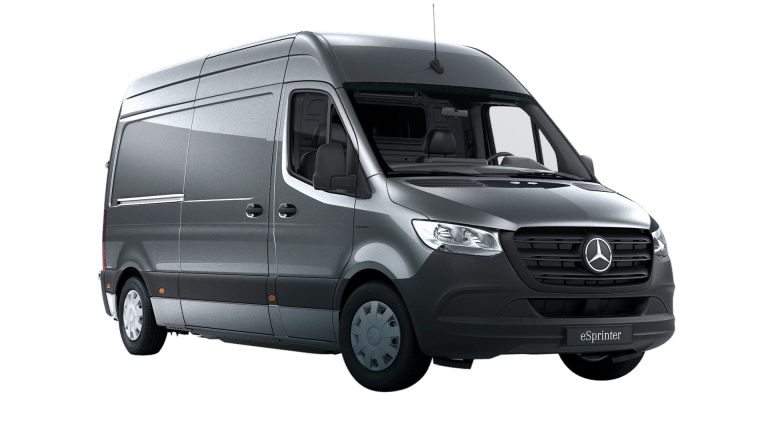
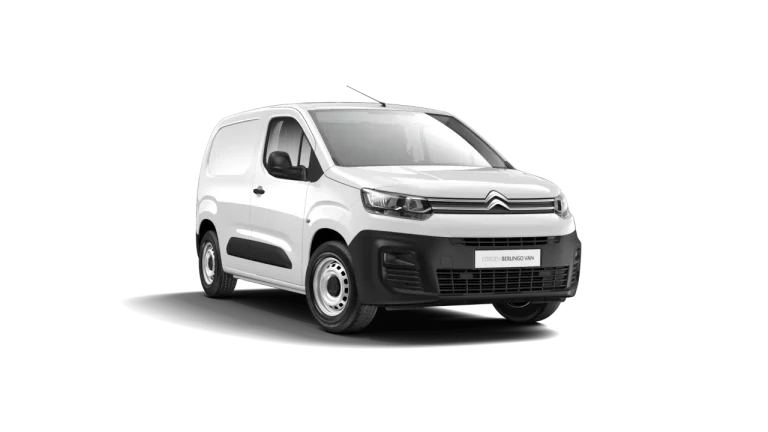
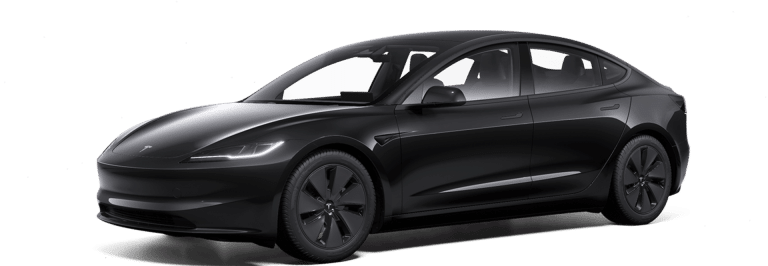
Car fleets have changed considerably in recent years. Formerly made up exclusively of combustion-powered vehicles, they now include hybrid and electric engines. This multiplies the parameters that need to be monitored.
This energy diversification is also accompanied by an explosion in the amount of data that needs to be tracked: electricity consumption, battery condition, availability of charging points, mileage in real time, leasing contract expiry dates, maintenance, etc. In fact, fleet managers today need to master cutting-edge skills to meet the growing expectations of their management.
The risks of poor fleet management
Rough management of its vehicle fleet can have serious consequences for the company. From a financial point of view, the lack of visibility on the Total Cost of Ownership leads to costs that are difficult to identify and correct. Undetected excess mileage, prolonged periods of vehicle inactivity, delays in preventive maintenance... All these factors generate hidden costs that have a direct impact on profitability.
This impact can also be measured in terms of regulatory compliance. Failing to anticipate technical inspection deadlines or forgetting to update insurance exposes companies to financial penalties and legal risks. With the constant evolution of vehicle taxation and new environmental standards, staying in compliance is becoming a permanent exercise.
Managing your car fleet: the limits of traditional methods
Spreadsheets, dispersed tools and manual monitoring
Many companies continue to rely on Excel spreadsheets to manage their vehicle fleets. While this solution may seem economical at first glance, it has a number of weaknesses that quickly become problematic as the fleet grows.
The first limit is the considerable loss of time. Entering mileage figures manually, updating contract expiry dates, compiling fuel or recharging invoices, calculating costs per vehicle... All these repetitive tasks take up precious energy that could be devoted to higher value-added activities.
The risk of error are also important. Incorrectly entered data, forgotten updates or files not shared with the right people can lead to decisions being based on incorrect information. In a context where cost control is crucial, these approximations quickly become problematic.
Finally, the fact that information is scattered across several tools creates a lack of overall visibility. Having to connect to the websites of each hire company, consult different fuel card management platforms, search for invoices in scattered emails... This fragmentation makes it impossible to have a consolidated, real-time view of your fleet.
When switching to electrification, specific tools are needed to monitor electricity consumption. They must be capable of analysing recharging data, identifying possible optimisations and comparing performance between vehicles.
So how do you manage a vehicle fleet effectively today?
Centralising fleet data
The first step towards optimum management is to bring together all your fleet's information in a single place. This centralisation provides a coherent overview. Each vehicle is documented with its technical characteristics, associated contract, maintenance history and usage data.
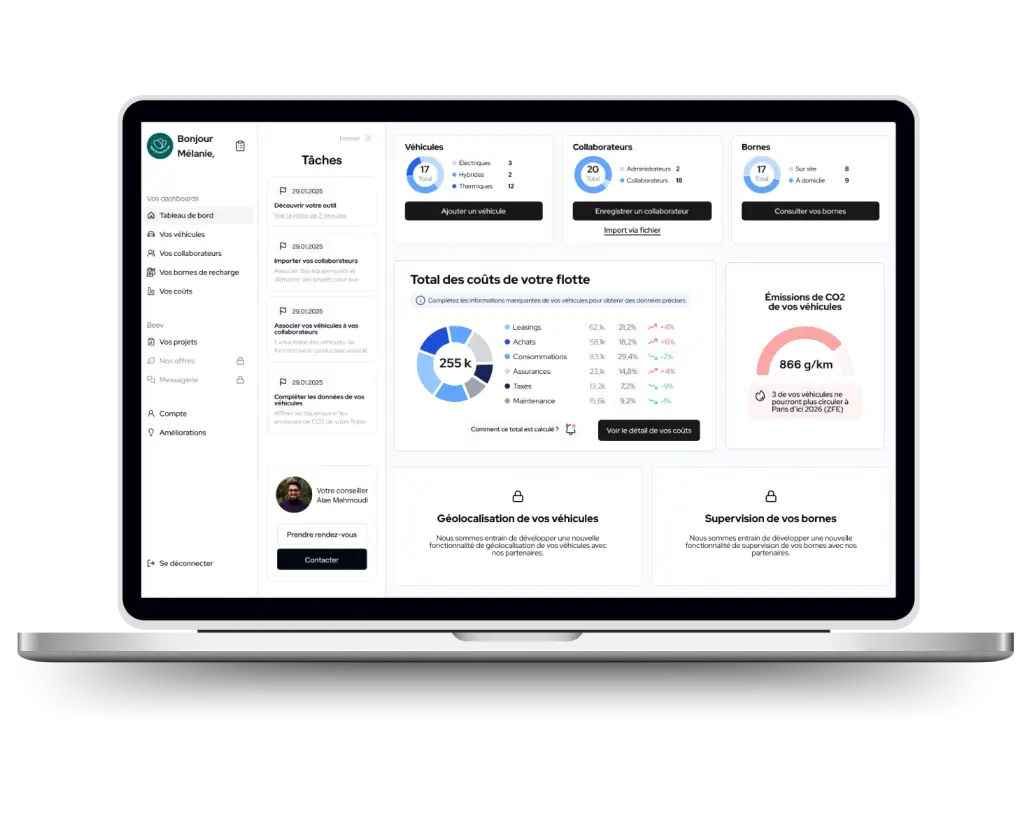
A centralised dashboard should instantly provide key information. This includes the number of vehicles per engine, the utilisation rate, alerts on upcoming deadlines, etc. This global overview enables optimisation opportunities to be identified quickly.
Managing costs and TCO
TCO is the most relevant indicator for assessing the economic performance of a fleet. It incorporates all expenditure over the life of the vehicle. If you can calculate it in real time, you can make informed decisions about optimising your contracts.
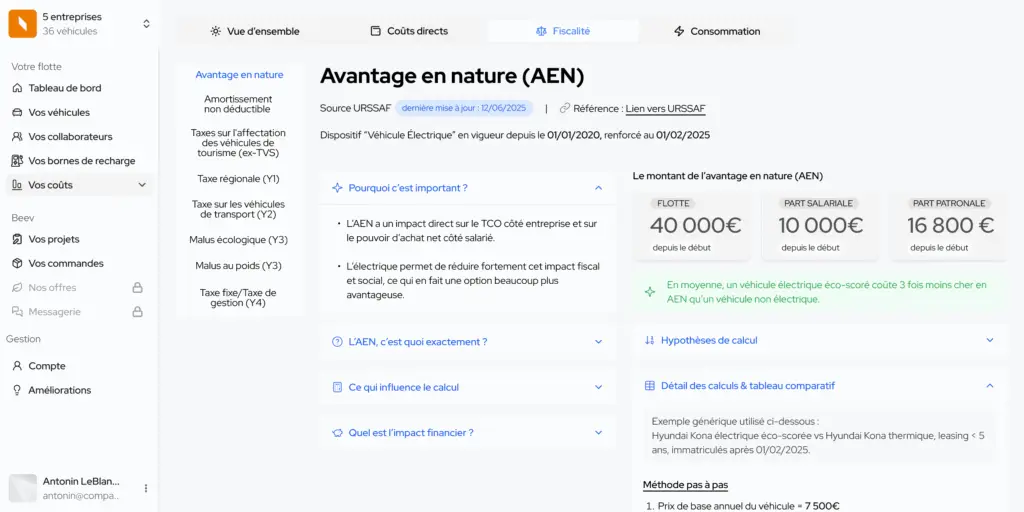
What's more, a good management tool should automate these calculations by incorporating up-to-date tax data. These include VAT rates, depreciation amounts, changes in the Annual Incentive Tax and benefits in kind. All this data must be taken into account to provide a reliable, up-to-date picture of actual costs.
Anticipating fleet changes
Fleet management is also about looking to the future. Anticipating the need to replace vehicles, planning the transition to cleaner engines, sizing the fleet, and so on.’recharging infrastructure These strategic decisions require simulation and projection tools.
Analysing a vehicle's consumption trends, mileage and maintenance costs also helps to identify when to renew the fleet. Similarly, comparing the environmental performance of different engines helps to align fleet management with the company's CSR objectives.
Fleet Manager: car fleet management software from Beev
A tool developed with our customers
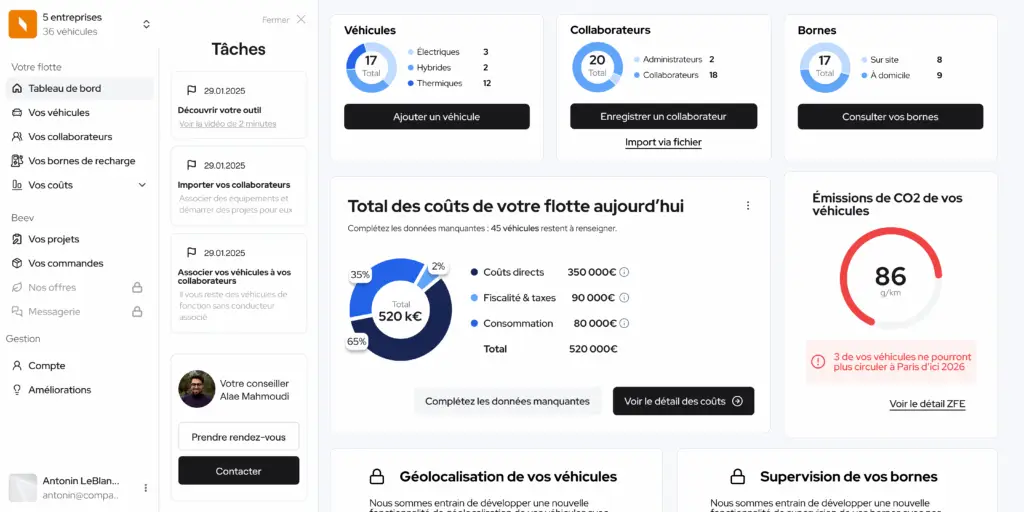
Officially launched on 3 November 2025, the Beev Fleet Manager is designed to simplify the day-to-day management of vehicle fleets. Developed in close collaboration with our customers, it meets the practical needs expressed by fleet managers in the field.
Available from €49 per month, depending on the size of your fleet, this software is aimed at companies of all sizes. The platform has been designed to be intuitive. It requires no special technical skills, and deployment is fast: Beev takes care of importing existing data and configures the tool to the specific needs of each organisation.
This all-in-one solution centralises all aspects of fleet management in a single interface. No more time wasted browsing the websites of different leasing companies or searching for information scattered in dozens of files. The tool brings together vehicles, contracts, invoices and recharging data in a single space.
A solution designed for combustion, hybrid and electric fleets
One of Fleet Manager's major assets is its ability to manage all types of engine within a single interface. The tool adapts to your situation and supports you in your energy transition.
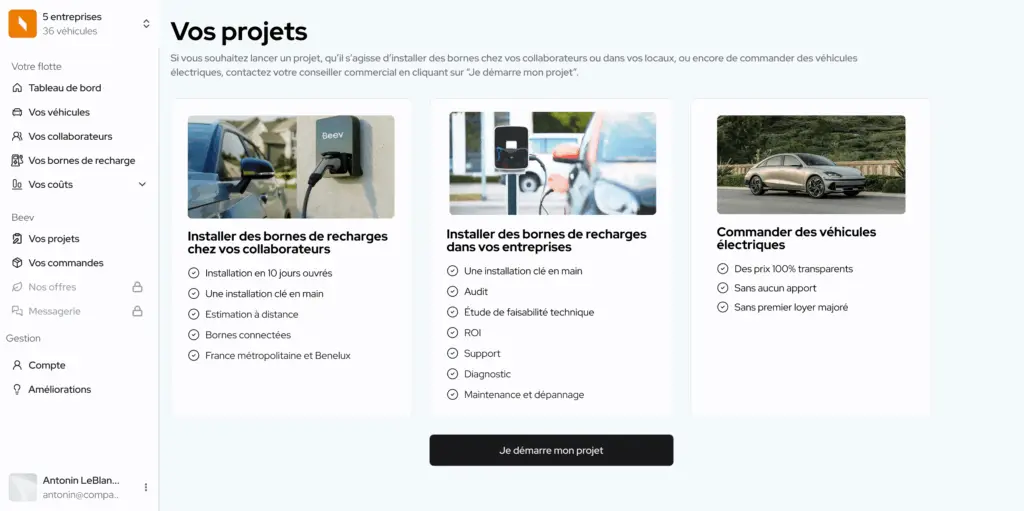
For electric and plug-in hybrid vehicles, Fleet Manager includes specific charging monitoring functions. The tool allows you to monitor the charging points installed. Among other things, it provides information on their operating status and availability. This visibility helps to avoid saturation of charging points and optimise their use.
The platform also facilitates the gradual greening of fleets by providing comparative data between engines. In this way, fleet managers can identify which combustion engine vehicles are the best candidates for replacement by electric vehicles. These calculations are always based on actual usage and mileage.
Key features of Fleet Manager fleet management software
Vehicle tracking and management
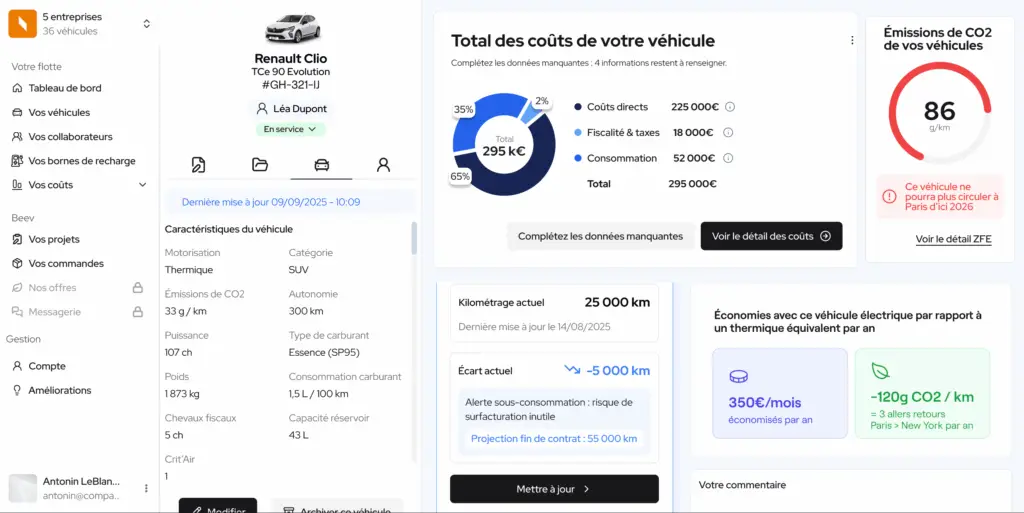
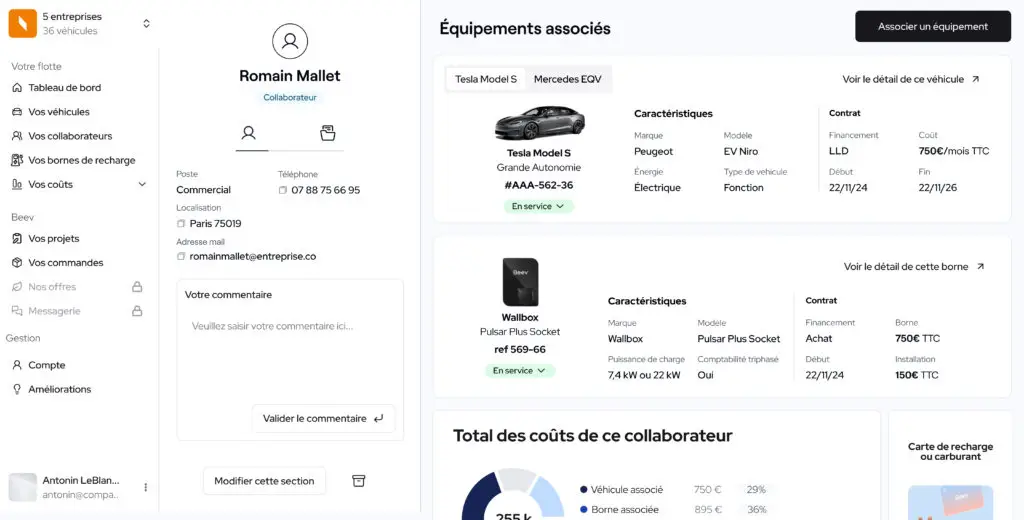
Fleet Manager provides a complete, real-time overview of the entire vehicle fleet. For each vehicle, all the essential information is just a few clicks away.
The dashboard lets you filter and organise this information according to different criteria. For example, if you want to see the progress of your energy transition, you can classify it by type of engine. If you want to identify which vehicles are undergoing maintenance or are available, all you have to do is classify them by status, and so on and so forth.
Automatic alerts warn managers of important deadlines. They see the end of the leasing contract approaching, technical inspections to be scheduled, servicing to be carried out, insurance renewals, etc. This enables them to anticipate the necessary actions to avoid costly oversights.
Cost control and TCO optimisation
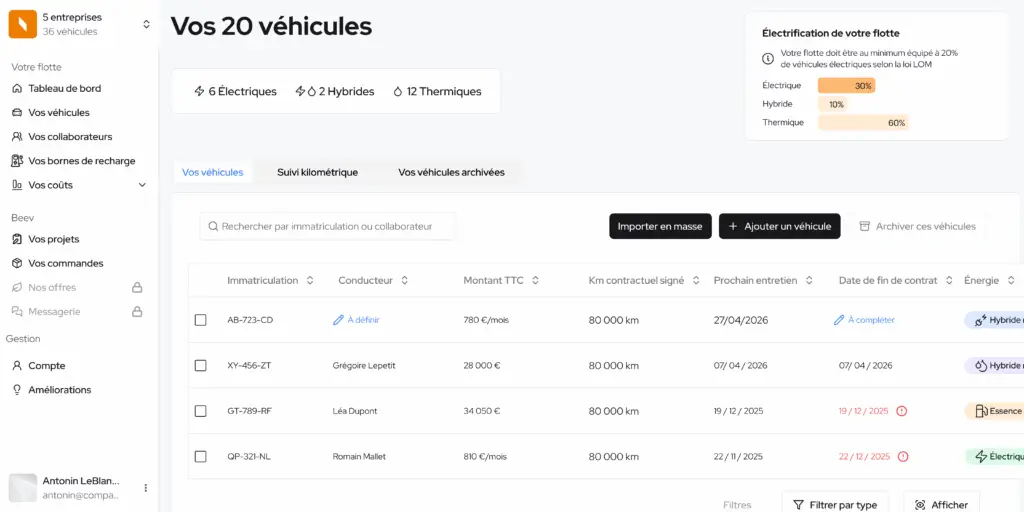
At the heart of Fleet Manager is the automatic TCO calculation function. The tool aggregates all the expenses associated with each vehicle and presents them in a clear and concise manner. Monthly leasing payments, fuel and electricity costs, maintenance and repair costs, insurance and taxes are all clearly shown.
Thanks to the integration of tax data updated daily, the calculated TCO also takes into account regulatory changes. In fact, fleet managers are kept up to date with the amount of the TAVT (formerly TVS), This transparency on actual costs means that any anomalies (over-kilometres, excessive fuel consumption, etc.) can be quickly identified. This transparency on actual costs enables anomalies to be identified quickly (over-kilometres, excessive fuel consumption, etc.).
Support for the transition to electric vehicles
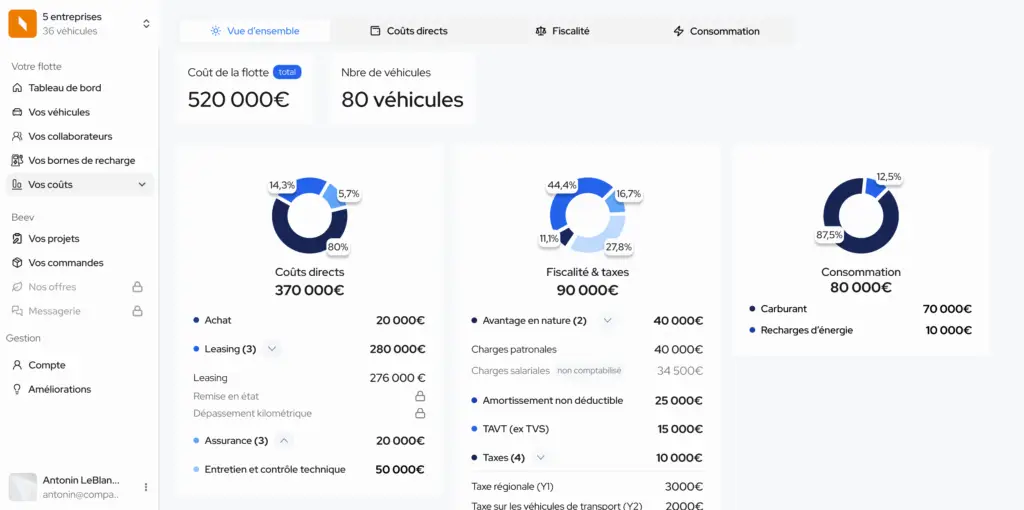
The Fleet Manager actively supports companies in their electrification. As soon as the contract is signed, the Beev teams carry out a complete audit of the existing fleet. This enables them to identify the types of use, the vehicles that are candidates for electrification and the recharging infrastructure requirements.
In addition, the tool incorporates a module dedicated to tracking CO₂ emissions. This makes it possible to measure the overall carbon impact of the fleet and visualise the emissions reductions achieved thanks to electric vehicles. This data is invaluable for feeding into CSR reports. They demonstrate the company's commitment to sustainable development.
The management of charging points is also integrated into the platform. Managers can list all the charging points, wherever they are installed. And all the technical information for each chargepoint can be accessed centrally.
A simple, accessible interface
Fleet Manager has been designed to be easy to use for all user profiles. Whether you're an experienced fleet manager or new to the function, the intuitive interface means you can get to grips with it quickly and without complex training.
The platform can be accessed from any computer via a web browser, as well as from mobile phones and tablets. This flexibility means that managers can consult important information wherever they are and react quickly if necessary.
The system also includes a centralised document area where you can store all your fleet-related documents. This is where you'll find all your leasing contracts, invoices, insurance documents and roadworthiness reports. No more endless searching through emails or physical filing cabinets! Everything is organised and accessible in just a few clicks.
A tool to help companies make the energy transition
The transition to low-carbon mobility is a major challenge for French companies. Fleet Manager is an integral part of this process, providing the tools needed to effectively manage the greening of the fleet.
L'alignment with CSR objectives becomes tangible thanks to the environmental dashboard. Companies can accurately measure their progress, identify areas for improvement and communicate transparently about their efforts.
The reduction incarbon footprint fleet management is based on concrete data. By comparing actual emissions from different engines and simulating the potential gains from electric vehicles, managers can make decisions based on hard facts.
La compliance with regulations is another decisive advantage. Fleet Manager helps to anticipate traffic restrictions in Low Emission Zones by identifying vehicles affected by future bans. The tool also keeps track of legal obligations linked to the Mobility Orientation Law.
Why choose Fleet Manager to manage your vehicle fleet?
A specialised fleet & electrification solution
Unlike general-purpose software, Fleet Manager has been designed specifically for fleet management. This specialisation translates into functionalities designed for the specific problems faced by fleet managers.
What's more, it is constantly evolving to incorporate feedback from users. In fact, Beev maintains a close relationship with its customers to gather their needs and develop the platform accordingly. Solal Botbol, co-founder and CEO of Beev, “This software is designed to live and develop, so we need to know how to prioritise [...] what we want to give our customers as time goes on. And to do that, you have to listen to them.”. This agile approach ensures that the Fleet Manager is always in tune with market expectations.
Beev's expertise goes beyond software
Choosing Fleet Manager also means benefiting from the support of a team of experts in electric mobility. Beev does more than just provide a technological tool. The company offers a genuine partnership to support the transformation of your fleet.
Beev advisers are available to answer your questions, help you interpret the data on the platform and guide you in your strategic decisions. This human dimension makes all the difference, as Géraldine Lellouch of BSL Group points out, underlining the responsiveness and involvement of the teams: «This is top-of-the-range customer service. They have this responsiveness as well as this concern for people, and I must admit that I was pleasantly surprised by their state of mind».»
Comprehensive support: advice, tools, recharging infrastructure
As well as Fleet Manager, Beev offers a complete range of services to help you make the transition to energy-efficient vehicles. The company helps you select the electric vehicles best suited to your needs. It also negotiates with manufacturers and leasing companies to obtain the best terms and conditions, and manages the installation of charging points.
This global approach considerably simplifies your electrification project. Rather than having to deal with a number of different people and coordinate different service providers, you benefit from a single point of contact who manages the entire process.
Conclusion
Vehicle fleet management has changed radically in recent years. Faced with increasingly complex challenges, traditional methods are showing their limitations. Excel spreadsheets and dispersed tools no longer provide the necessary visibility and responsiveness.
Beev's Fleet Manager provides a tailored response to these new challenges. It centralises all information, automates complex TCO calculations, makes it easier to monitor charging points and supports the transition to electric vehicles. With its intuitive interface, this tool gives fleet managers the time and resources to concentrate on their strategic missions.
Manage your fleet easily with our dedicated tool
A fleet management tool from A to Z
- Add your fleet and employees in just a few clicks
- Plan your transition to electric vehicles and monitor your CSR objectives in real time
- Centralise your expenses