



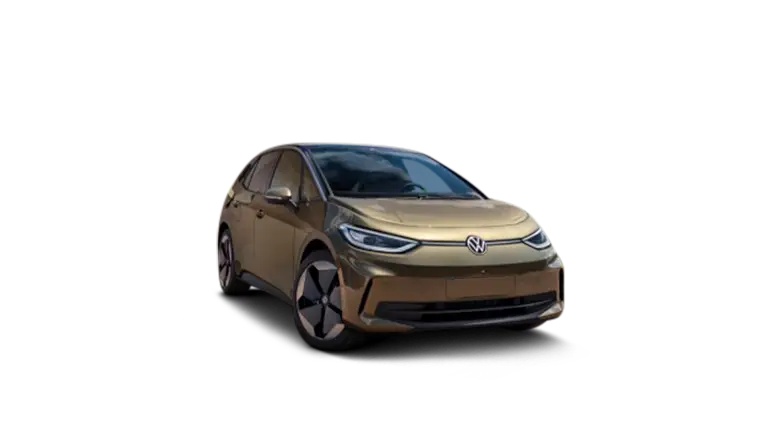









The Skoda Elroq phenomenon: figures that speak for themselves
A meteoric rise on the European market
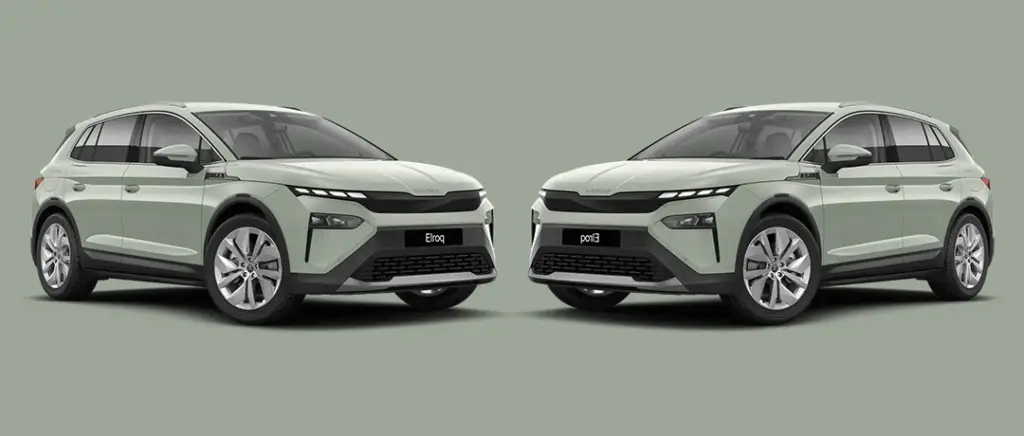
In October 2025, the Skoda Elroq had 11,461 units registered, putting it at the top of the European electric car rankings for the first time. But this top spot is no fluke. It is part of a particularly strong sales dynamic since the vehicle was launched. Over the year 2025 as a whole, the Skoda Elroq has already racked up 70,745 registrations in Europe. This puts it in second place in the annual rankings, just behind the indisputable Tesla Model Y, which has launched a more affordable version.
Immediate industrial success
The Elroq has already become Skoda's third best-seller, all engines combined. As a result, it ranks just behind the iconic Octavia and the Fabia city car. It is well ahead of its big brother, the Skoda Enyaq, which was launched several years earlier. This performance in the in-house range underlines the extent to which the Elroq's positioning responds precisely to current market expectations.
International recognition
The success of the Elroq is not limited to sales figures. The electric SUV has just been awarded the prestigious title of «German Car of the Year 2026» for technical excellence and innovation. This title is not just reserved for German brands, as it has already been awarded to foreign manufacturers.
While Germany is the most buoyant market for the Elroq, its success extends far beyond that. It is also number one in the Czech Republic, Denmark and Slovakia, while also topping the podium in Austria, the Netherlands and Switzerland.
Why is Elroq appealing to businesses?
A game-changing price positioning
With a list price of €36,620 excluding environmental bonus, Skoda is hitting the professional electric SUV segment hard. This entry-level price makes it one of the most affordable options on the market in its category.
For fleet managers, this price/performance ratio is a decisive argument. For this model, Beev also offers long-term leasing solutions from €424 per month (incl. VAT). This type of leasing allows the gradual integration of electric vehicles into the fleet without affecting cash flow.
A perfect balance between compactness and habitability
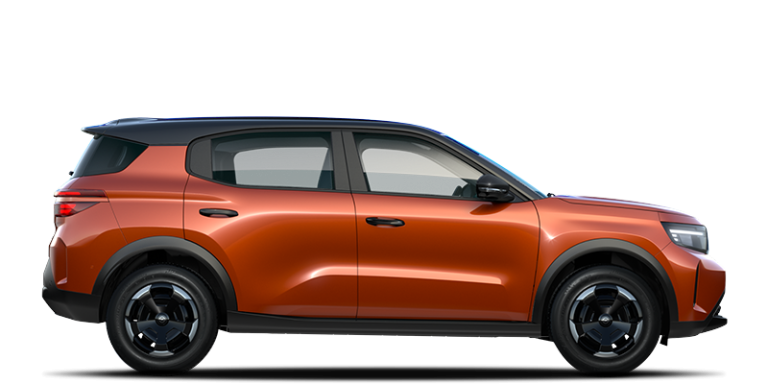
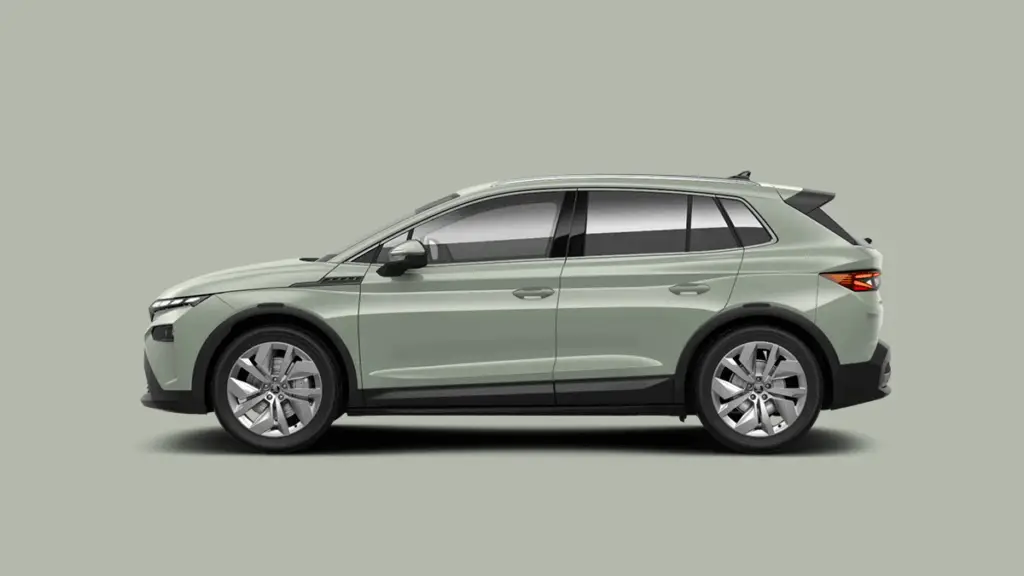
One of the major challenges for electric SUVs is to find the right balance between reasonable size and generous interior space. The Skoda Elroq meets this equation perfectly, with its controlled dimensions making it easy to manoeuvre.
But the real strength of the Elroq lies in its optimisation of interior space. With five seats and a generous boot, it offers appreciable modularity for professionals. Whether you're transporting equipment or simply looking to comfortably accommodate colleagues or customers, the Elroq makes no compromises when it comes to versatility.
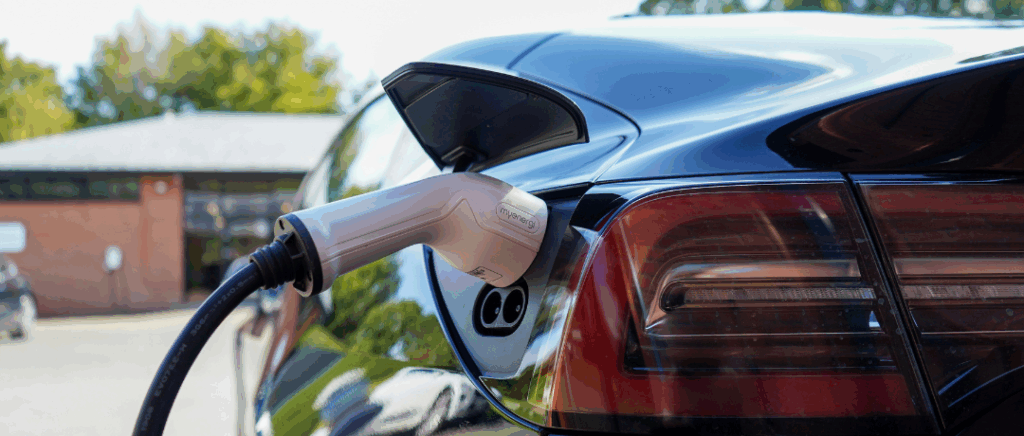
The location of the charging hatch on the right-hand side of the rear also makes it easier to access the charging points, no matter which way you park your car. A practical detail that counts in everyday life.
A autonomy designed for professional use
With a WLTP range of 449 km, the Skoda Elroq 60 is at the top end of the compact electric SUV market. This theoretical range translates into around 410 km in real mixed conditions (city and road). Even in more demanding winter conditions, the Elroq maintains a range of around 335 km. That's more than enough to cover the needs of most professional users.
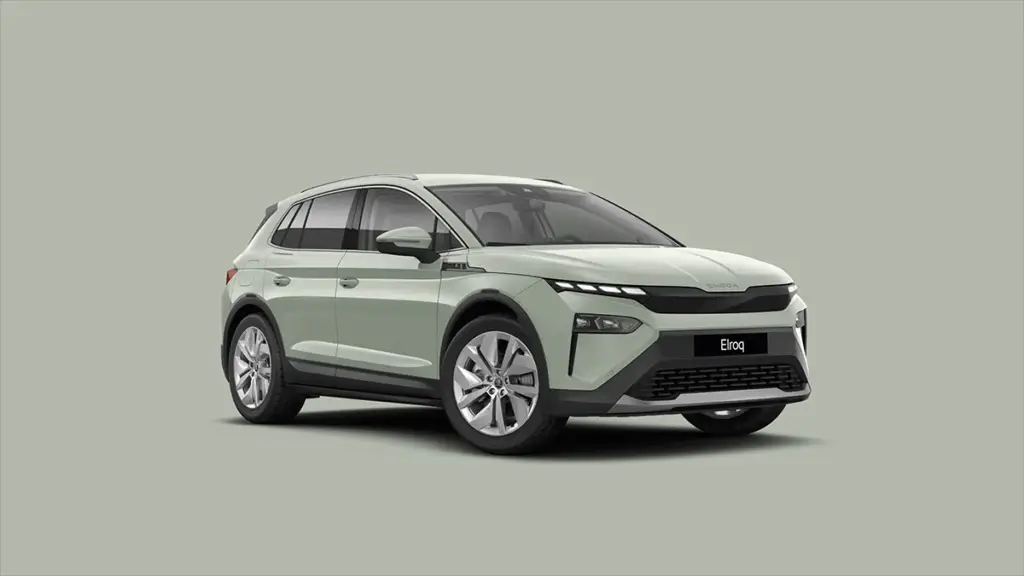
Elroq 60 performance and technical specifications
A well-balanced engine for all uses
The Skoda Elroq 60 features a 204 hp electric motor. Combined with 310 Nm of torque, this power delivers excellent performance for all-purpose use.
Acceleration from 0 to 100 km/h takes 8.5 seconds. This very respectable time guarantees stress-free overtaking and motorway driving.
For fleet managers, this engine offers enough dynamism to satisfy demanding drivers, while remaining reasonable in terms of fuel consumption.
A battery designed for everyday use
The 63 kWh lithium-ion battery from nominal capacity is built around a 400-volt electrical architecture. This proven, reliable technology ensures an optimum balance between range, weight and cost.
What's more, the manufacturer offers an 8-year or 160,000 km warranty on the battery. This long-term guarantee reassures fleet managers that their investment will last. It also limits the risk of unforeseen expenditure linked to premature cell deterioration.
Recharging capacities tailored to professional constraints
In AC (alternating current) trickle charge mode, the vehicle accepts a maximum power of 11 kW via a Type 2 connector. This configuration enables a full recharge from 0 to 100% in around 6.5 hours at a dedicated charging point. It's ideal for night-time recharging at or in the company car park. In addition, Beev supports all companies in the’installation of suitable recharging stations to create an infrastructure consistent with the fleet's needs.
That said, it is with fast charging DC (direct current) that the Elroq shows its full potential. In fact, the vehicle can recover 80% from its battery in just 24 minutes on a fast terminal. This represents a range of around 359 km. This performance is invaluable for mobile workers who need to recharge their vehicle during lunch breaks or customer appointments.
Safety at the highest level
The Skoda Elroq achieved the maximum 5-star rating in the Euro NCAP 2025 crash tests, with high scores in all the categories assessed.
Protection for adult occupants reaches 90/100. This is an excellent result, reflecting the solidity of the structure and the effectiveness of the restraint systems. Protection of vulnerable road users (pedestrians, cyclists) scores 77/100, while safety aid technologies reach 78/100. The Elroq comes with all the latest equipment, such as automatic emergency braking, blind spot detection, lane keeping assist and adaptive cruise control.
This equipment helps to reduce the number of accidents in the fleet, and therefore insurance costs. This is a significant financial factor in the overall TCO of a business vehicle.
Comparison table with its main competitors
This comparison table positions the Skoda Elroq 60 against its three main competitors in the car segment Electric SUVs professional compacts.
| Caractéristiques | Skoda Elroq 60 | Kia EV3 Standard Range | Renault Scénic E-Tech EV60 | Peugeot e-3008 73 kWh |
|---|---|---|---|---|
|
Base price (excl. VAT)
|
36 620 €
|
35 990 €
|
41 990 €
|
44 990 €
|
|
LLD Beev
|
From €445/month
|
From €437/month
|
From €525/month
|
From €646/month
|
|
Power
|
204 ea
|
204 ea
|
170 hp
|
210 hp
|
|
Couple
|
310 Nm
|
283 Nm
|
280 Nm
|
343 Nm
|
|
0-100 km/h
|
8.5 seconds
|
7.5 seconds
|
8.6 seconds
|
8.7 seconds
|
|
Battery capacity
|
63 kWh
|
58.3 kWh
|
65 kWh
|
77 kWh
|
|
WLTP range
|
449 km
|
429 km
|
430 km
|
527 km
|
|
AC charging (alternating current)
|
11 kW
|
11 kW
|
22 kW
|
11 kW
|
|
DC recharging
|
165 kW
|
100 kW
|
130 kW
|
160 kW
|
|
Fast recharge time (10-80%)
|
25 minutes
|
30 minutes
|
35 minutes
|
36 minutes
|
|
Maximum boot volume
|
1,580 litres
|
1,251 litres
|
1,670 litres
|
520 litres
|
|
Tare weight
|
2,000 kg
|
1,800 kg
|
1,847 kg
|
2 083 kg
|
|
Depreciable percentage of battery
|
100%
|
100%
|
100%
|
100%
|
|
Maximum amortisation period
|
5 years
|
5 years
|
5 years
|
5 years
|
Kia EV3 Standard Range: powerful but more limited
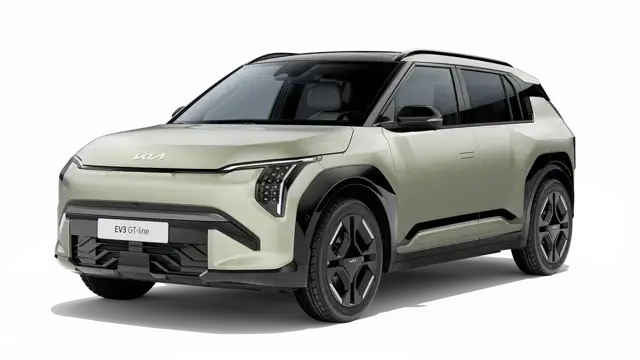
The Kia EV3 boasts good acceleration (0 to 100 km/h in 7.5 seconds) and power on a par with the Elroq. However, its shorter range and 100 kW DC charging limit make it less versatile on long journeys. It also has less boot space. The Elroq, on the other hand, is more enduring and quicker to recharge.
Renault Scénic E-Tech EV60: spacious but less dynamic
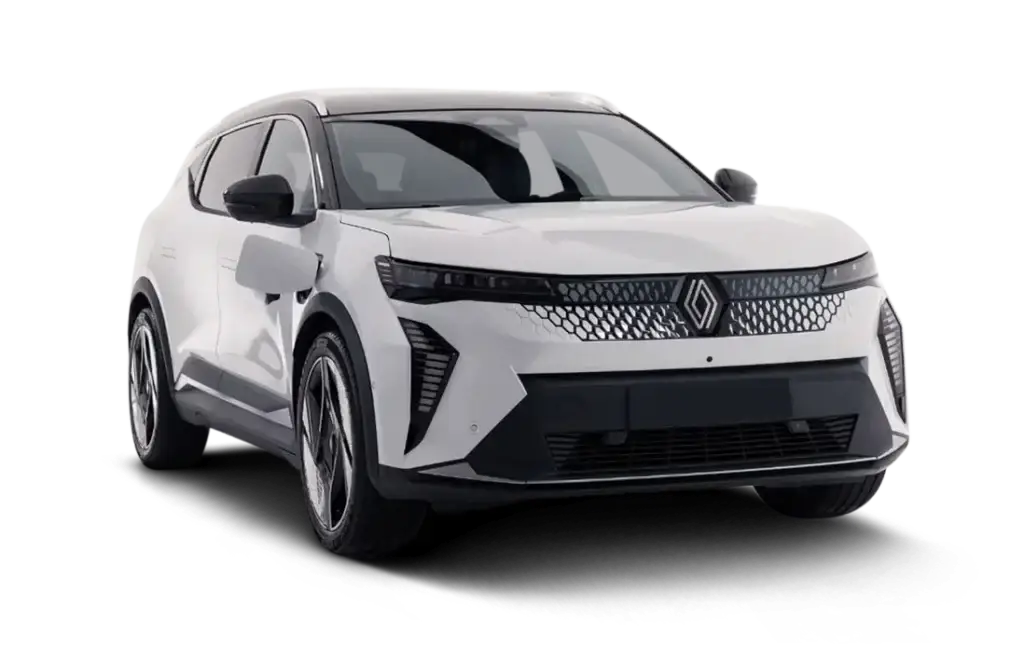
The Scénic boasts ample boot space and a high-performance 22 kW AC charger. But its lower power output (170 bhp), lower torque and longer fast-charging time penalise it. At a higher price, it offers less overall dynamism. Here, the Elroq stands out for its better performance and more efficient DC charging.
Peugeot e-3008: more enduring but more expensive
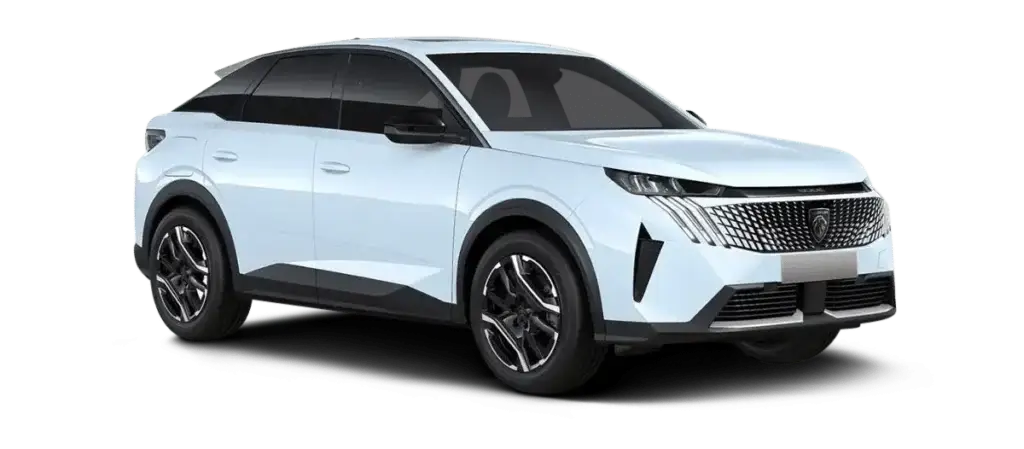
With a range of 527 km, the e-3008 is the champion of endurance. However, this performance comes at a cost, with the highest base price and leasing price of the comparison. Heavier and slower to recharge, it loses out in overall efficiency. This makes the Elroq a more rational alternative, offering excellent value for money.
What you need to know from this comparison
While each model has its strengths, the Skoda Elroq stands out for its overall balance. It offers solid performance, comfortable range and efficient fast charging. What's more, it's priced better than some of its rivals. Where others focus either on endurance, space or dynamism, the Elroq ticks all the boxes. In fact, it's a particularly good choice for fleet managers looking for a versatile electric solution.
Elroq in your energy transition strategy
Optimised TCO for professional fleets
Le Total Cost of Ownership is the decisive factor in the transition of a fleet to electric vehicles. Over and above the purchase price, it is the total expenditure over the vehicle's lifetime that determines the profitability of the investment.
The Skoda Elroq is particularly convincing in this respect. What's more, the cost of maintaining an electric vehicle is structurally lower than that of a combustion-powered equivalent. In fact, an electric car doesn't need an engine oil change, oil filter change or timing belt and clutch change. The only recurring operations concern tyres and brakes, although wear and tear on these is considerably reduced thanks to the electric motor. regenerative braking.
With an average consumption of 17.1 kWh/100 km and an electricity cost of €0.25 per kWh, the cost per kilometre is around 4.3 centimes. For an equivalent diesel, the cost is closer to 8 to 10 centimes. Over 30,000 km a year, this represents a saving of more than €1,500 a year per vehicle on fuel alone.
Advantageous tax depreciation
The French tax system strongly encourages the greening of company fleets. As a reminder, 100% electric vehicles can be written off up to a maximum of €30,000. For their internal combustion counterparts, the ceiling is just €18,300. In practical terms, with a purchase price of €36,620 excluding VAT, a company can deduct €30,000 over a maximum period of 5 years.
The battery benefits from an even more favourable regime, as it can be depreciated at 100% of its value. And there's no upper limit.
For companies subject to Tax on the Assignment of Passenger Vehicles (ex-TVS), The Elroq also offers a decisive advantage. Because it is 100% electric, it is totally exempt from this annual tax, unlike combustion and plug-in hybrid vehicles.
Controlled environmental impact
Beyond the financial aspects, the integration of electric vehicles into a company fleet meets increasingly important environmental and brand image challenges. Like all 100% electric vehicles, the Skoda Elroq emits 0 grams of CO2 when in use. In fact, companies are significantly reducing their carbon footprint linked to mobility.
This absence of direct emissions is also reflected in the green Crit'Air sticker. This gives unrestricted access to Low Emission Zones (LEZ) in France's major conurbations. For companies whose employees regularly need to travel to city centres such as Paris, Lyon, Grenoble or Strasbourg, this freedom of movement represents a major operational advantage. Thermal vehicles, even recent ones, are increasingly subject to restrictions that can disrupt operations.
Lastly, for companies involved in the CSR (Corporate Social Responsibility), the electrification of the vehicle fleet is a concrete and measurable lever for action. Elroq makes an effective contribution to achieving the emissions reduction targets set by organisations.
Conclusion
The success of the Skoda Elroq on the European market is no accident. By becoming the best-selling electric vehicle in October 2025, the SUV is demonstrating that it meets the expectations of companies committed to the energy transition.
For fleet managers, the Elroq represents a sure bet for initiating or accelerating the electrification of the vehicle fleet. Its versatility means it can be adapted to a wide range of professional uses.
The market for professional electric vehicles is entering a new phase of maturity. Models such as the Skoda Elroq demonstrate that electric vehicles are no longer a regulatory constraint, but a relevant solution in terms of economy and operational efficiency. Companies that take the plunge today are one step ahead of future regulatory developments.