










China, driving the global electricity transition
Behind the meteoric growth of the Chinese electric vehicle (EV) market lies a government strategy: invest massively, industrialise quickly, and create a complete ecosystem from the battery fleet management.
Record figures: one in two sales electrified
According to official figures from the China Association of Automobile Manufacturers (CAAM), New Energy Vehicles (NEVs: battery electric, plug-in hybrids and hydrogen) accounted for 49.5 % of total new car sales in China in September 2025, or more than 1.6 million units.
In the first nine months of the year, the country registered more than 11.8 million NEVs, an increase of 32 % compared with 2024.
The International Energy Agency (IEA) confirms this trend: China alone accounts for almost 60 % of global sales of electric vehicles in the first half of 2025.
In practical terms, this means thatOne in every two electrified vehicles sold in the world now travels on Chinese roads.
For fleets, this effect of scale is decisive: the more the market grows, the lower the production costs, the more diverse the offerings and the more sophisticated the management solutions.
Incentive-based public policies and a coherent industrial strategy
This rise is the result of an exemplary alignment between public policy and industrial strategy.
Since 2010, Beijing has structured a solid framework:
- direct purchase subsidies ;
- mandatory emission quotas for manufacturers ;
- massive investment in charging stations (more than 9 million installed by the end of 2024, according to the China Electric Vehicle Charging Infrastructure Promotion Alliance);
- and above all, support for local battery production: CATL, BYD and CALB now dominate the world market.
Results the market share of 100 % electric vehicles (BEVs) exceeded 34 % of new car sales in China in 2025, according to Reuters, compared with less than 10 % in Europe. Where other countries struggle to coordinate subsidies, infrastructure and production, China has succeeded in building an integrated value chain, from lithium to connected fleets.
When China becomes a laboratory for fleet innovation
As well as volumes, China acts as an open-air laboratory for innovation.
Cities such as Shenzhen, Guangzhou and Shanghai are carrying out large-scale tests of 100 % electric fleets: taxis, vans, buses and HGVs.
According to Car News China, More than 90 % city buses in China are now electric, and the country is deploying thousands of long-distance electric trucks equipped with quick-change batteries.
These full-scale experiments accelerate collective learning:
- mastering fast recharging,
- TCO optimisation,
- predictive maintenance,
- integrating fleets into smart energy networks.
Fleet managers around the world are benefiting indirectly from this experience curve. What is being tested today in Shenzhen could be deployed tomorrow in Paris, Berlin or Madrid.
Lessons for fleet managers in Europe
Far from being an exception, China represents a foreshadowing of what lies ahead for Europe. For companies, observing this market is a way of anticipating: Which technologies will dominate? What business models will be viable? How can they rethink the energy management of their facilities?
How the Chinese dynamic is influencing global standards
The first lesson is the norm effect: when a country of China's size passes the 50 % electrificationIt is redefining global industrial standards.
International manufacturers are having to keep pace: electric platforms, on-board software, battery safety - everything is becoming standardised.
For European fleet managers, this means that performance and cost standards will be aligned with those in Asia.
Another consequence: battery prices are falling. According to Bloomberg NEF, the average cost of lithium-ion cells produced in China has fallen to 89 $ / kWh in 2025, compared with 135 $ / kWh in 2023. This drop will have a direct impact on the total cost of ownership (TCO) of vehicles.
Towards convergence of offerings and technologies
The technologies developed and produced on a large scale in China (LFP batteries, modular platforms, V2G bi-directional recharging) are spreading rapidly in Europe.
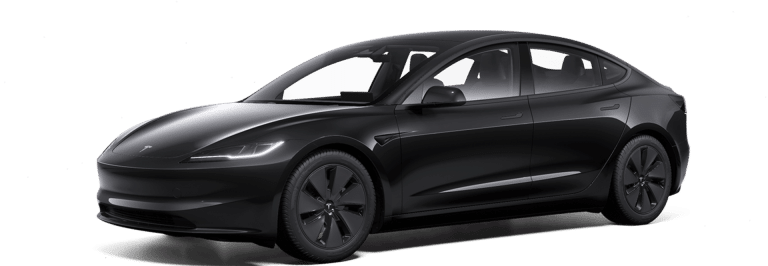
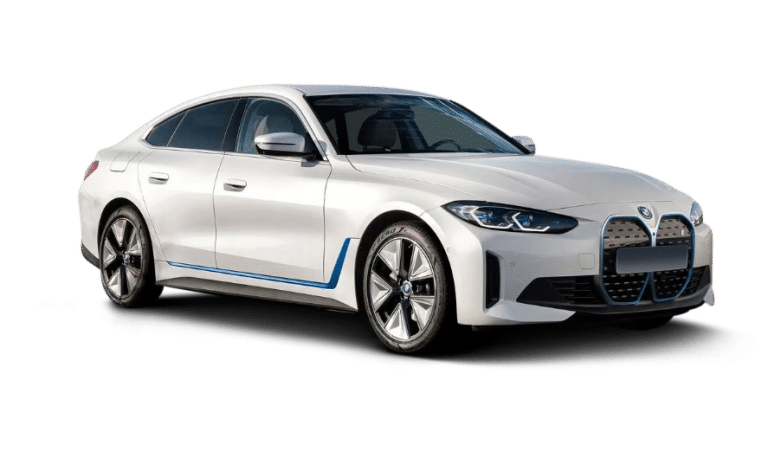
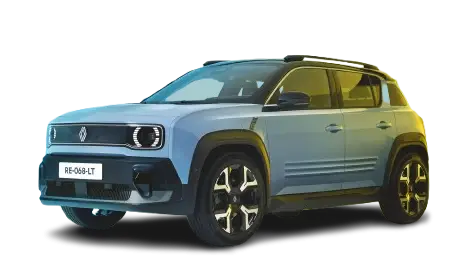
Many Western manufacturers are now sourcing Chinese cells, and some (such as Tesla, BMW and Renault) are assembling their models using technology developed in China.
This convergence is speeding up the democratisation of electric vehicles for fleets, with more than 100,000 vehicles in use.autonomyMore models for professional use (SUVs, LCVs, vans, light trucks).
Practical implications for companies' energy transition strategies
For European companies, the consequences are very practical:
- Re-evaluate renewal plans: electricity becomes competitive from the first replacement cycle;
- Investing in smart terminals and site energy management;
- Train teams to drive and maintain EVs;
- Anticipate the ZFE regulations, which will soon make heat-powered vehicles difficult to use in town centres.
In short, China is setting the pace: the question for Europe is no longer whether its fleet should go electric, but how quickly.
What the rise of China means for corporate fleets
The impact of the Chinese model goes beyond theory: it is transforming the cost structure, operating habits and operational management of fleets.
A broader offering and lower ownership costs
The explosion of the domestic market has led to a proliferation of models adapted to professional needs: SUVs, vans, light commercial vehicles, buses and HGVs.
Large-scale local production, supported by champions such as BYD, SAIC, Geely and Dongfeng, has reduced unit costs.
According to the IEA, vehicles produced in China cost 25 to 35 % less than their Western equivalents for the same performance.
For a fleet, this changes everything:
- the cost of acquisition falls ;
- Simplified maintenance (fewer parts, remote diagnostics);
- the TCO becomes more favourable.
More autonomy, more availability: a new operational paradigm
Innovations from the Chinese market are considerably improving everyday use:
- LFP and sodium-ion batteries, more stable ;
- ultra-fast charging (10 to 80 % in 15 minutes) ;
- automated battery changing systems (BATTERY SWAP) for intensive fleets ;
- software platforms capable of optimising routes according to load and the electricity network.
Trials carried out on Chinese logistics fleets show an average reduction of 20 % in operating costs compared with diesel.
This new operational paradigm is transforming journey planning, energy management and even corporate HR policy.
Direct impact on TCO and fleet renewal plans
TCO (Total Cost of Ownership) is at the heart of fleet decisions.
The figures converge: with the fall in the price of batteries and the lower cost of electricity in China (around €0.09/kWh), the TCO of a commercial electric vehicle is now 10 to 25 % lower than that of a conventional electric vehicle. thermal vehicle.
For European fleet managers, this heralds an imminent changeover:
As soon as the price of local or imported batteries follows this trend, the break-even point will shift definitively towards electric vehicles.
Europe and the rise of China
This industrial domination arouses both admiration and concern. Europe has to deal with a formidable competitor, while transforming this pressure into a lever for competitiveness and innovation.
Electrification as a competitive lever for European fleets
For European fleets, the answer lies in performance: optimising costs, enhancing sustainability and promoting a low-carbon image.
Managers who are rapidly electrifying their fleets are already benefiting :
- tax exemptions or bonuses ;
- lower running costs;
- and a better employer and customer image.
By drawing on China's experience, Europe can accelerate its transition while avoiding the mistakes of an infrastructure that is too slow, a lack of standardisation and insufficient planning.
Collaboration, innovation, sovereignty: striking the right balance
However, this transition must preserve Europe's industrial sovereignty.
Dependence on Chinese components (batteries, cathodes, rare earths) remains a major issue.
- The European Union is therefore banking on initiatives such as :
- European Battery Alliance;
- the development of local gigafactories (Northvolt, ACC, Verkor);
- and research programmes on the recycling and second life of batteries.
For fleets, this means a wider choice of 'Made in Europe' models, easier access to maintenance and greater traceability of the vehicle's history.carbon footprint vehicles.
Outlook for global fleets
The Chinese experience is not limited to a national market. It is redrawing the global balance of professional electric mobility: supply, data, software, energy management.
Towards a global market for professional electric mobility
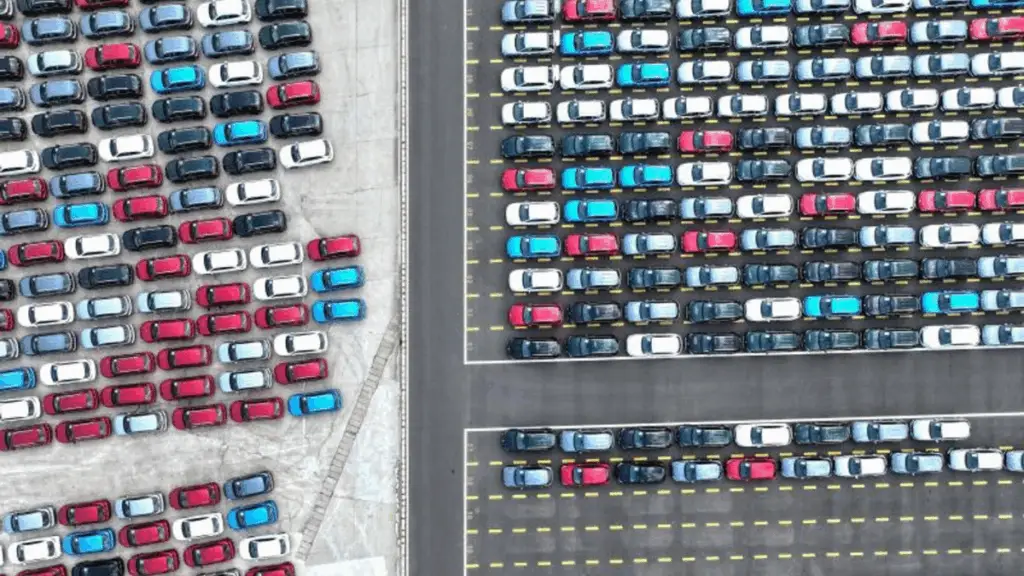
Chinese exports are exploding: more than 6 million electric vehicles will be exported by 2025, according to Reuters, with a growing number destined for B2B fleets.
This internationalisation creates a standardisation of components and technologies, making it easier to maintain and integrate multinational fleets.
The major international managers (LeasePlan, ALD Automotive, Sixt, Geotab) are now including competitive Chinese models in their catalogues.
For companies operating on several continents, this means that fleet policies can be harmonised: same vehicles, same software, same energy performance indicators.
The role of data and management software in energy efficiency
In a world of electrified fleets, data becomes the invisible energy that powers performance.
China, a pioneer in on-board connectivity, has set up national systems to monitor NEVs in real time: recharging, range, geolocation, battery temperature and use of charging points.
These tools are inspiring European managers, who are in turn adopting integrated platforms for energy monitoring, intelligent planning, predictive maintenance and carbon analysis.
Ultimately, the success of an electric fleet will be based on an inseparable triptych: vehicle + energy + data.
Conclusion - China, a global catalyst for fleet electrification
Today, the Chinese market is acting as the most powerful accelerator in the global transition to a low-carbon economy. carbon-free mobility.
Through its volumes, its public policy and its industrial ecosystem, it has made electricity an economic as well as an environmental standard.
For European fleet managers, the stakes are clear:
- understand the mechanisms of Chinese competitiveness,
- anticipate lower costs,
- invest in data and infrastructure,
- and adapt their renewal strategy to remain competitive.
The electrification of fleets is no longer a gamble on the future: it's an economic and operational reality.
And if China has taken the lead, it is now up to Europe to turn this pressure into an opportunity to build its own sustainable, sovereign and efficient model.
To remember:
- 1 in 2 cars sold in China is now electrified.
- More than 60 % of global EV sales are in China.
- The cost of batteries has fallen below 90 $/kWh.
- The TCO of an electric vehicle is 10-25 % lower than that of a combustion engine.
- Data and energy management are becoming the new levers for fleet performance.