


















New generation: 500 kW V4 Superchargers explained
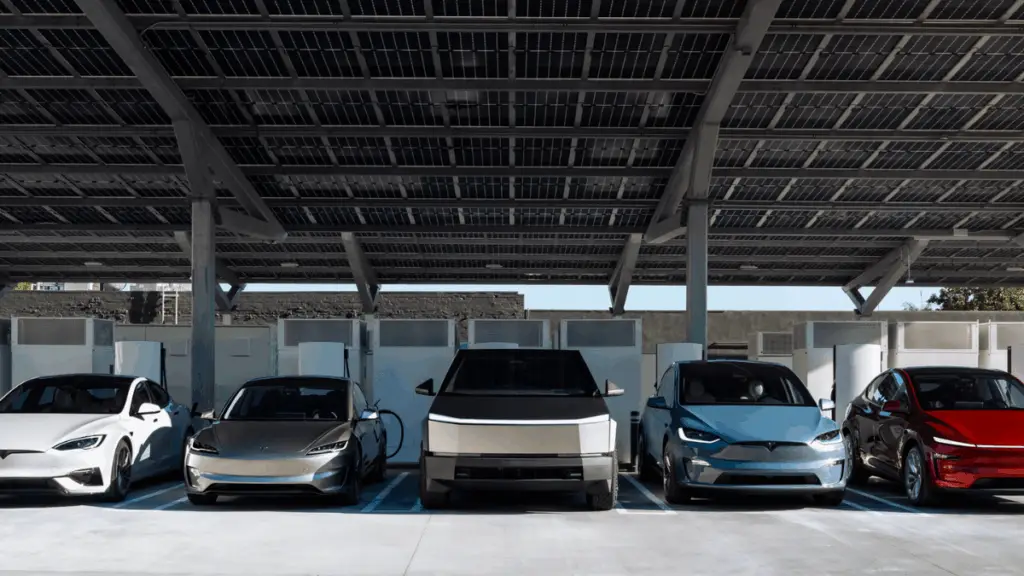
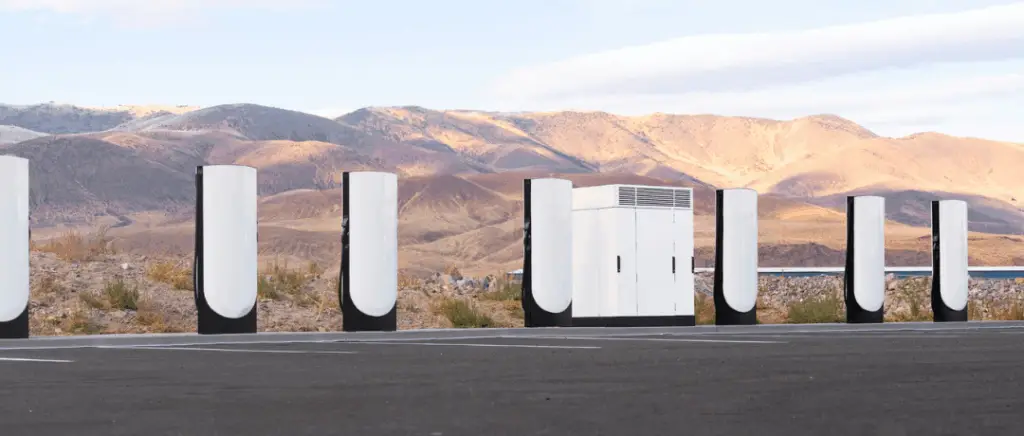
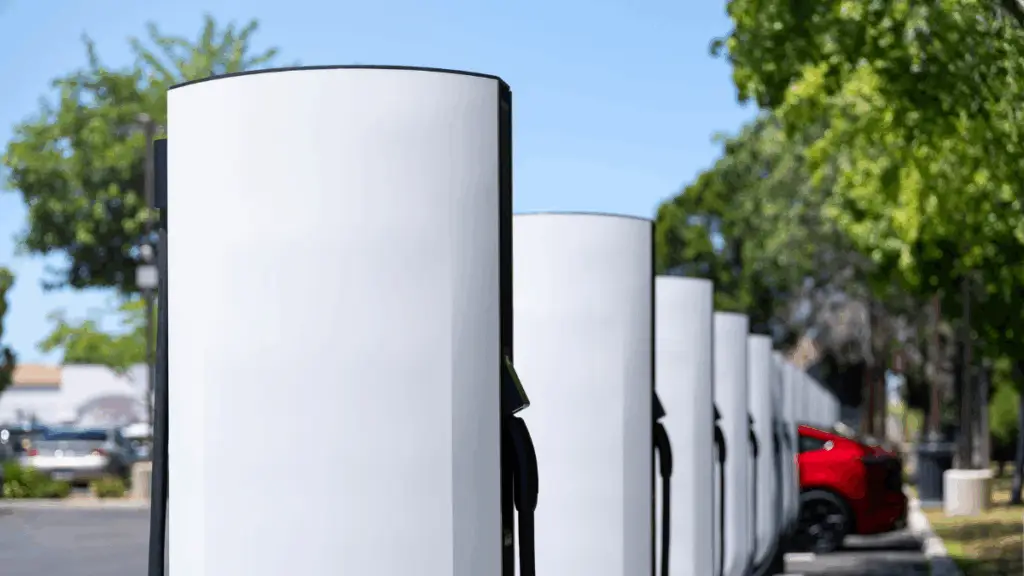
Tesla has not just improved its hardware: it has rethought its entire energy architecture. The power of Tesla Superchargers has doubled, from 250 kW to 500 kW with the V4 models, a leap that paves the way for a new generation of superchargers. ultra-fast charging unprecedented on the market.
V4 technical specifications :
- Maximum power : 500 kW (compared with 250 kW for the V3).
- Supported voltage : 1000 V architecture (400 V and 800 V compatible).
- Capacity per cabinet : 8 terminals powered simultaneouslydouble that of the previous generation.
- Charging cable : Extended length for easy access to all types of vehicles.
- Payment terminalst: integration of CB readers for non-Tesla vehicles.
What does this mean in practical terms?
This means twice as fast recharging for compatible vehicles.
| Model | V3 (250 kW) | V4 (500 kW)* | Gain |
|---|---|---|---|
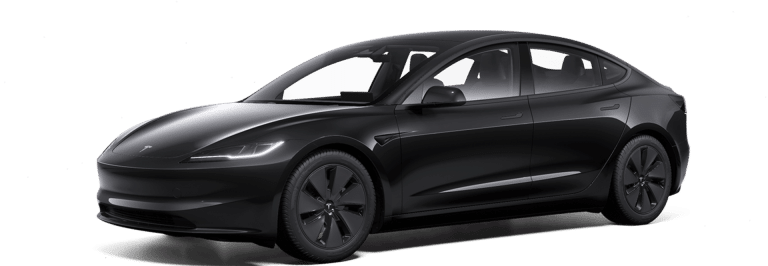
| Tesla Model 3 Long Range | ~25 min | ~25 min | 0% (limited by battery 400V) |
| Tesla Model Y Performance | ~27 min | ~27 min | 0% (limited by 400V battery) |
| Tesla Cybertruck | ~45 min | ~22 min | 51% |
| Tesla Semi (HGV) | N/A | ~45 min | New accessible segment |
Ultra-fast recharging: what are the benefits for fleet managers?
1) Drastic reduction in downtime
In fleet management, every minute counts.
A vehicle at a standstill means an unproductive employee and a potentially missed appointment.
Let's take a fleet of 30 vehicles charging 2 times a week:
- With V3 (250 kW): 30 vehicles × 2 recharges × 25 min = 1,500 minutes/week (25 h)
- With V4 (500 kW): 30 vehicles × 2 recharges × 15 min = 900 minutes/week (15 h)
Annual gain 520 hours recovered, equivalent to 65 days of 8-hour work.
Financial impact :
By valuing employee time at €50/hour (average employer cost), the annual saving amounts to €26,000 for a fleet of 30 vehicles.
2) Optimising sales productivity
For mobile sales forces, after-sales technicians or express delivery fleets, ultra-fast recharging is transforming route planning.
Operational benefits :
- Increase in the number of customer visits +1 to 2 extra appointments per day.
- Greater flexibility : Opportunistic recharging between appointments.
- Stress reduction end of anxiety linked to theautonomy.
- Improving employee satisfaction: vehicles perceived as more efficient.
3) Simplified logistics management
Ultra-fast charging brings the electric experience closer to that of a full internal combustion engine (5-7 minutes).
For fleet managers, this means :
- Simplified planning A natural addition to lunch breaks or between meetings.
- Reduced on-site infrastructure requirements : less dependence on company terminals.
- Geographical versatility : guaranteed national coverage with the dense Supercharger network.
4) Anticipating future high-voltage engines
The evolution of architectures towards 800 V and more (Hyundai, Porsche, Mercedes, BYD...) makes ultra-fast charging a future standard.
500 kW Superchargers are therefore becoming a solution of the future, compatible with the generations of vehicles that will be equipping fleets from 2026-2027.
Investing today in a compatible ecosystem means anticipating tomorrow's needs without the risk of technological obsolescence.
Integrating Superchargers into a company fleet: how does it work?
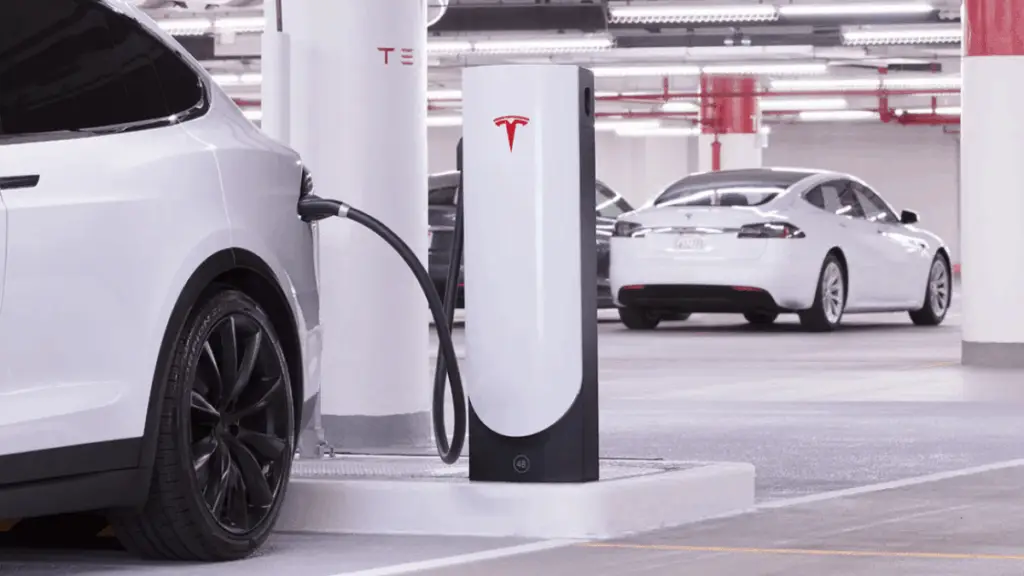
For a fleet manager, the increase in the number of Supercharger 500 kW charging points is not just a technical advance: it's an accelerator in the transformation towards more efficient, cost-effective and sustainable mobility.
The integration of these new recharging capacities is part of an overall approach to managing the electrical fleet, where every minute and every kilowatt counts.
An infrastructure that is now universal
Superchargers, long reserved for Tesla vehicles, are now moving towards greater interoperability.
The adoption of the NACS (North American Charging Standard) and CCS standards means that many electric vehicle brands can connect directly to the Tesla network, offering a universal solution for mixed fleets.
This opening changes the game:
- Fleet managers can now plan optimised journeys without being limited to a single brand.
- The Tesla network is becoming an essential link in the public fast-charging chain, guaranteeing availability, reliability and national coverage.
Beev, a partner in the electrification of fleets
At Beev, we help companies to integrate these new infrastructures into their mobility strategy.
Our role goes far beyond simply supplying vehicles: we help managers to build a consistent, scalable and economically optimised recharging policy.
Our solutions include :
- Electric mobility audit analysis of usage, itineraries, business constraints and recharging requirements.
- Multi-infrastructure integration A mix of in-house charging points, public recharging and superchargers.
- Unified payment and billing management universal cards, supervision portals and centralised energy monitoring.
- Automated CSR reporting consolidated consumption, avoided emissions and energy costs, which can be directly exported for carbon audits and comply with the LOM law.
Thanks to the connectivity of the Tesla V4 charging stations and Beev's digital tools, each charge can be automatically included in the company's environmental reporting.
This allows :
- complete traceability energy data,
- simplified monitoring emissions avoided (Scope 1 & 3),
- and a production of automated carbon balancesThese are ready to be integrated into CSR reports or certification procedures (ISO 14001, Label Engagé RSE, carbon footprint).
Our experts will advise you according to your needs. Beev offers Tesla 100% electric vehicles at the best prices, as well as recharging solutions.
Return on investment and CSR opportunities
TCO comparison: electric vehicles (including superchargers) vs internal combustion vehicles
The financial impact of this development is measured in terms of total cost of ownership (TCO).
Let's take the case of a fleet of 10 vehicles, commercial use, 35,000 km/year over 4 years:
| Cost item | Electric (Superchargers included) | Thermal |
|---|---|---|
| Acquisition (LLD) | 201 600 € | 230 400 € |
| Energy | 21 600 € | 47 600 € |
| Maintenance | 4 800 € | 14 400 € |
| Insurance | 32 000 € | 36 000 € |
| Taxation (TVS, malus, etc.) | 0 € | 12 000 € |
| TOTAL (4 years) | 260 000 € | 340 000 € |
| Savings | ≈ €80,000 (-24%) | |
Carbon impact and CSR reporting
Integrating Superchargers into your fleet strategy brings measurable benefits in terms of your CSR obligations.
Reduction in CO₂ emissions (calculation based on fleet of 10 vehicles, 35,000 km/year) :
- Diesel fleet 140g CO₂/km × 350,000 km/year = 49 tonnes CO₂/year.
- Tesla Fleet (French energy mix 80 g/kWh): 18 kWh/100km × 0.080 kg/kWh = 14.4 g/km → 5 tonnes CO₂/year.
Annual discount emissions: 44 tonnes CO₂, a reduction of 88 %.
Talking equivalents for your CSR report:
- 44 tonnes of CO₂ = 200 Paris-New York flights avoided.
- = 4,400 trees planted (average capture 10 kg CO₂/year/tree).
- = Carbon footprint of 4 French people.
Compliance with the LOM Act :
Fleets of more than 100 vehicles must incorporate 20 % of low-emission vehicles by 1ᵉʳ January 2025 (according to Article 40 of the LOM Law).
Tesla 100 % electric vehicles count in their entirety towards this quota, unlike plug-in hybrids, which are gradually being phased out.
Promoting environmental commitment :
- Carbon footprint (scopes 1 and 3): precise data via Tesla API
- ISO 14001 (environmental management): energy traceability
- Label Engagé RSE: green mobility criteria increasingly scrutinised
Looking ahead to 2026 and beyond: what will it take to get ahead?
Expected technological developments
Short term (2025-2026) :
- General introduction of V4s in Europe With commissioning scheduled for 2025, Tesla is asserting its leadership position. By the end of 2026, 50 % of the European network should be equipped with 500 kW cabinets.
- Opening to third-party vehicles : Superchargers are increasingly accepting non-Tesla models thanks to the NACS standard or CCS adapters.
- V2G (Vehicle-to-Grid) integration Future V4 cabinets could support bi-directional charging, transforming fleets into reversible energy assets.
Medium-term (2027-2028) :
- Cable-free charging (high-power induction): Tesla is experimenting with induction systems of up to 100 kW.
- AI-driven dynamic pricing: costs adjusted according to occupancy rate and spot energy rates.
Winning fleet strategies for 2026
1. Anticipating the increase in workload (no pun intended)
Smart fleet managers start now to :
- Train drivers to optimise recharging (battery pre-heating, thresholds 80 %),
- Map frequent journeys vs. availability of V4 Superchargers,
- Negotiate framework agreements with Tesla to secure tariffs and priority access.
2. Intelligent energy mix
A fleet of 100 electric %s is not always the best solution in 2025. The right approach :
- 70-80 % electric for urban and suburban use (<200 km/day)
- 20-30 % plug-in hybrid for multi-region long-distance drivers
- Reserving combustion engines for heavy commercial vehicles (pending credible electric solutions)
3. Preparing for the integration of new brands
Opening up Superchargers to non-Tesla vehicles redefines the fleet choice equation:
- Diversification possible without sacrificing access to the best charging network,
- Stronger negotiations with incumbent manufacturers (Volkswagen, Stellantis), who are losing their "proprietary infrastructure" argument.
Regulatory vigilance points
AFIR Directive (Alternative Fuels Infrastructure Regulation)
Coming into force in 2024, it requires :
- Fast stations (>150 kW) every 60 km on the TEN-T network by 2025,
- Total network interoperability (CB payment compulsory),
- Tesla will therefore have to maintain its technological lead while opening up.
- Carbon tax at borders (MACF)
From 2026, a carbon tax will apply to imports, including vehicles. Tesla cars produced in China (Model 3/Y) could see their price rise by 5-8%, impacting TCOs. Something to keep an eye on when it comes to fleet renewal.
Conclusion
With the 500 kW Supercharger, Tesla is redefining fast charging and ushering in a new era for professional mobility.
But beyond pure performance, it is the economic and environmental challenges that are changing the game:
- A significant reduction in TCO,
- Increased productivity for employees,
- Better energy traceability thanks to automated CSR reporting,
And easier compliance with the LOM law and the 2030 carbon targets.
With the support of partners like Beev, companies can integrate these innovations in a simple and measurable way, while preparing their fleet for the next decade of electric mobility.
Manage your fleet easily with our dedicated tool
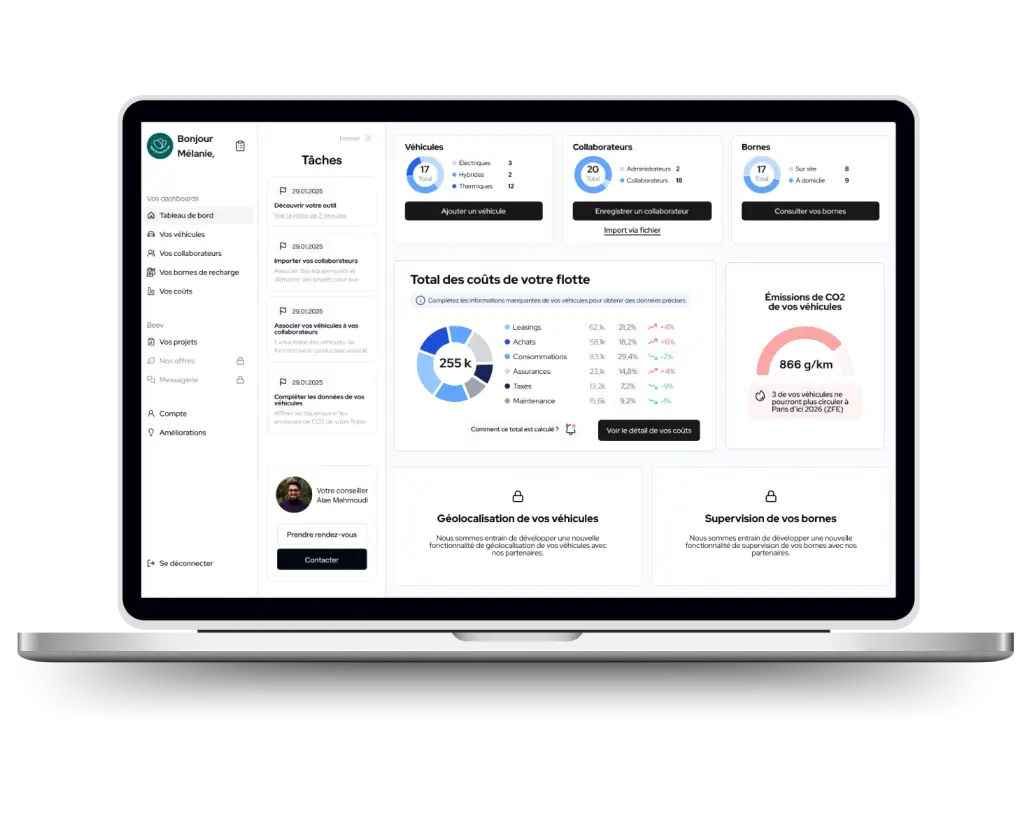
A fleet management tool from A to Z
- Add your fleet and employees in just a few clicks
- Plan your transition to electric vehicles and monitor your CSR objectives in real time
- Centralise your expenses