











Toyota announces solid state battery What does "revolutionary" really mean?
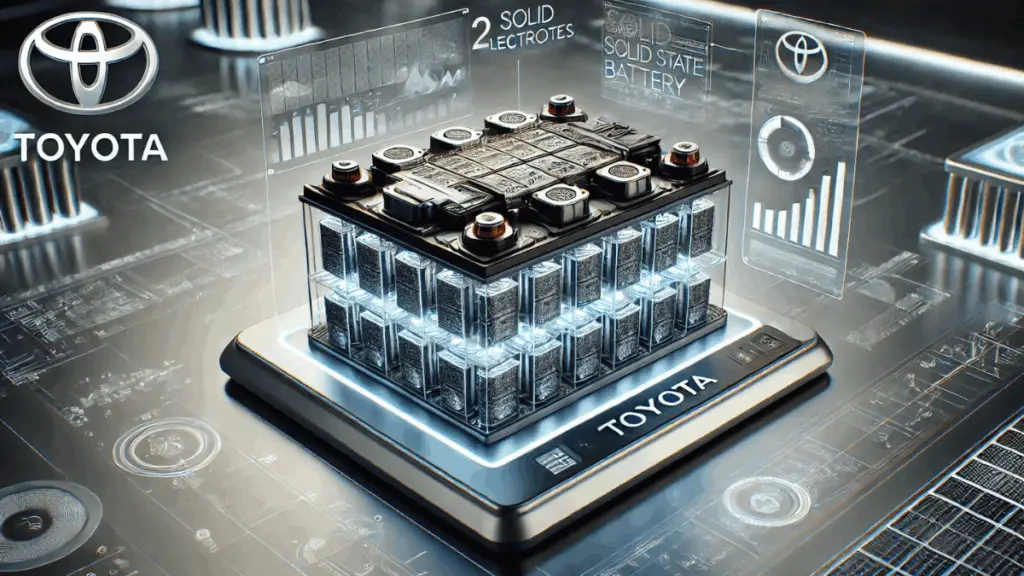
Since 2014, Toyota has regularly presented solid-state batteries as the key to the "new era" of the electric vehicle. Every time it speaks, the figures announced strike a chord: autonomy exceptional, virtually infinite lifespan, instant recharging. But behind the hype, a number of questions remain: what has actually been developed? What stage have the prototypes reached? And why are these promises still not being translated into available vehicles?
1,000 km range, ultra-fast charging, record lifespan: the official promise
Toyota claims that its future solid-state batteries will offer a range in excess of 1,000 km, recharge in ten minutes and a lifespan announced at forty years, a longevity incomparable with current lithium-ion batteries. On paper, this performance would be revolutionary. They would make it possible to reduce the size of batteries, make vehicles lighter, lower the cost per kilometre and increase availability for fleets.
The theoretical benefits for businesses are immense: a vehicle capable of travelling long distances, recharging very quickly and lasting much longer would revolutionise TCO, maintenance and fleet rotation.
However, this projection is based on laboratory prototypes, not on models that have been approved or tested on a large scale. The promises have not yet crossed the boundary between research and industrialisation.
Why have these ads been appearing regularly since 2014?
Toyota's announcements about solid-state batteries come at regular intervals, often presented as a decisive step towards a new generation of electric vehicles. However, no model equipped with this technology has yet been introduced on the market.
There are several reasons for this recurrence:
- Toyota wants to maintain its historic position as an innovator in a highly competitive market;
- investors expect a long-term vision for technology battery ;
- The brand is also looking to catch up with players who are already well established in the all-electric market, such as Tesla, Nissan, BYD and Volkswagen ;
- technological communication is helping to nurture the image inherited from the success of the Prius hybrid.
This dynamic shows why it is important for fleets to distinguish between technological announcements and solutions that are actually available in the short and medium term.
Why has Toyota still not brought a solid-state battery to market?
Behind the high-profile announcements, Toyota's industrial reality is much more nuanced.
Although the brand frequently advertises its 'revolutionary solid batteries', their absence from the market is not due to a lack of know-how, but to a different strategic approach, pursued for almost twenty years.
Understanding this discrepancy is essential for analysing the real value of the promises of 1,000 km of range and ultra-fast recharging.
A strategy focused on hybrids for 20 years
While other manufacturers were fully committed to electric vehicles, Toyota focused almost exclusively on hybrids.
The worldwide success of the Prius has given it a solid 'green' image, but it has also created a 'lock-in' effect:
- the company has invested heavily in hybrid powertrains;
- it has developed mechanical expertise, not software;
- it has opted for hydrogen rather than lithium-ion batteries;
- it has not built any dedicated electric vehicle platforms.
This strategic choice has certainly enabled Toyota to dominate a segment... but it has kept it away from the key technologies needed for a solid battery: chemistry, power electronics, energy density and large-scale cell production.
In plain English Toyota found itself having to catch up with a speeding train.
The absence of competitive electric models until 2023-2024
For a long time, Toyota concentrated its investments on hybrids, which delayed its entry into the market for 100 % electric vehicles.
The bZ4X, launched late, has had a complicated career:
- less autonomy than its direct competitors,
- low-performance fast charging,
- worldwide recall when it went on sale,
- a platform initially designed for several powertrains (not just electric).
Meanwhile, a number of manufacturers have accelerated very quickly:
- Tesla has consolidated its lead in software and efficiency,
- Hyundai and Kia have imposed their 800 V platforms,
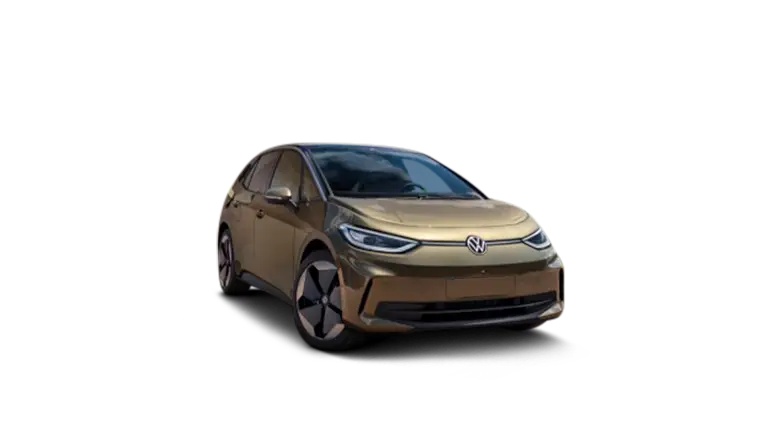
- Volkswagen has rolled out its ID range,
- BYD and MG have turned the market on its head in terms of price/equipment,
- Nissan (Toyota's historic rival) was already making progress with its new generation EV and its own work on solid-state vehicles.
This context also explains why the integration of a solid-state battery in a production model is still not an option at this stage.
Why Toyota is stepping up its technology announcements today
Faced with this gap, Toyota is now adopting a much more aggressive communication strategy.
The announcements on solid batteries address a number of issues:
- reassure investors who are worried about the historic delay,
- maintain its media profile in the face of Tesla, BYD and Volkswagen,
- assert a symbolic technological leadership, inherited from the Prius era,
- give internal perspectives to its R&D teams,
- demonstrate its ability to stay in the race for the next-generation battery.
But advertising and marketing are two different worlds.
Toyota's solid-state battery remains experimental, produced in very small quantities, and no serious timetable for mass deployment has been confirmed.
So the big promises are mainly to occupy media space, not to announce an imminent product.
Where does the industry really stand? A neutral, multi-brand overview
Contrary to popular belief, Toyota is not alone in the race. Several battery manufacturers are working on solid or semi-solid technology.
Nissan, Toyota, Volkswagen, BYD... all moving at their own pace
Solid state batteries are being developed worldwide. Several players have already presented working prototypes, or even batteries that are close to industrial production. For fleets, this means that the future does not lie with a single brand, but with a wide range of manufacturers. global ecosystem.
Nissan, a pioneer in electric vehicles with the Leaf, is developing its own solid-state battery, with production scheduled for the second half of the decade.
Volkswagen, via QuantumScape, is making progress on a stable prototype that is still a long way from production.
BYD and CATL, world leaders in batteries, are exploring semi-solid solutions that are already being tested in certain models sold in Asia.
So Toyota is not the only credible player, and in some cases it is not even the most advanced.
Semi-solid batteries: a more realistic technology in the short term
The technology that will be really accessible in the next few years is not the pure solid battery, but the semi-solid battery.
It offers :
- higher energy density
- fewer thermal risks
- better control of production costs
- improved service life
Several Chinese models already include semi-solid variants, proof that innovation is progressing, but in a pragmatic way.
For fleet managers: what decisions should be taken today?
Fleets cannot wait for a technological breakthrough whose date of commercialization remains unknown. Operational, economic and regulatory constraints call for immediate decisions.
Why waiting for solid state batteries would be a strategic mistake
Waiting for a technology that is still uncertain exposes companies to a number of risks:
- delaying the electricity transition
- lose current tax benefits
- jeopardise EPZ obligations
- higher fuel costs
- falling behind on CSR
- extend the depreciation cycle
Solid-state batteries are not expected before 2028-2030, and probably first on low-volume, top-of-the-range models.
Technologies actually available: LFP, NMC, semi-solids
Today, fleets have access to reliable, tried and tested solutions:
- LFP for urban use and controlled costs
- NMC for long distances and performance
- semi-solid in certain premium or Asian models
These technologies already cover more than 95 % of business needs.
How to secure TCO without waiting for technological breakthroughs
The TCO of an electric vehicle is based above all on concrete, measurable parameters. What really counts today are the efficiency of the model, the reliability of its battery, the ability to plan recharges precisely, the associated energy costs, the speed of charging, the availability of leasing and the stability of the residual value. None of these parameters depend on innovations that are still hypothetical.
To date, no study has shown that delaying the transition to electric vehicles would result in a lower TCO thanks to a hypothetical solid-state battery. In fact, the opposite effect is more common: delaying electrification often results in higher expenditure, notably because of the increasing tax burden on internal combustion engines, higher operating costs and the loss of financial opportunities such as bonuses, exemptions and advantages linked to the EPZs.
In other words, securing a high-performance TCO requires decisions based on technologies available today, not on promises whose industrialisation is still uncertain.
Credible alternatives for businesses right now
Many electric models available today already offer a solid range, rapid recharging and excellent TCO control.
Efficient electric models for fleets
Contrary to the still theoretical promise of solid batteries, fleets already have a wide choice of reliable, competitive electric models that are perfectly suited to professional use. In the field, several vehicles have demonstrated a solid combination of real range, efficiency, controlled operating costs and total compatibility with current infrastructures.
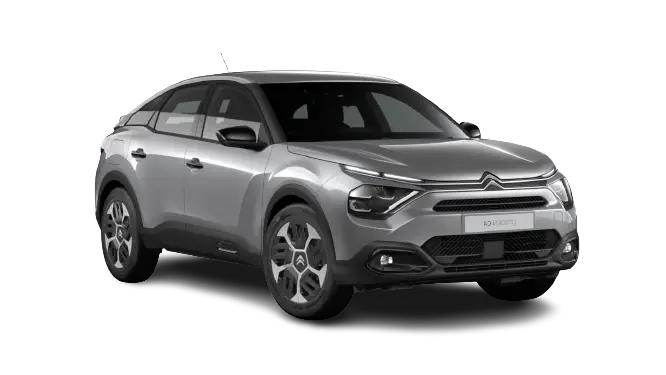
The Citroën ë-C3 opens up the segment with a very attractive price and remarkable efficiency for urban and suburban travel.
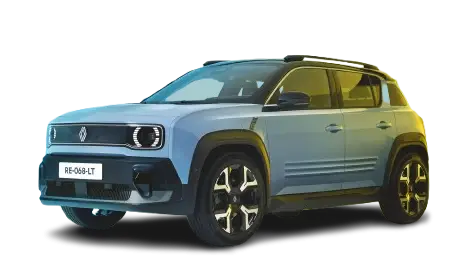
The Renault Mégane E-Techwith its high level of efficiency and driving comfort, has become a benchmark for regional commercial vehicles.
In terms of versatility, the Peugeot e-308 offers an excellent compromise between fuel consumption, driving pleasure and integration into existing vehicle policies.
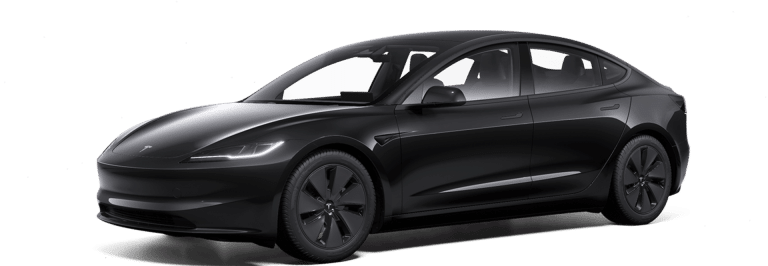
La Tesla Model Y remains one of the best-performing models for long-distance fleets, with exceptional efficiency and a highly reliable recharging network.
More affordable models such as the MG4 or the BYD Dolphin round off this range, combining decent range, low running costs and availability under long-term leasing on attractive terms.
In short, the current offering already fully meets all the business needs of fleets.
What criteria should be prioritised in 2024-2027: real range, cost of use, recharging, etc.?
At a time when technological announcements are multiplying - solid batteries, advanced chemistries, new platforms - the right choice for a fleet is based on concrete, measurable and immediately operational criteria. The priority is not the most futuristic technology, but the one that guarantees continuity of service, controlled operating costs and simple integration into the company's mobility policy.
Actual range must be the first criterion, as it determines the vehicle's ability to cover daily journeys without disrupting missions. Then there's efficiency, expressed in kWh/100 km, which has a direct impact on energy bills.
Compatibility with fast recharging also plays a key role, particularly for field teams who make several trips a day.
The reliability of the battery, the availability of leased models and the expected residual value are just as decisive: these are the parameters that dictate the final TCO. In other words, a fleet needs to think in terms of what works today, not what might happen in five years' time.
How Beev helps companies make the right choice for their needs
The growing complexity of the electricity market makes expert, neutral support essential. This is precisely Beev's role. The team analyses actual usage:
- daily distances,
- types of journey,
- vehicle rotations,
- ZFE constraints,
- refuelling requirements and budget structure.
This hands-on approach enables us to recommend models that are truly suitable, by transparently comparing several brands, technologies and financing offers. Beev also helps companies to optimise their TCO, taking into account energy costs, taxation, maintenance and opportunities to reduce expenditure.
Finally, the installation and management of the charging points, whether on site, at home or roaming, are integrated into the offering, enabling organisations to deploy a coherent, end-to-end electrical strategy, without having to deal with multiple contacts.
Things to remember: Toyota's solid batteries may change the future, but not your decisions 2024-2028
Solid state batteries represent a promising technological horizon, and are likely to transform the automotive industry in the long term. But for the time being, they remain a theoretical prospect, supported by repeated announcements that are still disconnected from industrial reality.
For fleets, the key is to focus on available and proven technologies. Today's electric vehicles - efficient, reliable, competitive in the leasing market and compatible with mature infrastructures - are already making it possible to optimise TCO, reduce environmental impact and meet regulatory requirements.
In other words: solid batteries may influence the future of the market, but they should not influence short- and medium-term strategic decisions. The real gains are to be found in controlled, methodical electrification tailored to use, and this is precisely what Beev facilitates.
Manage your fleet easily with our dedicated tool

A fleet management tool from A to Z
- Add your fleet and employees in just a few clicks
- Plan your transition to electric vehicles and monitor your CSR objectives in real time
- Centralise your expenses