








Why are we talking about "intelligent batteries" today?
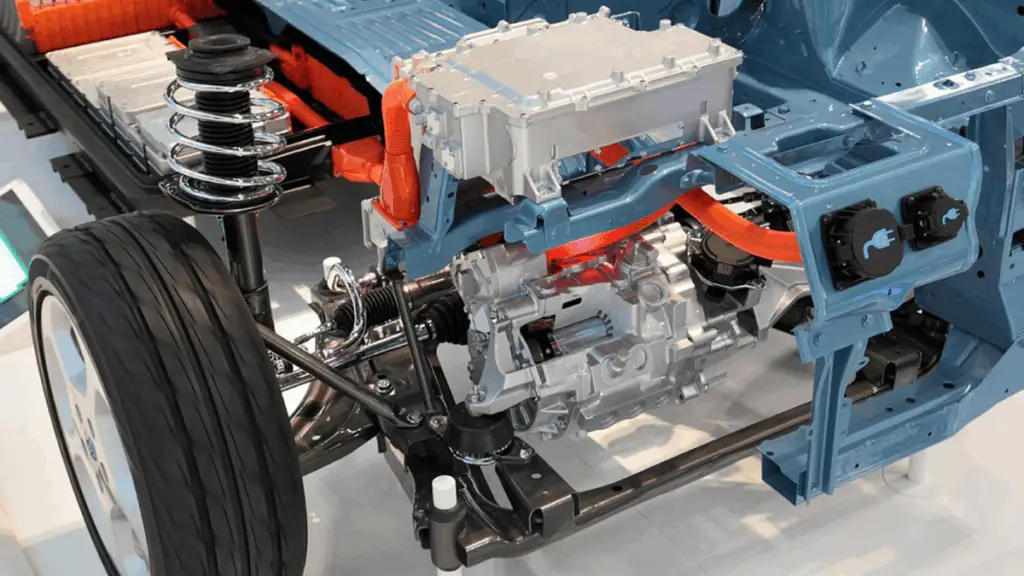
Batteries currently account for up to 40 % of the total cost of an electric vehicle. Optimising usage is therefore strategic, especially for fleet managers.
However, current systems, even the most efficient, are still based on a static approach: the State of Charge (SoC) is measured, i.e. the percentage of energy remaining, but without taking into account the context of use.
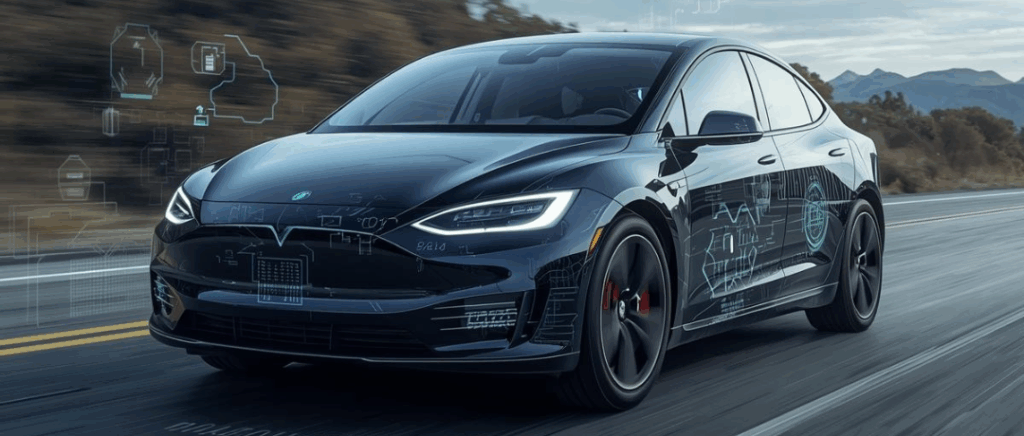
That's where smart batteries come in. They add a new dimension: the State of Mission (SoM), a scientific concept that combines artificial intelligence and physical modelling to anticipate the real needs of a mission before it even starts.
From the classic "State of Charge" to the "State of Mission
According to a study published in iScience (Cell Press), researchers have developed a model called Neural-ODE (Neural Ordinary Differential Equation), capable of merging calculations based on electrochemical laws and machine learning predictions.
In concrete terms, the battery no longer just measures its energy level: it includes the mission ahead, the road profile, the ambient temperature and even the vehicle's driving style.
This approach, known as State of Mission (SoM), marks a major breakthrough. It transforms the battery into a decision-making player, capable of adjusting its internal parameters in real time to better manage discharge, regeneration and temperature.
Adapting fuel consumption to the mission in hand (road, route profile, outdoor conditions)
The aim of this innovation is to adapt consumption according to the task in hand: a dense urban route with frequent stops, long-distance deliveries or motorway use do not place the same demands on the battery.
Thanks to automatic learning, the intelligent battery dynamically adjusts :
- the discharge power,
- the braking regeneration threshold,
- the optimum operating temperature,
- and the recommended recharging strategy.
Results more precise consumption, a autonomy and slower battery ageing, a winning combination for professional fleets.
Uncertainty reduction and operational optimisation for fleets
For fleet managers, the promise is clear: no more over-cautious safety margins and approximate range estimates. With a "mission-aware" battery, consumption assessment becomes contextual and predictive, reducing estimation errors by 15 to 25 % according to studies.
The technical principles of a mission-aware battery
To understand the scope of this revolution, we need to delve into the inner workings of these intelligent batteries. They are based on a technological triad: advanced sensors, hybrid modelling and on-board intelligence.
On-board sensors, predictive models and intelligence
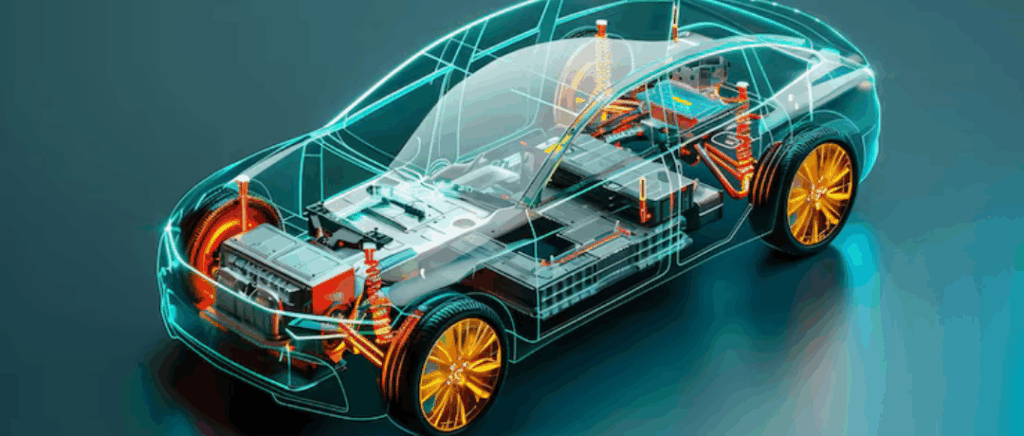
Each intelligent battery is fitted with a series of sensors: temperature, current, voltage, charge cycle, climatic environment.
This data is cross-referenced with mission parameters (route, topography, payload, weather) to adjust the energy strategy on the fly.
An on-board processor, coupled with local or cloud AI, processes this data in real time. In this way, the battery becomes autonomous in its decisions, without the need for human intervention.
Hybrid modelling: combining battery equations and machine learning
The key innovation lies in hybrid modelling, which combines electrochemical equations with AI models capable of learning from past situations.
This dual approach - physical and predictive - makes it possible to model complex situations such as rapid variations in temperature or high levels of stress.
Dynamic adjustment: power, regeneration thresholds, temperature
When a mission is planned, the battery adjusts :
- its authorised discharge range,
- maximum output power,
- regulation during braking,
- and the internal heating/cooling curve.
Impact on ageing and energy efficiency
By reducing thermal and electrochemical stress, these batteries can gain up to 20 % of extra life.
They can also recover up to 10 % of effective range simply by optimising the discharge and recharge thresholds according to actual conditions.
Benefits for electric fleet managers
For fleet managers, this innovation is not just a technical advance: it is a strategic lever that transforms the planning, maintenance and overall performance of the fleet.
More reliable mission planning
A battery that can anticipate the real needs of each mission guarantees much more accurate monitoring of consumption.
Management tools can plan routes taking into account topography, weather or payload, with reliable range prediction at 95 %.
Reducing safety margins
Today, managers often retain a margin of autonomy of 15 to 20 % "as a precaution".
Intelligent batteries reduce this margin to an average of 8 %, freeing up additional operating capacity without risk.
Productivity gains: fewer unplanned stoppages
Thanks to continuous prediction of the state of health, the system can warn of faults in advance and recommend preventive action.
This means fewer unplanned stoppages and better availability for the fleet.
Improved TCO: optimised fuel consumption and longer service life
Energy optimisation translates directly into savings:
- Fewer charge cycles = less battery stress;
- Lower average consumption = fewer kWh billed;
- Longer life = longer damping.
Overall, studies estimate a saving of 8 to 12 % on the annual TCO of a 100 % electric fleet.
Better integration with CSR reporting / LOM Act
Smart batteries make it easy to collect energy and emissions data automatically.
In this way, they become allies in automated CSR reporting, a key asset in the face of the requirements of the LOM law and corporate carbon audits.
Monday to Friday
9am - 12.30pm - 2pm - 7pm
Usage scenarios for company fleets
Adapting these technologies opens the way to very real scenarios for fleets.
Urban delivery fleets: real-time energy management
Urban delivery vehicles, which are subject to wide variations in pace and multiple recharges, benefit immediately from intelligent batteries.
They adapt their energy profile to short journeys, reduce overheating in dense environments and optimise regeneration whenever braking.
Multi-site businesses: pooling recharging and balancing energy needs
Managers of large companies can share mission data between several sites.
Intelligent batteries help to balance energy needs and optimise charging times according to grid availability.
Automated emissions reporting and regulatory compliance
Each battery becomes an environmental sensor.
The data collected automatically feeds into carbon dashboards and CSR reports, simplifying compliance while demonstrating exemplary energy transparency.
Conditions for success and deployment challenges
Despite their potential, smart batteries will not become the norm without overcoming a number of technical and organisational challenges.
Compatibility with existing fleet management platforms
Fleet Management Systems must be able to integrate this new data from batteries.
This requires open APIs, common protocols and greater interoperability between manufacturers and operators.
On-board computing power and hardware constraints
Real-time computing requires powerful on-board processors capable of analysing several thousand data items per second without impacting on the vehicle's fuel consumption.
Manufacturers will have to find the right balance between computing capacity and energy efficiency.
Standardisation and interoperability (protocols, APIs)
One of the major challenges remains standardisation: each manufacturer is currently developing its own diagnostic and battery communication protocol.
Standardisation on a European and Asian scale will be essential to facilitate multi-brand fleet maintenance.
Safety, reliability and robustness in extreme conditions
An intelligent battery handles sensitive data and interacts directly with the driving and recharging systems.
Its cyber security must be guaranteed: encryption, supervision, security protocols and resilience to extreme conditions.
Acceptance, operator confidence and training
Finally, the key to adoption will be training for managers and drivers. Understanding and exploiting this data are essential conditions for reaping the full benefits.
Future prospects and technological convergence
We are entering a decade in which the battery becomes an energy brain, not just a reservoir.
Towards "plug & play" adaptive batteries
Future generations will be able to configure themselves according to the mission of the day: urban, regional, logistics...
The battery can be calibrated before each departure using simple software settings.
Integration into the recharging ecosystem and overall energy management
Smart batteries will interact with :
- charging points,
- connected buildings,
- and smart electricity grids.
They will become energy players in their own right, capable of smoothing consumption peaks or returning energy to the grid (V2G).
Synergies with V2G and smart grids
Vehicle-to-Grid (V2G) will take on a new dimension: a battery that is aware of its actual state can choose when and how much energy to release, without compromising its lifespan.
Towards "self-optimising" fleets
By 2030, the convergence of smart batteries, fleet management AI and connected charging points will give rise to self-optimising fleets.
The vehicles will communicate with each other and with the infrastructure to balance consumption, recharging and maintenance autonomously.
2030-2035: convergence of technologies between China and Europe
China is making rapid progress on large-scale production and experimentation, while Europe is focusing on reliability, durability and regulation.
These two approaches converge towards the same ambition: to make electric mobility more efficient, predictive and universal.
Conclusion: Batteries, the new brain of professional mobility
Intelligent batteries mark a new era in the management of electric fleets.
They transform the battery from a simple passive component into a strategic player in energy performance, sustainability and TCO.
For fleet managers, this means :
- greater autonomy,
- predictive energy management,
- and seamless integration into the CSR strategy.
With specialist partners like Beev, companies can start anticipating this revolution today.
With its comprehensive expertise in fleet electrification, recharging and software supervision, Beev helps organisations move towards more intelligent, sustainable and economically efficient mobility.
Tomorrow's batteries will do more than just power vehicles: they will think, learn and optimise each mission, a major step towards truly intelligent electric fleets.
Manage your fleet easily with our dedicated tool
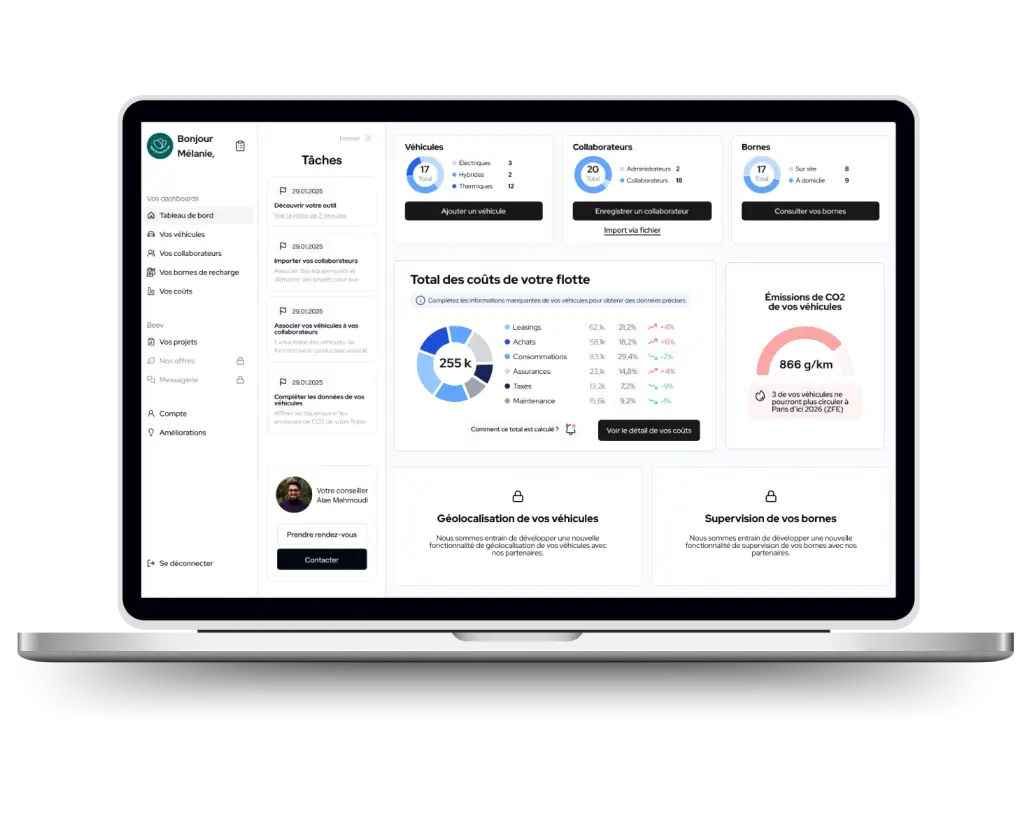
A fleet management tool from A to Z
- Add your fleet and employees in just a few clicks
- Plan your transition to electric vehicles and monitor your CSR objectives in real time
- Centralise your expenses