


























Understanding the new value equation in electric fleets

In an electric park, the residual value (RV) represents the part of the capital that remains to be recovered on resale. It has become a crucial issue for several reasons:
- Rapid electrification of fleets increases financial pressure Vehicles cost more to buy, and every unanticipated discount point has an impact on the TCO.
- The second-hand market for electric vehicles is taking shape Professional and private buyers are looking for reliable models with a clear track record. battery and maintenance.
- Regulations and tax incentives reinforces the need to maximise the return on investment in clean vehicles.
When it comes to calculating TCO, depreciation remains the biggest item, often exceeding energy, maintenance and insurance costs combined. A poor estimate of VR can turn a theoretically profitable vehicle into a source of losses.
Discover how to control total cost of ownership with electric vehicles.
The battery: the decisive factor
In electric vehicles, the battery represents the technological and financial heart. Its health has a direct impact on the value of the vehicle: a damaged battery reduces theautonomyThis alerts buyers and drives down resale value.
Degradation depends on a number of factors :
- charge/discharge cycles,
- type of recharge (AC vs DC),
- room temperature,
- driving style and maintenance.
Thanks to modern telematics and data collection tools, it is now possible to monitor the real state of the battery and anticipate any loss of performance before it becomes irreversible.
Use the TCO simulator to calculate the total cost of ownership of your car and compare it with its internal combustion equivalent.
Data, the fleet manager's new compass
The electrification of fleets is transforming the role of the fleet manager. In a context where every decision has a direct influence on the total cost of ownership (TCO) and the residual value of vehicles, the fleet manager is becoming a true data manager.
In the past, its role focused on logistics, maintenance planning and administrative follow-up. Now it's a job of analysis, projection and anticipation, where data plays a central role in steering the technical, economic and environmental performance of fleets.
From volume to decision
Each connected electric vehicle generates thousands of data points a day: charge cycles, battery temperatures, energy consumption, average speed, braking, weather conditions, maintenance history, etc.
But the value does not lie in the raw data: it emerges from the ability to transform it into usable indicators. It is this shift from 'monitoring' to 'strategic reading' that redefines the role of the fleet manager.
Faced with this mass of information, the role of the fleet manager is changing: he or she is no longer limited to monitoring financial indicators or planning maintenance. They are becoming strategic analysts, capable of anticipating depreciation, steering the fleet and maximising residual value.
Thanks to tools such as Beev Fleet Managerit can now :
- detect under- or over-used vehicles,
- analyse differences in energy performance between drivers,
- identify behavioural drifts that impact the battery,
and adjust the usage, recharging or renewal policy in real time.
In other words, data becomes a compass for decision-making: it enables us to arbitrate, plan and steer, where previously we simply reacted after the event.
4 data levers to preserve residual value
While data is becoming the fleet manager's new compass, it is only meaningful if it is put into action.
Gathering thousands of pieces of information is of no value if it is not used to extend the life of a product, rReduce depreciation and optimise TCO.
Here are the four main levers that data currently offers to preserve, and sometimes even increase, the residual value of electric fleets:
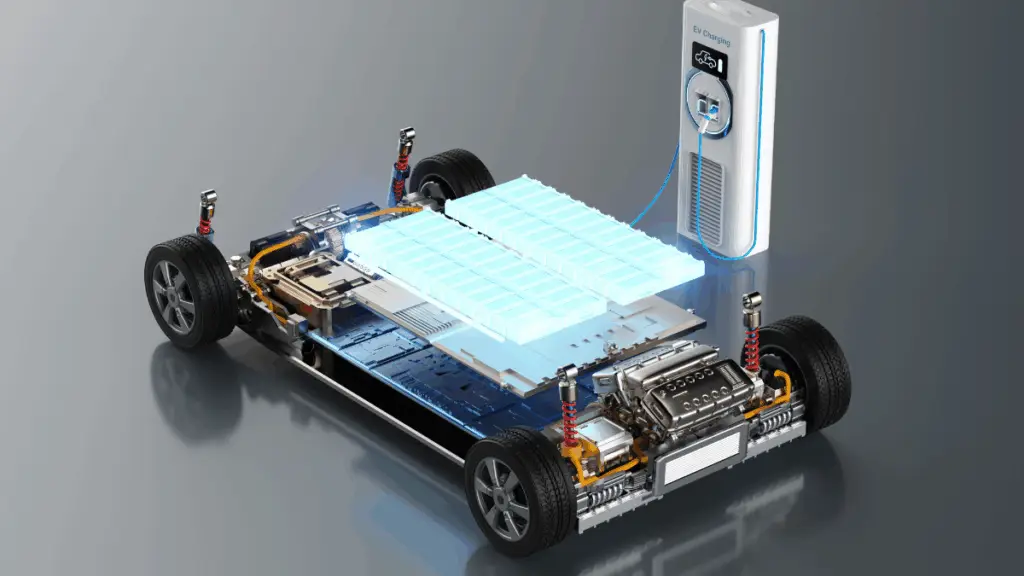
1. real-time monitoring of battery health
The battery is the heart of the electric vehicle, but also its main factor of depreciation.
The health of a battery does not depend solely on its age or mileage. It is the result of a number of factors:
- number and depth of charge and discharge cycles,
- average charge level (SoC),
- ambient temperature and conditions of use,
- intensity of rapid recharging,
- driving habits.
2 Adapting uses through telematics
While the battery defines the technical value of a vehicle, daily use determines its real longevity.
And this is precisely where telematics - the collection and analysis of journey data - becomes a decisive asset.
Not all electric fleets wear out in the same way.
After 3 years, two identical vehicles can have very different battery conditions, simply because their drivers have had different driving habits:
- sporty driving, strong acceleration, rapid daily recharging = accelerated degradation,
- smooth driving, planned slow recharging = optimised durability.
Thanks to telematics, the fleet manager can identify these differences in behaviour and reallocate vehicles according to usage profiles.
Planning the right time for resale
One of the most powerful levers for preserving the value of a fleet is also one of the least understood: choosing the right time to sell.
Traditionally, managers based their decisions on fixed criteria: the vehicle's age (3 or 4 years), mileage (60,000 to 80,000 km), or the contractual term of the lease.
But in the world of electricity, these traditional benchmarks are no longer enough.
Usage data can be used to determine the 'sweet spot' for resale, i.e. the precise moment when depreciation accelerates without the residual value collapsing further.
Key indicators to monitor :
- battery health rate,
- number of charge cycles,
- average annual mileage,
- maintenance history,
- changes in the second-hand market (supply/demand for equivalent models).
By combining these elements, a tool like Beev Fleet Manager can calculate a forecast value curve for each vehicle in the fleet.
The manager can then schedule the resale at an optimal time.
Guaranteeing vehicle transparency and traceability
The final lever, but without doubt the most structuring in the long term: transparency.
In a market as young as that for vehicles, the confidence of buyers and leasers depends on the complete traceability of the vehicle.
Each piece of data collected (recharge, maintenance, incident, battery performance) is a building block in a verifiable history.
At a time when resale platforms and professional hire companies are incorporating electrical assessment criteria, this "digital health book" is becoming a commercial asset.
Fleets that can present a detailed report certifying regular maintenance, good load management and a compliant SOH (State of Health) will sell faster and at a better price.
Here, certified data plays the same role as a stamped maintenance logbook did for heating systems. They become objective proof of the quality of the fleet.
Traceability = trust = value
Traceability is also an image asset.
It enables the company to :
- demonstrate its CSR rigour,
- prove that its fleet complies with LOM and CSRD obligations,
- and reassure customers, partners and employees.
At a time when buyers are looking for "properly managed" vehicles, data is becoming a passport to trust.
It is this confidence that ultimately stabilises and protects residual value.
From raw data to strategic decisions
Collecting data is not enough. You have to turn it into a decision-making tool.
This is where the difference lies between a simply connected fleet and a truly high-performance fleet.
An electric vehicle can generate up to 4,000 data points per day geolocation, battery level, recharge cycles, temperature, speed, braking, etc.
But without a centralised analysis tool, this data remains an inert mass. It needs to be contextualised, correlated and interpreted to reveal its economic meaning.
This is precisely the role of solutions such as Beev Fleet Manager Aggregate these information flows, display them in the form of clear indicators, and trigger automatic alerts depending on the objectives set (TCO, lifespan, etc.), carbon footprint...).
Good to know : predictive algorithms can already estimate the useful life of a battery on the basis of its charging and temperature history. This approach, which is still in its infancy, prefigures an 'automated' management of value, where data becomes a tool for projection and not just for observation.
How data is transforming the role of the fleet manager

While data has revolutionised the fleet manager's tools, it has above all transformed his role, skills and strategic positioning within the company.
From technical management to strategic analysis
Once focused on logistics and compliance, fleet managers are now becoming key players in sustainable performance.
Thanks to data, it no longer simply manages vehicles: it manages living assets, at the crossroads of economic, environmental and social performance.
He must now :
- interpret the data to guide renewal or resale decisions,
- anticipate depreciation and hidden costs,
- integrate CSR indicators and regulatory constraints (LOM, CSRD, etc.),
- advise management on trade-offs between vehicles, use and investment.
This change turns the fleet manager into a true mobility analyst, who is at once a technician, an economist and a data-driver.
Extended collaboration throughout the company
Fleet management is no longer done in silos. Data from vehicles is now of interest to :
- The Finance Departmentto refine cost and depreciation models.
- CSR teams, to monitor real emissions indicators and promote environmental progress.
- Human resourcesto help drivers drive more efficiently.
- Purchasing, to adjust rental, maintenance or recharging contracts in line with actual usage.
The fleet manager becomes the conductor of electric mobility, capable of aligning performance, sustainability and corporate strategy.
Towards a culture of fleet data management
The most advanced companies are now deploying an integrated approach to data, known as Fleet data management, which combines :
- training teams to read and use the data,
- use ofvisualisation tools (such as Beev Fleet Manager) to centralise and analyse key indicators,
- setting up sustainability and profitability KPIs shared between departments.
This gives the company a sustainable competitive advantage: a fleet that is more profitable, more efficient and more transparent.
Challenges to overcome before reaping the full benefits of data
Despite its potential, data is not a magic wand.
Integrating it into fleet management involves meeting a number of technical, organisational and human challenges.
1) Data quality and reliability
Not all data is created equal.
Discrepancies between sensors, calibration problems or connectivity interruptions can distort analyses.
Incorrect monitoring of temperature or actual mileage can lead to poor decisions (unnecessary maintenance, premature resale, etc.).
It is therefore essential to use certified and interoperable tools.
2) Security and RGPD compliance
Mobility data, in particular geolocation and driving habits, are considered sensitive.
Their processing must comply with European regulations (RGPD), with a clear policy on :
- the consent of drivers,
- data anonymisation,
- shelf life,
and protection against unauthorised access.
3) Integration costs and complexity
Implementing a data strategy requires an initial investment: deployment of tools, training, API configuration, etc.
But it should be seen as an investment with a rapid return, because the reduction in maintenance costs, better energy management and optimisation of the life cycle quickly offset the initial outlay.
4) Enhancing team skills
Data is useless without interpretation.
Managers need support to develop a data culture: reading dashboards, interpreting indicators, prioritising actions.
The future of fleets depends not just on technologies, but on the ability of teams to understand and exploit them.
A strategic opportunity for companies committed to transition
Beyond the operational aspects, the data becomes a tool for reporting and environmental credibility.
It links fleet performance directly to CSR strategy and regulatory obligations.
Measure, prove, enhance
The indicators collected - fuel consumption, emissions and battery life - provide concrete measures of environmental progress.
This data feeds into carbon audits, CSR scorecards and the transparency requirements of the CSRD (Corporate Sustainability Reporting Directive).
Companies can :
- justify their choice of investment in electric mobility,
- demonstrate the reduction of their carbon footprint,
- and promote their commitment to customers and investors.
Anticipating future constraints
European regulations are evolving rapidly: greening quotas (LOM Act), harmonised reporting (CSRD), and transparency obligations on indirect emissions (Scope 3).
Companies that already control their data will be the ones to adapt the fastest.
A sustainable and innovative image
Finally, beyond compliance, companies that are able to exploit their data are seen as innovative and rigorous.
They embody controlled, measured and responsible mobility, a strong argument for both the employer brand and our partners.
Conclusion: data, the new insurance policy for the electric fleet
Preserving the value of your fleet means preserving your company's capital.
At a time when electricity is becoming the norm and transparency is essential, data is the common thread linking economic, ecological and operational performance.
Thanks to data, fleet managers finally have a 360° view of their fleet:
- anticipate risks,
- to extend its lifespan,
- reduce costs,
- and enhance resale value.
Intelligent tools like Beev Fleet Manager do more than just track vehicles: they orchestrate the entire mobility strategy.
Tomorrow, the question will no longer be "should we digitise our fleet?", but "what data strategy should we adopt to remain competitive and sustainable?".
To find out more, Find out how Beev can help you control TCO and digitalise your fleet management.
Manage your fleet easily with our dedicated tool
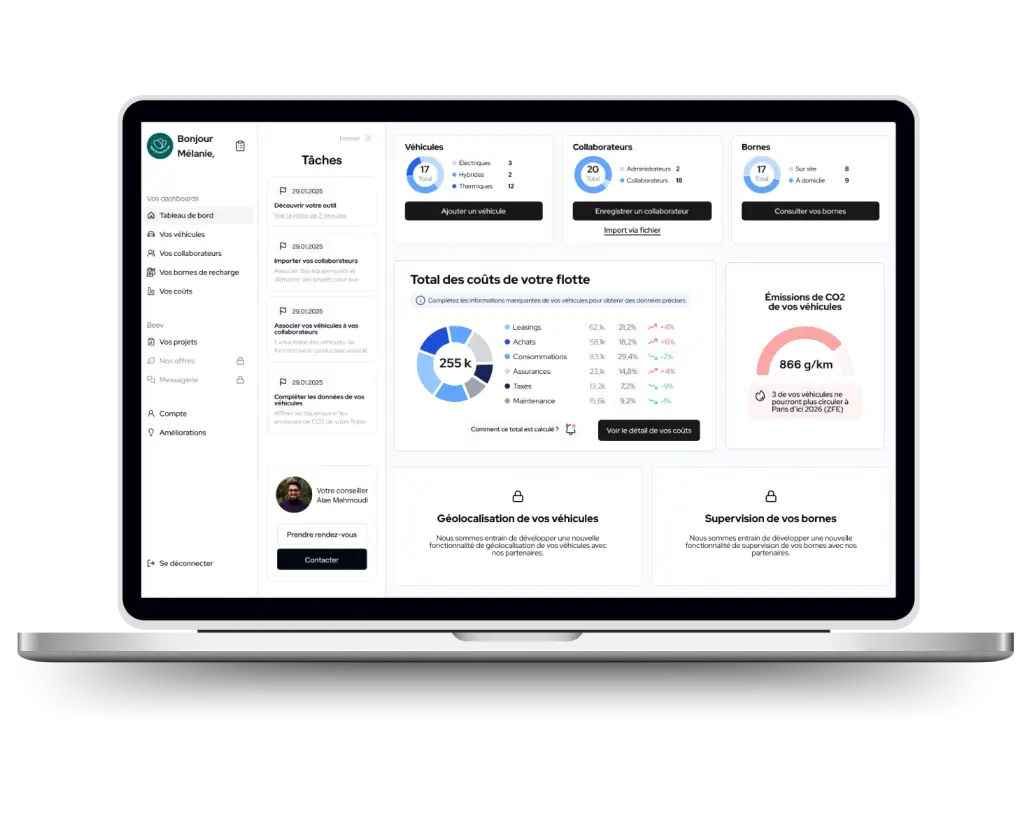
A fleet management tool from A to Z
- Add your fleet and employees in just a few clicks
- Plan your transition to electric vehicles and monitor your CSR objectives in real time
- Centralise your expenses