













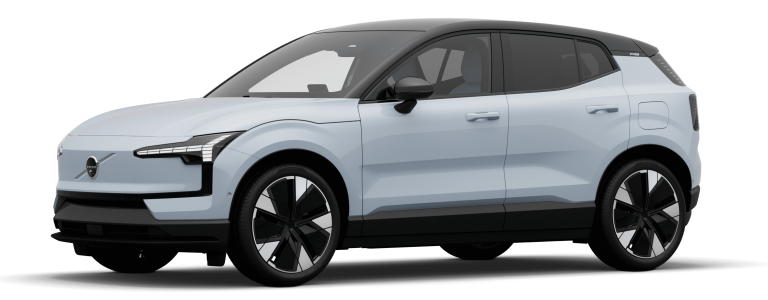










Technical improvements to the Tesla Model S and Model X
Significant weight reduction
The 180kg weight reduction on the Tesla Model X is one of the most remarkable optimisations of this update. For an electric SUV that previously weighed close to 2.5 tonnes, this reduction represents around 7% of the vehicle's total weight. This figure is particularly significant when you consider that every kilogram has a direct impact on energy efficiency.
This reduction in mass is the result of an overhaul of the vehicle's architecture, made possible by the application of technologies proven on more recent models in the Tesla range. The manufacturer has taken advantage of this update to apply to the Tesla Model S and Tesla Model X innovations initially developed for the Model 3 and Model Y, which benefit from higher production volumes.
This optimisation of weight plays a crucial role in the overall improvement in energy performance. Energy consumption during acceleration is affected, as is the efficiency of the engine. regenerative braking and tyre wear. For a professional fleet, these gains translate into measurable savings over the entire life cycle of the vehicles.
Our experts will advise you according to your needs. Beev offers Tesla 100% electric vehicles at the best prices, as well as recharging solutions.
Giga Presse technology for weight reduction
This technology represents one of the most significant manufacturing innovations. Introduced by Tesla, it enables structural parts of the chassis to be moulded in a single piece. Previously, these parts required the assembly of dozens, if not hundreds, of separate components. As the oldest models in the range, the Tesla Model S and Model X did not benefit from this innovation when they were first designed.
The revolutionary Giga Presse approach offers a number of significant advantages. It eliminates the need for multiple joints, welds and reinforcements, which weighed down the structure and were potential points of weakness. It also provides a more rigid chassis without increasing weight. This improves safety and driving dynamics.
The integration of this technology on the Model S and Model X is part of a strategy to transfer skills from mass-produced models to premium vehicles. This industrial strategy will enable us to continually improve the entire range while optimising production costs.
For fleet managers, this technical development guarantees greater structural reliability and durability. A one-piece chassis presents less risk of corrosion or misalignment over time, factors that can affect the residual value of vehicles at the end of their ownership period.
The new powertrain
The evolution of the powertrain is probably the most significant technical innovation in this update. Tesla has replaced the rear permanent magnet motor with an induction motor. The latter offers a number of advantages, including greater compactness, which saves space and weight in the rear compartment of the vehicle. Its energy efficiency, particularly on motorways and at steady speeds, is perfectly matched to the usage profile of these vehicles. Finally, its rare-earth-free design reduces dependence on critical materials and improves control over production costs.
Optimised batteries with improved energy density
Battery optimisation is the fourth pillar of this technical update. By improving the energy density of its battery packs, it is possible to store more energy in the same volume and weight. This development is part of the continuous improvement trajectory that the manufacturer has applied to its battery technology since its creation.
Optimising the capacity/size ratio has a number of benefits for professional use. It frees up usable space in the vehicle, improves weight distribution and facilitates thermal management of the battery pack. A more compact, better-integrated pack heats up less during rapid charging and cools more efficiently, extending its life and maintaining its performance over time.
For a company fleet, the longevity of batteries represents a major financial challenge. A battery which retains 85 to 90% of its capacity after 200,000 km, guarantees a better residual value. It allows vehicles to be held for longer periods without any significant loss of fuel efficiency.’autonomy. In fact, the improvements made to the new generations of Tesla batteries contribute directly to optimising TCO.
Gains in performance and autonomy
An improvement in average consumption
The combination of a lighter vehicle, a new powertrain and optimised batteries is producing tangible gains in energy consumption. The official data provided by Tesla reveal significant improvements that have a direct impact on the cost of daily use.
| Version | Consommation précédente | Nouvelle consommation | Amélioration |
|---|---|---|---|
|
Model X Dual Motor
|
19.1 kWh/100 km
|
18.3 kWh/100 km
|
-4,2%
|
|
Model X Plaid
|
20.8 kWh/100 km
|
19.3 kWh/100 km
|
-7,2%
|
While a reduction of 0.8 kWh/100 km on the Dual Motor version may seem modest, it takes on a whole new dimension when multiplied by the typical annual mileage of a company car.
If we take the example of a vehicle travelling 40,000 km per year, i.e. heavy commercial use, the old consumption would have required 7,640 kWh per year. The new system reduces this requirement to 7,320 kWh, a saving of 320 kWh per year. At an average rate of €0.20/kWh for business charging, this represents a saving of €64 per vehicle per year.
For the Plaid version, and on the same basis of 40,000 km per year, the saving is 600 kWh, or €120 per year per vehicle. Multiplied by a fleet of 10, 20 or 50 vehicles over a holding period of 3 to 4 years, this optimisation represents a tangible financial gain in terms of improved TCO.
Increased autonomy
Increased range is the other direct benefit of the technical optimisations made to the Tesla Model S and Model X.
The Model X Plaid version has now passed the symbolic milestone of 600 km of WLTP range. This is an important milestone that drastically reduces range anxiety. This extended range transforms the conditions under which the vehicle can be used for professional purposes, since it means that Paris-Lyon or Paris-Bordeaux journeys can be envisaged without the need for intermediate recharging.
For fleet managers, this autonomy reduces dependence on public recharging networks, limits downtime and improves employee productivity.
As part of a strategy of gradual electrification of a business fleet, long-range vehicles such as the Model S and Model X can cover the most demanding usage profiles.
Monday to Friday, 9am to 12.30pm and 2pm to 7pm
The direct impact on the TCO of professional fleets
Reducing energy costs
Optimising TCO starts with a rigorous analysis of energy costs over the entire life cycle of the vehicle. The improvements in fuel consumption on the new Tesla Model S and Model X generate substantial savings that accumulate over time and with the number of kilometres driven.
Let's do a concrete calculation based on a standard 4-year ownership period with an annual mileage of 40,000 km, i.e. 160,000 km in total. For a Model X Dual Motor, the reduction in consumption of 0.8 kWh/100 km generates savings of 1,280 kWh over the total period. At the average professional rate of €0.20/kWh for company recharging, this represents savings of €256 per vehicle.
For the Plaid version, which is more efficient and consumes more fuel, the improvement of 1.5 kWh/100 km produces savings of 2,400 kWh over 160,000 km, or €480 over the ownership period. While these figures may seem modest in absolute terms, they take on their full meaning when put into perspective with fleet volumes and the many areas of TCO optimisation.
In fact, a company fleet of 20 Model X Dual Motor vehicles saves €5,120 over 4 years thanks to improved fuel consumption alone. For a fleet of 50 vehicles, the savings would reach €12,800. These amounts are in addition to the other levers for financial optimisation linked to electrification: savings on maintenance, advantageous taxation, lower energy costs than combustion fuel, etc.
It is also important to consider the likely trend in energy costs. Against a backdrop of energy transition and price volatility, every point of consumption saved represents protection against future price increases. A more efficient vehicle offers greater predictability of operating costs over the medium and long term.
Promoting CSR objectives
Reducing energy consumption is one of the CSR objectives of many companies. It contributes directly to reducing’carbon footprint professional mobility, a criterion that is increasingly valued in extra-financial reports and corporate communications.
Did you know? Beev is the first automotive company in Europe to be labelled B Corp and the second largest in the world.
Optimising'recharging infrastructure
The improved energy efficiency of the Tesla Model S and Model X has a direct impact on the sizing and use of recharging infrastructure in businesses.
More efficient vehicles require less energy to cover the same distance, which means shorter recharging times and better rotation of available charging points.
This optimisation offers a number of operational benefits for the management of the vehicle fleet. It makes it possible to increase the number of electric vehicles without necessarily increasing the number of charging points proportionately. It also reduces saturation situations where vehicles have to wait for a charging point to become available, thereby improving employee satisfaction and operational efficiency.
From the point of view of initial investment, a company fleet that is planning its electrification can size its recharging infrastructure more optimally, taking into account the actual efficiency of the vehicles.
Maintenance and durability
The weight reduction on the Tesla Model S and Model X has beneficial effects on all the vehicle's mechanical and driving components. A lighter vehicle generates less stress on tyres, brakes, suspension and transmission components. This extends their life and reduces preventive and corrective maintenance costs.
Tyre wear is one of the biggest maintenance issues for electric vehicles. This is particularly true of heavy models such as SUVs. Lightening the weight of the tyres by 180 kg reduces the pressure exerted on them and limits their deterioration, extending their life by 10 to 15%.
Braking systems also benefit from this reduction in mass. Brakes that are less heavily used retain their effectiveness for longer and require less frequent replacement.
The increased durability of components also has an impact on the residual value of vehicles at the end of their ownership period. A well-maintained vehicle with wear components in good condition fetches a higher value on the second-hand market. This is a significant advantage for companies that sell their vehicles after 3 or 4 years.
Finally, the structural reliability provided by Giga Presse technology reduces the risk of mechanical failures associated with complex assemblies. A one-piece chassis has fewer weak points and ages better over time.
Strategic integration into a company fleet
Appropriate use profiles
In their optimised versions, the Tesla Model S and Model X are ideally positioned for specific professional use profiles within a vehicle fleet.
Their status as premium vehicles, combined with their exceptional range and improved efficiency, make them particularly relevant solutions for certain categories of employee.
Executive vehicles are the first natural segment for these models. The Model S and Model X demonstrate a strong commitment to the energy transition.
Key account managers who regularly travel long distances represent another optimal usage profile. For these employees, the extended range of Model S and Model X eliminates any operational constraints linked to recharging.
Sizing the charging infrastructure
Integrating Tesla Model S and Model X into a business fleet requires careful thought about the size of the recharging infrastructure.
Equipped with large-capacity batteries, these vehicles can benefit from high recharging power. Their optimised efficiency also means that more flexible charging strategies can be envisaged. An 11 kW charging point, the standard power for businesses, will give a Model X Dual Motor around 70 km of range per hour of charging. For a vehicle parked for 8 hours during a working day, this represents around 560 km of range recovered. A 22 kW charging point doubles this charging speed, giving a range of around 140 km per hour.
Company charging strategies must also include compatibility with public charging networks. The Tesla Model S and Model X benefit from access to the Supercharger network, which offers charging capacities of up to 250 kW. Recently, these networks are visible on Google Maps.
Optimising charging infrastructure also involves intelligent management of charging cycles. Energy management solutions make it possible to distribute the charge over off-peak hours, to smooth power demand and optimise energy costs.
Finally, the size of the infrastructure must anticipate changes in the vehicle fleet. An installation that is slightly oversized in relation to immediate requirements will allow the gradual electrification of the fleet to proceed smoothly without the need for new installation work.
Conclusion
The technical improvements made to the Tesla Model S and Model X illustrate the growing maturity of premium electric vehicle technology. The 180 kg reduction in weight, the integration of the Giga Press, the new powertrain and the improved energy density of the batteries are structural developments that are transforming the economic equation for these vehicles.
For fleet managers and decision-makers in charge of their company's energy transition, these technical optimisations mean tangible gains across all TCO components.
Beyond the purely financial aspects, integrating optimised Tesla Model S and Model X into a business fleet also meets strategic challenges. It makes it possible to offer employees high-performance premium vehicles, while demonstrating a strong commitment to environmental responsibility.
TCO analysis is not limited to technical and financial aspects alone. It takes a global view, including the company's CSR objectives, employee expectations, regulatory developments and future technological innovations. The Tesla Model S and Model X, now optimised, are fully in line with this long-term strategic perspective.