















An electric city car under €15,000: why this is a strong signal for the market
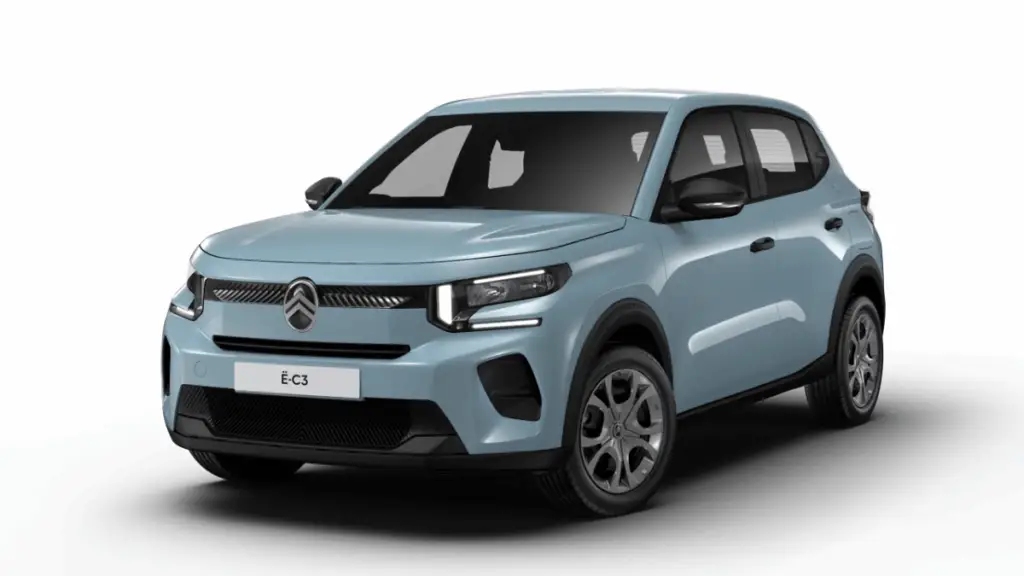
An electric city car under €15,000 for a new vehicle represents a symbolic turning point for the market. Until now, the cost of acquisition has been one of the main obstacles to the mass electrification of fleets, particularly for companies with large fleets or low unit values.
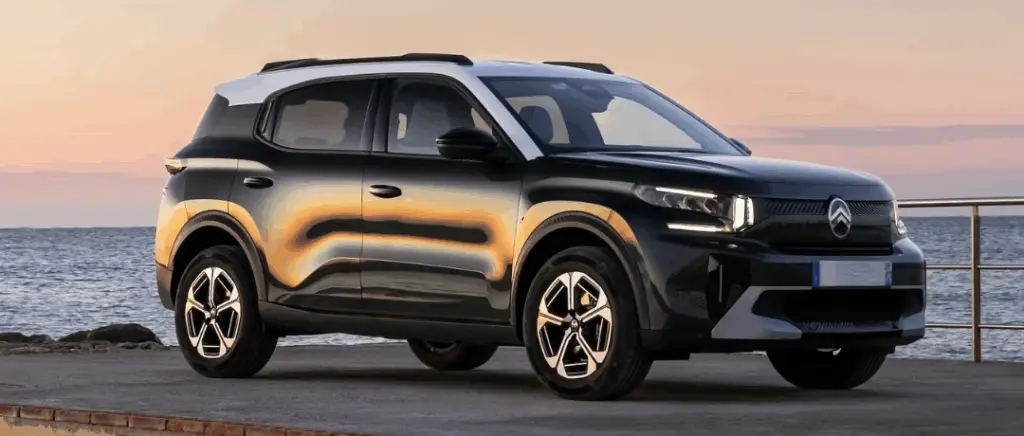
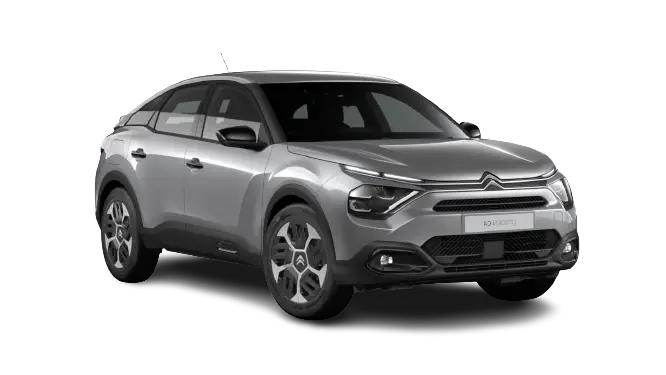
With the ë-C3, Citroën is profoundly changing the perception of the entry-level electric vehicle. For professionals, this announcement doesn't just mean a lower price: it reflects a structural change in the market, where electric cars are beginning to approach, in terms of face value, certain internal combustion city cars that have traditionally been used in fleets.
This development is taking place in a particular regulatory and economic context. Companies are being encouraged, even forced, to speed up the greening of their fleets, while at the same time facing budgetary pressures and increased demands for profitability. In this context, the arrival of an electric vehicle at this price level is changing the nature of trade-offs.
A clear strategy to democratise electric vehicles
Citroën is adopting a pragmatic approach by offering a version of the ë-C3 with a battery more compact, designed for everyday, mainly urban, use.
The aim is clear: not to over-dimension the vehicle, nor by autonomy or equipment, in order to contain costs and offer a solution that is consistent with real needs.
For company vehicle fleets, this logic echoes a reality often observed on the ground: a large proportion of vehicles travel less than 100 kilometres a day, with regular returns to the depot or main site. Under these conditions, a moderate-sized battery is not only sufficient, but also makes economic sense.
This approach marks a break with a past tendency to favour high autonomies, which are often little used in practice, but generate additional purchase costs.
What this positioning means for companies
This positioning calls into question certain well-established purchasing practices. Where companies have been reluctant to electrify so-called “secondary” vehicles - service, pool or internal mobility vehicles - because of the perceived extra cost, the ë-C3 opens the way to a finer, more gradual electrification of fleets.
It allows us to envisage a phased transition, starting with the simplest and most predictable uses, while retaining more versatile models for long missions, inter-regional travel or intensive use.
Citroën ë-C3 electric: a model really suited to professional use?
An attractive price is not enough to qualify a vehicle as suitable for professional use. The role of the fleet manager is to analyse in detail the match between the vehicle proposed and the actual operational constraints, both technical and organisational.
Autonomy and battery: a targeted response to everyday use
The €14,990 version of the ë-C3 is fitted with a 30 kWh battery, giving a WLTP range of just over 200 kilometres. This deliberately limited range corresponds to a well-defined usage logic.
In a professional context, this capacity is suitable for repetitive missions, inter-site travel, urban tours or service vehicles. However, it requires rigorous organisation of recharging, particularly at the end of the day or between two missions, to ensure that the vehicle is ready for use.
This sizing also encourages companies to better analyse their driving data, in order to avoid over-equipment errors and maximise the profitability of each vehicle in the fleet.
Autonomy in real-life conditions: what fleet managers need to anticipate
In real-life conditions, range depends very much on the context of use: seasonality, type of journey, on-board load, driving style and frequency of stops. In urban environments, the recovery of energy from braking and moderate speeds favour electric vehicles, making them particularly efficient.
For companies, the challenge is not therefore to maximise theoretical autonomy, but to ensure that there is a sufficient match between the distances travelled, the downtime and the recharging capacity available on site or nearby.
This approach requires an overall rethink of the organisation of missions and the integration of the electric vehicle into existing processes.
In addition to autonomy, another key criterion for companies is the level of equipment and user comfort.
Equipment and comfort: an acceptable compromise for the fleet
The ë-C3 offers a level of equipment consistent with professional use. Without aiming for the top end of the range, it offers the essential functions expected by businesses: basic driving aids, thermal comfort, minimal connectivity and safety.
For a fleet of vehicles, this compromise is often a wise one. The aim is not to offer a premium experience, but to guarantee reliability, ease of use and acceptability to drivers.
What is the impact on the TCO of an electric fleet?
The total cost of ownership remains the central criterion in any fleet decision. In this respect, the ë-C3 at €14,990 offers real advantages, but also conditions for success that should not be overlooked.
Purchase price and depreciation
With such a low purchase price, the impact on investment budgets is immediate. Book depreciation is easier, and the financial risk associated with obsolescence is reduced. For some companies, this means they can electrify more vehicles while keeping their budgets constant.
Operating costs: a structural advantage of electric power
Like all electric vehicles, the ë-C3 benefits from reduced maintenance costs. The absence of a combustion engine, complex gearbox or exhaust system limits maintenance operations and downtime.
Energy costs, when kept under control by on-site recharging, remain well below those of a thermal vehicle equivalent, reinforcing the competitiveness of the TCO over the entire life cycle.
Taxation and perquisites
Tax incentives for electricity also help to improve the economic equation. Tax exemptions, advantageous depreciation and an improved CSR image are all indirect benefits that need to be factored into the overall analysis, particularly in the context of extra-financial reporting.
For which types of professional fleets is the ë-C3 relevant?

The ë-C3 is not designed for all fleets, but it is perfectly suited to certain usage profiles.
Urban fleets and local missions
Fleets operating in urban or suburban areas are the main target. The limited daily distances and the possibility of regular recharging make this model particularly effective.
VSEs, SMEs, local authorities and internal mobility
Small and medium-sized businesses, local authorities or multi-site companies can find in the ë-C3 an affordable solution for electrifying part of their fleet, particularly pool or service vehicles.
Recharging and infrastructure: the key to success
The full value of a low-cost electric vehicle can only be realised if it is integrated into a coherent recharging strategy.
On-site recharging: the key to economic performance
On-site AC charging is the optimum scenario for operating the ë-C3. It reduces costs, ensures the daily availability of vehicles and limits the need for more expensive public infrastructure.
Steering and organising recharging
Even with a small battery, poorly organised recharging can lead to operational constraints. The planning of recharges, the sizing of charging points and power management are essential to guarantee smooth usage and avoid additional energy costs.
Why IRVE support remains crucial
Support from experts like Beev enables companies to structure their IRVE strategy, avoid sizing errors and ensure the long-term viability of their investments.
An attractive offer, to be integrated into an overall fleet strategy
The ë-C3 at €14,990 is a real opportunity, but it should never be analysed in isolation.
Avoid the “price only” approach”
A vehicle chosen solely on the basis of its purchase price can quickly become a source of constraints if it is not aligned with actual usage. In the fleet, a model with too limited autonomy or poorly integrated into the daily organisation can generate indirect additional costs, productivity losses or user dissatisfaction.
Before integrating an entry-level model such as the ë-C3, it is essential to assess :
- the distances actually travelled on a daily basis,
- the downtime available for recharging,
- compatibility with existing infrastructure,
- the impact on the organisation of missions and routes.
This analysis helps to avoid a short-termist approach and to secure the overall performance of the fleet.
Building a balanced fleet of electric vehicles
Entry-level models such as the ë-C3 have their place in a multi-model strategy, alongside more versatile vehicles designed for long-distance or intensive use. This intelligent segmentation of the fleet optimises costs without sacrificing operational flexibility.
In practical terms, a balanced fleet is often based on :
- compact vehicles for urban and local use,
- models with greater autonomy for inter-site or regional journeys,
- a recharging infrastructure sized according to usage profiles,
- centralised control of recharging and consumption.
It is precisely this global approach that enables us to transform an attractive offer like the ë-C3 into a genuine lever for economic and operational performance.
Key points for managers of electric vehicle fleets
The €14,990 Citroën ë-C3 marks an important step in the democratisation of electric vehicles. By significantly lowering the entry price, Citroën is helping to remove one of the last psychological barriers to the electrification of company vehicle fleets.
However, this offer is not a universal solution. It represents a targeted opportunity, This is particularly relevant for urban use, local missions and high-volume parks, provided it is integrated into a coherent overall strategy.
Performance does not depend on the vehicle alone. It depends on companies' ability to structure their fleet strategy, control recharging and anticipate changes in usage. In this context, comprehensive support - from vehicle selection to the installation and management of recharging infrastructures - becomes a key lever for transforming an attractive offering into genuine economic and operational performance.
To sum up, for companies :
- ë-C3 enables’accelerating electrification on simple, predictable uses; ;
- sound TCO is competitive provided you have a well-organised recharging system; ;
- it can be effectively integrated into a multi-model fleet strategy ;
- success is based on global approach to vehicles, IRVE, energy management.
Manage your fleet easily with our dedicated tool

A fleet management tool from A to Z
- Add your fleet and employees in just a few clicks
- Plan your transition to electric vehicles and monitor your CSR objectives in real time
- Centralise your expenses