


















What is outsourced asset management? vehicle fleet ?
Definition and scope
Outsourcing a vehicle fleet involves entrusting all or part of the management of its fleet to an external service provider specialising in the field. In this way, the company moves from a direct management approach to a service approach. It benefits from an operational fleet without having to manage its day-to-day complexity.
Outsourced fleet management involves a wide range of services, covering the entire life cycle of a vehicle:
- Financing
It is often the cornerstone of outsourcing, involving the implementation of solutions tailored to the company's needs.
- Servicing and maintenance
It includes routine servicing and repairs. The service provider generally has a network of partner workshops throughout the country.
- Insurance management
It involves negotiating fleet contracts, managing claims, monitoring compensation, etc. Pooling often makes it possible to obtain advantageous pricing conditions.
- Administrative management
It covers all time-consuming tasks: registration, management of vehicle registration documents, monitoring of roadworthiness tests, management of fines and tickets, renewal of Crit'Air stickers, etc.
- Fleet optimisation and management
This involves the provision of fleet management tools, with regular reporting on the fleet's KPIs.
Manage your fleet easily with our dedicated tool
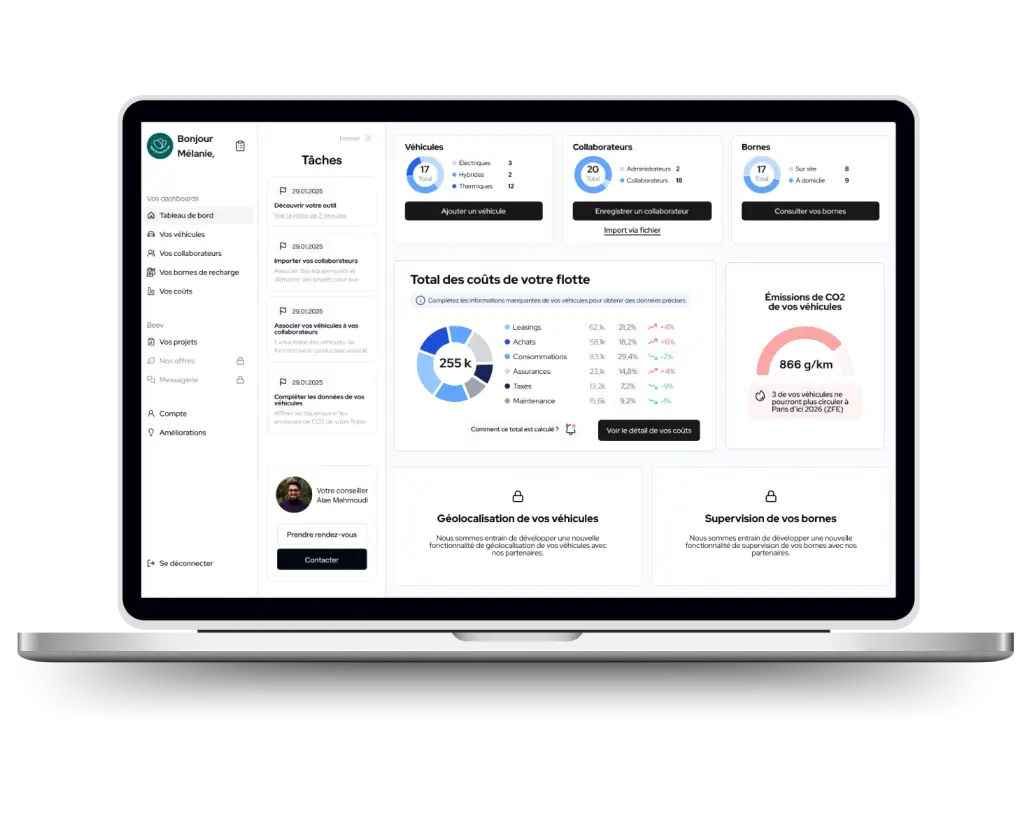
A fleet management tool from A to Z
- Add your fleet and employees in just a few clicks
- Plan your transition to electric vehicles and monitor your CSR objectives in real time
- Centralise your expenses
The different ways of outsourcing
There are several ways of outsourcing a vehicle fleet. Each meets specific needs and contexts:
- Long-term leasing Leasing: the most widespread model in France, it allows companies to hire vehicles for a fixed period in return for a fixed monthly rent. At the end of the contract, the company returns the vehicle without having to worry about reselling it.
- Leasing with a purchase option (LOA) leasing: also known as financial leasing or leasing, it differs from long-term leasing in that the company has a purchase option when the vehicle is returned.
- Full Service Lease
This is the most comprehensive form of vehicle fleet outsourcing, incorporating all the services associated with the use of the vehicle.
- Delegated management or TCO Management
It is an intermediate model for companies wishing to retain ownership of their vehicles while benefiting from the expertise of an external service provider.
Why outsource your car fleet management?
There are many reasons for this, and they vary from one organisation to another. However, there are four main benefits that systematically justify the use of outsourced fleet management.
Reduce costs and optimise TCO
The economic argument is often the first trigger for a fleet management outsourcing project. Contrary to popular belief, entrusting your fleet to an external service provider can result in substantial savings in terms of TCO.
Professional fleet managers simultaneously manage a large volume of vehicles on behalf of multiple customers. This volume gives them considerable negotiating power with all the players in the chain.
Our ability to negotiate with suppliers can even extend beyond purchase prices, with framework contracts with the main maintenance networks.
Outsourcing also offers unrivalled visibility and budget control. With a system of fixed monthly payments, the company knows exactly what its fleet costs will be for the entire duration of the contract.
Save time and refocus on your core business
Today, time is as precious a resource as money.
Outsourcing a vehicle fleet avoids monopolising in-house human resources. Teams can refocus on strategic projects that really generate value, such as business development, product innovation or digital transformation. Delegating all the time-consuming tasks can radically transform the day-to-day life of companies.
This operational efficiency also means greater responsiveness: a vehicle immobilised due to a breakdown or accident is quickly taken care of by the operator's network. A replacement vehicle is made available as quickly as possible to ensure optimum continuity of service.
Access to specialist expertise and tools
Efficient fleet management requires specialised skills and sophisticated tools. Fleet management software offers far greater functionality than a company could deploy on its own. These digital platforms enable real-time monitoring of the entire fleet.
In addition, up-to-date regulatory knowledge is a major asset in a constantly changing legislative environment.
Strategic consultancy complements this operational expertise. A good service provider doesn't just carry out tasks, it supports its customers in optimising their mobility policy.
Simplifying the transition to electric vehicles
If theelectrification of vehicle fleets is becoming unavoidable, this transition represents a complex challenge for many companies.
Against a backdrop of development of electric carsOutsourcing car fleet management makes perfect sense. It becomes a real accelerator of sustainable mobility. By entrusting its transition to electric vehicles to an expert, the company benefits from comprehensive support that secures the project and speeds up its implementation.
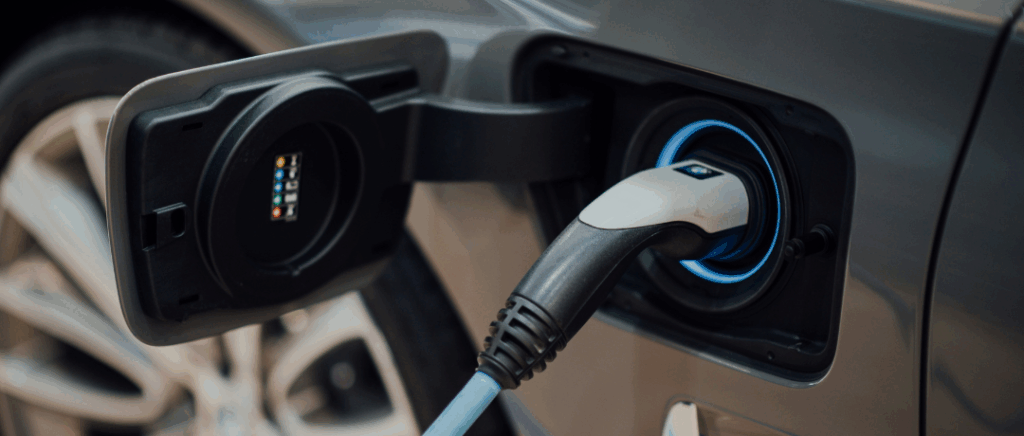
The expert in question will take charge of managing the charging points and assisting with the choice of electric vehicles. This enables the company to avoid costly mistakes. In this way, they can maximise the economic and environmental benefits of electrification.
Outsourcing versus insourcing: how do you choose?
Comparison of the advantages and disadvantages of outsourcing
| Criteria | Type | Outsourced management | In-house management |
|---|---|---|---|
| COSTS | Benefits |
|
|
| Disadvantages |
|
|
|
| CONTROL | Benefits |
|
|
| Disadvantages |
|
|
|
| FLEXIBILITY | Benefits |
|
|
| Disadvantages |
|
|
|
| EXPERTISE | Benefits |
|
|
| Disadvantages |
|
|
|
| TIME | Benefits |
|
|
| Disadvantages |
|
|
Outsourcing vehicle fleet management offers significant advantages on most criteria, particularly for VSEs and SMEs. However, the final decision must take into account the specific context of your organisation, as well as its available resources and strategic objectives.
Key decision criteria
There are two main criteria that can help you decide whether outsourcing your vehicle fleet is the right decision for your company.
The size and complexity of the fleet
Statistically, the threshold at which outsourcing becomes relevant is around 10 vehicles. Below this volume, in-house management can remain manageable, even if it is not optimal.
The budget and TCO targets
Outsourcing vehicle fleet management offers optimisation levers that are difficult to use internally. Savings are often achieved by negotiating with the external service provider and systematically optimising each item of expenditure.
Signals that indicate it's time to outsource
Rapid growth in a company's fleet is the most obvious signal. If your fleet is growing, or if you are planning a significant expansion in the coming months, in-house management is likely to quickly show its limits.
In addition, the lack of in-house time and expertise is a key factor. If your teams spend a disproportionate amount of time on fleet management to the detriment of their core tasks, there will be delays in processing files.
The lack of visibility over your fleet costs is also a warning sign. Outsourcing will give you the transparency and management tools you need.
How can you successfully outsource your vehicle fleet?
Once the decision to outsource has been taken, the success of the project depends on a structured approach. Outsourcing your vehicle fleet is a real transformation that requires preparation and increased support.
Clearly defining your needs and objectives
The first step is to carry out a detailed inventory and clarify your expectations. This preliminary audit forms the basis of your outsourcing project. With this analysis, you can identify any mismatches between the vehicles allocated and the real needs. The choice of services to be outsourced is a direct result of this audit. It enables you to decide whether you want to outsource all or part of your business.
Beev's advice: Make a precise list of the services you require: financing, servicing, tyre management, insurance, claims management, management tools, etc. This list will form the basis of your specifications and enable you to compare service providers' offers objectively.
Managing and monitoring performance
Delegating operational management means putting in place effective monitoring tools to ensure that objectives are met.
The KPIs to be monitored must cover all aspects of your fleet's performance. That's why your service provider must provide you with total visibility, with regular reports and/or dashboards accessible in real time.
What's more, the satisfaction of your employees should not be neglected, as they are the end users. Set up surveys to assess their level of satisfaction, so that you can react quickly if a problem arises.
Finally, environmental indicators are also important. Their data enables you to monitor your fleet greening strategy and, above all, to communicate your CSR commitments.
Fleet outsourcing in the age of electrification
The energy transition in road transport is having a profound effect on vehicle fleet management. Against this backdrop of accelerated change, fleet outsourcing is more than ever a strategic lever for successfully electrifying the fleet.
The complexity of the transition to electric vehicles represents a major challenge for fleet managers. Unlike internal combustion vehicles, whose parameters are well under control, electric vehicles introduce new variables that need to be taken into account. L'recharging infrastructure is the first issue: should on-site terminals be installed? How many and how powerful? How do you manage charging at employees' homes? Which public charging network should be used for long-distance journeys? These questions require in-depth technical analysis and major investment.
So, while the tax system for electric vehicles is advantageous overall, there are specific features that need to be mastered to optimise costs. Ecological bonuses are constantly changing. Knowing at your fingertips the VAT exemption, tax depreciation of charging points, tax credits and regional grants can be extremely complex for the uninitiated. That's why it's best to call on specialist expertise. An expert knows the pitfalls to avoid, the most reliable technical solutions and the most suitable vehicle models for different uses.
The electric vehicle market is evolving extremely rapidly. New models are launched every quarter, with technologies advancing at breakneck speed. That's why in-depth expertise in choosing the right electric vehicles is a key factor in making a successful transition to electrification.
Full support for recharging stations
Support for charging points is also an essential aspect of electrification. It includes advice on infrastructure sizing, installation by certified professionals, management of administrative procedures and the choice of supervision and payment solutions.
How can you take advantage of off-peak times to reduce electricity costs? How can solar panels be integrated for even greener recharging? How can we manage home recharging of company cars, with fair reimbursement of the electricity consumed? Specialised support will provide practical answers to these complex questions.
By combining the outsourcing of fleet management with increased expertise in electrification, companies can turn a complex project into an opportunity to improve their economic, operational and environmental performance.
Conclusion
Outsourcing vehicle fleet management is much more than a simple optimisation option: it's a real strategic lever for companies that want to turn their professional mobility into a competitive advantage.
Against a backdrop of accelerating energy transition, the outsourcing of vehicle fleet management is taking on an added dimension. While it represents an opportunity to reduce costs and emissions, the electrification of fleets also introduces a new level of complexity that few companies can manage on their own. The recharging infrastructure, the management of theautonomyThese are all challenges that require specialised expertise.
That's why specialist partners like Beev bring real added value.