













An industrial strategy focused on competitiveness and local production
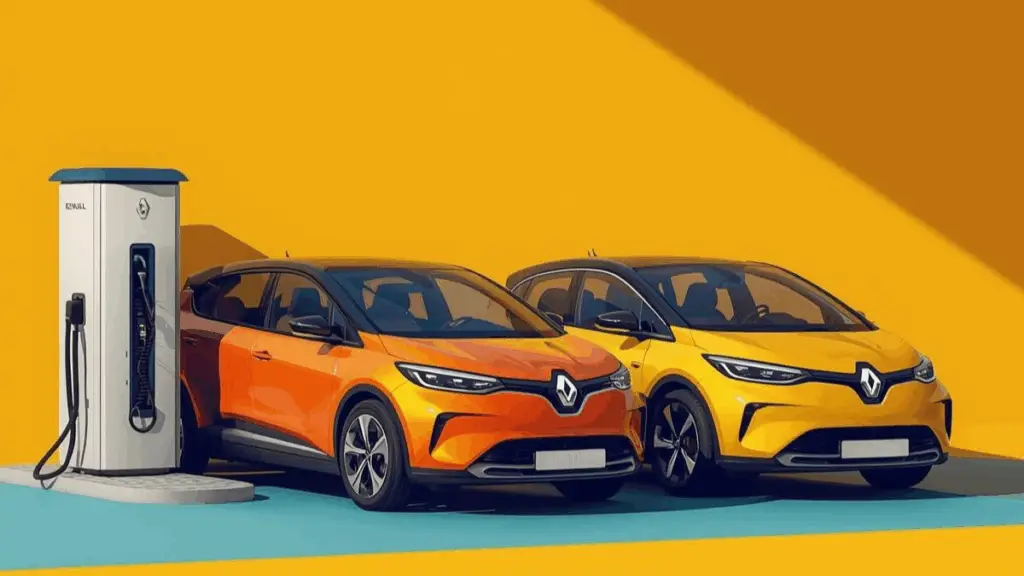
Renault is not simply looking to cut costs: the group is completely rethinking its value chain to make electricity generation more efficient and more resilient. This transformation, which will begin in 2024, is aimed at both profitability and sustainability, two essential pillars for companies electrifying their fleets.
Standardising to cut costs
Renault's strategy is clear: rationalise to produce better and more cheaply.
The brand is banking on modular electrical platforms and a complete digitisation of its industrial sites in order to cut production costs without sacrificing quality.
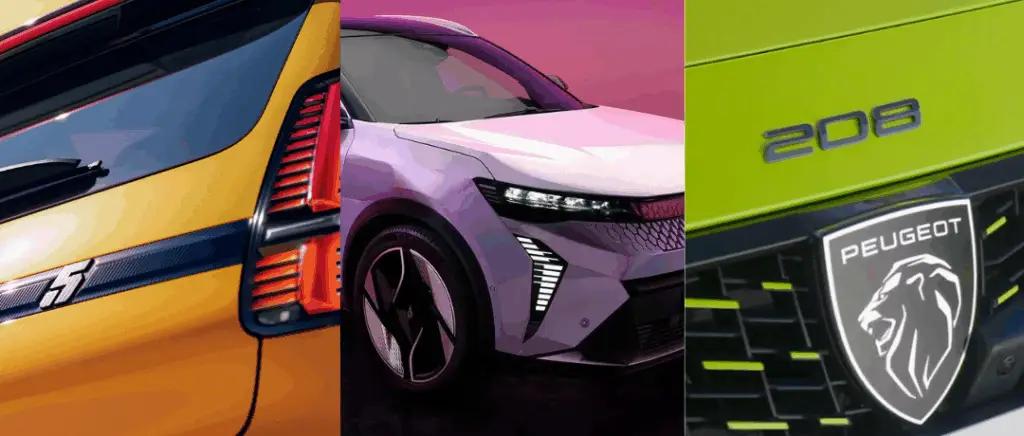
Future generations of vehicles, such as the electric Twingo or the Ampère models, will share a maximum number of components: motors, electronic modules and software architectures.
This standardisation of technical elements will reduce industrial complexity and increase production rates.
Connected factories, supported by artificial intelligence and industrial metavers, will monitor every stage of production in real time: predictive maintenance, quality monitoring and energy management of assembly lines.
Objective: reduce fixed costs, while improving reliability.
For businesses, this means more affordable and better managed electric vehicles, with durability, simplified maintenance and constant performance built into their design from the outset.
Relocation as an economic and environmental lever
Renault opts for the "made in Europe"And it's not just an ecological argument.
Producing locally reduces logistics costs, shortens lead times and stabilises supplies in the face of geopolitical volatility.
It also means guaranteeing a better eco-score, a criterion that has become essential for fleets in public and private tenders.
The Ampère plant in Douai illustrates this approach, combining lean assembly lines, renewable energy and digital flow management.
The result is agile, more fuel-efficient production, with a carbon footprint far inferior to models imported from Asia.
For fleet managers, this relocation reinforces the strategic interest of the "European product":
- immediate compliance with CSR criteria,
- easier access to EEC and regional aid,
- greater price stability in leasing contracts.
Renault is demonstrating that a locally produced electric model can now combine competitiveness, sustainability and profitability - three criteria at the heart of modern fleet strategy.
Batteries at the heart of the cost-cutting plan
Batteries currently account for almost a third of the cost of an electric vehicle. This is where Renault is concentrating its efforts.
By rethinking both the chemistry and the design of the batteries, the manufacturer is aiming to drastically reduce costs without compromising safety.autonomy nor sustainability.
New LFP chemistry: more sustainable, less expensive
The main cost of an electric vehicle remains the batteryThis is often almost a third of the total price.
The manufacturer is now adopting Lithium Iron Phosphate (LFP), already used by several Asian players, replacing the classic trio nickel-manganese-cobalt (NMC).
There are many advantages:
- a price nearly 27 % lower than the NMC,
- increased longevity,
- and production that requires fewer rare and critical metals.
This new chemistry also improves the thermal stability of batteries, reducing the risk of overheating and making them easier to recycle.
In the long term, this will enable Renault to almost halve the unit cost of batteries, while increasing their useful life.
For fleets, this means lower maintenance costs and greater operational availability, a major advantage for highly mobile businesses.
Cell-to-pack technology: integration and efficiency
Innovation doesn't stop at chemistry: it also affects design. Renault, in partnership with LG, is banking on a cell-to-pack architecture, which consists of integrating the cells directly into the vehicle chassis.
This approach reduces the number of interfaces, cables and modules, resulting in a lighter, more rigid and more efficient package.
The economic benefits are immediate: a reduction in production costs of up to 15 %. In terms of performance, this integration offers better thermal and structural management, contributing to the vehicle's safety and range.
The future electric Twingo will be the first concrete example of this: compact, accessible, designed for professional urban mobility, with simplified maintenance and minimal running costs.
Tangible benefits for companies and fleet managers
Behind the industrial announcements, it is businesses that will benefit directly from lower costs.
For fleet managers, this transformation means a better balance between total cost of ownership (TCO), profitability and environmental compliance.
A direct reduction in TCO
Renault's objective is not just to reduce production costs: it is also to rnd make electric vehicles economically viable for fleets.
With an estimated 15-20 % reduction in TCO by 2028, Losange vehicles could become the benchmark for the B2B market.
The levers of this competitiveness are many:
- less maintenance elimination of fast-wearing mechanical parts,
- controlled energy costs Electricity is still 3 to 4 times cheaper than fuel,
- enhanced residual value thanks to reliability and local production.
Over a leasing cycle of 4 to 5 years, the savings can exceed €30,000 for a fleet of 10 vehicles compared with equivalent combustion models.
This increased profitability paves the way for electrification to be budget-neutral, or even positive in the medium term - an unprecedented prospect for fleet managers.
Electric vehicles finally within the reach of all fleets
Thanks to the reduction in its industrial costs, Renault plans to launch electric professional vehicles costing less than €30,000.
A major step towards democratising access to zero-emission mobility.
This repositioning makes it possible to equip SMEs, ETIs and local authorities, which until now have often been held back by the initial cost of acquisition.
Combined with public subsidies (CEE, regional bonuses, tax exemptions), the entry ticket for an electric fleet finally becomes competitive.
Renault is thus aligning accessibility, sustainability and regulatory compliance, three levers that are transforming electric vehicles from a budgetary constraint into a strategic tool.
Greener mobility that meets regulatory requirements
Renault's new production strategies are perfectly aligned with changes in the European regulatory framework.
Electricity is no longer just a technological choice: it's a legal obligation and a lever for environmental performance for fleets.
The eco-score, a new competitive criterion
The eco-score has become the new compass for the European car market.
It measures a vehicle's overall environmental performance, from production to end of life.
Models produced in Europe, with a controlled carbon footprint, logically score best.
For companies, this means :
- automatic eligibility for grants EEC,
- best CSR rating in calls for tender,
- privileged access to ZFE zones (Low Emission Zone) and local tax benefits.
This gives manufacturers like Renault that produce in Europe a structural advantage when it comes to supporting the ecological transition of business fleets.
Anticipating future ZFE and ESG obligations
Regulations are being tightened:
- The EPZs will gradually ban internal combustion vehicles by 2030.
- La Climate and Resilience Act requires at least 20 % of fleet renewals to be electric by 2025.
- La CSRD directive makes it compulsory for all major European companies to publish ESG indicators.
Against this backdrop, investing in a locally produced, low-carbon fleet becomes a competitive advantage and an assurance of compliance.
An opportunity for fleet managers
Falling costs and the rise of "made in Europe" are creating a unique window of opportunity for businesses. This is the ideal time to adapt vehicle policies, plan investments and prepare for the intelligent management of electric fleets.
Adapting the car policy to the new generation of vehicles
Fleet managers now need to rethink their selection criteria:
- beyond the purchase price, include the overall cost of use,
- consider the origin of production and eligibility for aid,
- anticipate the need for recharging infrastructure.
2025-2026 will mark a key period: current public support will still be available, manufacturing costs will start to fall, and electric ranges will become more widespread.
Now is the time to adjust the car policy and plan the energy transition without financial constraints.
Optimising management through data and connectivity
Electrification is no longer just a technical development: it's a digital transformation of fleet management.
Renault electric vehicles feature a high level of native connectivity.
For managers, this is a major advantage:
- real-time tracking consumption, recharging and maintenance cycles,
- predictive analysis of costs and requirements,
- simplified reporting for CSR and ZFE compliance.
Thanks to solutions such as Fleet ManagerThis data becomes a lever for strategic management. It can be used to model TCO, optimise journeys and improve the energy performance of the fleet. The idea is to move from reactive management to predictive management, where every decision is based on measurable indicators.
Renault, the catalyst for a new balance between cost, performance and sustainability
In addition to its technological innovations, Renault is positioning itself as the driving force behind a new economic equation. By combining competitiveness, responsibility and European roots, the brand is reshaping the landscape of the professional electric vehicle.
An inspiring industrial model for the entire sector
Renault is redefining the roadmap for the European automotive industry. Its approach combines innovation, sustainability and profitability, proving that it is possible to produce locally, at controlled cost and with a low carbon footprint.
This strategy will have direct repercussions for fleets:
- more affordable vehicles,
- optimised maintenance,
- and reducing regulatory risk.
In other words, the electric vehicle is finally becoming a stable economic asset, and no longer a cost item to be monitored.
A strong signal for the democratisation of the professional electric vehicle
Renault's ambition sends out a clear message:
Le electric vehicle is no longer reserved for large companies or senior executives. It is becoming a a universal tool for performance and energy transition.
With European production, a controlled carbon footprint and steadily falling costs, the professional electric vehicle is establishing itself as the sustainable mobility standard for the coming years.
Worth remembering: an industrial revolution for fleets
In short, Renault's strategy is not limited to cost reduction: it is opening up a new era in corporate mobility. By combining local production, innovation and frugality, Renault is paving the way for a more economical, greener and more sustainable fleet model.
- Objective: - 40 % on production costs by 2028.
- Direct impact on TCO and business vehicle leases.
- Local production, enhanced eco-score and guaranteed CSR compliance.
- A more cost-effective electrificationaccessible and sustainable for all fleets.
Beev helps companies make the transition to 100 % electric fleets:
- Audit of existing fleets,
- TCO simulation and electrification plan,
- Selection of suitable models,
- Installation of pro kiosks and CSR support.
Manage your fleet easily with our dedicated tool
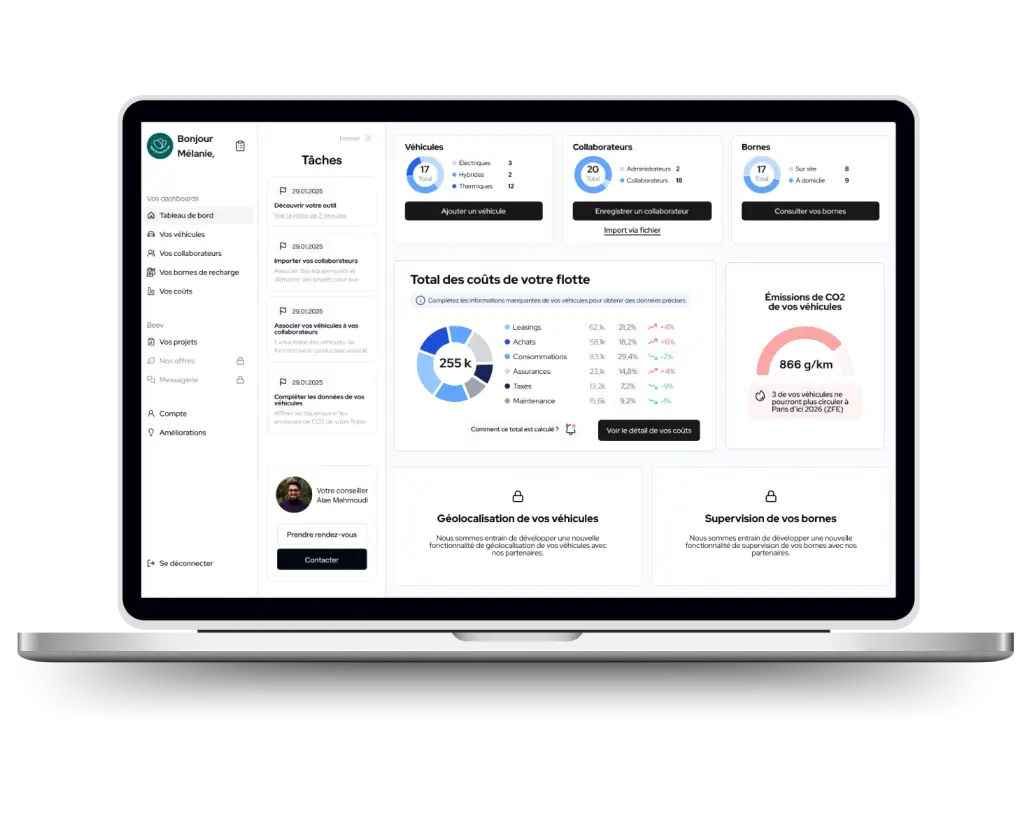
A fleet management tool from A to Z
- Add your fleet and employees in just a few clicks
- Plan your transition to electric vehicles and monitor your CSR objectives in real time
- Centralise your expenses