









The electric car market in 2026: what will change for professionals?
The 2026 electric car market is undergoing a major transformation, driven by a number of technological and strategic innovations. Carmakers are stepping up their efforts to offer ever more competitive models, both in terms of price and performance.
The new electric platforms
Manufacturers are massively deploying their dedicated 100% electric platforms. These include Volkswagen's MEB, Renault's CMF-EV and Mercedes' new MMA. These optimised architectures make it possible to improve fuel efficiency, reduce production costs and increase boot space.
The price offensive for increasingly affordable electric cars
2026 will see the arrival of a large number of models costing under the symbolic €25,000 mark, including the Renault Twingo E-Tech and the Citroën ë-C3. For professionals managing urban fleets, these prices finally make it possible to envisage complete electrification while keeping acquisition costs under control.
More sophisticated recharging technologies
Ultra-fast charging is no longer the preserve of premium models. With the widespread use of 800V architecture, recharge times are falling. On some models, around twenty minutes is enough to recover several hundred kilometres of battery life.autonomy.
A more extensive infrastructure network
In 2026, it will be compulsory to install electric charging points of at least 400 kilowatts every 60 km along the European Union's main motorways. Coupled with the massive deployment of IonityTesla Supercharger and Total Energies, range anxiety is a thing of the past for long-distance journeys.
Our Top 15 electric cars 2026
Affordable electric city cars
1. Renault Twingo E-Tech, the champion of accessibility
The new Renault Twingo E-Tech embodies the return of the icons of the 1990s in an electric 100% version. With its neo-retro design faithful to the first generation, this city car boasts an unbeatable price of under €20,000. Ideal for urban fleets, it excels on daily city journeys.
Beev's opinion: The Renault Twingo E-Tech is one of the best value electric cars for urban fleets that demand great manoeuvrability.
2. Dacia Spring 2026, an evolving low-cost car
This new generation of Dacia Spring abandons its old chassis for a modified version. This new technical development marks a significant move upmarket. The 2026 Dacia Spring is the perfect model for inter-site travel and urban use.
Beev's opinion: This version of the Dacia Spring is the most affordable on the European market. It's the ideal way to try out electric cars without making a major financial commitment.
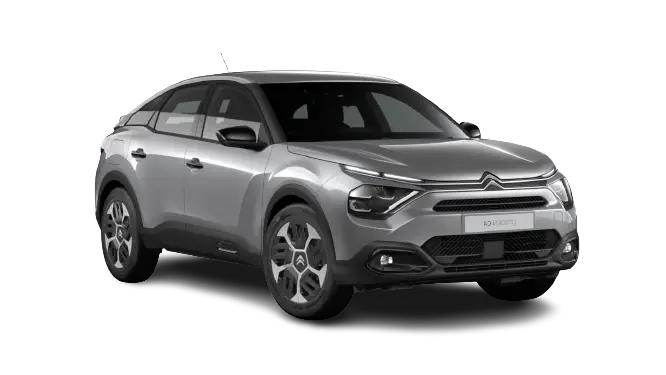
3. Citroën ë-C3, comfort at an affordable price
In 2026, Citroën is striking back with its flagship city car featuring the famous Advanced Comfort suspension. Its spacious, modular cabin makes it a serious contender for sales representatives in urban and suburban areas.
Beev's opinion: In terms of space, price and comfort, the Citroën ë-C3 represents a very good compromise for mixed fleets requiring versatility.
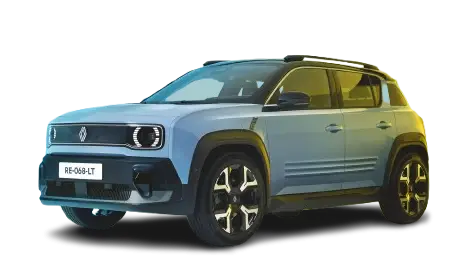
4. Renault 5 E-Tech, the modern, connected icon
Star of the Year 2025 and voted European Car of the Year 2024, the Renault 5 E-Tech continues its career in 2026 with unquestionable commercial success. Its neo-retro design will appeal to both private individuals and professionals looking for a modern brand image.
Beev's opinion: Its appealing design and dynamic performance make it a desirable company car, making it easy for employees to adopt.
Compact cars and multi-purpose saloons
5. Kia EV3, an SUV that's as compact as it is efficient
Launched at the end of 2024, this SUV has rapidly established itself as a benchmark in its range. Its size makes it ideal for city driving.
Beev's opinion: One of the best range electric cars in the compact segment, with unbeatable value for money.
6. Kia EV4, the long-range hatchback
Kia's first 100% electric saloon, the EV4 has clear ambitions: to offer the best range in its segment at a contained price.
Beev's opinion: The Kia EV4 is ideal for frequent commercial drivers who need range and road comfort.
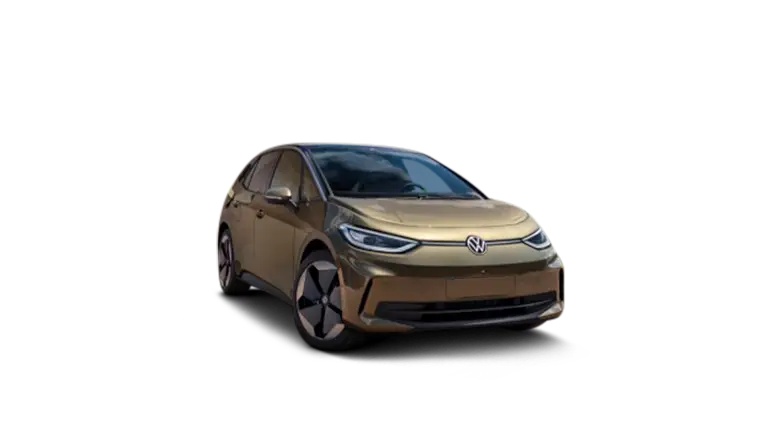
7. Volkswagen ID.2, affordable German quality
Volkswagen is striking a blow with the ID.2, its electric entry-level model. Positioned to take on the Renault 5 and Citroën ë-C3, the ID.2 embodies the democratisation of premium comfort.
Beev's opinion: Volkswagen's dense network in France guarantees optimum after-sales access for multi-site fleets.
8. Audi A6 e-tron, for long-distance driving only
The Audi A6 e-tron represents the new generation of electric premium saloons. It combines high performance with exceptional range.
Beev's opinion: The Audi A6 e-tron brings a touch of excellence to executive vehicles. Its brand image enhances the company's image and helps to retain high-potential employees.
Electric SUVs for all purposes
9. Skoda Elroq, value for money focused on space
On sale since the end of 2024, the Skoda Elroq is rapidly establishing itself as the compact electric SUV offering the best electric car range in its category.
Beev's opinion: It's the best compromise between versatility, price and range for mixed fleets. Its optimised TCO and Skoda warranty make it a rational and reliable choice.
10. New-generation Nissan Leaf, the classic revisited
After a career spanning more than a decade, Nissan is preparing an all-new generation of its iconic electric vehicle. Expected in 2026, it will abandon the current platform and adopt the modern architecture of the Ariya.
Beev's opinion: The dense network of Nissan dealerships in France guarantees accessible maintenance, even in rural areas. A criterion to be taken into account for national fleets.
11. Toyota C-HR+ electric, a hybrid SUV that becomes 100% electric
Toyota has long shied away from pure electrics in favour of hybrids, and is finally speeding up its conversion with an electric 100% version of its compact SUV.
Beev's opinion: The electric Toyota C-HR+ marks a key stage in the brand's transition to all-electric power. A credible option for fleets wishing to combine reliability with a sustainable image.
12. Volkswagen ID.4 restyled, the perfected electric bestseller
The brand's best-selling electric SUV will benefit from further improvements for 2026, including a revised design.
Beev's opinion: This vehicle, which no longer needs to prove its worth, is a safe choice for prudent managers who want top-of-the-range for their fleet of business vehicles.
13. Mercedes CLA Shooting Brake electric, a premium long-distance estate car
This electric Mercedes CLA inaugurates the new MMA (Mercedes-Benz Modular Architecture) platform that we mentioned at the start of this article. It marks Mercedes' return to the premium electric compact saloon segment.
Beev opinion: The electric Mercedes CLA Shooting Brake is perfect for executive or senior management vehicles with a brand image that enhances the company.
14. Alpine A390, the French electric sports car
Renault's sporty brand is electrifying its DNA with the A390, a fastback crossover that combines electric performance with everyday practicality.
Beev's opinion: With its bold design, this model showcases French innovation and automotive heritage. It makes a perfect ultra-premium executive vehicle.
15. BMW iX3, top of the range reinvented
BMW is preparing a complete overhaul of its iX3 compact electric SUV with the adoption of the revolutionary Neue Klasse platform. This new 100% electric architecture embodies BMW's vision for the next decade.
Beev's opinion: For senior executives, the iX3 Neue Klasse combines the BMW brand image with top performance and cutting-edge technology.
Comparison table of the 15 best electric cars 2026
| Modèles 2026 | Prix à partir de | Autonomie WLTP (km) | Puissance max. (ch) | Temps charge 10-80% |
|---|---|---|---|---|
|
Dacia Spring
|
16 900€
|
225
|
70-100
|
29 min
|
|
Renault Twingo E-Tech
|
19 990€
|
300
|
85
|
30 minutes
|
|
Citroën ë-C3
|
19 900€
|
320
|
113
|
26 min
|
|
Renault 5 E-Tech
|
24 990€
|
410
|
150
|
30 minutes
|
|
Volkswagen ID.2
|
28 000€
|
600
|
300
|
20 min
|
|
Skoda Elroq
|
33 430€
|
573
|
170
|
26 min
|
|
Toyota C-HR+ electric
|
35 450€
|
609
|
NC
|
NC
|
|
Kia EV3
|
35 990€
|
605
|
204
|
31 min
|
|
Nissan Leaf
|
36 000€
|
530
|
177
|
NC
|
|
Kia EV4
|
39 090€
|
625
|
204
|
30 minutes
|
|
Volkswagen ID.4 restyled
|
45 990€
|
332
|
201
|
33 min
|
|
Mercedes CLA Shooting Brake
|
48 050€
|
791
|
272
|
22 min
|
|
Audi A6 e-tron
|
67 900€
|
750
|
367
|
21 min
|
|
BMW iX3 Neue Klasse
|
71 950€
|
805
|
463
|
21 min
|
|
Alpine A390
|
NC
|
550
|
470
|
25 min
|
The essential criteria for choosing a professional electric car in 2026
Real autonomy depending on your uses
The range claimed in the WLTP cycle is only a benchmark. Actual range will vary according to conditions of use. To choose an electric car that's right for you, analyse your mobility profile:
- For intensive urban useActual range often exceeds the WLTP claim by 10 to 20%.
- For a mixed urban and suburban useHowever, you need to rely on the reference WLTP profile, as the actual range generally corresponds to 85-95% of the advertised range, depending on how you drive.
- For a motorway usehigh speeds and resistance aerodynamics have a significant impact on range. The WLTP range at 130 km/h is generally 60-70%.
- In winter conditionsIn cold weather, the batteries are affected and the passenger compartment needs to be heated, resulting in additional fuel consumption.) You can expect to lose 20-30% of range when the temperature is between -15°C and -5°C.
Total cost of ownership (TCO)
In addition to the purchase price, the TCO is the real economic indicator for professional fleets. Over a period of 3 to 5 years, electric vehicles are often more economical than internal combustion, even if the list price is higher.
In fact, you need to take into account the grants included in the purchase price, such as the ecological bonus, the conversion premium and regional grants, which vary from region to region. Combined, these aids significantly reduce the initial investment.
What's more, the cost of servicing and maintenance is reduced, because an electric car has fewer wearing parts and fewer engine components than a combustion-powered car.
In addition, there will be many tax advantages in 2026. These include total exemption from company vehicle tax (TVS) for electric cars and advantageous tax depreciation for vehicles emitting less than 20g/km of CO₂.
Electrification depends on the availability of suitable recharging solutions. There are three types of recharging :
- Recharging at the office with the installation of in-company charging points that allow employees to recharge during working hours. The Advenir programme is proposing an incentive for businesses to install recharging points.
- Home recharging for employees with a company car.
- Charging at public charging points with the French motorway network increasingly equipped with fast charging points.
Versatility according to your activity
Each profession has its own specific requirements that the electric car of 2026 will have to satisfy. For sales representatives, the emphasis will be on autonomy and driving comfort. An urban fleet, meanwhile, will require maximum compactness. And if the need is above all for brand image, high-performance vehicles with on-board technology are ideal.
Electric cars 2026: which models for which fleets?
For urban fleets
Vehicles designed exclusively for urban and suburban use focus on their price/CO2 ratio and manoeuvrability. The models below have the lowest TCOs on the market, thanks to their low fuel consumption, low purchase price and minimal maintenance.
Our selection for 2026:
- Renault Twingo E-Tech
A champion of manoeuvrability with a turning circle of 8.6 m, it's perfect for congested city centres. - Dacia Spring 2026
The entry-level car for trying out electrics without a major financial commitment.
- Citroën ë-C3
An excellent compromise if you're looking for space and comfort at a reasonable price.
- Renault 5 E-Tech
For companies looking to enhance their image with a modern, eye-catching vehicle.
For hard-working salespeople
Road warriors need a high level of autonomy, with rapid recharging and a high level of driving comfort.
Our selection for 2026:
- Kia EV4
Its 625 km WLTP range means you can cover a full day's driving without an intermediate recharge.
- Skoda Elroq 85
With 573 km WLTP, it also combines a long range.
- Mercedes CLA Shooting Brake electric
The champion of all categories, with 791 km of WLTP range, ultra-fast charging and a premium image to enhance the company's image.
- Audi A6 e-tron
Featuring ultra-fast recharging and on-board technology, it's perfect for the top end of the market.
For mixed multi-purpose fleets
For mixed use of company vehicles (home-work, client meetings, personal journeys, etc.) with a view to maximum versatility.
Our selection for 2026:
- Skoda Elroq
The best compromise of all. With four versions to choose from, you can tailor your choice to suit your needs.
- Kia EV3
The compact SUV format is ideal for its manageable size and spacious cabin.
- Volkswagen ID.4
Volkswagen's electric bestseller that no longer needs to prove itself.
- New generation Nissan Leaf
It combines Nissan's experience and their first mass-market electric car, launched in 2010, with modernised technology.
- Toyota C-HR+ electric
Toyota reliability applied to electric vehicles.
Premium company cars for executives
Top-of-the-range executive vehicles combine performance with comfort and brand image.
Our selection for 2026:
- Mercedes CLA Shooting Brake electric
An electric version of German excellence, with a record range of 791 km WLTP and an ultra-fast 800 V recharge.
- Audi A6 e-tron
The benchmark premium saloon that guarantees top-flight performance with its state-of-the-art MB.OS interface.
- BMW iX3 Neue Klasse
The future BMW benchmark with its new-generation batteries that increase energy density by 30%.
- Alpine A390
For companies that value French innovation and sportiness, the Alpine A390 is an executive vehicle that makes a lasting impression.
Pending the release of these new models, discover the electric cars in our catalogue.
Our advice for anticipating your electricity transition in 2026
Analyse your real mobility needs
Before investing, map out your exact usage: annual mileage per vehicle, types of journey, number of long-distance journeys, specific constraints (towing, load volume), etc.
An audit of the current fleet often reveals that 70 to 80% of vehicles cover less than 200 km a day, making immediate electrification possible with average models with a range of 400 to 500 km.
Monday to Friday
9am - 12.30pm - 2pm - 7pm
Assess the charging infrastructure available
Identify accessible recharging solutions. There are many ways of installing charging points: company car parks, employees' homes, density of the public network in travel areas, etc.
Good to know: The Advenir programme finances up to 50% of the business installation.
Compare TCO over 3 to 5 years
The mistake is to stop at the list price. However, a TCO includes all sorts of parameters, such as tax (VAT), purchase subsidies, depreciation, maintenance, and so on. Our online simulation tools for precise vehicle-by-vehicle comparisons.
Take advantage of current grants
The 2026 model year maintains substantial support. You can take advantage of an ecological bonus, a conversion premium, cumulative regional aid, a tax credit for recharging stations and an exemption from VAT.
Good to know: These grants are changing! By anticipating your purchases, you can benefit from these schemes before they are reduced.
Conclusion
It's a fact: 2026 marks the arrival of ever more powerful, affordable models with impressive ranges. Professionals have an even wider range of the best electric cars for their uses and for all budgets.
With attractive offers ranging from city cars to premium saloons, the transition to electric vehicles is becoming easier and easier. For companies, the transition means lower operating costs and a more positive brand image, with a tangible commitment to the environment.
Don't wait for the competition to take the lead: anticipate your transition to zero-emission mobility now.