









Why choose electric city cars for your business fleet?
The economic and operational advantages of electric city cars
The first advantage is the Total Cost of Ownership (TCO). With a list price very often below €35,000, these vehicles also benefit from purchase subsidies.
What's more, maintenance is another area where savings can be made. With no oil changes, clutches or complex exhaust systems, electric city cars require up to 40% less maintenance than a conventional car. thermal vehicle.
They also offer significant tax benefits. These include depreciation capped at €30,000, an exemption from taxes on the use of passenger vehicles (ex-TVS) and VAT recovery on the electricity used for recharging. These tax breaks make investing in a fleet of electric city cars particularly attractive.
Urban practicality is another major advantage. With their compact dimensions (between 3.60 m and 4.10 m in length), these vehicles make it easy to park in town. This saves precious time for professionals making multiple daily stops. Their tight turning radius and optimum manoeuvrability make them ideal for navigating city centres.
Finally, the adoption of electric city cars reinforces the company's brand image. It demonstrates its concrete commitment to the ecological transition. At a time when Low Emission Zones (LEZ) are multiplying, having an electric fleet guarantees the long-term future of the business.
Activities and company profiles concerned by the acquisition of electric city cars
Electric city cars are aimed primarily at companies whose activities are concentrated on short to medium distances. This category includes :
- Personal services (home help, nursing care, assistance, etc.). With a autonomy 130 to 280 km, an electric city car more than meets the needs of these professionals.
- Delivery activities (couriers, meal delivery, light parcel distribution, etc.). These jobs require vehicles that are agile, inexpensive to run and capable of making many stops.
- Sales representatives mainly in densely populated areas. They'll appreciate the ease of parking and the savings on travel costs.
- SMEs and VSEs for service vehicles used for short business trips. This optimises costs while offering a modern alternative to internal combustion vehicles.
Local authorities and public administrations. Subjected to exemplary targets in terms of greening their vehicle fleets, they need to switch their fleets to electric vehicles.
Criteria for selecting electric city cars for a business fleet
Choosing the right electric city cars for your fleet means analysing a number of key criteria:
- Real autonomy
- Loading capacity
- Power and performance
- Recharging speed
- Acquisition cost and financing arrangements
- Comfort and equipment
Monday to Friday
9am - 12.30pm - 2pm - 7pm
Our selection of electric city cars
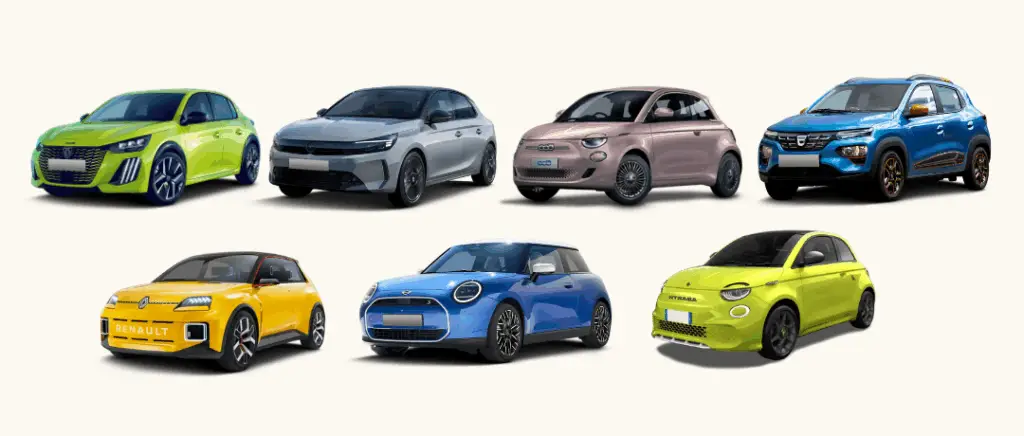
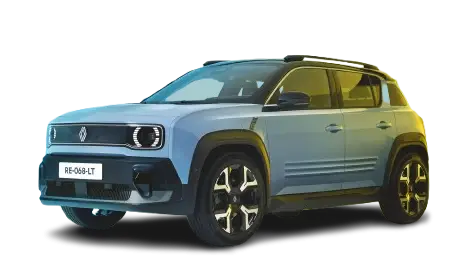
The Renault 5 E-Tech, the productivity trump card
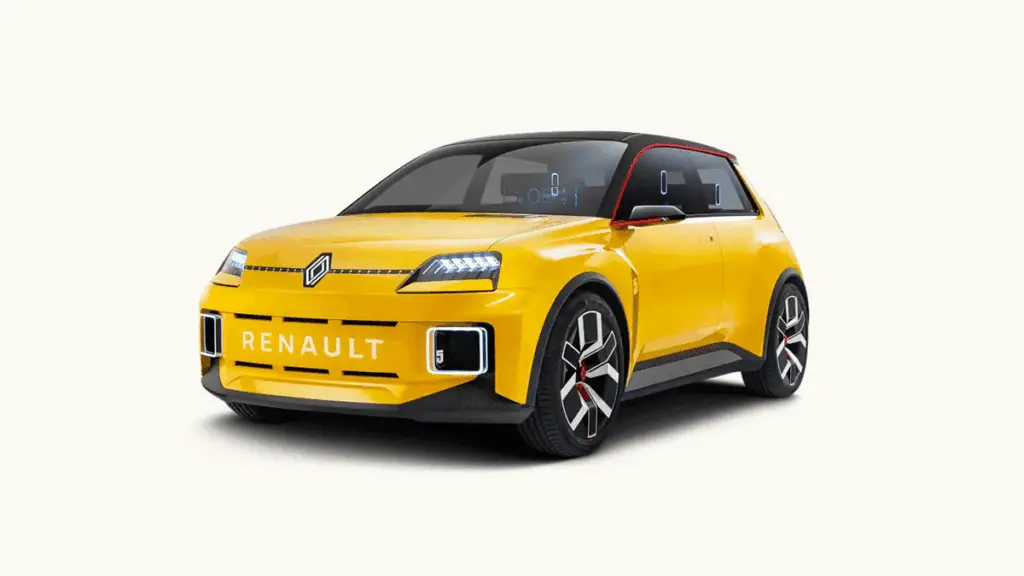
It marks the return of a French icon in an all-electric version.
With a WLTP range of 400 km, the Renault 5 E-Tech leads our comparison on this essential criterion. In real-life conditions, you can expect a range of 280 to 325 km. This means you can confidently plan full tours without the need for intermediate recharging.
Sa battery 55 kWh also offers the highest capacity of our selection. This guarantees excellent versatility of use.
Its 150 bhp ensure acceleration from 0 to 100 km/h in just 7.5 seconds. In everyday driving conditions, this liveliness translates into rapid acceleration.
The exceptional boot volume of 1000 litres puts the Renault 5 E-Tech on a par with some compact estate cars. This loading capacity makes it particularly well-suited to light delivery activities. The rear seats can be folded down to further optimise the load space as required.
When it comes to recharging, this electric city car accepts up to 11 kW of alternating current. In fast charge mode, the 100 kW power allows the battery to be recharged from 10 to 80% in 57 minutes.
With a kerb weight of 1450 kg, the Renault 5 E-Tech offers an excellent compromise between robustness and fuel efficiency.
A plus for your fleet : Its neo-retro design blends nostalgia and modernity, reinforcing the image of an innovative company with an iconic French heritage.
The Peugeot e-208, the brand image trump card
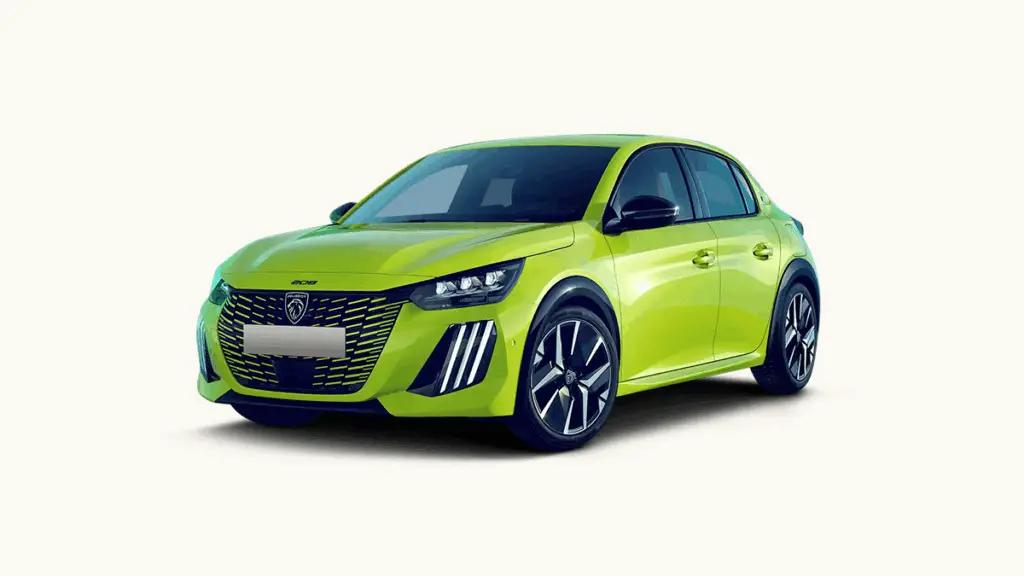
The Peugeot e-208 embodies French excellence in the electric city car segment. An electrified version of the best-seller in France, it already enjoys a high profile.
Its WLTP range of 362 km puts it in a very good position in our electric city car comparison. In real business use, you can expect to cover between 240 and 280 km, depending on conditions.
The 50 kWh battery offers an excellent capacity/size ratio, helping to preserve the vehicle's habitability.
With 136 bhp, the e-208 delivers dynamic performance, accelerating from 0 to 100 km/h in 8.1 seconds. This generous power ensures a high level of driving pleasure, which is particularly appreciated by sales staff.
The interior of the e-208 is distinguished by its much-appreciated i-Cockpit and a compact steering wheel that offers a sporty driving position. Its meticulous materials enhance the company's image.
The 265-litre boot is this model's weak point when it comes to transporting equipment. It is perfectly suited to employees travelling light or for journeys without a heavy load.
Recharging is possible at up to 11 kW on alternating current. In fast charge mode, the 100 kW power allows you to recharge from 10 to 80% in just 28 minutes.
Weighing in at just 1455 kg, the e-208's low mass helps to optimise range and roadholding.
A plus for your fleet : A premium image that adds value to your business, combined with a fast 28-minute charge to minimise downtime.
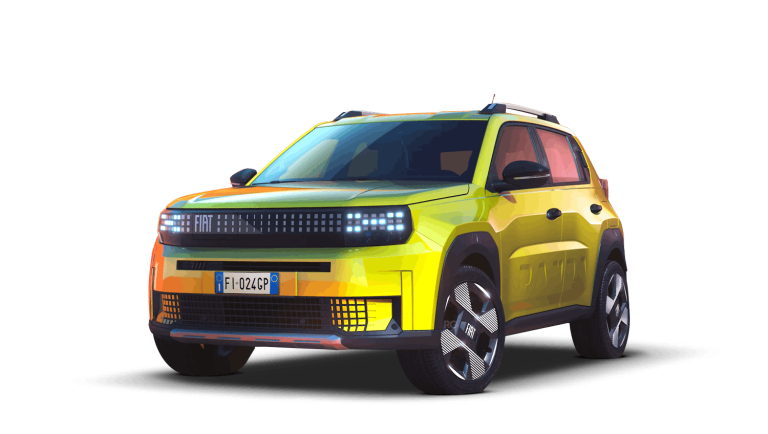
The Fiat 500 Hatch 24 kWh, the urban manoeuvrability trump card

Italian charm in an ultra-compact format. The Fiat 500 Sedan 24 kWh is an icon of automotive design for the electric age. This model will appeal to companies looking for manoeuvrability and a modern image.
With a WLTP range of 190 km, the Fiat 500 is clearly positioned for exclusively urban use. In real-life conditions, the range is between 130 and 165 km, depending on the season and driving style. Its 23.8 kWh battery, the smallest in our selection, limits range but also reduces the time and cost of recharging.
Its 95bhp may seem modest, but it is perfectly suited to the vehicle's urban vocation. Acceleration from 0 to 100 kph in 9 seconds is more than enough to get you through traffic and around town.
The distinctive design of the 500 is one of its key selling points. Its timeless, instantly recognisable style conveys a modern image. In the creative, fashion or luxury sectors, this vehicle can become a true brand ambassador.
The boot volume of 185 litres naturally limits loading possibilities. This small electric car is therefore primarily aimed at professionals who don't carry a lot of equipment.
Recharging power reaches 11 kW on alternating current, enabling full recharging in just 4 hours. In fast charge mode, the 85 kW of power means that the vehicle can be recharged from 10 to 80% in 25 minutes. This is excellent charging performance for an urban vehicle.
Finally, its weight of 1,500 kg gives it a very solid feel.
A plus for your fleet : Ultra-compact dimensions for easy parking in urban areas and less time wasted on the road.
The Dacia Spring Electric 65, the key to profitability

The Dacia Spring is revolutionising the market for electric city cars by offering the most affordable vehicle on the market. It makes electromobility possible for small and medium-sized businesses with tight budgets, while offering surprising features for its price point.
The WLTP range of 220 km places the Dacia Spring in the middle of our comparison. In real use, you can expect to cover between 135 and 160 km depending on conditions. This range is ideal for local activities such as local deliveries, home help rounds or technical interventions in a limited area. The 26.8 kWh battery helps to keep the purchase price particularly attractive.
With 65bhp, the Spring has the most modest power output of our selection. Its acceleration from 0 to 100 km/h in 13.7 seconds is clearly intended for urban use, where high speeds are rarely necessary.
The major advantage of the Dacia Spring is its exceptional boot space of 1,004 litres. It's the biggest in our comparison. This load capacity makes it the best electric city car for activities requiring the transportation of equipment. It's ideal for couriers, delivery drivers and tradesmen working in town.
AC charging is limited to 6.6 kW, requiring 4.5 hours for a full charge. The 34 kW fast charge power requires 38 minutes to go from 10 to 80%.
With an unladen weight of just 1040 kg, the Dacia Spring is by far the lightest in this comparison.
A plus for your fleet : The lowest TCO on the market and unexpected load capacity for a minimal investment.
The Opel Corsa-e 136 bhp, the all-rounder

It offers similar technical features to the Peugeot e-208, but with a distinctive personality and design.
Its WLTP range of 359 km, virtually identical to that of the e-208, confirms the qualities of the common platform. In real-life professional conditions, you can expect to cover between 240 and 280 km, depending on usage. The 50 kWh battery offers appreciable versatility of use, enabling longer journeys to be envisaged from time to time.
With its 136 bhp, the Corsa-e delivers a 0 to 100 km/h performance in 8.1 seconds. This generous power ensures a high level of driving pleasure and reassuring overtaking ability. The driving experience is dynamic and safe, with healthy roadholding.
The cabin has a conventional design, with a standard-sized steering wheel and classic ergonomics. This sobriety is an advantage for fleet vehicles that have to be driven by different employees.
Its 409-litre boot volume is a real argument in this comparison of electric city cars. This load capacity makes it a much more versatile vehicle for activities requiring the transport of equipment, samples or goods.
It recharges at up to 7.4 kW in alternating current, slightly less than its rivals. A full charge takes 7.5 hours. In fast charge mode, the 101 kW power rating means that the battery can be charged from 10 to 80% in 42 minutes.
Weighing in at 1,530 kg, the Corsa-e is slightly heavier than the e-208, probably due to its different structural features.
A plus for your fleet : The best compromise between range and boot size for activities that require versatility and carrying capacity.
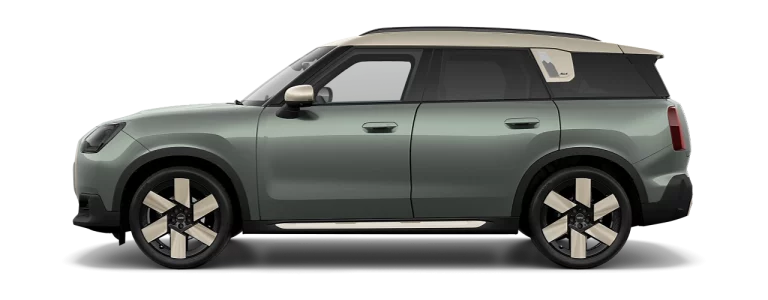
Mini Cooper Electric, the differentiating factor
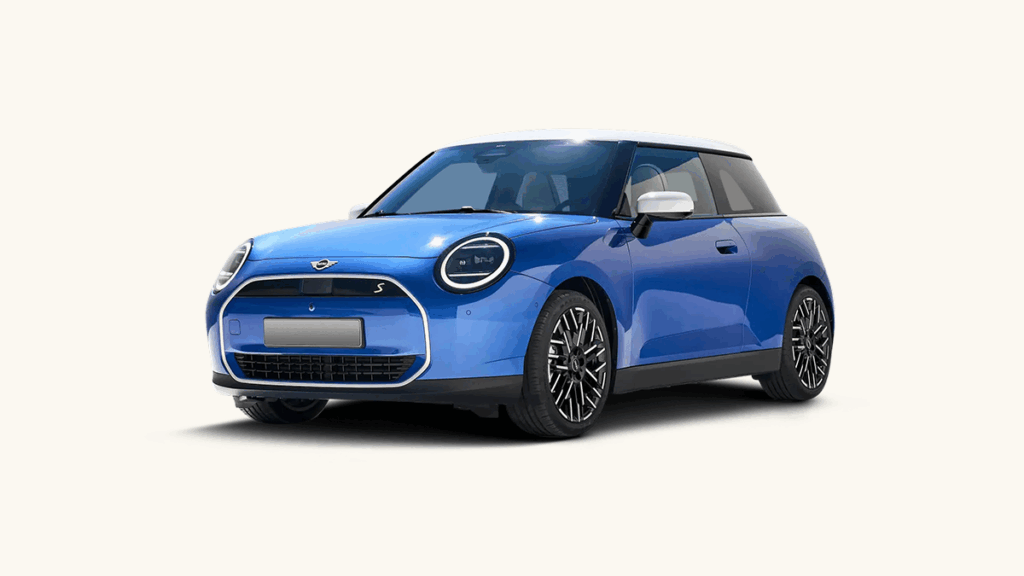
The iconic British city car for companies looking to project a premium, dynamic image.
The WLTP range of 234 km puts the Mini Cooper Electric at the bottom of the table in this comparison. This model prioritises driving pleasure and design over pure energy efficiency. In real use, expect to cover 130 to 160 km depending on conditions. This range means it's best suited to short urban journeys. Its 32.6 kWh battery offers a capacity that will require daily recharging for most intensive business use.
On the other hand, its 184bhp make the Mini Cooper Electric the most powerful of our selection. It offers remarkable performance, accelerating from 0 to 100 km/h in just 7.3 seconds. This liveliness is an undeniable pleasure to drive, a hallmark of the brand.
Mini's instantly recognisable design makes it a vehicle with a strong character. The cabin is particularly well cared for, with quality materials and distinctive styling details.
The boot volume of 211 litres severely limits loading possibilities. This small electric car is aimed exclusively at professionals who carry little or no equipment.
AC charging is limited to 6.6 kW. A full charge takes 3.5 hours, which is a reasonable time given the battery's limited capacity. On fast charge, the power of just 44 kW means it takes 47 minutes to go from 10 to 80%.
At 1700 kg, the Mini Cooper Electric is the heaviest of our selection. This high mass can penalise range and energy efficiency.
A plus for your fleet : With its 184 bhp of power, it's also ideal for promoting a dynamic brand image to your customers.
The exclusive Abarth 500e Hatchback 42 kWh
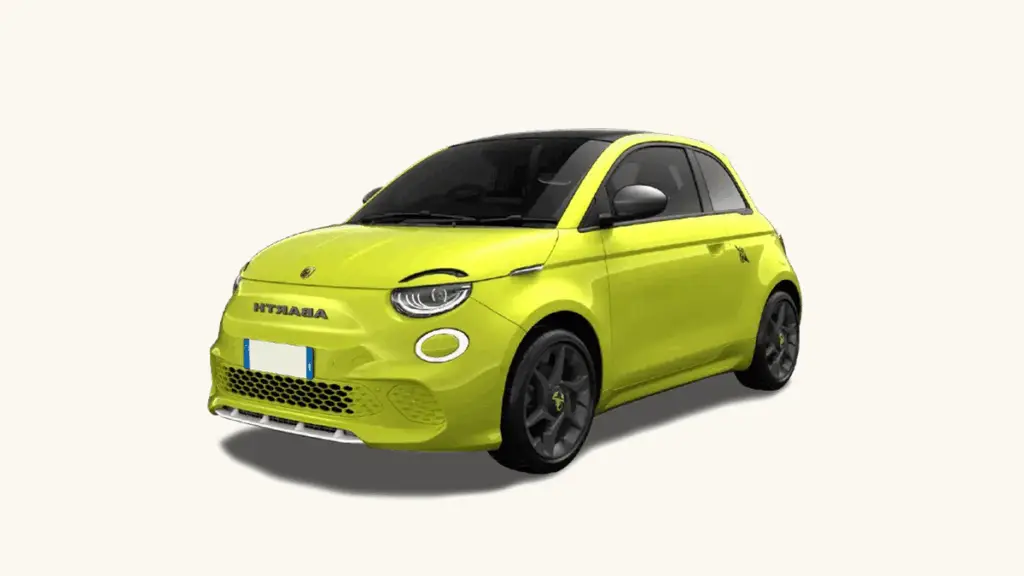
The Abarth 500e is the sporty and exclusive version of the electric Fiat 500. It proudly sports the iconic scorpion of the Italian brand specialising in high-performance versions. This model is aimed at a very specific professional clientele, with a focus on image and sportiness.
The WLTP range of 331 km places the Abarth 500e in an honourable intermediate position in our electric city car comparison. In real use, you can expect to cover between 200 and 230 km depending on conditions and driving style. This is a decent range for professional urban and suburban activities. The 42 kWh battery offers much greater versatility of use, as it means that longer journeys can be envisaged without intermediate recharging.
With 118 bhp, the Abarth 500e is in the middle of the table in terms of absolute power. Acceleration from 0 to 100 km/h in 9 seconds ensures sufficient performance for dynamic use.
The Abarth design adds a touch of sportiness and exclusivity with its specific styling elements: scorpion badges, dedicated wheels, distinctive bodywork elements, etc. For certain companies in the luxury or automotive sectors that want to convey a dynamic and prestigious image, this positioning can justify the extra cost compared with a standard Fiat 500.
The boot capacity of 550 litres is an excellent surprise and a major advantage of the Abarth 500e. This load capacity offers unexpected versatility for this small, sporty electric car.
It recharges to 11 kW in alternating current. This means it can be fully recharged in 4 hours, which is a very good performance for professional use. In fast charge mode, the 85 kW power allows you to recharge from 10 to 80% in 34 minutes.
At 1365 kg, the Abarth 500e weighs very little for an electric vehicle with this battery capacity.
A plus for your fleet : A rare combination of exclusive sportiness and practicality, with 550 litres of boot space, for companies looking for a distinctive top-of-the-range positioning.
Comparison table
| Modèle | Autonomie WLTP | Puissance | Batterie | Volume coffre | Poids à vide | Prix catalogue (hors bonus) |
|---|---|---|---|---|---|---|
|
Renault 5 E-Tech
|
400 km
|
150 hp
|
55 kWh
|
1000 L
|
1450 kg
|
33 490€
|
|
Peugeot e-208
|
362 km
|
136 ea
|
50 kWh
|
265 L
|
1455 kg
|
35 400€
|
|
Fiat 500 Hatchback
|
190 km
|
95 hp
|
23.8 kWh
|
185 L
|
1500 kg
|
30 400€
|
|
Dacia Spring Electric 65
|
220 km
|
65 ea
|
26.8 kWh
|
1004 L
|
1040 kg
|
18 900€
|
|
Opel Corsa-e
|
359 km
|
136 ea
|
50 kWh
|
409 L
|
1530 kg
|
32 000€
|
|
Mini Cooper Electric
|
234 km
|
184 ea
|
32.6 kWh
|
211 L
|
1700 kg
|
31 700€
|
|
Abarth 500e Hatchback
|
331 km
|
118 ea
|
42 kWh
|
550 L
|
1365 kg
|
36 900€
|
Summary: which electric city cars for which uses?
- La Renault 5 E-Tech has established itself as the best all-round electric city car. It combines the most generous range with exceptional boot space. It meets the needs of businesses looking for a vehicle that can do everything without major compromises.
- La Dacia Spring is unbeatable in terms of price and practicality. Its modest range and limited power mean that it is strictly for urban use.
- La Peugeot e-208 and theOpel Corsa-e, The Corsa-e and the e-208 are technical twins that stand out for their excellent range and dynamic performance. The Corsa-e is the preferred choice for business customers who value boot space, while the e-208 will win you over with its more refined finish and premium image.
- La Mini Cooper Electric offers the best performance and a distinctive brand image. On the other hand, its limited range and high price mean that it is reserved for companies for whom the vehicle is as much a communication tool as a means of transport.
- L'Abarth 500e offers an original combination of sportiness and practicality. Its price limits its appeal to fleets looking for exclusivity.
- La Fiat 500 Hatchback seduces with its iconic design, but its modest specification means it's best suited to light urban use.
Conclusion
Today's market for electric city cars offers a wide range of solutions tailored to the different needs of business fleets. This electric city car comparison shows that there is no universally superior model, but rather vehicles that correspond to specific uses and priorities.
Over and above the choice of vehicle, the success of a transition to electric power also depends on the’recharging infrastructure in place. L’installation of suitable terminals at your business sites is a key factor in optimising the effective range of your electric city cars and guaranteeing maximum operational availability.
Monday to Friday, 9am to 12.30pm and 2pm to 7pm