

















What the 2026 environmental bonus really changes

The increase in the bonus is not simply a “helping hand” for private individuals: it is part of a wider industrial and European strategy, the aim of which is to accelerate the switch to electric vehicles while supporting local production. For businesses, this is a strategic development, as it directly affects their purchasing decisions and budget trajectories.
A bonus of up to €5,700: why the increase now?
The 2026 eco-bonus has been increased for several reasons political and economic reasons.
Firstly, Europe has set a clear trajectory in the National Low-Carbon Strategy (SNBC): to drastically reduce transport emissions by 2030. Given that fleets account for a significant proportion of the vehicle fleet, the government is using the bonus as a lever to speed up the transition in companies.
Secondly, this increase reflects the reality of the market. The slowdown in sales of electric vehicles in 2024, particularly among private customers, has demonstrated the need for stronger financial support to stabilise demand. Fleets, which are more regular and predictable than private customers, are becoming an essential pillar in maintaining European industrial activity.
Lastly, this increase indirectly offsets the tightening of thermal taxation (CO₂ malus, TVS, weight malus), which will continue to grow in 2026 and beyond. The bonus becomes an essential counterweight to preserve companies' investment capacity.
Companies: who can really benefit in 2026?
Contrary to popular belief, the bonus is not just for private individuals. Businesses are fully eligible, and in 2026 the scheme will become even more favourable for professionals. Fleets can benefit in several ways:
- private fleets Company cars, service cars, pool cars ;
- long-term contract : LLD, LOA, leasing and financial leasing ;
- shared vehicles : multi-agency or multi-site ;
- light commercial vehicles strategic segment for the operational business lines ;
- mixed fleets in transition Gradual replacement of fossil-fired generation.
There's also an essential rule: the bonus applies when the vehicle is first registered, even if it is financed through a leasing company. Lease payments therefore automatically include the aid, which immediately improves the TCO. By 2026, the bonus will be a key factor in the financial decision between internal combustion, hybrid and electric vehicles.
Confirmed eco-score: an essential filter for imported models
L'eco-score, introduced in 2024, remains a decisive criterion in 2026. Its objective is clear: to add value to vehicles produced in Europe or using low-carbon supply chains. carbon footprint. Conversely, models imported from carbon-intensive zones are penalised or even excluded from the scheme.
For fleets, this criterion has three major consequences:
1) Chinese models are becoming less accessible
BYD Dolphin, MG4, MG5, Leapmotor C10 and certain NIO models are all covered by the eco-score filter.
Even if some of them make changes to their production or logistics, most of them will remain less competitive than European suppliers eligible for the bonus.
2) Tesla Shanghai is heavily impacted
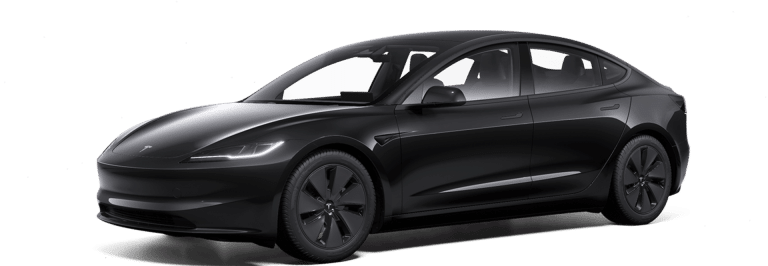
In 2024, the Model 3 and Model Y produced in Shanghai were effectively penalised by the eco-score and lost the bonus. In 2026, the situation changes: the Model Y produced in Berlin remains fully eligible, while the versions imported from Shanghai are not automatically excluded, because Tesla has improved its carbon footprint (batteries, production, transport). However, their eligibility will depend on the final score obtained, which is why fleets should give priority to Berlin production in order to secure the bonus.
3) European manufacturers strengthen their advantage
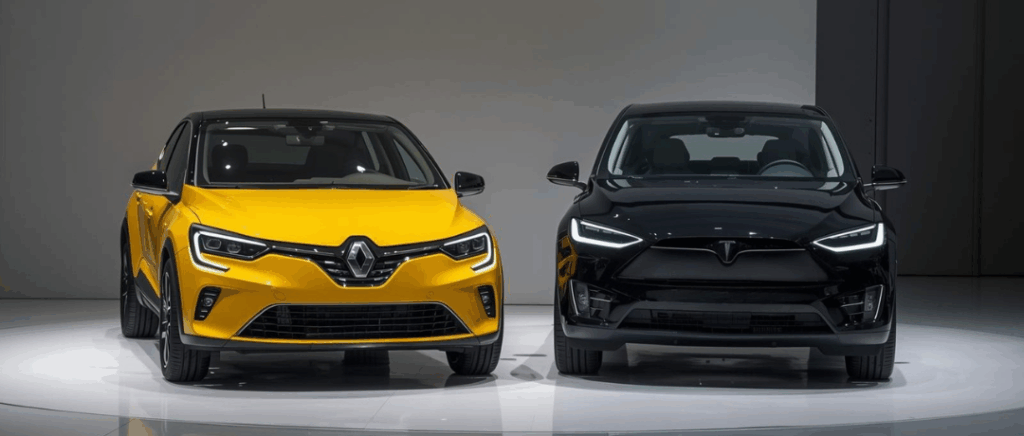
Renault, Peugeot, Citroën, Volkswagen, Škoda, Fiat and Hyundai (European production) are better positioned. Models made in France, Spain, Slovakia, Germany or Italy will benefit from a very favourable price effect in 2026.
The eco-score is therefore becoming a strategic tool: it automatically filters and prioritises the models that remain competitive for fleets.
The practical impact on fleets: TCO, renewal, car policy
The increase in the environmental bonus is not simply a marketing ploy. Against a backdrop of fiscal pressure on internal combustion engines, it profoundly alters the calculation of TCO and automatically accelerates decisions to electrify.
Immediate reduction in TCO for eligible models
One of the most direct effects of the increased bonus is a reduction in the total cost of ownership. For fleets, this translates into :
- lower long-term hire leases, as the bonus reduces the amount financed; ;
- more stable residual values, with electric models identified as “durable” depreciating less quickly; ;
- lower energy costs, especially given the expected volatility of oil prices; ;
- lower maintenance, as electric systems require less intervention; ;
- more favourable tax treatment, thanks in particular to zero VAT and exceptional depreciation (AEV).
The bonus not only lowers the purchase price, it also reduces the financial volatility of the fleet, a key criterion for finance departments.
Why fleets need to adjust their car policies from 2026
With more generous bonuses and ever more expensive internal combustion engines, car policies are rapidly becoming outdated. Companies need to review their emissions thresholds, reclassify segments to incorporate new electric models, and re-evaluate the categories of authorised vehicles. The eco-score must now form part of the selection criteria, as must the adjustment of staff envelopes, because rents evolve with the bonus.
In plain English, the 2026 bonus changes the economic balance of the fleet: car policies designed before 2024 are no longer appropriate and need to be updated.
Which professions will benefit most from the bonus?
Not all businesses benefit equally from electrification. The most advantaged are :
1) Field technicians
- several daily trips
- foreseeable types of journeys
- can be recharged on site or in a depot
3) Regional sales representatives
- autonomy EV now sufficient
- fast charging now standardised
- Very favourable TCO
3) Light delivery vehicles and urban logistics
- ZFE access
- lower fuel costs
- complete phase-out of fossil-fired generation by 2030
4) Multi-site or multi-agency fleets
- sharing charging points
- consistent requirements between vehicles
The bonus creates an environment where electricity is no longer a constraint, but an operational advantage.
2026 electric models favoured by the new bonus: a multi-brand overview
The strengthening of the bonus is profoundly changing the competitive landscape. Some models are becoming unbeatable for their price/range ratio, while others risk being penalised by the eco-score.
Compact and city cars: the big bonus winners (ë-C3, e-208, Mégane, Dolphin)
The city and compact segments are the main beneficiaries of the 2026 bonus.
- Citroën ë-C3 one of the best TCO models on the market, made in Europe.
- Peugeot e-208 Efficient, versatile and very competitive in terms of leasing.
- Renault Mégane E-Tech solid range, European production, high residual value.
- Dacia Spring (European production to come): if its eco-score is validated, it could become highly competitive once again.
- BYD Dolphin well placed technically, but uncertainty about the eco-score depending on where it is produced.
These models already cover 70 % of traditional professional uses.
SUVs and crossovers: who remains eligible after the eco-score?
In this category, the key is simple: only European products achieve a compliant eco-score.
- Tesla Model Y berlin : eligible, very attractive TCO.
- Renault Scenic E-Tech one of the best electric SUVs of 2024-2025.
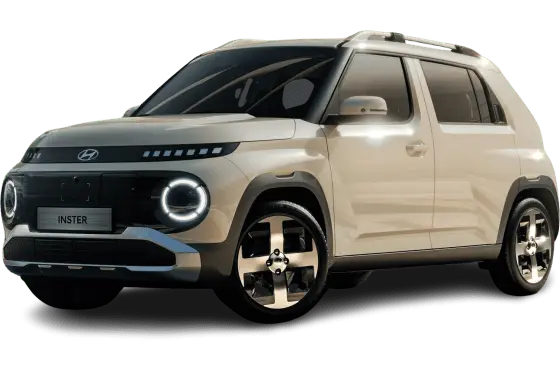
- Hyundai Kona Electric (European production): highly versatile.
- Volkswagen ID.4 / Škoda Enyaq : Solid VR, long battery life.
SUVs imported from outside the EU, on the other hand, risk losing their bonus in 2026.
Company vehicles and light commercial vehicles: a strategic segment for fleets
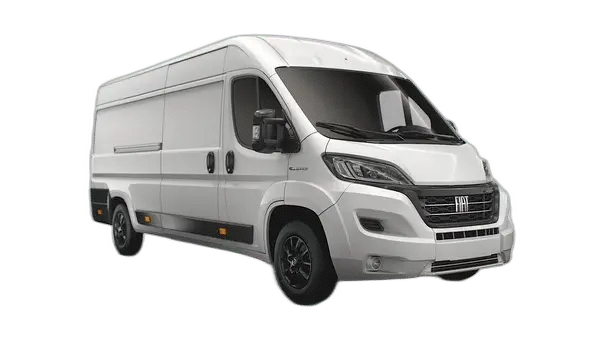
LCVs are essential to our operational businesses. In 2026, several models will become extremely competitive:
- Renault Kangoo E-Tech
- Renault Master E-Tech
- Peugeot e-Partner / e-Expert
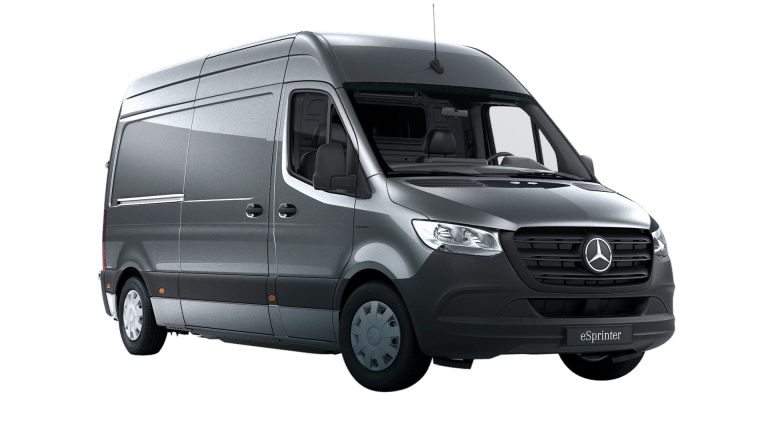
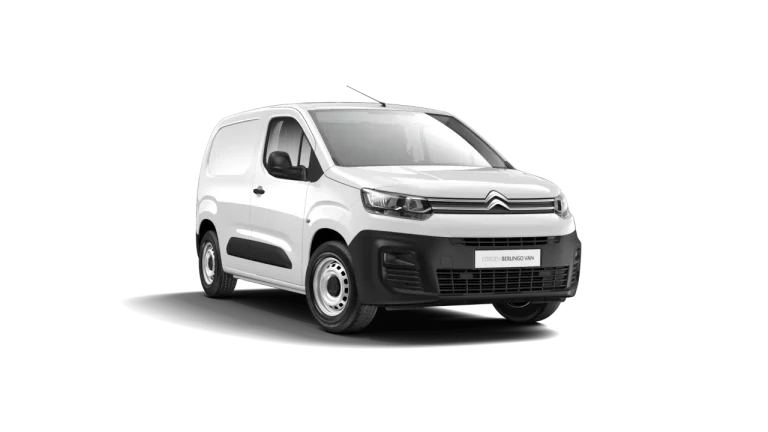
- Citroën ë-Berlingo / ë-Jumpy
This segment in particular benefits from the bonus, but also from cumulative aids such as ADVENIR for the terminals.
2026 Bonus: what companies need to anticipate to secure their advantage
The increased bonus never lasts forever. Companies need to think ahead to avoid two major pitfalls: the end of the bonus for certain models and a surge in demand.
Please note: some models will no longer be eligible for the bonus in 2027
The foreseeable tightening of the eco-score could exclude from 2027 models produced outside Europe, those using high-carbon batteries or those whose assembly line has not been relocated. Companies must therefore identify from 2026 the vehicles that will remain eligible the following year.
Risk of scissor effect: increase in demand + delivery times
Each time the eco-bonus is increased, the market experiences the same scenario: demand rises sharply, production times are extended and deliveries are spread over several months. Manufacturers reduce their allocations for fleets, while some list prices rise to compensate for the commercial pressure. For companies, the equation is simple: the longer they wait, the longer the lead times and the higher the overall cost is likely to be.
Fleet budget: how to incorporate the new bonus into the 2026-2028 trade-offs
The new bonus must be integrated into all budgetary decisions relating to the park This involves calculating the TCO over several years, reviewing car policies, planning renewals in line with the ZFE (Zone d'Emissions Frontières) and choosing between internal combustion and electric vehicles. It also influences staff budgets, as it modifies rents and the level of equipment available. It is one of the only levers that can bring about an immediate reduction in expenditure, provided that it is anticipated in the 2026-2028 projections.
How Beev helps fleets maximise the 2026 environmental bonus
With more than 200 electric models on the market and an eco-score that evolves every year, Beev plays a role in supporting companies.
Full Beev support: eligibility, TCO, recharging and overall strategy
Beev offers integrated support to help companies make the most of the new 2026 environmental bonus. The first step is to carry out a detailed analysis of the eligibility of the models: compliance with the eco-score, place of production, type of product, etc. battery and risks of leaving the scheme by 2027. This check avoids any unpleasant surprises and ensures that choices are secure from the selection phase onwards.
At the same time, Beev provides a multi-brand TCO comparator that simulates long-term leasing rents after bonuses and projects costs over several years. This gives managers an objective budgetary view, based on real financial data rather than catalogues or commercial assumptions.
Finally, Beev joins the’recharging infrastructure in the overall strategy: power studies, on-site or home installation of charging points, optimisation of ADVENIR assistance, multi-site management and operational supervision. The whole package guarantees coherent, controlled electrification without disruption for the teams.
Worth remembering: a stronger 2026 bonus, but a limited window of opportunity for fleets
The 2026 environmental bonus is a major opportunity, but its effect won't last:
- the bonus actually increases ;
- the eco-score remains strict; ;
- some models will be phased out in 2027; ;
- demand will put pressure on lead times; ;
- thermal becomes financially risky.
For companies, the conclusion is simple:
Fleets that take action in 2025-2026 maximise their financial advantage and secure their TCO for the next 3 to 5 years. Those who wait will have to absorb higher costs from 2027.
And Beev is supporting this transition from start to finish: model selection, TCO optimisation, financing, terminals and regulatory compliance.
Manage your fleet easily with our dedicated tool
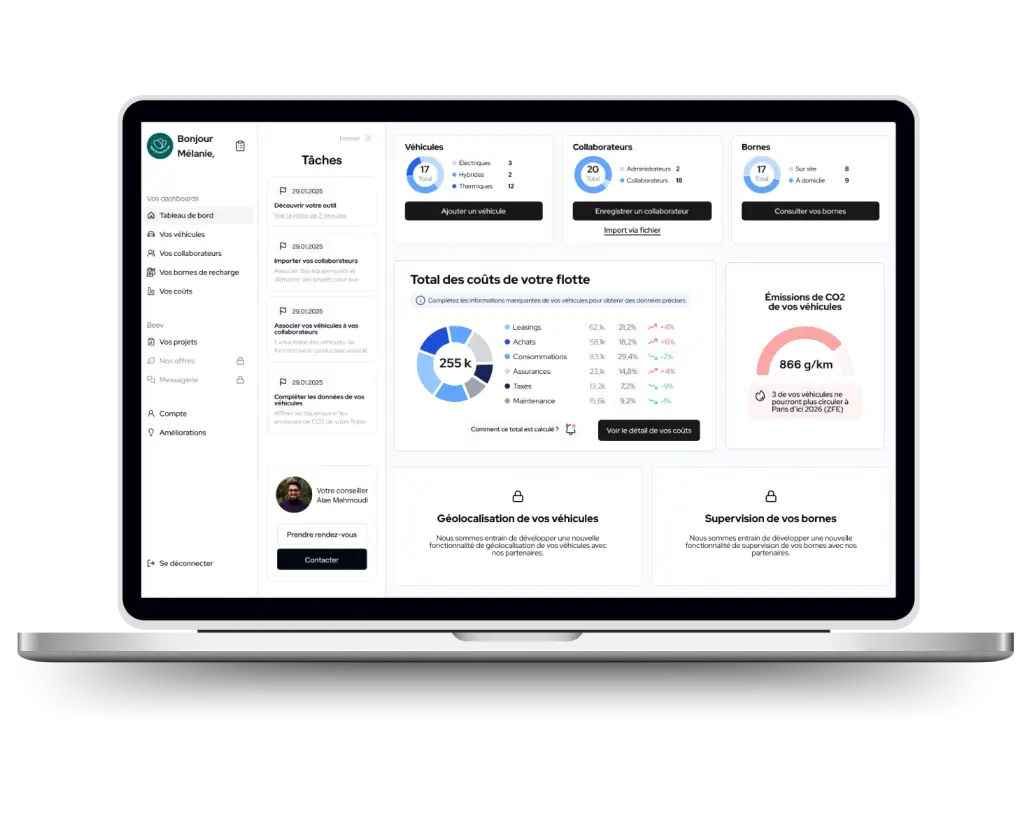
A fleet management tool from A to Z
- Add your fleet and employees in just a few clicks
- Plan your transition to electric vehicles and monitor your CSR objectives in real time
- Centralise your expenses