


VS
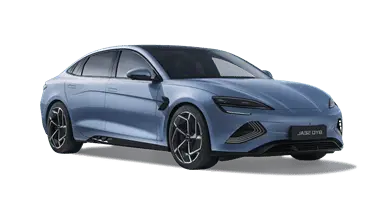
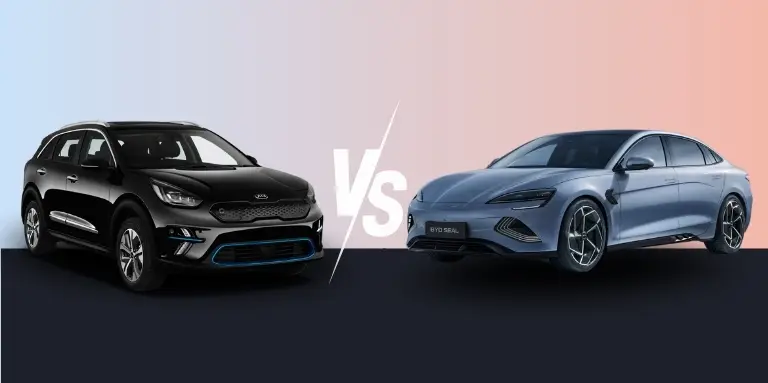
Compare the BYD Seal vs KIA Niro EVin our electric car comparison tool
Performance and driving: is the BYD Seal more dynamic than the Kia Niro EV?
How much power and acceleration for the BYD Seal and Kia Niro EV?
La BYD Seal stands out for its impressive power, particularly in its all-wheel drive version. This variant develops 390 kW (530 bhp) and can accelerate from 0 to 100 km/h in just 3.8 seconds. The rear-wheel drive version, meanwhile, delivers 230 kW (313 bhp) and accelerates from 0 to 100 km/h in 5.9 seconds. It is interesting to note that despite this high power output, the BYD Seal's top speed is electronically limited to 180 km/h for both versions.
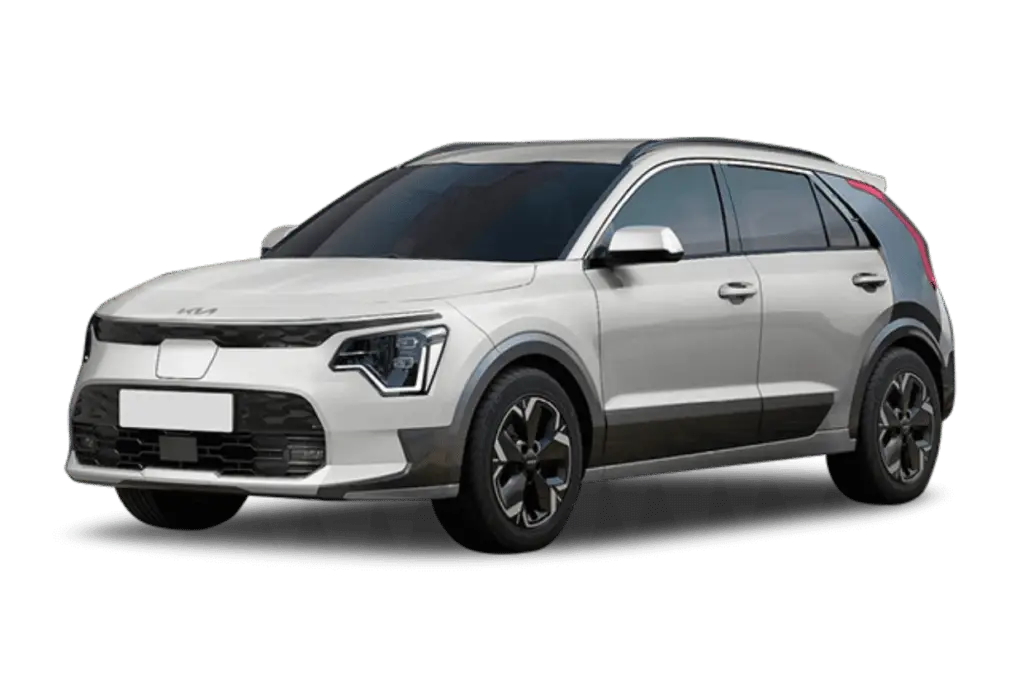
Le Kia Niro EV, although less powerful, offers respectable performance. It reaches a top speed of 167 km/h, slightly faster than its rival BYD Atto3. However, the Niro EV is a little slower on the throttle, accelerating from 0 to 100 km/h in 7.8 seconds.
Driving comfort and roadholding: Kia Niro EV or BYD Seal, which excels?
Le Kia Niro EV stands out for its driving comfort and roadholding. Its suspension does a better job of filtering out the roughness of the road, giving a smoother ride. The Niro EV's controls, such as the accelerator and brake pedal, are more responsive and direct, improving the feeling of control over the vehicle. What's more, the Niro EV's regeneration system is more responsive and can be easily adjusted using the paddles behind the steering wheel.
La BYD Sealis distinguished by its sporty handling. Its rear-wheel drive configuration gives it greater front-end precision and limits torque steer. The Seal offers a dynamic driving experience with rigorous traction, while allowing a few controlled slides from the rear. Although it doesn't offer the same level of precision as a BMWthe BYD offers a more engaging driving experience than some of its competitors.
In terms of comfort, the BYD Seal benefits from ergonomic sports seats and a panoramic roof that enhance the driving experience. However, it should be noted that a rolling noise becomes noticeable at speeds approaching 130 km/h.
Autonomy and charging: is the BYD Seal better than the Kia Niro EV?
How far can the BYD Seal and Kia Niro EV go on a single charge?
The BYD Seal impresses with its WLTP range of up to 570 km for the rear-wheel drive version, thanks to its battery Blade with 82.5 kWh. This range can vary between 520 and 570 km depending on the version of the vehicle. It is important to note that actual range may differ from these official figures depending on driving conditions.
The Kia Niro EV, meanwhile, boasts a WLTP range of 460 km with its 64.8 kWh battery. In real-life conditions, the range varies according to the type of journey: on the open road, it can be as much as 467 km, while on the motorway it is reduced to around 279 km. In urban environments, the Niro EV can even cover up to 604 km according to WLTP data.
Charging time and compatibility: Kia Niro EV vs BYD Seal, which is faster?
The BYD Seal stands out for its rapid direct current (DC) charging capacity of up to 150 kW, allowing 80% to be recovered from the battery in around 30 minutes on a fast terminal. On a slow load (AC), it accepts a maximum power of 11 kW.
The Kia Niro EV supports a maximum DC charging power of 77 kW, allowing it to recharge from 10 to 80% in around 41 minutes. On a trickle charge (AC), it can accept up to 11 kW, requiring around 7 hours for a full charge.
In terms of compatibility, both vehicles use the Type 2 connector for AC charging. For rapid DC charging, they are equipped with the CCS (Combined Charging System) standard.
In conclusion, the BYD Seal offers shorter recharging times on fast charge thanks to its superior DC charging power, making it more efficient for long journeys requiring frequent recharging stops.
Design and technology: the BYD Seal and Kia Niro EV from every angle
What is the difference between the design of the BYD Seal and that of the Kia Niro EV?
The BYD Seal is an elegant saloon measuring 4.8 metres long, 1.875 metres wide and 1.46 metres high, with a Stufenheck body design that combines aesthetics and aerodynamics. Its slim profile gives it a remarkable coefficient of drag of 0.219, reflecting a design focused on efficiency. aerodynamics.
The Kia Niro EV, meanwhile, adopts a compact SUV silhouette with smaller dimensions: 4.42 metres long, 1.825 metres wide and a height varying between 1.545 and 1.57 metres. Its design, though modern, remains true to the SUV identity, with a taller stance and a more robust appearance.
The difference in size is notable, with the BYD Seal being 38 cm longer and 11 cm lower than the Kia Niro EV. This difference is reflected in a distinct stylistic approach: the Seal favours fluid, sporty lines, while the Niro EV focuses on a more practical, versatile appearance.
Interior and on-board technology: is the BYD Seal more innovative than the Kia Niro EV?
The BYD Seal stands out for its central 15.6-inch rotating screen, a unique feature that surpasses in size the 10.25-inch screen on the Kia Niro EV. This touchscreen can be switched from portrait to landscape mode electrically, offering impressive display flexibility.
The Kia Niro EV offers a more conventional but effective approach, with two high-definition screens, each measuring 10.25 inches: one for the instrumentation and the other for the infotainment system. It makes up for the more modest size of its screens with meticulous ergonomics, including semi-physical buttons for quick access to essential functions.
In terms of connectivity, both vehicles offer Android Auto and Apple CarPlay, as well as an 8-speaker sound system. However, the BYD Seal seems to have gone all out for multimedia, with a system based on an integrated 4G key and a smartphone-inspired user interface.
In terms of driving aids, the Kia Niro EV offers an optional DriveWise pack providing Level 2 autonomous driving, which is considered to be more efficient and precise than the equivalent systems on the BYD Seal.
Although the BYD Seal has some innovative features, notably its large rotating screen, the Kia Niro EV makes up for this with well thought-out ergonomics and more advanced driver assistance systems. Innovation is present in both vehicles, but manifests itself in different ways, with the Seal focusing more on the spectacular technological aspect, while the Niro EV prioritises efficiency and ease of use.
Price and value for money: is the BYD Seal more attractive than the Kia Niro EV?
BYD Seal vs Kia Niro EV: what are the prices and options available?
The BYD Seal is priced from €46,990 for the 313 bhp version with 82.5 kWh battery, and up to €49,990 for the 530 bhp AWD version. It comes as standard with a 15.6-inch rotary screen and advanced driving aids.
The Kia Niro EV starts at €41,690 for the base version. Options include the DriveWise Pack at €1,500 for Level 2 autonomous driving, and cosmetic options such as metallic paint at €750. The Niro EV also offers a heat pump and 3 kW V2L/V2D system in a €1,400 pack.
Between the BYD Seal and the Kia Niro EV, which is the better investment?
Choosing the best investment depends on the buyer's priorities. The BYD Seal offers a longer range (up to 570 km WLTP) and higher performance, which could make it more attractive to those looking for cutting-edge technology and performance. The Kia Niro EV, on the other hand, boasts a longer warranty of 7 years or 150,000 km, compared with 4 years or 120,000 km for BYD, and a well-established dealer network in Europe.
For a long-term investment, the Kia Niro EV might be preferable thanks to its extended warranty and reliable service network. However, the BYD Seal could offer better value for money for those who value the latest technology and performance.
BYD Seal vs Kia Niro EV: which electric SUV to choose in 2025?
Which driver profile would best suit the BYD Seal or the Kia Niro EV?
The ideal driver profile for the BYD Seal or the Kia Niro EV varies according to the characteristics of each vehicle. The BYD Seal would appeal more to technophile and performance-minded drivers who enjoy dynamic and sporty driving. With its rapid acceleration, extended range and advanced technologies such as the 15.6-inch rotary screen, it would suit those who make long journeys and are looking for a more engaging driving experience. Its sleek, aerodynamic saloon design would appeal to aesthetically minded drivers.
The Kia Niro EV, on the other hand, is aimed more at drivers who prefer comfort, practicality and everyday versatility. Its compact SUV format, well-calibrated driving aids and 7-year extended warranty would make it a wise choice for families and drivers looking for reliability and peace of mind. The extensive service network of Kia would also be an asset for those who value reliable after-sales support.
Comparison table of performance, range and price between the BYD Seal and the Kia Niro EV
| Features | BYD Seal | Kia Niro EV |
|---|---|---|
| Base price | 46 990€ | 41 690€ |
| Length | 4 800 mm | 4 420 mm |
| Width | 1,875 mm | 1,825 mm |
| Height | 1,460 mm | 1,570 mm |
| Wheelbase | 2 920 mm | 2 720 mm |
| Power | 313 bhp (rear-wheel drive) / 530 bhp (AWD) | 204 ea |
| Battery | 82.5 kWh | 64.8 kWh |
| WLTP range | 520-570 km | 460 km |
| Acceleration 0-100 km/h | 5.9 s (rear-wheel drive) / 3.8 s (AWD) | 7,8 s |
| Maximum speed | 180 km/h | 167 km/h |
| DC fast charge | 150 kW | 77 kW |
| Reload time 10-80% | ~30 min | ~41 min |
| Boot volume | 402 L | 475 L |
| Weight | 2 055-2 185 kg | 1,814 kg |
See also our article :
Nore test BYD Seal
Conclusion
In conclusion, the choice between the BYD Seal and the Kia Niro EV in 2025 will largely depend on the buyer's priorities. The BYD Seal stands out for its impressive performance, long range and technological innovations, appealing to drivers looking for thrills and a dynamic driving experience. The Kia Niro EV, meanwhile, is positioned as a more practical and versatile compact SUV, ideal for families and drivers who value everyday comfort. With its extensive warranty and well-established service network, it offers a reassuring solution for those seeking reliability and peace of mind.
These two vehicles illustrate the growing diversity of the electric vehicle market in 2025, offering options to suit different electric mobility needs. Whether you're interested in purchasing an electric vehicle, a professional leasing or individual, or even by theinstallation of a recharging pointIf you have any questions, please do not hesitate to consult Beev, the electric mobility expert, to guide you in your transition to electromobility.
Use the TCO simulator to calculate the total cost of ownership of your car and compare it with its internal combustion equivalent.