












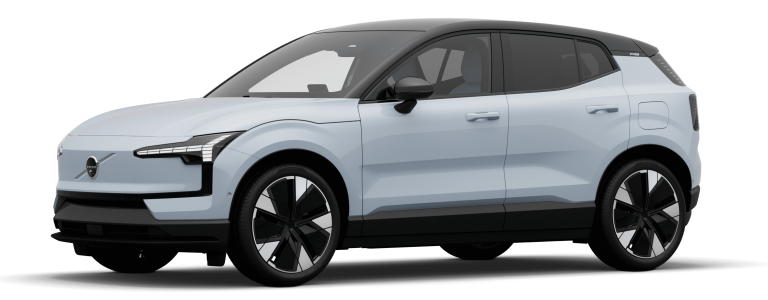










Why will registration for electric cars no longer be free?
Was the decision motivated by budgetary issues or a refocusing of aid?
The decision to abolish free registration for electric vehicles is the result of two factors: budgetary and strategic. The regions, which levy a tax on vehicle registration certificates (averaging between €50 and €150 per vehicle), have seen their revenue fall with the rise of electric cars, which have been exempt from this tax since 2020. This loss is exacerbated by the overall fall in vehicle registrations (-22 % between 2019 and 2023), linked to inflation and the imbalance between supply and demand.
At the same time, the State, which is committed to a savings plan of €40 billion by 2026, is encouraging local authorities to rationalise tax niches. Some regions, such asÎle-de-Francehave already reintroduced a reduced tax (50 % of the thermal tariff) for electric cars in 2023, anticipating a refocusing of aid on low-income households and second-hand vehicles.
Why was the vehicle registration document free for electric vehicles?
Introduced between 2017 (for the first pioneering regions) and 2020 (nationwide roll-out), this exemption was designed to offset the extra cost of purchasing electric vehicles (30 to 40 % more expensive than internal combustion vehicles at the time). It was part of an "all-electric" policy combining environmental bonus (up to €7,000), conversion allowance (€5,000) and fringe benefits (TVS exemption for companies). The effect has been spectacular, with the number of electric vehicles on the road rising from 30,000 in 2017 to almost 1.2 million by 2024.
But this success has made the measure economically untenable, with exemptions now representing an annual loss of revenue of over €100 million for the regions.
What other forms of support could replace the current free service?
Several schemes are emerging to compensate for the end of the grey card exemption, targeting both accessibility and infrastructure. The 2025 environmental bonusreserved for new electric vehicles under €47,000, is now modulated according to income (up to €5,000 for low-income households), while a 500 tax credit facilitates the installation of home charging points. Businesses benefit from specific support, in particular through long-term leases including maintenance and recharging management, with bonuses of up to €3,000.
In addition, zero-interest loans for the purchase of second-hand electric vehicles or subsidies targeted at entry-level models (such as the Dacia Spring) are envisaged to democratise access. The regions could also introduce a regional bonus-musus scheme, penalising energy-guzzling hybrids and favouring the most fuel-efficient vehicles, although harmonising support at national level remains a challenge.
Vehicle registration document for electric cars: changes from 1 May 2025
From 1ᵉʳ May 2025, new and used electric cars will lose their regional tax exemption in most regions, with the exception of Hauts-de-France, where the free allowance will be maintained temporarily. From now on, the regions will apply a standard rate per tax horseThis is in line with that for internal combustion vehicles, and varies between €30 and €60 per CV depending on the region.
For example, in Île-de-Franceeach fiscal CV will cost €54.95, leading to increases of up to +3,400 % compared with the current rate of €13.76 - as for the Renault 5 E-Tech (5 bhp), whose registration fee will rise from €13.76 to €274.75. This reform, included in the 2025 Finance Act, is a response to the shortfall in local authorities' budgets, exacerbated by the collapse in internal combustion vehicle registrations and the boom in electric cars, which are now mature on the market.
End of free charging: which electric cars are affected by the new measure?
The measure applies to all 100 % electric vehicles registered after 1ᵉʳ May 2025This applies to both new and used vehicles. Rechargeable hybrids, which are already subject to a ecologic malus based on their CO₂ emissions, are not affected by this specific reversal. Grey cards issued before this date retain their validity without retroactivity.
The regions now have total freedom to set fares, with three options: abolish the exemption altogether, reduce it by 50 %, or keep it free (as in Hauts-de-France).
Electric cars: how much will the registration fee be after 1 May?
The cost will depend on two criteria:
Administrative power (tax horsepower) :
- Renault 5 E-Tech (5 CV): €274.75 in Île-de-France (€54.95/CV), €225 in Occitanie (€45/CV).
- Tesla Model Y (8 hp): €480 in Provence-Alpes-Côte d'Azur (€60/CV), €400 in Nouvelle-Aquitaine (€50/CV).
- Citroën Ë-C3 (4 CV): €240 in Normandy (€60/CV), €220 in Centre-Val de Loire (€55/CV).
The region of registration :
- Extreme rates: from €30/CV (French overseas departments and territories) to €60/CV (Normandy, Brittany, Eastern France).
- Total cost: between €150 (Dacia Spring 3 CV at €50/CV) and €750 (premium vehicles at 12 CV).
- The fixed costs (€11 management fee + €2.76 delivery charge) are added to the regional fee, bringing the final amount to €13.76.
Plug-in hybrids are still subject to the ecologic malus classic, but their registration documents are not affected by the abolition of the specific exemption for electric 100 %s (not explicitly mentioned in the sources, but deduced from the context).
Vehicle registration documents and electric cars: what are the consequences for buyers?
Until 1 May 2025, thebuying an electric car in France offered free or greatly reduced registration fees, thanks to an exemption from regional tax on the vehicle registration certificate. This measure, introduced to encourage the transition to zero-emission vehicles, enabled buyers to save several hundred euros on the purchase of a new or used vehicle.
From May 2025, this advantage will end in almost all French regions, with the notable exception of the Hauts-de-France which are maintaining the exemption for the time being. From now on, purchasers of electric cars will have to pay the same registration fee as for a car. thermal vehicleThis is calculated on the basis of the number of tax horses and the regional rate, which generally varies between €30 and €60 per tax horse.
What impact will the end of free charging have on the cost of an electric car?
The abolition of the free vehicle registration represents an immediate additional cost for buyers of electric cars.
For example, in a region where the fiscal horse is 60 euros, a 5-horsepower car will now cost 300 euros in regional tax, plus the usual fixed costs. Depending on the model and the region, the total cost of registration for an electric car will be between 150 and 750 euros. While this sum is still moderate compared with the purchase price of a new vehicle, it comes on top of other recent reductions in purchase subsidies, such as the reduction in the ecological bonus and the disappearance of the conversion premium, all of which add to the overall bill for consumers.
Is there a risk that this will slow down the adoption of electric vehicles?
The end of free vehicle registration, against a backdrop of a general reduction in support for electric vehicles, could have a negative effect on market dynamics. Even if the cost of the vehicle registration document only represents around 1 % of the total price of a vehicle, the accumulation of unfavourable signals (rising costs, falling incentives, regulatory uncertainties) could discourage some potential buyers.
However, the main obstacles to adoption remain the high purchase price, the lack of charging points and concerns about battery life. Nevertheless, the removal of this tax incentive comes at a pivotal time, when France is aiming for the end of combustion engine car sales in 2035. While the measure is not a major obstacle in itself, it does contribute to a climate of uncertainty that could slow the growth of electric vehicle sales, especially among the most price-sensitive households.

Electric car registration documents: what are the differences between regions and countries?
The policy of exempting electric vehicles from registration tax is undergoing major change in France. Until now, free registration has been the general rule, but now each region can decide whether or not to apply a total or partial exemption from the regional vehicle registration tax for electric, hydrogen or rechargeable hybrid vehicles. This autonomy While most French regions will be phasing out the free scheme, some may choose to maintain incentives to encourage the purchase of clean vehicles.
Across Europe, the situation is even more varied: many countries offer registration tax exemptions or reductions for electric cars, but the amounts and criteria vary considerably according to national legislation.
Will some regions continue to offer partial exemption?
However, Law 2025-127 of 14 February 2025 amended thearticle L421-49 which now allows French regions to decide locally whether or not to continue to exempt electric vehicles from registration fees. To date, only the Hauts-de-France region has officially announced that it will continue to waive the registration fee for electric vehicles after 1 May 2025.
The other regions have chosen to put an end to this advantage, citing in particular the need to compensate for the drop in revenue linked to the reduction in registrations and the increase in the number of clean vehicles. However, the legislation leaves the door open to a total or half-fare exemption, depending on future decisions by regional councils.
How does French policy compare with that of other European countries?
Compared with its European neighbours, France stands out for the rapid reduction in its tax incentives for the purchase of electric vehicles. While free registration was a strong argument until 2025, most other European countries continue to offer significant tax breaks.
For example, theGermany offers a ten-year road tax exemption for electric vehiclesthe Belgium applies reduced tax rates or exemption in Flandersand countries such as Croatia, Bulgaria and Romania are maintaining their total exemption from registration tax for electric vehicles.
Other countries, such as Italy and Finland, offer substantial reductions in property or registration tax. So, by putting an end to the generalised free allowance, France is adopting a policy that is less of an incentive than most of its European partners, which could have an impact on the competitiveness of the French electric vehicle market in the short term.
Buying an electric car before 1 May: a good idea to save on vehicle registration fees?
If you buy an electric car before 1 May 2025, you will be able to take advantage for the last time of virtually free registration. Until that date, the average cost of registering an electric vehicle is just €13.76, corresponding solely to fixed costs, as the regional tax is fully waived.
From 1 May, this benefit will disappear in almost all French regions, and the registration document for an electric car will be charged at the standard rate, based on the number of fiscal horsepower and the regional rate, i.e. an additional cost of between 150 and 750 euros depending on the model and region. This sharp rise in the cost of registration explains why many buyers are anticipating their purchase to take advantage of the exemption before it ends, creating a surge in registrations just before the deadline.
Is it still worthwhile taking advantage of free travel before you stop?
Yes, it's still worth taking advantage of the free vehicle registration before 1 May 2025, especially for buyers who want to optimise their budget. The savings can amount to several hundred euros, a not inconsiderable sum in addition to the other subsidies still in force, such as the environmental bonus.
After that date, the registration document for an electric car will cost as much as that for a combustion vehicle, which will add to the overall bill for new buyers. In a context of reduced subsidies, seizing this opportunity gives you greater control over your investment.
Conclusion: what you need to know about the end of free vehicle registration
| Key point | What you need to know about the end of free vehicle registration |
|---|---|
| Date of entry into force | 1st May 2025 |
| Measure concerned | End of total exemption from regional vehicle registration tax for 100 % electric vehicles. |
| Regions concerned | All French regions except Hauts-de-France are maintaining free travel. |
| New cost for motorists | Registration will be charged at the same rate as for internal combustion vehicles, i.e. between €150 and €750 depending on the model and region. |
| Tax rate per horse | Varies by region: from €43 (Auvergne-Rhône-Alpes) to €60 (Bretagne, Centre-Val de Loire, Grand Est, Normandie), with a national average of €50/CV. |
| Reasons for the measure | The regions need revenue, as the vehicle registration document is a major source of tax. |
| Impact on purchase aid | Overall reduction in support for the purchase of electric vehicles, with the abolition of free registration. |
| Possibility of regional exemption | The regions may decide to maintain a total or partial exemption, but only Hauts-de-France has confirmed this to date. |
| Consequences for the market | Higher acquisition costs, risk of slowing down the adoption of electric vehicles. |