









Design and comfort: Tesla's top-of-the-range redesigned
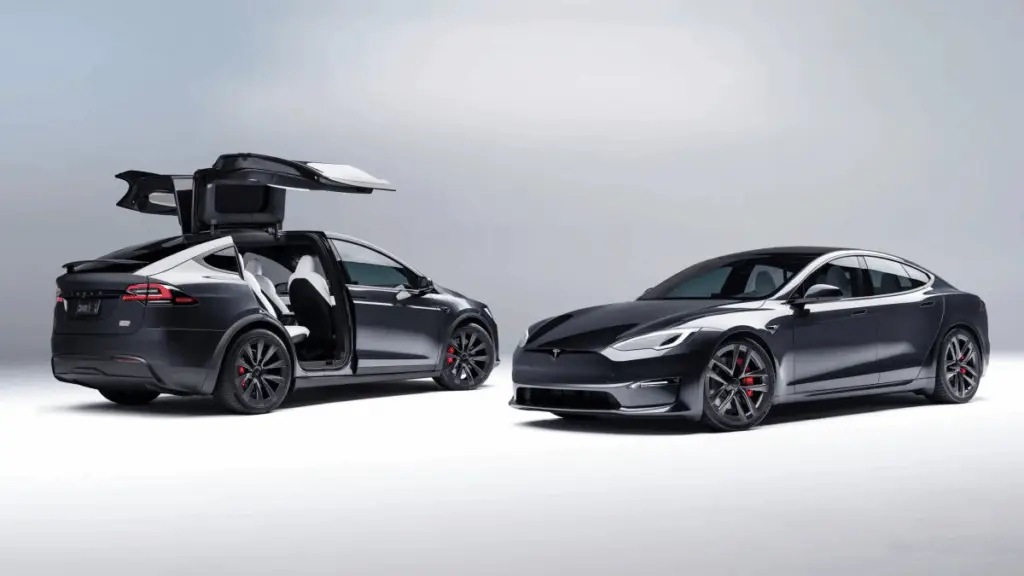
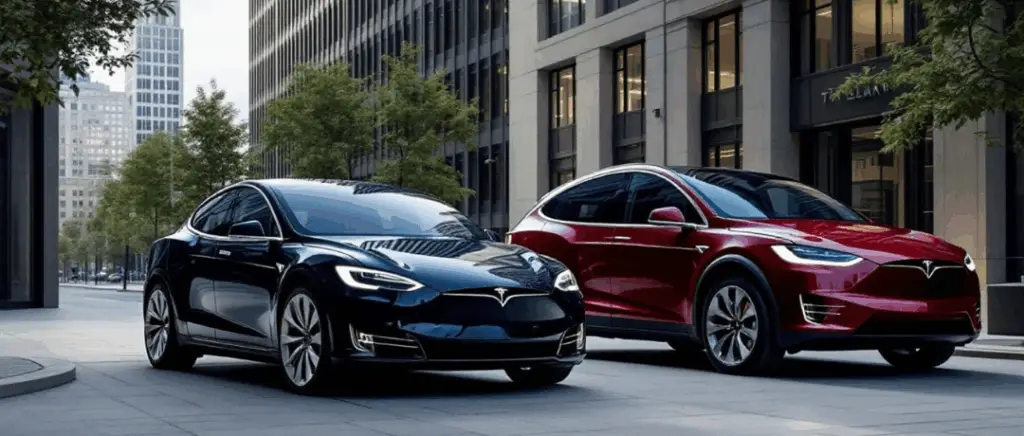
Tesla has not only reintroduced two iconic models, it has also redesigned their interior architecture and ergonomics to make them genuine rolling workspaces, at the crossroads of automotive design and digital technology.
A completely redesigned driving experience
The new Model S and X take up the best of Tesla's philosophy: simplicity, responsiveness and immersion.
- Reworked driver interface double screen (17-inch centre + 8-inch rear) to control navigation, climate control or video conferencing.
- Yoke or classic steering wheel The user chooses between futuristic design and traditional ergonomics.
- Latest-generation power steering, more Autopilot and the 'Full Self-Driving' system enhanced by remote software updates.
- Silent operation thanks to enhanced soundproofing and fine-tuning of the adaptive suspension.
Every journey becomes a fluid, calming experience, where performance is not at odds with comfort.
A premium atmosphere, designed for the road
The interior has been completely redesigned:
- High-quality materials brushed aluminium, vegan leather, sustainable textiles.
- Heated and ventilated seatswith multiple settings.
- Panoramic roof offering natural light for long journeys.
- Immersive audio system 22 speakers, turning the car into a mobile meeting room.
- Optimised storage space and front and rear luggage compartments combining up to 894 litres on Model S and 2,247 litres on Model X.
Results An environment as comfortable as an executive saloon, but quiet, connected and sustainable.
Performance and autonomy Model S and Model X 2025 set new standards
Beneath their familiar looks, the Model S and X 2025 have benefited from a complete optimisation of the powertrain and energy management software. Tesla remains the world benchmark for range.
Up to 744 km WLTP range: endurance for professional fleets
The figures speak for themselves:
- Model S Long Range up to 744 km WLTP, a record in its category.
- Model X Long Range 664 km WLTP, more than most electric SUVs on the market.
- Plaid version (three engines): combined power in excess of 1,000 bhp and 0-100 km/h acceleration in 2.1 seconds for the S, 2.6 seconds for the X.
These figures are not just anecdotal: they reflect Tesla's technological mastery, but also its energy reliability, which is crucial for long-distance fleets, mobile managers, consultants, regional technicians or general management.
Supercharger network and fast charging: the stress-free mobility solution for businesses
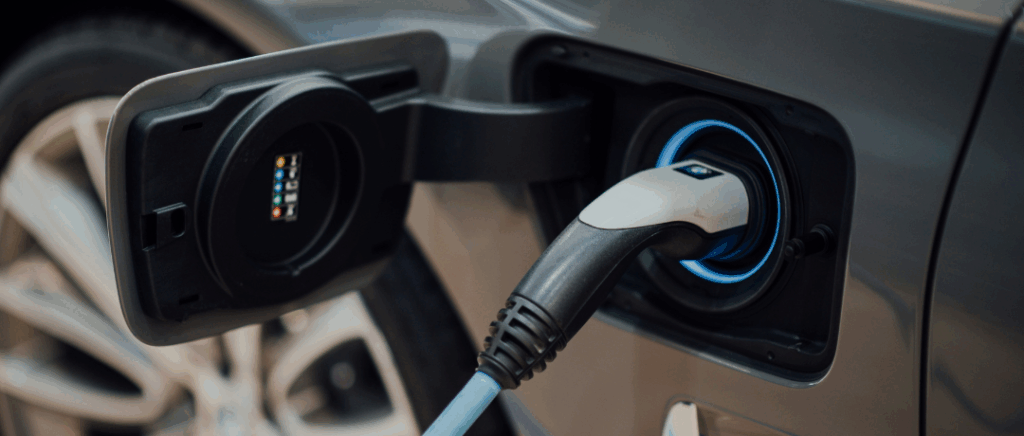
The Supercharger network is a unique advantage for fleets:
- more than 2,000 stations in Europe, including more than 200 in France;
- refills from 10 to 80 % in less than 30 minutes ;
- increasing compatibility with other brands, ensuring interoperability and freedom of movement;
- centralised management via the Tesla Fleet application, enabling consumption, costs and availability to be tracked.
For a fleet, this means less wasted time, less stress and simpler planning. Tesla doesn't just sell cars: it offers a complete ecosystem of connected mobility.
Tariffs and total cost of ownership (TCO): top-of-the-range electric vehicles make sense
Long perceived as inaccessible, models S and X are now reaching a point of economic equilibrium for businesses.
- Model S Grande Autonomie: around €95,000 excluding VAT.
- Model X Long Range: around €105,000 excluding VAT.
- Maintenance: around 40 % less expensive than an equivalent internal combustion model (fewer parts, less maintenance).
- TVS = €0 and ecological bonus not applicable (above the price ceiling), but advantageous book depreciation.
- Over 4 to 5 years, the TCO is comparable to, or even lower than, that of a luxury diesel SUV.
For companies, it's a strategic investment: premium electrics are no longer an image gimmick, but a rational and sustainable choice.
Why the new Tesla Model S and Model X are appealing to fleet managers
Beyond performance, Tesla has understood the new decision-making levers for fleet managers: economic rationality, employer appeal and operational innovation.
Image, innovation and employer appeal: triple leverage for companies
Offering a Tesla vehicle to an executive or key employee is no longer just a symbolic benefit:
- it's a tool for building loyalty and motivation;
- a vector for CSR image and innovation for the company;
- and concrete proof of our commitment to sustainable mobility.
In a competitive recruitment market, the company car remains a key part of the package: offering a premium electric vehicle is a distinctive asset.
Performance and autonomy tailored to everyday business needs
With a range of 600 to 744 km, :
- Reduce recharging stops for long missions;
- plan inter-regional journeys without constraints;
- and ensure maximum availability of the vehicle in professional schedules.
The combination of performance and endurance positions these models as genuine mobile productivity tools.
Connectivity designed for intelligent management of electric fleets
Thanks to the Tesla Fleet portal, managers can :
- monitor energy consumption in real time ;
- view the location of vehicles and their charging status;
- Establish consolidated reports for CO₂ monitoring and TCO ;
- integrate this data into the Beev Fleet management.
This operational transparency transforms the Tesla into a data vehicle, at the service of fleet performance.
Tesla 2025 comparison: Model 3, Model Y, Model S and Model X
| Tesla Model 2025 | WLTP range (km) | Power (hp) | 0-100 km/h | Estimated price before tax (€) | Fleet positioning |
|---|---|---|---|---|---|
| Model 3 Propulsion | 513 | 283 | 5,9 s | 42 000 | Commercial fleet / VSEs |
| Model Y Long Range | 600 | 384 | 5,0 s | 48 000 | Managers / pool car |
| Model S Long Range | 744 | 670 | 3,2 s | 95 000 | Direction / long distance |
| Model X Long Range | 664 | 670 | 3,9 s | 105 000 | Management / executive mobility |
/* prevents the table from breaking into stacked columns : */
.table-scroll table {
white-space: nowrap; /* forces columns to remain on a single line */
min-width: 700px; /* minimum width: you can adjust if you want to be more compact */
}
/* table style */
.tesla-table {
width: 100%;
border-collapse: collapse;
font-family: system-ui, -apple-system, BlinkMacSystemFont, "Segoe UI", Roboto, "Helvetica Neue", Arial, sans-serif;
font-size: 15px;
color: #1a1a1a;
}
.tesla-table thead {
background-color: #f9fafb;
}
.tesla-table th {
text-align: left;
font-weight: 600;
padding: 12px 16px;
border-bottom: 1px solid #e5e7eb;
font-size: 13px;
color: #374151;
}
.tesla-table td {
padding: 12px 16px;
border-bottom: 1px solid #e5e7eb;
vertical-align: top;
color: #111827;
font-weight: 400;
}
.tesla-table tbody tr:nth-child(even) {
background-color: #f9fafb;
}
/* optional: visual cursor when sliding */
.table-scroll {
cursor: grab;
}
.table-scroll:active {
cursor: grabbing;
}
/* on desktop large we can release the nowrap if you want */
@media (min-width: 1024px) {
.table-scroll table {
white-space: normal; /* the table reverts to normal full screen */
}
}
Tesla covers the whole range of needs: from compact service vehicles to top-of-the-range executive models.
Top-of-the-range electric vehicles as a lever for sustainable business mobility
Adopting a Model S or X is no longer just a matter of prestige: it's a decision aligned with CSR strategies and European regulatory obligations.
Emission reductions and EPZ compliance: an environmental advantage for fleets
Integrating the Tesla Model S and Model X into a fleet is more than just a technological choice: it's a strategic decision in line with European and French environmental obligations.
Faced with the gradual tightening of CO₂ standards and the widespread introduction of Low Emission Zones (LEZs), these 100 % electric vehicles are becoming an essential compliance tool.
The Model S and X have 0 g/km of CO₂ in use, which guarantees them unlimited access to all current and future restricted traffic zones.
For a company operating in several major French cities (Paris, Lyon, Bordeaux, Lille, Nice, etc.), this represents a major logistical and economic gain: no risk of restrictions, no exemptions to apply for, no penalties.
The absence of local emissions also offers immediate environmental comfort: no noise, no smell, and a smooth drive, even in high-density city centres.
Contribute to the CSRD trajectory and the Mobility Orientation Law
Since 2022, the European CSRD directive has required many companies to produce a structured extra-financial report on their environmental impact. The proportion of zero-emission vehicles is becoming a key indicator.
The Model S and Model X meet these criteria perfectly:
- they help to achieve the objectives of decarbonisation by 2030 ;
- they contribute to reducing carbon intensity per employee or per km travelled ;
- they support compliance with the Mobility Orientation Law (LOM), which requires the progressive greening of fleets (50 % of low-emission renewals from 2027).
Clearly, these vehicles are becoming a regulatory compliance tool as much as a sustainable investment.
They enable a CSR department or a CFO to demonstrate that electric mobility is not just an ecological constraint, but a lever for performance and strategic resilience.
Intelligent recharging and connected data: the keys to tomorrow's fleet
Tesla has always placed data and connectivity at the heart of its strategy. The new Model S and Model X embody this philosophy: they are no longer just vehicles, but connected energy interfaces capable of interacting with the electricity grid and fleet management systems.
Vehicles are able to automatically adapt their recharging sessions according to :
- off-peak network hours (to reduce the cost of electricity) ;
- the site's available capacity (to avoid power surges or tariff peaks);
- operational priorities (intelligent planning based on the next day's journeys).
For a fleet of several dozen vehicles, this translates into a average reduction of 20 to 30 % of the annual energy bill, while limiting the load on the internal network.
The charging points can be controlled remotely via centralised software, and deferred charging becomes a genuine strategy for optimising your budget.
Each Tesla vehicle records thousands of items of data: fuel consumption, mileage, energy efficiency, use of charging points, routes, weather and average speed.
This information, aggregated in dashboards, enables :
- d'analyse the real cost per kilometre according to usage profile ;
- didentify optimisations for recharging ;
- from monitor emissions avoided compared to a thermal vehicle equivalent ;
- and move towards a fully energy-managed fleet.
These features place the Tesla Model S and Model X at the heart of Fleet 4.0: an intelligent, connected fleet capable of adapting to economic, energy and environmental constraints.
By anticipating changes in electricity pricing policies and using real-time consumption data, businesses can reduce their TCO on a long-term basis while improving their environmental performance.
Beev tips for integrating the Tesla Model S and X into your company fleet
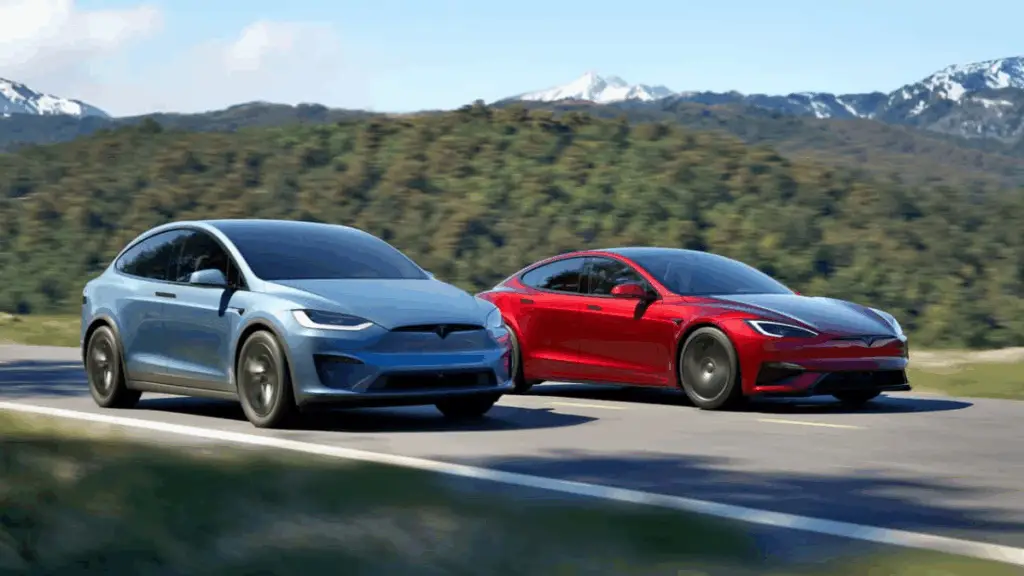
Tesla represents a strategic opportunity, but its integration needs to be planned.
Here are the key steps to follow, according to Beev:
- 1) Carrying out a premium mobility audit Identify employees whose use justifies a top-of-the-range long-distance vehicle (management, consultants, strategic clients).
- 2) Simulate the TCO of electricity versus heat including depreciation, tax, energy costs and residual value.
- 3) Preparing the infrastructure On-site AC terminals, fast DC partnerships, Supercharger access badges.
- 4) Training users real autonomy, eco-driving, intelligent journey planning.
- 5) Communicating internally : promote the approach as part of the company's CSR and car policy.
The Beev team provides support at every stage: simulation, financing, deployment of terminals and change management.
Conclusion - Tesla redefines premium mobility and the performance of electric fleets
With the Model S and X 2025, Tesla is confirming its lead with a revamped design, superior comfort, record range and cutting-edge connectivity.
But above all, these models demonstrate that top-of-the-range electric vehicles are now a rational choice for businesses.
For finance departments and fleet managers, the equation is simple:
- less taxation,
- more perceived value,
- a carbon footprint reduced,
- and a stronger employer image.
More than a range upgrade, it's a redefinition of premium mobility: high-performance, intelligent and sustainable.
Tesla no longer sells cars: it offers a complete ecosystem of electric mobility for businesses.
And with Beev, this ecosystem becomes a concrete, integrated and profitable solution.
Manage your fleet easily with our dedicated tool
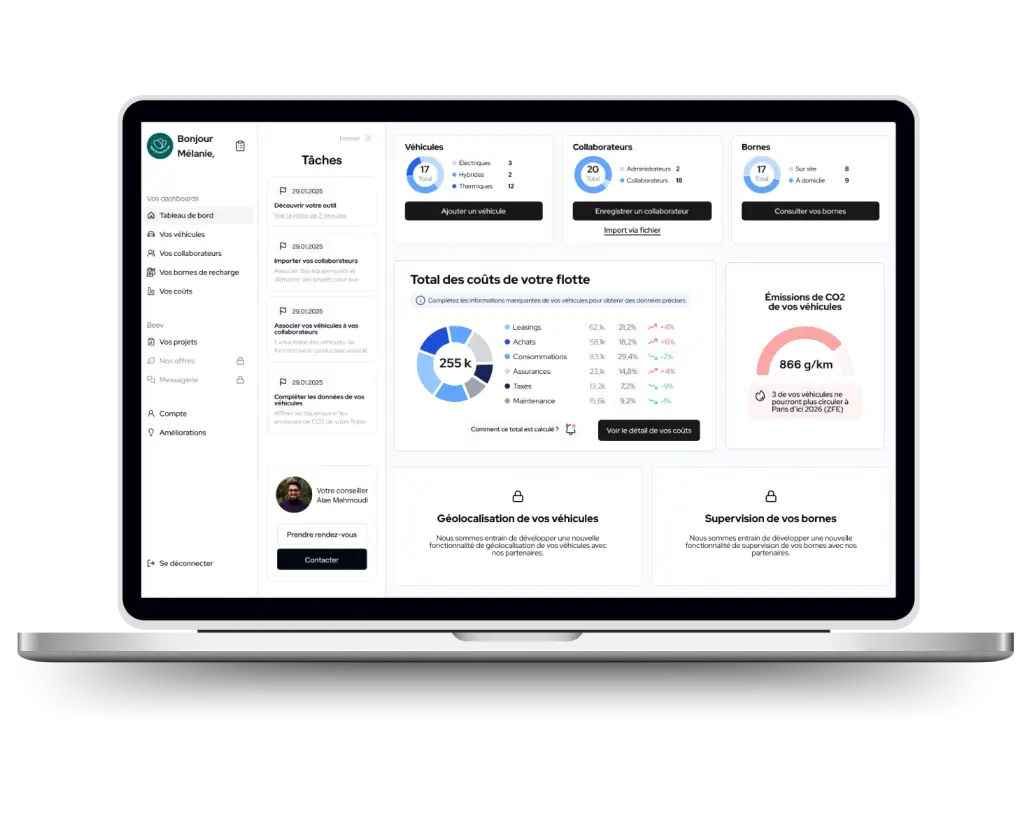
A fleet management tool from A to Z
- Add your fleet and employees in just a few clicks
- Plan your transition to electric vehicles and monitor your CSR objectives in real time
- Centralise your expenses