





Peugeot 208 GTi electric: what happens to the sporting icon in the zero-emission era?
A muscular new generation: what changes in size and stance?
La Peugeot 208 GTi electric marks a turning point in the history of the sporty city carby bringing the legendary DNA of the 205 GTi into the zero-emission era. This electrified version doesn't just take on the GTi label: it thoroughly modernises it, while remaining true to the spirit of sportiness and driving pleasure for which it is renowned.
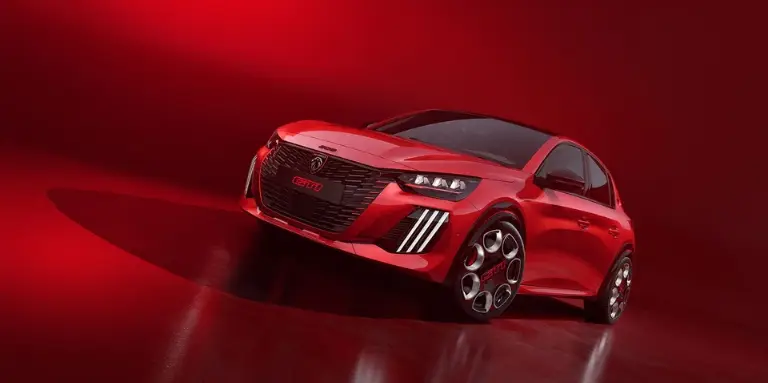
In terms of dimensions, the new E-208 GTi retains the fundamentals of the classic 208, but adopts an even more assertive stance. The chassis has been lowered by 3 cm, while the front and rear tracks have been widened by 5.6 cm and 2.7 cm respectively, improving roadholding and giving the car a more dynamic and aggressive appearance.
Together, these developments give the 208 GTi electric a more muscular silhouette, ready to take on the sporting competition from electric city cars, while preserving the brand's emblematic visual identity. The front spoiler, roof spoiler and special wheels reinforce this sporty character, without going overboard.
The 208 GTi electric embodies both respect for its sporting heritage and a commitment to innovation, offering a muscular, modern and committed new generation.
Power and performance: how good is the 240bhp 208 GTi 100 % electric?
The 240 bhp version of the electric Peugeot 208 GTi is positioned as a sporting benchmark in the electric city car segment. This engine, which is already very powerful, is based on the e-CMP2 platform, specially designed to accommodate electric technologies while ensuring excellent dynamics and remarkable agility.
Thanks to this architecture, the 208 GTi benefits from a low centre of gravity, optimum weight distribution and increased rigidity, all of which enhance driving pleasure and roadholding precision.
With 240 bhp and the instant torque typical of electric motors, the electric 208 GTi offers lively acceleration and spontaneous acceleration, while remaining perfectly controlled in corners. This power, combined with the e-CMP2 platform, enables the car to rival the best sports cars in the segment, without sacrificing handling or everyday driving comfort.
In short, the 240 bhp 208 GTi 100 % electric offers an excellent compromise between sportiness, efficiency and enjoyment, while relying on a modern platform adapted to the demands of electric mobility.
Autonomy and recharging: what are the 208 GTi electric's capabilities?
The Peugeot 208 GTi electric is based on a battery 54 kWh, giving it an official range of 350 km according to the WLTP standard in the combined cycle. This capacity is slightly lower than that of the classic E-208 version, mainly due to the more powerful engine and additional sports equipment, which have an impact on fuel consumption.
When it comes to recharging, the 208 GTi electric accepts a maximum power of 100 kW, enabling the battery to go from 20 % to 80 % in around 30 minutes on a fast terminal adapted. This rapid recharging makes everyday journeys and sporting outings easier, while ensuring a certain versatility of use.
The range of the 208 GTi electric is sufficient for most urban and suburban uses, while its rapid recharging capability means it remains competitive with its rivals in the segment.
Exterior design: an electrified GTi look that's as aggressive as ever?
The Peugeot 208 GTi electric boasts an exterior design that combines the sporting heritage of the GTi label with a resolutely modern and electrified aesthetic. The compact and dynamic silhouette of the E-208 serves as the ideal base for the GTi version, which is distinguished by a more aggressive stance: the body is lowered by 30 mm, while the front and rear tracks are widened by 56 mm and 27 mm respectively, accentuating road presence and cornering stability.
The GTi look is expressed through a number of emblematic details: the large 18-inch wheels with their perforated design, inspired by the 'perforated' wheels of the 205 GTi, provide both heat dissipation from the brakes and retro-sport styling. The wider wheel arches, highlighted by a thin red line, and the specific front spoiler further reinforce the sporty identity. The gloss black-tinted rear diffuser and discreet red accents on the grille, around the logos and on the brake callipers complete the picture, without ever going overboard.
Interior and technology: a cabin designed for modern sportiness?
The cabin of the Peugeot 208 GTi electric has been designed to offer a sporty and modern driving experience, without sacrificing comfort or connectivity. The special "sports" seats are designed for optimum support, while being covered in new high-quality fabrics, enhanced by red stitching and accompanied by a distinctive scarlet carpet: these elements recall the sporting heritage of the GTi label and breathe a racing atmosphere into the interior.
In terms of technology, the 208 GTi electric benefits from the Peugeot i-Connect Advanced information system, which incorporates high-performance TomTom connected navigation, "OK PEUGEOT" voice recognition and wireless mirroring (Apple CarPlay and Android Auto). The 3D i-Cockpit® with its 10-inch digital handset makes essential information perfectly legible, while the central touchscreen provides easy access to all the multimedia and assistance functions.
The compact, Alcantara-wrapped steering wheel and the centre console in the same top-of-the-range material reinforce the sporty, premium character of the cabin. Finally, customisable ambient lighting and a host of comfort and safety features, such as an HD reversing camera and parking aids, complete a resolutely contemporary interior designed for modern sportiness.
Prices and versions: how much will the new Peugeot 208 GTi cost?
The official price of the new electric Peugeot 208 GTi has not yet been revealed by the manufacturer, but several specialist sources estimate that it could cost in the region of €45,000, a significant sum for a city car, even a sports car. This price is explained by the high power output (up to 280 bhp depending on the version), the 54 kWh battery and the specific sports equipment, which make this E-208 GTi a direct competitor to the top-of-the-range electric sports cars in the segment.
By way of comparison, the classic electric Peugeot 208 starts at around €28,000 for the 136 bhp version and exceeds €35,000 for the 156 bhp version, before deduction of any environmental bonus.
For the moment, the 208 GTi electric does not appear to be available in several versions, but it is likely that the manufacturer will offer a number of options that can be customised to suit its own tastes. The final price and the availability of certain finishes therefore remain to be confirmed as the car approaches the market.
Launch and production: where and when will it be manufactured and marketed?
The new electric Peugeot 208 GTi was officially unveiled on 13 June 2025, alongside the Le Mans 24 Hours, marking the return of the GTi sports car label to an electric city car. The manufacturer has confirmed that production will be carried out at the Stellantis group's usual plants, most likely at the Trnava plant in Slovakia, which already assembles the classic 208, or at the Poissy plant in France, but no official information has been released on the precise location for this GTi version.
However, it has been established that the Emotors electric motor, developing up to 280 bhp, is manufactured in Trémery (Moselle). The first deliveries are expected in 2026, with sales set to begin shortly after the opening of orders, scheduled for late 2025 or early 2026.
The electric 208 GTi won't be in the catalogue for long, however: the next generation of the Peugeot e-208 has been announced for 2027, with a new GTi planned for 2028 on a different platform.
Comparison table: Peugeot 208 GTi vs Mini Cooper JCW SE vs Abarth 500e
| Model | Power (hp) | 0 to 100 km/h (s) | WLTP range (km) | Battery (kWh) | Key features |
|---|---|---|---|---|---|
| Peugeot 208 GTi | 280 | 5,7 | 350 | 54 | Lowered chassis, wider tracks, Torsen differential, sport brakes |
| Mini Cooper SE JCW | 218 à 258 | 6.5 (JCW 258 bhp) | 305 à 371 | 54 (for JCW) | Iconic styling, JCW finish, playful steering |
| Abarth 500e | 155 | 7 | 265 | 42 | Sporty sound, stylish looks, compact size |
An electric sports car for under €40,000: a successful gamble for Peugeot?
It remains to be seen whether Peugeot will succeed with an electric sports car costing less than €40,000, as the manufacturer has yet to announce the exact price of the new electric 208 GTi. Initial estimates from the specialist media suggest that the 208 GTi electric will cost well over the €40,000 mark, with figures approaching €45,000.
This positioning therefore places it outside the historically accessible segment of the GTi label, which aimed to offer affordable sportiness. However, in terms of performance (280 bhp, 0 to 100 km/h in 5.7 seconds), range (350 km WLTP) and a wealth of sporting equipment, the 208 GTi electric is in line with the standards of today's premium electric sports city cars, such as the Mini Cooper SE JCW.
In conclusion, if Peugeot manages to offer the 208 GTi electric for less than €40,000, it would be a real feat that would be in keeping with the original spirit of the label. But according to all the information available, that's not the case at the moment: the 208 GTi electric looks more like a top-of-the-range electric sports car, priced at over €40,000.
Conclusion
With the 208 GTi electric, Peugeot has succeeded in combining the sporting character of its emblematic models with the challenges of electric mobility. Its dynamic design, powerful performance and modern technologies make it a 100 % electric city car that remains true to the GTi spirit.
But over and above the vehicle itself, this development highlights a broader paradigm shift: the electric cars are not only becoming more desirable, but also more accessible thanks to leasing offers (LLD or LOA) and the growth in the number of charging points, both in businesses and at home.
Are you thinking of going electric, equipping your home or business, or looking at financing solutions tailored to your needs (leasing/leasing)?
Call on Beeva specialist in electric mobility and the installation of charging stationsto support you at every stage of your project
For individuals and businesses