
Home > Electrify your fleet with Beev > Fleet manager's guide: building a sustainable mobility policy for your company
Fleet manager's guide: building a sustainable mobility policy for your company
According to Ipsos, in 2025, nearly 84% of French companies are committed to an energy transition for their vehicle fleetsaware that more sustainable mobility is no longer just a trend, but a reality. strategic and regulatory necessity. The introduction of mandatory quotas and tax incentivesThese include the ecological malus and the new annual tax on non-green fleets, which are shaking up traditional models.
The challenges are considerable: optimising total cost of ownership (TCO), ensure the regulatory compliancestrengthen its employer appealbut also make an active contribution to the company's ecological transition.
Faced with these challenges, the role of the fleet manager is being reinvented. It is no longer just a question of managing vehicles, but of managing a global mobility policy, agile and manager.
Beyond the vehicle, the increasing use of soft mobility (bicycles, scooters, public transport, car-sharing) is also emerging as a lever for economic performance and CSR (Corporate Social Responsibility). A study reveals that 74% of working people continue to use private cars for home-work journeysor approximately 18.1 million peopleHowever, modal shift is progressing rapidly, leading to a significant reduction in companies' carbon footprints.
In this article, we explore the key stages in building a sustainable mobility policy ambitious and pragmatic, the levers to activatethe legal obligations to anticipate, as well as advice from companies already committed to the transition.
Table of contents
Why develop a sustainable mobility policy?
Environmental challenges: reducing our carbon footprint and anticipating the future
Le The transport sector remains the largest emitter of greenhouse gases in France. In 2018, thecarbon footprint of passenger transport amounted to almost 2.9 tonnes CO₂ per personwhile the The average annual CO₂ emissions per person in France is estimated at 9.2 tonnes..
For companies with fleets, theThis is a major challengeevery internal combustion vehicle on the road has a significant impact on the overall carbon footprint.
So setting up a sustainable mobility approach allows reduce this footprint, d'improving air qualityand respond to growing social pressure around CSR issues.
Economic challenges: optimising budgets and boosting performance
In addition, integrating sustainable mobility into the fleet strategy also means efficiency and savings. On average, every French household spends €5,000 a year on a car, representing 10 to 12% of its budget. For a company, in addition to direct costs (fuel, purchase, maintenance), there are a number of other costs, such as numerous indirect coststaxes, social security contributions, parking... but also the hidden cost of absenteeism due to commuting accidents.
At the same time, the transition to more responsible mobility reduces dependence on fossil fuels (often subject to unpredictable price increases) and long-term user costsAn electrified fleet generates significant savings on fuel and maintenance.
Regulatory issues: complying with an increasingly strict framework
On the regulatory front, since 1 January 2024French legislation requires companies with more than 100 vehicles to have at least 20% of their renewals with low or very low emission vehicles. This obligation will increase to 70% from 2030. Companies that do not comply with these quotas are exposed to the following risks annual incentive taxes and a strengthening environmental reporting systems.
At the same time, the same Mobility Orientation Act (LOM) is now mandatory for all companies with more than 50 employees on the same site, the inclusion, during the compulsory annual negotiations, of concrete measures to improve commuting and make it greener. We'll look at all this in more detail throughout this guide.
Sustainable mobility as a business performance driver
A direct impact on operational efficiency and competitiveness
By 2025, sustainable mobility will be a driving force behind profound change.
Schemes such as the sustainable mobility package (FMD), adopted by 65% of large companies and offering up to €900 per employee/year by 2025These are the average reduction of 3.2 tonnes of CO₂ per employee each year but also a significant tax advantage on the mobility budget. But above all, they provide new flexibility in fleet managementthanks to customisable digital solutionsIn this way, managers adapt the mobility budget to real needs, optimising each transport investment. This FMD will be explained in more detail later in this article.
This flexibility, combined with the growth in alternative solutions (bicycles, carpooling, etc.), has made it possible to offer a wide range of services, electric vehicles...), keeps operating costs under control. For example, a medium-sized companyin reducing travel by 10%, can save almost €100,000 a year on his mobility expenses, while this is the 2nd largest item after payroll.
Strengthening the employer brand and attracting talent
A sustainable mobility strategy also enhances a company's attractiveness. More than 8 out of 10 talents today prefer employers committed to responsible actionand the green mobility becomes a differentiating criterion during recruitment. In other words, by improving quality of life through the reduction of stress on the road, thecompany builds employee loyalty and limits absenteeism linked to commuting.
Manage your fleet easily with our dedicated tool
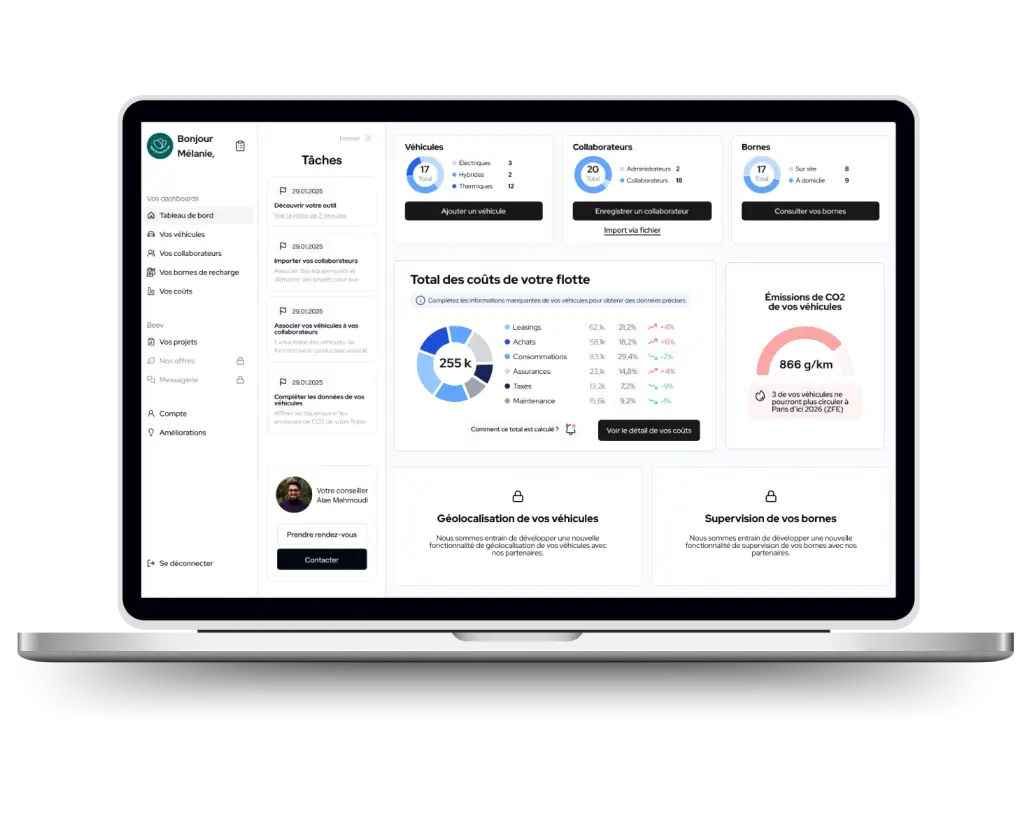
A fleet management tool from A to Z
- Add your fleet and employees in just a few clicks
- Plan your transition to electric vehicles and monitor your CSR objectives in real time
- Centralise your expenses
Understanding the basics of sustainable mobility in fleet management
Definition and main principles of sustainable mobility
Sustainable mobility refers toall solutions and strategies for reconciling business travel with a reduction in environmental impact and the staff well-being. It is based on two main pillars:
- L'adoption of low-emission means of transport (electric/hybrid vehicles, car sharing, soft mobility)
- L'flow optimisationThis will encourage people to limit unnecessary journeys and dependence on private cars.
Reducing greenhouse gas emissions
Le The transport sector alone accounts for around 30% of total greenhouse gas (GHG) emissions in France.. The stakes are therefore strategic for companies: every company car and every motorised journey contributes to increasing the collective carbon footprint.
The European Union is imposing a A 15% reduction in CO₂ emissions from new heavy commercial vehicles by the end of 2025. (compared with 2019). In France, the National low-carbon strategy aims to reduce transport-related emissions by 28% by 2030This is forcing fleet managers to rapidly transform their practices.
So, for fleet managers, this movement is thean opportunity to position itself as a responsible, pioneering playerEvery decision on fleet composition, driver training or the choice of digital tools becomes a further step towards mobility for the future.
Promoting alternative forms of transport
Sustainable mobility is not just about choosing a greener fuel: it is also about active promotion of alternatives to the private car. For fleet managers, these solutions represent opportunities to boost their organisation, control costs and meet major environmental challenges.
Initially, the public transport (bus, tram, metro or train) are often the main the preferred solution in urban and suburban areas. By 2025, 41% of French people regularly use these modes for their home-work journeyseven if the rate remains below the European average (58%). For the company, encouraging this practice will reduce :
- car traffic,
- pollutant emissions
- and the stress of traffic jams.
It should be noted that the use of public transport is also facilitated by employees thanks to subscriptions partially or fully paid for by the employerbeing a social benefit to strengthen the employer brand.
Secondly, the marche and the bike are among the most virtuous means. In 2025, 32% of French people use a bicycle on a weekly basisand almost half (57%) own a bicycle, whether conventional or electric.
For the journeys of less than 5 kmWith no emissions, improved quality of life at work and reduced absenteeism thanks to the health benefits, these methods are unbeatable. Many companies are now investing in company bicycle fleetsmainly electric, and are installing secure shelters or charging stations.
💡Did you know ? Walking is still the most universal mode of transport: 91% of French people walk regularly, and it's ideal for getting from work to a station or public transport stop.
Last but not least, car-sharing is growing with the support from dedicated platforms and public incentives. Although 13% of French people will be using it by 2025the The public authorities are aiming for 3 million daily journeys by 2027, compared with 900,000 a year ago. today.
Carpooling allows you to :
- share costs,
- strengthen cohesion between colleagues,
- reduce the pressure on parking,
- but also significantly reduce emissions per user.
It also paves the way for news forms of solidarity and mutual aid within companies and between employees of different companies in the same economic zone.
By promoting alternative forms of transport, we can maximise the positive environmental impact while making direct economic gains:
- Reducing GHG emissions by limiting solo car journeys.
- Improving QWL (quality of life at work), a key factor in attracting and retaining staff.
- Reducing operating costs related to fuel reimbursements, maintenance and parking.
Optimising and renewing the vehicle fleet
As explained above, the Mobility Orientation Law (LOM) has accelerated the renewal of company car fleets: each fleet renewal in large companies must include a a growing share of low-emission vehicles.
Le legal threshold will be raised to 40 % in 2027 (compared with 20% today), with a increased financial penalties for non-compliance : exclusion from public contracts and fines of up to 1 % of sales for companies that fail to meet their targets for 'greening' their fleets.
Also of note : Since March 2025only the electric or hydrogen-powered vehicles are included in the legal quotasPlug-in hybrids are now excluded from the official calculation of the green fleet.
This renewal strategy is reflected in the market figures: by 2025, the electric and hybrid vehicles account for 20 % and 40 % respectively of new fleet registrationsfor a remaining 40 % reserved for combustion engines. More generally, 21.8 % of company purchases now involve electric or plug-in hybrid vehiclesand already 1 company in 3 has reached the compliance thresholds set by the LOM.
The French fleet now totals almost 1.3 million electric vehicles (and 2 million electric/hybrid), i.e. 2 to 3 % from the national parkBut this momentum is accelerating year on year.
The link with CSR policies and total cost of ownership management
Naturally, the sustainable mobility policy at the heart of CSR. It responds to three major challenges:
- Environmental Reducing pollution, fossil fuel consumption and greenhouse gas emissions.
- Social Improving quality of life at work by reducing the stress and fatigue associated with travel (30% of employees say that commuting has a negative impact on their quality of life), and promoting inclusive mobility.
- Economical Rationalise direct and indirect fleet costs, while complying with regulations and enhancing the employer's image.
In this respect, companies that integrate sustainable mobility into their CSR strategy are better equipped to meet environmental challenges, improve their attractiveness and benefit from a differentiating positioning in the eyes of customers and talent alike.
At the same time, the control of total cost of ownership (TCO) is becoming essential in this context. As a reminder, TCO takes into account :
- The purchase or lease price of the vehicle.
- Fuel, maintenance, insurance and tax costs.
Thanks to the transition to cleaner cars and optimised use, it is possible to reduce overall costs while meeting performance, compliance and responsibility targets.
In short, understanding and applying the fundamentals of sustainable mobility means that fleet managers can the means to take concrete action for the future of your company and its employees. This approach, far from being restrictive, is proving to be a veritable a lever for innovation and sustainable value creation.
How to build a sustainable mobility policy
Stage 1 - Mobility analysis: analysing travel practices and needs
The first key stage in building an effective sustainable mobility policy is to carry out a mobility analysis. This phase involves taking a an accurate and precise "snapshot" of travel habits and constraints within your companyThis is an essential prerequisite for developing relevant initiatives that are tailored to the realities on the ground and to your CSR objectives.
Data collection and analysis
→ Collect structured and behavioural data
The diagnosis focuses on two main areas:
- Le structural part lists mobility infrastructure and services accessibility of the site (public transport, cycle paths), availability of car parks, network of electric charging points, car-sharing or car-pooling services, existing fleet with its characteristics (engine, Crit'Air class, age of cars), group timetables and capacity.
- Le behavioural component aims to gain a detailed understanding of travel practices of employees, suppliers and visitors This includes the modes of transport used for each type of journey, frequencies, timetables, distances travelled, places of residence, potential for car-pooling, and openness to changes in practices. This data is collected by means of anonymous surveys, entrance and exit counts, maps of residences, and analysis of car park occupancy rates.
→ Analysing accessibility and traffic flows
The accessibility study involves assess all mobility options around the site (bus routes, stations, cycle lanes, safe pavements, etc.) and the any obstacles encountered :
- Temporally (unsuitable timetables),
- physically (lack of facilities),
- or economically (prohibitive costs for employees).
At the same time, analyse commuter and business flows is used to detail distances, journey times, geographical groupings, rates of use of different modes of transport and employee profiles requiring specific attention (isolated people, atypical working hours, etc.).
For example, a company will often discover that more than 50% of its employees live less than 30 minutes away by bicycle or public transportbut continue to use the car for lack of information or visible alternatives.
→ Encouraging exchange and internal dialogue
Building this diagnosis is also a collective act Involve staff representatives, mobility officers, human resources and, why not, external stakeholders (transport unions, local authorities).
This collaborative approach guarantees better understanding of real needs and encourages future adherence to the mobility plan.
→ Targeting modal shift and impact reduction
At the end of this work, the company has :
- From a a clear view of the current modal split (e.g. 70% solo car, 15% public transport, 10% carpooling, 5% cycling/walking).
- D'operating indicators to manage change, such as the potential for modal shift towards cycling or public transport, the identification of mobility 'black spots' or the need for support in ecomobility.
- From usable data to set concrete objectives and measure the results (reduction in the number of kilometres travelled solo, reduction in CO₂ emissions, improvement in punctuality, employee satisfaction, etc.).
This approach, far from being theoretical, has become the norm: according to ADEME, 53% of companies that have undertaken a mobility diagnosis manage to reduce their CO₂ emissions linked to travel by more than 12% in 3 yearswhile improving QWL and rationalising expenditure.
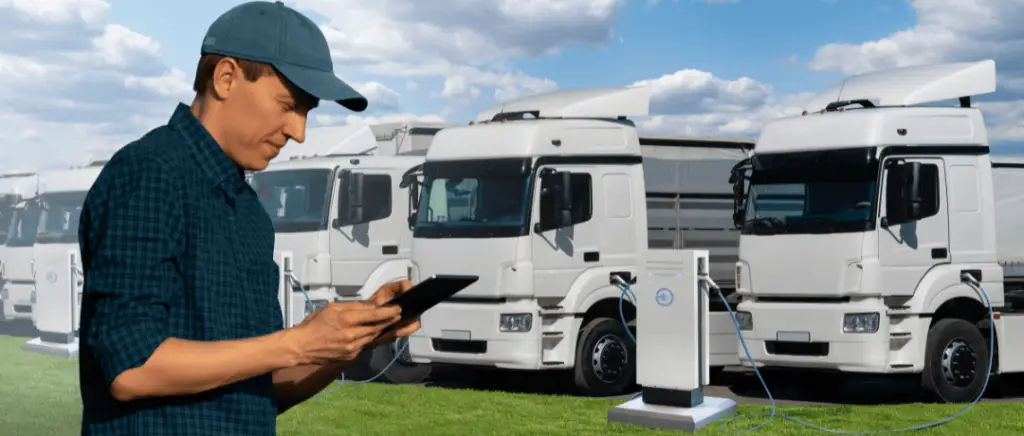

Identification of areas for improvement and issues specific to the company
Once the data on the company's mobility practices has been collected and analysed, the next step is vital: accurately identify the areas for improvement and the challenges specific to your organisation. This work enables the fleet manager to adapt his sustainable mobility policy to the reality on the ground and to maximise overall performance while meeting employee expectations.
The mobility diagnosis often reveals unsuspected areas for progress. Among the most common are :
- Under-use or over-use of certain vehiclesUp to 30% of a fleet's vehicles may be poorly used or unsuited to their missions, generating unnecessary costs and avoidable emissions.
- Non-optimised routes and journey times On average, optimising routes can reduce fuel consumption and associated emissions by up to 15%, while increasing team productivity.
- Bad driving habits On-board telematics: Risky behaviour (speeding, sudden braking, stopping with the engine running, etc.) takes a heavy toll on maintenance, fuel and safety. On-board telematics can identify and correct these practices, reducing maintenance costs by 10 to 20%.
- Low take-up of alternative modes of transport When the private car predominates, it is often due to a lack of alternatives or support for change. The modal shift rate is often less than 10% without an incentive policy.
Naturally, the issues to be tackled vary according to the size of the fleet, the type of business, the geographical location and the profile of the teams.
Stage 2 - Defining objectives and key indicators
Setting SMART objectives
After the mobility diagnosis, the next essential step is to define clear, motivating and above all achievable objectives. To ensure the effectiveness and consistency of the approach, we recommend adopting the SMART methodSpecific, Measurable, Achievable, Realistic and Time-bound.
The SMART method enables fleet managers to passing on general intentions (in this case "reduce emissions") concrete, manageable and shared ambitions. This fosters team buy-in, gives each player a sense of responsibility and makes it easier to monitor progress at every stage of the roll-out.
Here are some examples of SMART objectives for sustainable mobility:
→ Reducing CO₂ emissions :
- Specific: Reduce CO₂ emissions generated by the fleet.
- MeasurableReduce total emissions by x % by year x compared to year x.
- ReachableAnnual growth thanks to the integration of hybrid/electric vehicles and optimisation of routes.
- RealisticBased on the current potential for greening and optimising the fleet, in line with the resources deployed.
- Temporally definedAchieving the target by such-and-such a year, with quarterly reviews.
→ Cost control (TCO) :
- SpecificReduce the total cost of ownership.
- MeasurableReduce operating costs by x % over the next 12 months.
- Reachable: Thanks to telematics, eco-driving and fleet rationalisation.
- RealisticPreliminary identification of sources of savings on maintenance, fuel and hire.
- Temporally definedMonthly assessment with automatic reporting, year-end analysis.
→ Employee satisfactions :
- SpecificImproving employees' experience and commitment to mobility.
- MeasurableIncrease the satisfaction rate expressed in internal surveys from x % to x % within x months.
- Reachable: Implementation of shared solutions, reserved areas and monitoring tools.
- Realistic: Mobilisation of a dedicated budget and support for change.
- Temporally definedSatisfaction measurement every six months, adjustment of measurements according to employee feedback.
To do this, here are some operational indicators to monitor:
- TCO per vehicle (€ per year)
- Employee satisfaction linked to mobility (%)
- CO₂ emissions (kg/CO₂ per km or per vehicle)
- Rate of low-emission vehicles in the fleet (%)
- Percentage of carpools ormultimodal uses
Integrating regulations and anticipating changes in the legal framework
In 2025, legislation will impose ambitious and progressive new requirements that will govern the transformation of business travel.
As previously stated, since the LOM law of 2019, reinforced by the Climate and Resilience ActCorporate fleets are subject to increasing quotas for low-emission vehicles.
As a reminder, 20% of the renewed fleet must be low or very low emission since 1 January 2024 for companies with more than 100 light vehicles (<3.5t). This quota will increase to 40% in 2027then 70% in 2030according to the Environment Code.
Worth noting the obligation affects companies with more than 50 employees and a fleet of more than 100 vehicles.
Here are some other key points to consider:
- Obligation to install recharging points in company car parksFor existing buildings with more than 20 parking spaces, a minimum of 1 terminal for every 20 spaces, then 1 additional terminal for every 20 spaces.
- Annual reporting obligation on fleet composition via a national platform (gouv.fr). The data is automatically cross-checked for compliance.
- Inclusion of sustainable mobility in the mandatory annual negotiations (NAO) in companies with more than 50 employees.
Nevertheless, the context is changing rapidly, and we need to be rigorously prepared. The fact is, several bills aimed at lowering thresholds (e.g. 10 vehicles) or impose stricter quotas were discussed in 2024 and could return to the political debate in the medium term.
What's more, ecological taxation has become tougher over the years. One example is the ecologic malusthe restrictions on internal combustion vehicles...
At the same time new measures encourage mobility policies to be structured around CSR criteria and ESG complianceFor example, the CSRD directive requires many companies to publish their fleet's carbon footprint transparently from the beginning of 2025.
Here are some best practices for fleet managers:
- Incorporating regulatory monitoring into the mobility strategy Keeping abreast of developments means that the fleet can be adapted under the best economic and social conditions, without last-minute constraints.
- Structuring a multi-year renewal plan Anticipating the legal deadlines of the LOM law avoids rushing into things and allows you to take advantage of the aid for electric cars.
- Involving stakeholders (management, HR, CSE, finance) to size investments and deploy mobility plans in line with requirements.
- Measuring the regulatory impact of your management indicators (TCO, percentage of regulatory compliance, projection over the next 3 to 5 years, etc.).
Stage 3 - Drawing up the action plan
Fleet energy mix: the transition to electric power
For today's fleet manager, drawing up an energy action plan is the key to success.a key step towards professional mobility aligned with regulatory expectations, CSR imperatives and cost management.
By 2025, the the choice of energy mix no longer leaves room for internal combustion vehiclesThe transition to electric vehicles is now the strategic way forward, both in terms of compliance and competitiveness.
But why opt for a 100 % electric fleet, over and above regulatory requirements?
- Medium-term financial advantageDespite a high initial investment, the cost of using an electric vehicle is significantly lower than that of a combustion engine car: around €3/100 km for an electric vehicle compared with €7 to €10/100 km for a combustion engine, with a return on investment in 3 to 4 years.
- Reducing the carbon footprint : Each electric vehicle adopted significantly reduces direct CO₂ emissions (Scope 1), a decisive parameter in CSR balance sheets and European extra-financial reporting obligations.
- Improving the employer brand and employee commitmentElectric vehicles: Employees are in favour of electric vehicles and the installation of on-site recharging stations, which are seen as proof of a commitment to the environment and quality of life at work.
To put together a pragmatic and effective action plan, consider the following points:
- Real autonomy : Current models offer a range of between 200 and 600 km, depending on use (daily needs (90 km/day on average for employees), long-distance journeys, mission profiles, etc.).
- TCO : Integrate all costs: acquisition (or professional leasing), recharging, maintenance and tax benefits.
- Compatibility with recharging infrastructurePrioritise models that are suited to your ecosystem (charging power, charging time, presence and management of on-site charging points). In June 2025, there will be around 170,000 public charging points in France.
- On-board technologies : Encourage the use of telematics to monitor consumption and range and optimise vehicle rotation, by integrating real-time monitoring of the recharging network.
- Choosing the right models and brandsSome models (Renault 5 electricPeugeot 208 GTi electric) combine range, affordable prices and appeal to teams.
Developing shared services and soft mobility
The development of shared services and soft mobility represents a major challenge for the future. an essential lever for fleet managers wishing to combine economic performance, HR attractiveness and environmental responsibility. These innovative solutions make it possible to transforming the way we travel within the company over the long termwhile optimising the use of existing resources.
That said, shared mobility encompasses a variety of schemes that enable companies to rationalise their fleet while meeting the varied needs of their employees:
- CarsharingThanks to a fleet of vehicles that can be made available and booked on demand, users can access a means of transport when they really need it. The result: a sharp rise in the vehicle utilisation rate and a reduction in the fleet of up to 30%.
- Carpooling company : the organisation of shared journeys for home-to-work or business trips, via internal or external platforms, generates up to 12% of CO₂ emission reductions per journey. At a time when 7 out of 10 drivers get to work alone in their car, this model makes it possible to limit the number of vehicles on the road and the parking spaces required.
- Short-term rental or alternative mobilityFor occasional needs, renting a vehicle or using multimodal solutions guarantees operational flexibility without sacrificing budget efficiency.
What's more, the in-car technologies (RFID badges for keyless access, management platforms, real-time telematics) make it much easier to organise sharing, monitor usage and generate reports mobility policy.
Important to know : Only 8% of home-to-work journeys are made on foot or by bikeat a time when more than 60% of employees still use their car for distances of less than 5 km. Le potential is therefore considerable.
Tools and incentives
It is essential to build on existing incentives for sustainable mobility. The key is to provide practical tools to accelerate the transition, optimise costs and meet society's expectations.
As mentioned earlier, the Sustainable Mobility Package (FMD) is the main a fiscal and social tool to encourage eco-responsible modes of transport to and from work :
- bike,
- car sharing,
- electric vehicles,
- public transport excluding season tickets...
By 2025, the the tax exemption ceiling is set at €600/yearand can go up to €900 when combined with 50 % of public transport season tickets. The allowance is paid to all eligible employees on an equitable basis.
This implementation is the result of a unilateral decision by the employeror a collective agreement with consultation of the CSE. Since 2025, it has even been possible to benefit from it in the case of "family" carpoolingand theto be used in the form of mobility vouchers for simplified management.
Worth noting Less than 30 % of private sector companies had deployed this package by the end of 2023, but the momentum is accelerating under the impetus of CSR obligations.
What's more, we have the mobility credit (alternative or complementary to the DMF) which offers employees the opportunity to give up a company car in exchange for an allowance dedicated to sustainable mobility. This envelope, the amount of which can vary according to the company's CSR policy, encourages a individual adaptation and a controlled switch to less polluting modes of transport.
In addition to all this, faced with the need to speed up the electrification of fleets, a number of incentives are attracting the attention of managers:
- Reload card universal: Facilitate access to more than 100,000 public charging points via a single card or application for all employees, making the use of electric vehicles possible on all work-related journeys.
- Less insurance and tax: Profits on the tax on the allocation of passenger vehicles (TVAT, ex-TVS), fringe benefits, energy saving certificates (EEC)...
But that's not all: the teleworking is now recognised as a pillar of a sustainable mobility policyless travel, less stress and a smaller carbon footprint.
Establishing 2 days teleworking per week can make reduce individual journeys by 30 to 40 %reducing the overall carbon footprint and improving the work/life balance.
Lorem ipsum dolor sit amet, consectetur adipiscing elit. Ut elit tellus, luctus nec ullamcorper mattis, pulvinar dapibus leo.
Stage 4 - Roll-out, governance and internal communication
Mobilising stakeholders
If a sustainable mobility policy is to succeed, the mobilising internal stakeholders is a decisive lever. It provides the fleet manager not only with influential contacts, but also with allies to steer this strategic change over the long term.
Initially, theinvolvement of the management committee guarantees the legitimacy of the project. Their public commitmentThrough messages, support for investment (electric vehicles, recharging stations) and the setting of targets (electrification rate, modal shift), the Group is giving a clear signal of its commitment to the environment. a clear direction that everyone can support. Management leadership also makes it easier to allocate the necessary budgets and arbitrate when operational or financial obstacles arise.
In a second phase, real change coachesHR plays a key role at every stage:
- Identification of internal ambassadors to promote a culture of mobility.
- Training and raising awareness among teams (sustainable mobility workshops, internal challenges, welcome kits).
- Integrating mobility into QWL policy (sustainable mobility package, mobility credit, teleworking where relevant, etc.).
In the third stage, involve employees through surveys, participatory workshops and European Mobility Week encourages their involvement and reveals unexpected obstacles or ideasThese are essential if we are to win the support of as many people as possible.
Use internal communication tools (newsletters, videos, webinars, mobility challenges) creates a friendly, unifying dynamic that is conducive to sustainable change.
Training, awareness-raising and change management initiatives
The successful deployment of a sustainable mobility policy depends on human support and education. For fleet managers, investing in training, awareness-raising and support for change means securing buy-in, limiting disincentives and turning mobility into a competitive advantage.
→ Training: speeding up the learning curve, reassuring people about innovation
- Sessions dedicated to getting to grips with electric vehicles To remove doubts about autonomy (80% of employees still express fears on this subject in 2025), practical workshops and trials are decisive.
- Eco-driving training Driving electric requires new habits. Eco-driving programmes, often offered via online modules or on-the-job coaching, help to save money and reduce wear and tear on vehicles.
- Raising awareness of recharging and infrastructure management Learning how to use a charging point, planning charging times and optimising time slots reduces logistical incidents and maximises vehicle availability.
→ Raising awareness: creating collective and individual commitment
- Internal campaigns on climate and CSR issues Explain why sustainable mobility is crucial (transport accounts for 31% of CO₂ emissions in France) to make the project easier to understand. Disseminate via newsletters, in-company posters, podcasts or short videos.
- Mobility challenges and events For example, organising a Mobility Week or awards for the best eco-drivers encourages emulation. Companies that launch these initiatives see an increase in commitment (+20% in average participation).
- Communicating resultsShare progress to maintain motivation and instil collective pride.
→ Supporting change: tailor-made for each employee
- Hotline and mobility advisersMobility coach: like a "mobility coach", designate an identified contact person within the teams to answer questions, identify obstacles and support new uses (getting to grips with the vehicle, managing the recharging card, etc.).
- Digital mobility guideOffer a practical booklet or mobile application describing all the services available (car-sharing, bicycles, terminal reservations, FAQs) and making it easy for employees to find their way around.
- Regular interviews and surveys The aim is to gather feedback on the new policy, adjust actions as it is implemented, and make the most of feedback from the field.
Measuring, enhancing and sustaining its actions
Monitoring CSR indicators and reporting
To assess the real impact of the actions taken, it is essential to rely on relevant and regularly updated KPIs:
- Modal share of journeys
- Monitoring the breakdown of modes of transport for home-to-work and business trips. This indicator measures the progress of carbon-free solutions and their adoption in-house.
- Emissions of CO₂ and other pollutants
- Calculation of the volume of emissions generated by the entire fleet over a given period.
- Energy consumption and mix
- Analysis of fuel consumption by engine and percentage of recharging from renewable electricity.
- Number of electric or low-emission vehicles
- Compliance with recent regulations.
- Fleet utilisation rate / kilometres travelled
- To optimise vehicle rotation, limit wear and tear and avoid under-use, this data is extracted via on-board telematics and analysed over time.
Digitalisation makes it much easier to manage:
- On-board telematics and SaaS platforms
- Telematics boxes collect mileage, fuel consumption, driving behaviour and vehicle status in real time, enabling reliable automated dashboards to be compiled.
- CSR tools and dynamic dashboards
- Including indicators in CSR reporting enables us to showcase our efforts to our stakeholders, meet our legal obligations and anticipate new environmental challenges.
- Communication of results and promotion
- Regularly share the progress made with employees and partners via concrete key figures: for example, reduction in total cost of ownership, reduction of x tonnes of CO₂/year or rate of adoption of soft mobility.
In short, linking management, valuation and monitoring in fleet management not only makes it possible to meet CSR obligationsbut also build a sustainable, recognised competitive advantagewhile optimising your fleet over the long term.
External promotion: labels, certifications and communication of commitments
Adopting a sustainable mobility policy is a tremendous opportunity. a lever for internal transformationbut it's also a opportunity for external enhancement, enhancing reputation and l'attractiveness of the company. Distinguishing ourselves through recognised labels and certifications, as well as transparent communication about our commitments, helps to lend credibility to our approach in the eyes of our customers, partners, applicants and employees.
Here are a few essential labels and certifications:
- Label Engagé RSE (AFNOR)
- A benchmark in France, this label assesses the maturity of a company's CSR strategy according to the ISO 26000 standard and the 17 UN Sustainable Development Goals. Held by more than 750 organisations, it officially attests to a company's commitment to sustainable development, particularly in terms of mobility. Obtaining this label sends a strong signal of responsibility and exemplarity to the market.
- Pro-Bike Employer" label
- Specifically dedicated to bicycle mobility, this label recognises the implementation of infrastructures and actions in favour of bicycle travel. It recognises the company's direct contribution to reducing emissions and improving employee well-being.
- ISO 14001 and ISO 26000
- ISO 14001 certifies a high-performance environmental management system, and ISO 26000 guides the organisation in a global approach to social responsibility covering environmental and social issues.
- Sector labels
- Some sectors have specific labels, such as "Responsible Transport & Logistics" for logistics, which recognises actions to promote low-carbon mobility and optimise business travel.
However, the labelling and certification are more than just trophies they mark out the process of progress and encourage continuous improvement. They structure reporting, facilitate dialogue with stakeholders, and enable the company to position itself as a driving force in the ecological transition.
A concrete example : Beev became a company at the end of 2024 B CorpThis is a symbol of our in-depth and verified commitment to making a positive social and environmental impact.
Naturally, committing to sustainable mobility does not stop at obtaining a label: it means signing up to a dynamic of progress, of regularly renew its certifications and communicate on objectives achieved and those to comeThis is achieved through regular, transparent communication and by raising the profile of the company with customers and partners.
Concrete examples and feedback from committed companies
Humanising sustainable mobility in business means drawing on feedback from fleet managers who have done it, going beyond the rhetoric to measure the real impact of their initiatives.
Microsoft: The power of collaborative car sharing
By setting up an internal platform dedicated to carpooling, Microsoft has made it easy for employees to share their journeys to and from work. The result: a 25% reduction in emissions linked to business travel in the first year. This success is based on financial incentives, integration into the company car park, and regular monitoring of environmental performance. The savings made on mileage allowances have made it possible to reinvest in new CSR initiatives.
Boulanger: Electrifying the fleet to cut costs
Faced with rising fuel prices and regulations, Boulanger has carried out a rapid transformation of its fleet: 60% of its combustion vehicles replaced by electrics in two years.. The results are there for all to see: savings of 30% on maintenance and fuel, taking advantage of the ecological bonus and the Advenir programme for recharging infrastructure. The benefits are not just economic, but also environmental, with a massive reduction in carbon footprint.
Lorem ipsum dolor sit amet, consectetur adipiscing elit. Ut elit tellus, luctus nec ullamcorper mattis, pulvinar dapibus leo.
Feedback from a French ETI: eco-driving and journey optimisation
A mid-sized company (100 vehicles each doing 25,000km/year) has opted for theintegration of electric vehicles (40% in the fleet) and the eco-driving training. In 18 months, it has halved its fuel costs: from €270,000 to €135,000/year. What's more, the company has taken advantage of public subsidies to speed up the transition to a low-carbon economy.
Conclusion
Building a sustainable mobility policy is not just a one-off project, but a structured, evolving process in which the fleet manager plays a central role. By combining rigorous diagnosis, clear objectives, tailored solutions and regular monitoringWith the right approach, it is possible to initiate a concrete, measurable transformation that is aligned with today's challenges.
Whether you're at the start of the process or already committed to the transition, every action counts fleet electrification, shared mobility, intelligent management, employee involvement, etc.
To achieve this, building a sustainable mobility policy calls for powerful, customised tools to effectively support fleet managers at every stage of this complex transition. This is wheretool Fleet Manager de Beev enters the scene as the inevitable solution.
Designed specifically for meeting the needs of fleet managersBeev simplifies day-to-day management by providing an easy-to-use complete visibility of vehiclesthe leasing contracts, l'gradual electrification of the fleet as well as charging stations. Thanks to a intuitive interface and a centralisation of key dataIt allows you to monitor the fleet's economic and ecological performance in real time while reducing costs and carbon footprint.
Lorem ipsum dolor sit amet, consectetur adipiscing elit. Ut elit tellus, luctus nec ullamcorper mattis, pulvinar dapibus leo.
Resources on the taxation of electric mobility
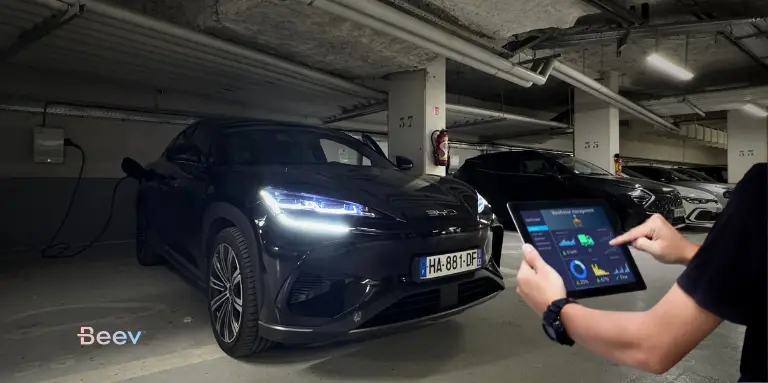
- Charging stations, Fleet management, Electric cars

- Fleet management, magazine, Professionals, CSR, Electric vans, Electric cars

- Taxation of electric cars and charging stations, Fleet management, Electric cars

- Charging stations, Fleet management, Professionals
- Fleet management, Professionals
- Fleet management, magazine, Electric cars
| Criteria | Beev Fleet Manager | Other solutions on the market |
|---|---|---|
| Cost of access | 100% free, with no hidden charges | Pay-as-you-go, generally by monthly or annual subscription, with additional costs for certain options |
| Fleet management | Centralised management of vehicles, drivers and charging points, suitable for companies of all sizes | Centralised management, often suitable for large fleets, sometimes less intuitive for smaller organisations |
| Energy transition | Personalised support for electrification, monitoring of CO₂ emissions, calculation of TCO for EVs | Variable support for electric vehicles, often designed for combustion or mixed fleets |
| Main features | Real-time monitoring, events calendar, document centralisation, customised reports, cost and TCO optimisation | GPS tracking, expense management, maintenance, customisable alerts, advanced reporting depending on solution |
| Ease of use | Intuitive platform, SaaS access from computer or mobile, rapid installation | Interfaces can be complex, requiring training or further integration |
| Support | Expert support for the acquisition of EVs, the installation of charging points, document management and the energy transition | Support varies between publishers, often limited to technical support |
| Adaptability | Suitable for VSEs, SMEs, ETIs and large groups, scalable at no extra cost | Often modular solutions, mainly for medium-sized and large companies |
Beev Fleet Manager is free, easy to use and dedicated to supporting the energy transition, while offering advanced management and monitoring functions.TCO optimisation for all types of fleet.
Other solutions on the market offer powerful, modular tools, but generally involve higher access costs, greater integration complexity and less specialisation in fleet electrification.
Do you have a question about fleet electrification?
Why electrify a company fleet in 2025?
Electrification makes it possible to reduce running costs (recharging, maintenance), meet regulatory requirements (LOM law, ZFE) and improve the company's CSR image. Electric vehicles also offer greater comfort for drivers.
What are the current legal obligations?
Since 1 January 2025, companies with more than 50 employees and a fleet of more than 100 vehicles must include at least 20 % of low-emission vehicles in their annual renewals. This quota will rise to 40 % in 2027 and 70 % in 2030. There are financial penalties for non-compliance.
What financial assistance is available?
Companies can benefit from subsidies such as ADEME's "Tremplin pour la transition écologique" scheme, which finances studies, diagnostics and investment in sustainable mobility.
How is Beev supporting the electric transition?
Beev offers a personalised audit of your fleet, identifies vehicle and charging infrastructure requirements, and provides a free platform to manage your electric fleet, track costs in real time and monitor CO₂ emissions.
What are the economic advantages of an electric fleet?
Electric vehicles cost around four times less to recharge than internal combustion vehicles, and require less maintenance. What's more, they save money thanks to the financial assistance available.
How do you manage an electric fleet effectively?
We recommend using management tools such as the Beev platform, which allows you to view key vehicle data, monitor the status of charging points and optimise the fleet's energy performance.