











Monday to Friday
9am - 12.30pm - 2pm - 7pm
The importance of lithium batteries in electric logistics
Production and management of lithium batteries
The production of lithium batteries, essential for electric vehicles, represents a major challenge for modern logistics. In 2023, global lithium production reached more than 180,000 tonnesThis has quadrupled since 2010, and is set to increase further to meet demand by 2025 and 2030.
What are the logistical challenges?
The production of lithium batteries is complex and presents a number of logistical challenges. Lithium is mainly mined in Australia, Chile and China, requiring extensive international transport to get the ore to the battery production sites. In France, companies such as Eramet play a crucial role in the production and management of lithium. For example, the San José lithium mine in Spain, managed by Eramet, is one of Europe's flagship projects for securing lithium supplies.
Another major challenge is the environmental impact of lithium extraction. Mining can cause significant environmental damage, particularly in terms of water consumption and deforestation. Sustainable practices are therefore needed to minimise these impacts and ensure a responsible supply chain.
What impact does battery management and recycling have on the supply chain?
Managing lithium batteries once they have been used also poses major logistical challenges. By recycling batteries, up to 95 % of strategic materials can be recovered, reducing dependence on the extraction of new resources and limiting the overall environmental impact. In France, companies such as Véolia and Suez are at the forefront of battery recycling, developing innovative processes to treat and reuse the components of used batteries.
The battery recycling process is essential for a sustainable supply chain. By integrating efficient recycling solutions, companies can reduce their environmental footprint. carbon footprint and create a circular economy. For example, Northvolt, a major player in Europe, is committed to using recycled materials in the manufacture of new batteries, demonstrating the importance of closing the loop in the supply chain.
Also read → What raw materials are used in electric car batteries?
Battery innovation and durability
Lithium battery technology continues to transform, with innovations aimed at improving durability and reducing costs. These advances are crucial to support the integration of electric cars into logistics operations.
The latest innovations focus on several key aspects to increase the performance and durability of batteries:
- Solid electrolyte batteriesThese replace liquid electrolytes with solids, increasing energy density and safety while reducing charging time.
- Nanomaterials, the integration of nanomaterials such as silicon nanoparticles in the electrodes of battery improves the capacity, stability and cyclic performance of batteries.
- Artificial Intelligence, AI is revolutionising battery management by optimising charge cycles, monitoring battery health and predicting faults.
Several strategies are being implemented to ensure the sustainable management of lithium batteries:
- Battery recyclingIt allows up to 95 % of strategic materials to be recovered, reducing dependence on the extraction of new resources.
- Reducing costsbattery costs have fallen by 90 % since 2010They are expected to fall by a further 40 % by the end of the decade.
This lower cost makes solar projects with battery storage more economical than new coal- or gas-fired power plants in many parts of the world. Nevertheless, universities and research centres are currently exploring alternatives to traditional lithium-ion batteries.
In France, companies such as Véolia and Suez are developing innovative processes to process and reuse used battery components, contributing to a circular economy. Lower costs make solar projects with battery storage more economical than new coal- or gas-fired power plants in many parts of the world. Finally, lithium-sulphur batteries offer higher energy density and lower costs, although challenges relating to cycle stability have yet to be overcome.
These innovations and strategies show how battery technology is evolving to meet the growing need for sustainability and efficiency in logistics operations and beyond. With these advances, lithium batteries are poised to play a key role in a greener, more sustainable energy future.
Also read → Impact of summer on electric batteries: what professionals need to know
Sustainable logistics and electric vehicles
The advantages of electric vehicles for sustainable logistics
Reducing CO2 emissions
One of the main advantages of electric cars is their ability to significantly reduce CO2 emissions. According to ADEME, a clean model emits on average six times less CO2 per kilometre than an equivalent internal combustion model. This reduction is crucial for companies seeking to minimise their environmental impact while meeting growing sustainability requirements.
Improving energy efficiency
Electric vehicles are more efficient than combustion engines. Their electric motor has an energy efficiency close to 80 %, which is almost four times greater than that of combustion engines. This not only reduces energy consumption, but also cuts operating costs.
There are also other benefits, such as reduced maintenance costs (less upkeep), numerous subsidies and tax incentives available to businesses, and improved brand image.
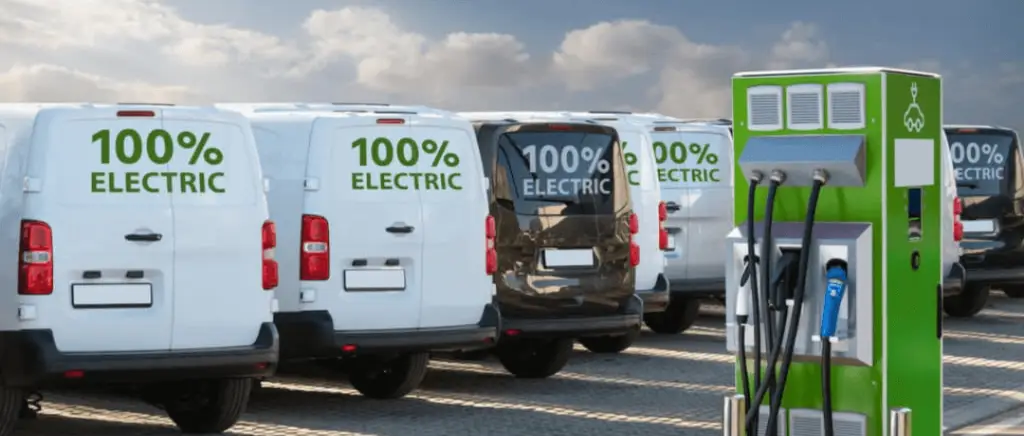
Several French companies have successfully adopted electric logistics solutions:
- La Poste In a pioneering move, the company uses a fleet of electric vehicles for its urban deliveries. This initiative has considerably reduced its CO2 emissions and noise pollution in cities. In 2020, La Poste announced that its electric cars had covered more than 30 million kilometres, contributing to greener logistics.
- Carrefour : The Carrefour group has also integrated electric trucks into its delivery fleet. In collaboration with Renault Trucks, Carrefour uses electric trucks for its deliveries in town centres, thereby reducing its carbon footprint and local pollutant emissions.
- Renault : with its strategic plan "RenaulutionRenault Group has invested heavily in electric vehicles. This plan includes optimising the company's internal logistics by using electric cars to transport parts between factories and distribution centres, demonstrating Renault's commitment to a more sustainable supply chain.
Also read → The advantages of electric cars for SMEs
What are the challenges and solutions for sustainable logistics?
Integrating electric vehicles into supply chains presents a number of major challenges, not least the initial investment required to purchase electric vehicles and install recharging infrastructure. SMEs are particularly affected by the high initial cost.
In addition, the limited availability of charging points, particularly in rural areas and logistics infrastructures, is a major obstacle. Electric vehicles also have lessautonomy than combustion-powered vehicles, this can lead to interruptions in logistics operations. Finally, variations in environmental regulations and support policies between different regions can complicate strategic planning and regulatory compliance for logistics companies.
However, a number of solutions have been put in place to overcome these challenges. These include the ADVENIR programme specially designed to encourage the installation of recharging points and certain tax incentives (accelerated depreciation, exemption from TVSreduction on CET). Investment in the development of recharging infrastructure through public-private partnerships is also a possibility.
In addition, the use of advanced fleet management technologies (UPS ORION) and route optimisation can maximise energy efficiency and minimise downtime for recharging. To ensure sustainable logistics, it also seems necessary to train drivers in eco-driving and raise staff awareness of the benefits of electric cars and sustainable practices to improve the adoption and effectiveness of these technologies.
Also read → Sustainable mobility, issues and solutions
Environmental impact of electric vehicles in the supply chain
Reducing CO2 emissions and carbon footprint
Electric vehicles offer considerable potential for reducing CO2 emissions in the supply chain. This reduction is mainly due to the fact that no fossil fuels are burnt during their use, which eliminates the direct CO2 emissions that are common with internal combustion vehicles.
CO2 emissions during use
Electric cars emit no CO2 when they are running, unlike combustion-powered vehicles. By integrating clean models into logistics operations, companies can significantly reduce their operational carbon footprint. For example, Mercedes-Benz has announced that its initiatives to use CO2-neutrally produced batteries and to integrate electric vehicles into its fleet should make it possible to reduce its CO2 emissions by 50 % by 2030 .
CO2 emissions during production
The production of electric cars, particularly batteries, is energy-intensive and generates CO2 emissions. However, significant progress is being made to make these processes more sustainable. For example, the use of recycled materials and renewable energy in the production of batteries can reduce their carbon footprint by more than 30 %. Many manufacturers, such as Volkswagen, Peugeot or BMW is currently working with suppliers to ensure that battery cells are produced from renewable energy sources, thereby reducing the CO2 emissions associated with production.
| Aspect | Véhicules électriques | Véhicules thermiques |
|---|---|---|
|
CO2 emissions during use
|
0 kg of CO2/km
|
Approximately 2.31 kg of CO2/litre of fuel
|
|
CO2 emissions during production
|
High, mainly due to the manufacture of batteries
|
Lower energy consumption for motor production
|
|
CO2 reduction thanks to renewable energy
|
Can reduce emissions by 50 % with renewable energy sources
|
N/A
|
|
Total life cycle (Production + Use)
|
CO2 emissions reduced from 40 % to 60 % compared with combustion cars
|
High dependence on fossil fuels
|
|
Use of recycled materials
|
40 % of recycled materials by 2030
|
Less common, dependence on new materials
|
|
Infrastructure and recharging
|
Necessary development of charging stations, reduced impact with renewable energy
|
Existing refuelling infrastructure
|
|
Battery recycling
|
Technology under development, significant impact on reducing emissions
|
Less impactful engine recycling
|
|
Indirect emissions
|
Fewer indirect emissions thanks to recycling and the use of renewable energy
|
High indirect emissions, in particular fuel extraction and transport
|
Waste management and recycling
Managing the waste generated by electric vehicles is a crucial issue in reducing the environmental impact of green technologies. Lithium-ion batteries pose specific challenges due to their chemical composition and the complexity of the recycling process. Batteries contain valuable and potentially toxic materials such as lithiumthe cobalt and the nickel.
These components, if not properly recycled, can cause significant environmental damage. For example, cobalt can cause soil and water pollution if released into the environment, while lithium extraction is energy-intensive and often leads to excessive water consumption. Several recycling initiatives have been put in place:
- Closed-loop recyclingThis method involves reusing materials recovered from used batteries to make new batteries, thereby reducing dependence on the extraction of new resources.
- Use of renewable energy, Some companies, such as Northvolt, use renewable energy to power their battery recycling plants, thereby minimising the CO2 emissions associated with the recycling process.
- Advanced recycling technologiesCompanies such as Li-Cycle and Redwood Materials are developing advanced technologies to improve the recovery rate of valuable materials from lithium-ion batteries. These technologies make it possible to recover up to 95 % of critical materials.
- Government regulations and initiativesThe European Union has introduced strict regulations for the management of battery waste, obliging manufacturers to recycle a significant proportion of the batteries placed on the market.
Also read → Recycling electric car batteries
Conclusion
The impact of electric vehicles on logistics and the supply chain is considerable, offering substantial reductions in CO2 emissions and an improved carbon footprint. With continued advances in battery technologies and a recharging infrastructure electric cars represent a viable and sustainable solution for the future. France already has more than 100,000 recharging points, facilitating the adoption of these environmentally-friendly vehicles. Recycling initiatives and the optimisation of resources therefore confirm the potential of electric vehicles for a more environmentally-friendly supply chain.