























Accelerating the development of electric recharging infrastructure
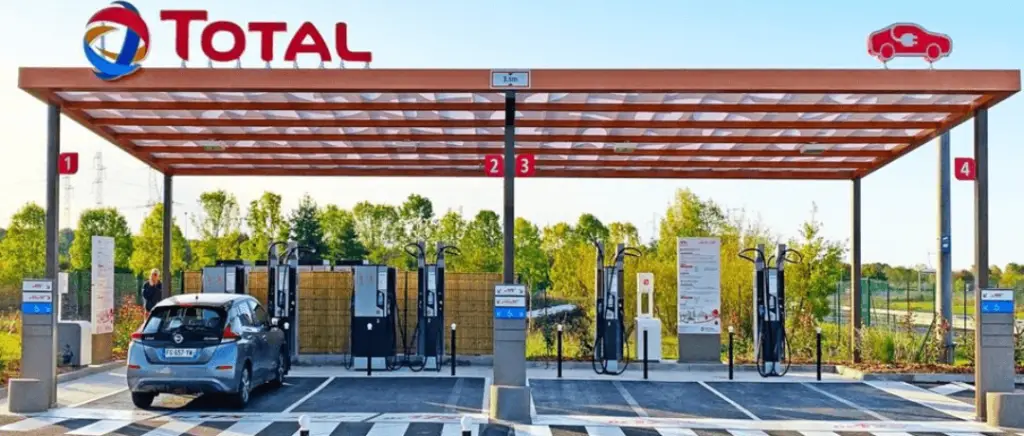
TotalEnergies is therefore positioning itself as a key player. By the end of 2023, the company had already installed more than 1,000 high-power charging stations in France, a major milestone in the development of ultra-fast charging infrastructure. These charging points, installed mainly at service stations on motorways and in high-traffic areas such as airports and railway stations, enable users to find their way back to their cars. 80 % of their autonomy in just 20 minutes.
Faced with growing demand, TotalEnergies continued in 2024 with massive investments to expand its network. The company aims to install more than 300 new terminals in suburban areas and in towns and cities, thereby extending access to ultra-fast charging infrastructure. This effort is crucial to support the energy transition and meet the needs of users who are increasingly looking to use electric vehicles in urban environments, where charging points are often less accessible.
In comparison, 2023 was a year of network structuring with a focus on major national roads and motorways, where 200 stations have been equipped. In 2024, the aim is to increase the number of such facilities in more localised areas, thereby improving the territorial coverage and accessibility of recharging, particularly in large conurbations and tourist areas. This expansion should make it possible to keep pace with the sharp rise in sales of electric vehicles, which have up 25 % on the previous year.
The contrast between 2023 and 2024 is clear: while 2023 was a launch year, with infrastructure focused mainly on major roads, 2024 marks a phase of acceleration, with greater urban and suburban coverage. This effort is in response to fast-growing demand, for both long-distance and daily journeys. TotalEnergies, at the forefront of this development, continues to play a leading role in the rapid expansion of the electric recharging network in France.
Also read → Charging stations: what's the current state of deployment?
The answer to new parking challenges: anti-parking bollards
The introduction of anti-parking bollards represents an innovative solution to the growing challenge of illegal parking near recharging points. These bollards are equipped with devices that limit the amount of time that vehicles can be parked once they have been recharged. battery recharged, to avoid a vehicle hogging a space when it no longer needs to recharge. This system makes it easier to access charging points, particularly in city centres, where demand is constantly increasing.
In practice, some of these charging points apply penalty charges if the vehicle remains parked once the charge is complete, which encourages drivers to quickly free up the space for other users.
The addition of these technologies in suburban and urban areas is part of a wider strategy to respond to the boom in electric vehicles, particularly in large cities where infrastructure is saturated.
As well as optimising the use of charging points, this approach helps to reduce parking-related tensions, while enabling more efficient management of charging infrastructure, thereby meeting the growing needs of an urban population that is increasingly turning to electric mobility.
Also read → What challenges will electric car charging infrastructures face in 2024?
Changes in the price of kWh: what is the impact on users?
Between 2023 and 2024, the price of recharging electric vehicles varied considerably, having a major impact on user habits. Charging at home remains the most economical option. In 2024, the average charge at home was of around €0.20/kWh, compared with €0.39/kWh for public charging, which varies according to the power of the charging points.
By comparison, in 2023, public tariffs were slightly lower, around €0.35/kWh. This increase can be explained in part by inflation in energy costs and the impact of theNational Energy Index (IEN 2024), which regulates the energy market in France.
Ultra-fast motorway charging points with a power rating of over 50 kW now charge up to €0.59/kWh This is much more expensive than home slow-charging. The high cost of public charging points means that many users prefer to charge at home at night, where off-peak rates can be lower. at €0.16/kWh.
So the rise in prices in 2024 is having an impact on drivers' charging habits. They often prefer to recharge at home or use off-peak periods, even if recharging at a public station remains essential for long journeys.
Conclusion
TotalEnergies has therefore strengthened its position by collaborating to adapt charging stations to new vehicle models. In addition, new legislation is facilitating the interoperability of recharging networks, simplifying access for users. Finally, efforts to recycle batteries also underline the importance of sustainability in this energy transition.
If you would like to find out more about the tax credit for in-car charging points 2024For more information, see our article on this subject.